Follow the show in your app. Apple leads on iPhone, Spotify on Android.
Summary
The industry doubted her for four decades. Frankie Staton kept playing, and then she built the stage that Black country artists never had.
Frankie Staton has spent four decades in Nashville. She grew up banging on her aunt's farmhouse piano outside Greensboro, North Carolina, moved to town with nothing, and worked her way from a Marriott salad bar to the grand piano at a five-star restaurant, sharing rooms with Clint Eastwood, Dolly Parton, and Minnie Pearl along the way. Publishers told her, more than once, that they did not believe a person who looked like her could have written the songs she played them.
In November 1996, after a newspaper story claimed there were no Black country artists to find, she founded the Black Country Music Association and staged the first Black country showcase at the Bluebird Cafe. It drew five TV stations, national trade press, and a reporter from the New York Times Magazine, and the crowd was so large that staff had to turn people away. She joins Ryan Vet to trace that journey, from a childhood memory of being pulled off a Woolworths stool because the counter was for white customers only, to a mentor who fought for her at Sony Tree and lost, to the choice she made to be, in her words, a victor and not a victim.
Key takeaways
1
Resilience is not one big leap. Frankie Staton built hers in tiny increments, one small step connected to the next, because that is the only thing that kept her going when nearly everything around her was negative.
2
You only need one believer. Even if ninety-nine people say it is not possible, it is the one person who says yes that you are listening for.
3
When a newspaper claimed there were no Black country artists to find, Frankie did not argue. She built the proof: the first Black Country Music Association showcase at the Bluebird Cafe in 1996, with a band and songs strong enough to compete with radio.
4
A publisher told her he did not believe she had written her own song. Mac Vickery, a songwriter with a gold record, took her into Sony Tree and fought for her anyway. They said no, but he told her she was worthy, and she never forgot it.
5
You learn how important it is to sew into other people when nobody ever really sewed into you. Frankie shows up for other artists the way she wishes someone had shown up for her.
6
Her frame for a life built against rejection and segregation-era memory is simple: I'm not a victim, I'm a victor.
Terms defined
Plain-language definitions for the ideas in this episode. Structured for search and AI answers.
Black Country Music Associationnoun · organization
The organization Frankie Staton founded in November 1996 to prove there were Black country artists in Nashville, after a newspaper story claimed none could be found. Its first showcase, staged at the Bluebird Cafe during Black History Month, drew five TV stations, national trade press, and the New York Times Magazine.
In this episode: Frankie's answer to a story that said her community had nothing to do with country music.
victor, not a victimphrase · Frankie Staton
Frankie's frame for a career built against rejection, racial profiling, and segregation-era memory. She draws it from the idea that her ancestors were survivors of the strongest kind, and refuses to tell her story as one of defeat.
In this episode: The line the whole conversation turns on.
building resilience in incrementsphrase · Frankie Staton
Frankie's answer to how anyone keeps going through rejection: not one heroic leap, but tiny steps that connect to each other, kept alive by the occasional person who tells you it is possible.
In this episode: Her advice to young people getting hit from every side.
Notable quotes
Lines worth keeping, verbatim from the episode.
“
I'm not a victim, I'm a victor.
Frankie Staton32:50“
It's little steps, tiny steps that connect to each other that keep you going.
Frankie Staton40:57“
They've got to find a safe place where they can dream, where somebody says yes it's possible, even if ninety-nine people say it's not possible.
Frankie Staton40:57“
You learn how important it is to sew into other people when no one ever really sewed into you.
Frankie Staton25:22“
It's really important to you if nobody believes in you, and then you find somebody that does. It's God, it's a liberating thing.
Frankie Staton20:18
Chapters
Jump to any moment. Timestamps deep-link the audio.
The guest
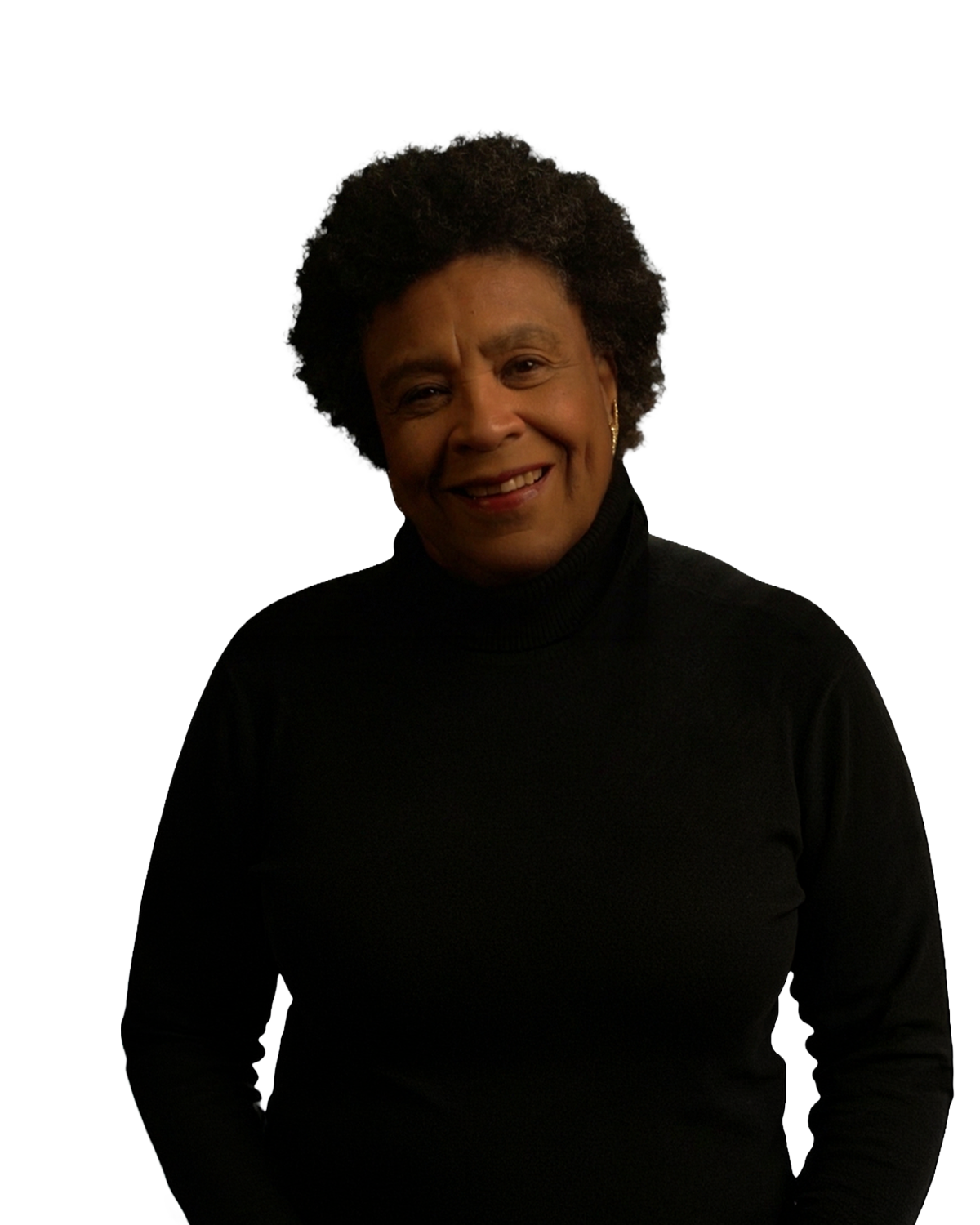
Frankie Staton
Founder, Black Country Music Association · Nashville pianist, vocalist & songwriter
Frankie Staton is a Nashville pianist, vocalist, and songwriter who founded the Black Country Music Association in 1996 and staged the first Black country showcase at the Bluebird Cafe. She has spent four decades performing across the city, working her way from a salad bar at the Marriott Airport Hotel to the grand piano at a five-star restaurant frequented by Clint Eastwood, Dolly Parton, and Minnie Pearl, and she spent ten years as a regular on Ralph Emery's WSM morning show. Along the way, publishers told her more than once that they did not believe a person who looked like her could have written the songs she played them.
In November 1996, after a newspaper story claimed there were no Black country artists to find, Frankie built the show to prove otherwise. The first Black Country Music Association showcase at the Bluebird Cafe drew five television stations, national trade press, and a reporter from the New York Times Magazine, and the crowd was so large that staff had to roll up the blinds and turn people away. She built it on the belief that the music had to be as strong as anything on the radio, and on the conviction, stated plainly in her own words, that she is not a victim, she is a victor. That belief traces back to a childhood in the segregated South, including being pulled off a stool at a Woolworths lunch counter because the counter was for white customers only, and forward through a habit of showing up for other people the way she wishes someone had shown up for her sooner.
Frankie is finishing her first memoir, A Witness at the Party, about her life in Nashville, and a country EP called Forever Loretta, a tribute to Loretta Lynn, whose story first inspired her to move to Nashville. She is available for concerts, one-woman shows, and keynote speaking engagements, and her advice to anyone facing rejection is the same one she lives by: build resilience in increments, and find the one person who says it's possible.
Straight answers to the questions this essay raises. Open by default, structured for search and AI.
Why did Frankie Staton found the Black Country Music Association?+
Frankie Staton founded the Black Country Music Association in November 1996 after her aunt sent her a newspaper story claiming there were no Black country artists to find. Rather than accept that, Frankie called the paper, told them she could rebut the story, and set out to prove it by staging a showcase of Black country artists during Black History Month.
What was the first Black Country Music Association showcase like?+
The first showcase was held at the Bluebird Cafe in November 1996. Frankie built a full band of session players, sourced songs strong enough to compete with radio hits, and worked for two days without sleep to prepare. The night drew five TV stations, trade press, and a reporter from the New York Times Magazine, and the crowd was so large that staff had to roll up the blinds and turn people away.
What happened to Frankie Staton outside a Nashville jam session in 1981?+
In 1981, while waiting on a Nashville street corner in an evening gown to sing at a jam session, a man mistook Frankie for a sex worker and asked how much. Police who were called on her actually escorted her into the club and vouched for her with the manager, and she went on to sing until 2:30 a.m. before finally being allowed on stage.
Who is Mac Vickery, and why does he matter to Frankie Staton's story?+
Mac Vickery was a Nashville songwriter who took Frankie into Sony Tree, then the largest country music publisher in Nashville, and pushed his colleagues to sign her. They turned her down, but he told her she was worthy and deserved a shot. Years later, Frankie found his gold record on display at the Alabama Songwriters Hall of Fame and was moved to tears remembering the one person who fought for her when others would not.
What does Frankie Staton mean by "I'm not a victim, I'm a victor"?+
It is Frankie's response to a career built against rejection, racial profiling, and segregation-era memories, including being pulled off a Woolworths stool as a child because the counter was for white customers only. She frames her story as one of survival and resilience rather than defeat, drawing on the idea that her ancestors were survivors of the strongest kind.
What advice does Frankie Staton give young people navigating rejection and doubt?+
Frankie says resilience is built in tiny increments, not one big leap, and points to a moment when a respected songwriting teacher publicly praised her work after years of rejection as proof that only one believer is needed to keep going. She also encourages young people to see the world beyond their own neighborhood, including taking a gap year, to gain perspective on how blessed their circumstances actually are.
What is Frankie Staton working on now?+
Frankie is finishing her first memoir, A Witness at the Party, about her life in Nashville, and a country EP called Forever Loretta, a tribute to Loretta Lynn, whose story first inspired her to move to Nashville. She is also available for concerts, one-woman shows, and keynote speaking engagements.
Frankie Staton ·So it's increments, it's little steps, tiny, tiny steps that connect to each other that keep you going. For me, that's the only thing that kept me going because everything was so negative. But he was very positive. So they've got to find a safe place where they can dream. Where somebody says yes, it's possible. Even if 99 people say it's not possible, it's the one person that says it's possible that you're listening for.
00:34How Ryan met Frankie at the piano
Ryan Vet ·Welcome to another episode of The Ryan Vet Show. You know, there's not many times in life where you meet a complete stranger who I would say has become a friend over the past eight years, and just absolutely inspirational. My wife and I were sitting, I actually was taking my sommelier test in Nashville, Tennessee, and we were sitting at the Gaylord Opryland Resort there and eating at the sports bar, and I heard Whitney Houston, and I was hearing this music, and I thought it was just echoing through the halls there in Opryland resort, and it was I Will Always Love You, and I listened and I said, No, that's not exactly Whitney, it's extremely close, but that's live music. And so we hurried up our lunch and we went out to the lobby there and saw a woman playing on the piano and singing Whitney and a bunch of other famous songs, and that is the first time I was able to meet Miss Frankie Staton. Frankie, welcome to the show.
Frankie Staton ·Well, I'm happy to be here, Ryan.
Ryan Vet ·Well, thank you. Thank you, thank you. And you know, if the music stopped right there at the piano, that would be one thing. But over those few minutes together, I think you might have played some songs that were our requests, but that wasn't where the story stopped. You found out that I had a couple coffee shops and wine bars in North Carolina. You ended up playing there, you ended up keynoting, being a closing keynote for an event I held in Nashville, which people still talk about to this day five years later. But what I found out was not only are you a phenomenal musician, but you are an incredible human being who has made such a powerful impact in the lives of those that you've touched personally, with your family, and coming to see them come out and cheer you on at an event in Chapel Hill not too long ago. But more than that, you have really sought for a way to make an impact positively in the Black country music world by founding the Black Country Music Association. And so that's what I want to talk about. I want to talk about your story, your life, your legacy, and the impact that you've made in so many and continue to make. So let's get started. You loved country music. What is your origin with music and how did you get involved in being the pianist and vocalist that you are today?
02:47A farmhouse piano, a Motown rejection letter, and a move to Nashville at all costs
Frankie Staton ·Well, my aunt had a piano at her farmhouse on the outskirts of Greensboro, North Carolina. And I would go out there as a baby, and I was always banging on this piano. And then probably when I was about three or four, I just played something really simple like Mary Had a Little Lamb. And my aunt said, How did you do that? And I said, I don't know. And she said, Do it again. And it freaked her out and blew my mind. And then I just started to play what I heard. You know, one day I was playing something, she said, What was that? And I said, the gas commercial. And so I just, whatever I heard, TV, I played, you deserve a break today, you know, so get up and get away to McDonald's.
Frankie Staton ·As I got older, I knew that there was no industry in High Point. There was nowhere for me to go. I still have the letters where Motown said we can't accept unsolicited material. So I had to be in a publishing center, in a music center, so I could at least try. I wasn't around musicians that wanted to go any further, but I really wanted to go all the way, and I studied everything, all kinds of music. And I really loved country and I love the stories of family, of children, of mother and father, of lifelong lasting eternal love. And I wanted to write those types of songs about my family. So when I looked at where I was gonna go, I was very afraid of New York, because you never know how southern you are until you try to leave. But then I knew all kinds of music was coming out of Nashville, and so I decided to come to Nashville and see it. The very first person I met was Maggie Cavender, who was the lady behind the group Alabama. She was a tiny little woman in a black cowboy hat, and she said, baby, you can do it if you want to do it. I was so inspired, so I went home and worked six months and came back. I knew I was never going back. Everybody kept saying, You'll be back in a year. I said, I'm never coming back. That's how much I love music, that's how much my commitment was to music.
Frankie Staton ·I just tried to find a job. I went around town, tried to find a gig, tried to find a job. It was so hard. The Nashville that was then is a lot different from what it is now. It was more tourist-oriented, everybody wanted to be on a stage in Nashville, take a picture singing on a stage in Nashville. I would see all these tour buses with all these people, and they would go to all these different places all over town, and everybody would get up and sing a song. This one particular place I would pass by when I'd go downtown to jam sessions, and it stood out in my mind that of all the names that had appeared there was Sammy Davis Jr.'s name. I said, okay, I'm gonna get really clean, put on my evening gown and my fake rhinestones. I'm gonna come down there and sit in one night. And I planned it out, I was ready. This is past me standing on the corner of Fourth and Broadway, and a man pulling up to me saying, How much? And I'm like, How much for what? That's shocking to me. I said, How much for what? He went around the corner and came back and said, Hey, how much? And I asked this lady, I said, Why is he saying how much to me? She said, Thinks you're a hooker. I said, I'm not a hooker, I'm a musician. And so he pulled off, he didn't bother me no more.
Frankie Staton ·So now I'm going to this jam session. I've got my one evening gown, I'm ready, right? I'm coming down Church Street, and the cops grabbed me. And where are you going? So I must have been in a red light district. You know what I'm saying?
Ryan Vet ·Yeah.
Frankie Staton ·That must have been like a red light district where I was at. And so when I look back at it now, I know how crazy it sounds. Here's this sister, 1981, with this big afro in this evening gown, going to the captain's table to sing Loretta Lynn. That sounds crazy. That's every opposite that you can think of. So they said, we're going with you. I said, you want to hear it? Well, come on. So my entree into the jam session was with the police. And the police went and told the manager, if you have any problems with her, give us a call. And I thought, why would they have any problems with me? I'm just here for the music. It was 11:30 at night. Jam session started at midnight. They wouldn't get me up. I was the first one to sign up. They wouldn't get me up. Busloads of people came. All of them got up. I said, I'm not leaving. I will stay here if we have to have Easter sunrise services. I am not leaving. 2:30 in the morning, I've been sitting there three hours, and the place is still packed. They said, we don't know this woman. I said, must be time for the chocolate cowgirl. And they said, but we're gonna get her up and sing a song. I went up there and I said, I'm doing Loretta Lynn, the coal miner's daughter, in the key of D. And they said, You know keys? And I said, Yeah. Okay, so I did it. And they wanted me to sing another song, another song, another song. Finally, here comes some money from the mayor of Nashville. And I said, You're not a mayor. And he's over there cracking up laughing. And I see him on TV the next day. I'm like, oh God, it is the mayor. And they called me and asked me to come back down there. And I said, I'm not a hooker. They said, We know you're not a hooker. And they said, We want you to get up and play. I said, Well, I'm gonna get up and sing as I'm gonna play a song on the piano. And they said, You can play the piano. And that was a game changer for me, because they needed a musician across the street on the grand piano at a beautiful Michelin star five-star restaurant called The Brass Rail. That's where they rolled the steaks to the table, where they had the Irish coffee, flaming cherries jubilee, bananas foster, caesar salad tossed table side. So I went over there the next night and auditioned and got the job.
Frankie Staton ·And then my very first night, in the door walks this man that I'm staring at. He's staring at me. And he said, What? Why are you looking at me like that? I said, You look like Clint Eastwood. He said, I am Clint Eastwood. I was like, Oh, you made cowboys real. And so I met so many, so many people there. But it was like a difference of night and day. I went from not working to working, and I had a full-time day job. I played six nights a week, worked five days a week. I just worked all the time. I was in an organization that still exists today called the Nashville Songwriting Association International. We met at Belmont College. It was a place to get your original music critiqued. I remember a guy saying, I have a home TAC Porter studio. I got in his conversation and said, What does something like that cost? He said, Why would you ask? You can't afford it. And I thought, well, how do you know what I can afford? I said, Well, where do you go buy it at? He told me: a place called Audio Systems over by Vanderbilt. I went and bought it and hired him to hook it up, brand new, hadn't been touched. He just looked at me like, wow, I don't assume, don't assume, because you really don't know.
Frankie Staton ·I continued to work and pitch on Music Row, trying to get my original songs heard. I remember there was a girl I was humming to one morning on my day job, where I was a salad maker at the Marriott Airport Hotel. She said, That's beautiful. Whose song is that? I said, That's my song. She said, You wrote that song? I said, Yeah, I want Tammy Wynette singing it. She said, I know a publisher that'll listen to you. So I went to this publishing company, Cedar Wood Publishing Company, with my cassette and my lyric sheet. The guy comes out and looks at me and goes, Sarah, can I talk to you down the hall? I thought, he probably won't even listen to my music. He comes back and says, As long as you hear, I might as well listen. We stood in the hallway. He stuck my song in a little portable cassette and said, if they listen to half your song, you've done good, most of the time you get a third of a song. He listened to half my song. And he said, I don't believe you wrote it. I don't believe you could write a song, a country song of that caliber. I said, You believe I brought you somebody else's music? I have the copyright on this song. He just said, I don't believe a person like you could write a song like that. Fortunately for me, he was on the board of directors of the Nashville Songwriting Association. We had our Christmas party at the musicians' union, and I was one of three songwriters whose song was chosen to be performed. He saw me get up and play the same song I'd played for him. He said, You're getting better.
Frankie Staton ·I just continued to work, and then I got hired to play at the Marriott, my real goal, because it was the newest, hottest place in town. I met everybody there. Sylvester Stallone, Dolly Parton, got cursed out by Hank Jr., met Chris Christofferson. But one of the most shocking things: I used to watch this man come on early in the morning, Ralph Emery, an all-night disc jockey on WSM with a cable show on the Nashville Network and a local early morning show. He was standing right beside the piano. I said, Excuse me, sir, I want to give you my card. He said, Why? I said, I've been watching your show in the morning, you need me, I'm gonna come down there and light your screen up. He said, Well, come on in the morning. Be down at WSM at 4:30 in the morning. I was there. I found a cop that had to show me where it was at. My very first morning, I was sitting there beside Lorrie Morgan. I didn't know who she was. Ralph said, What are you gonna sing? I said, Country When Country Wasn't Cool, a hot song then recorded by his best friend, Barbara Mandrell. I didn't know she was his best friend. And just to be crazy, I said, Ralph, I went by George Jones' house, he wouldn't get out of bed, so I'll sing his part. He came back over there and said, Can you come back next Tuesday? Lorrie said to me, He likes you. Because if he did, he would never say that to you. I go back on the third week, and he said, We got a piano player. I said, You know how many people in the world play the piano, Ralph? He said, Okay, you can play. So I was on his show ten years later when it went off the air. That exposed me to a lot of people. We would go down to McEwen and do the wrap every day, a fundraiser for the Lions club. Every year we had a guest: Minnie Pearl, Lee Greenwood, the country comedian Jerry Clower, Steve Wariner. So although I wasn't able to really get inside the publishing houses like I wanted to, and to write with the big songwriters, I was around it enough to get a taste of it. You know what I'm saying?
20:18Kenny Sears, Sony Tree, and the man who fought for her
Ryan Vet ·Absolutely.
Frankie Staton ·I was playing one morning at the morning show when Kenny Sears, of the Time Jumpers, a hot Western swing band in Nashville made up of studio players, some of the best in the city, said to me, Frankie, you always talking about your music. You see that guy right there? That guy is a big time songwriter, had George Strait hits. Go ask him to listen to your music. I said, Now you think I ain't gonna do it, but I'm gonna do it, Kenny. I went over and asked him, Sir, will you listen to my songs? He said, They ain't no good, I'm gonna tell you. I said, That's cool. He sits beside me on the piano bench, I started playing, and he's like, You wrote those songs by yourself? I said, Yeah, I hear music all the time in my head, in the middle of the night, I can hear music at night while I'm asleep and wake up and write the song. He said, Come on, let's go to breakfast. He keeps looking at his watch. He said, Let's go, follow me. This man pulled into Sony Tree, the largest publisher of country music in Nashville, where Harlan Howard and Bobby Braddock wrote, 50 staff writers. He said, Follow me, and we went into a writing room, first time being in a real writing room. He said, Lay down three songs, I'm gonna go fight for you. You are worthy, you deserve a shot. And what I noticed was a blackboard in the outer lobby that said we are looking for music for Dionne Warwick, Whitney Houston, Lionel Richie, all these people that were not country. I'm like, this is how it's done, this is how songs get picked up out of Nashville.
Frankie Staton ·He stays in there like 45 minutes. He comes back out beat down, pitiful. He said, Let's go, they won't sign me. But honey, I went to bat for you, and I really feel like you got as much talent as people in here got. You are worthy. I won't ever forget that somebody stood up for me like that. A few years ago, I have some friends from England, and we went down to Muscle Shoals, Alabama. We walked into the Alabama Songwriters Hall of Fame, and the first gold record I saw was by Mac Vickery, the man that fought for me to get a publishing deal at Sony. I fell apart. I just literally melted, had to sit on this bench, was just crying like a baby. I said, This is the man that stood up for me that believed in me. It's really important to you if nobody believes in you, and then you find somebody that does. It's God, it's a liberating thing. I'll never forget Mac Vickery for what he did for me, what he attempted to do for me.
25:22What you learn when nobody sews into you
Ryan Vet ·That's a powerful story. And one of the things that I love and admire about you, Frankie, is you don't stop. You're persistent, and you don't take no for an answer in the best way possible.
Frankie Staton ·I'm really not persistent, Ryan. I have moments I just go, why are you doing this, why do you keep going? I just interviewed a lady from Scotland and she said, Well, why do you keep going? And I'm like, I just feel like it's my purpose. What you learn from that is, you learn how important it is to sew into other people when nobody ever really sewed into you. I know how important it is to look in that audience and see somebody at your showcase, or somebody seriously sits there and listens to a new song. Because so many people wouldn't listen to mine. You learn a lot. I remember one girl invited me to her showcase, and I went. I was the only person that came. She had one person in her audience, and that person was me. She'll tell you all these years later, You're the only one that came to my showcase. But it's just important to have somebody to believe in you.
27:20Founding the Black Country Music Association
Ryan Vet ·And you've done such a good job believing in others and believing in an industry. There's been a lot of labels that you've had to face over your career, all the isms that you've had to overcome. But you really have opened the door for so many in founding the Black Country Music Association in, I believe it was 96 or in the mid-90s. Could you share a little bit of your journey and your vision for that?
Frankie Staton ·Well, it just dawned on me one day, you're not an anomaly. You're not the only person that's being treated this way, because you don't see a Black presence in country music. You don't see it. I started to ask around: do you ever get your songs heard? No. What do they say to you? Why do you want to do that? I really felt like, man, if you're doing it to me, what are you doing to brothers? I can't imagine what they were going through. It was very, very negative, and you have this passion, and it's so negative, and you want to give up, but then you don't want to give up. My aunt, the very one that gave me her piano, sent me a story from the New York News and Record that said, why don't you have more diversity in country music? All these people that ran these companies said, we can't find no Black people. I said, you know what, Frankie, you ought to challenge the story. You can prove this. So I called the New York News and Record and said, I can rebut this story, and if you come to Nashville, I'll show you the Black country singers.
Frankie Staton ·I put together in my mind that I was gonna have a Black country music showcase. This was November of 1996. I said, I gotta do it right, so I'm gonna do it during Black History Month where you can get away with everything. I wanted to do it in an industry place, and I had sung the Bluebird many times, so I went and talked to Amy. She said, Everybody else sing here, why can't y'all? Because I know if it's at the Bird, the industry is gonna support it. Then I started trying to raise money, trying to hire a band, and I thought about the content of the music, that it had to be as good as what was on the radio. So I went around to publishers and got songs that almost made these people's albums. If I had a guy that was a second tenor who sounded like Vince Gill, I went after the songs that almost made Vince Gill's album. My band were people who played in sessions, they could read like I don't know what. I had a killer band, really good country singers. My battle with them was: you're coming to Nashville, you live in Oklahoma, at two o'clock in the morning when people are drunk on Friday night, everything sounds good in Oklahoma. But you come into Nashville, baby, that's a whole different ballgame, that's where the hits you hear on the radio are written, the best songwriters, the best producers, the best musicians, so you got to be your best.
Frankie Staton ·I knew that the night of the first show it was gonna be beyond anything anybody ever dreamed of, because I was a working idiot. I hadn't slept for days, went probably two days with no sleep, to the wire, putting up posters, sending the menu from the Bluebird out to a lot of people, dealing with the press. I had five TV stations, all the trade and industry magazines, and five newspapers, the Black newspapers. Nobody knew that the guy with the long plait was from the New York Times magazine. They sent the New York Times magazine down there, and he didn't believe it was real. His name is Michael Perry. And so the night of the first show, Amy said, Frankie, nobody else can come in here, they'll shut us down.
Ryan Vet ·Wow.
Frankie Staton ·So literally they had to roll the blinds up. They had all these people standing around the outside that couldn't get in, people sitting in their car like they was at Sonic. You couldn't get nobody else in the place, you couldn't move. I got up and said, we perform gospel, jazz, screaming blues, rhythm and blues, but we also are involved in country music and have been for a long time. That led me on a journey of why people thought we had nothing to do with country music, how we've never claimed our southern heritage. I'm very proud to be from the South, and my story is not a story of defeat. We have a saying in our race that the weak ones died on the way, the weak people died in the ships that were on their way from Africa to America. We are survivors of strong people. And so we have, I'm not a victim, I'm a victor. And that's the way I look at my life, regardless of how many hits I go up against. One of the songs that Valerie, one of my favorite female country singers ever, would always sing: I am a daughter of the South, born and bred to stand up straight and proud. My roots run deep the Dixie dirt, where all my people still reside and work. And I was raised right to have respect for the blessings I've been given. I am bound forever in their debt, and thankful to be living under the southern sun, where the earth is lush and green, and everything I ever dreamed I ever would become. Under the southern sun, where the water's kept with diamonds, and beyond the blue horizon there is hope for everyone, under the southern sun. Isn't that beautiful?
35:32Advice for a generation getting hit from every side
Ryan Vet ·It is powerful. You said something so profound, that you're choosing to be a victor and not a victim. And I think not just from what you've gone through, but for all time, and even recently, when you look at young people these days, it's easy to be the victim, but you're saying, No, I'm going to be the victor. What advice would you have for young people today that are getting hit from multiple sides?
Frankie Staton ·I would have them to really open their eyes and look at the world. Because regardless of how hard it's been for me, and it's been hard in my life, I have to look at people and say, we're still in a blessed nation. There are people in this world that died from a snake bite when they were on their way to get some clean water, because they have no water being pumped into the tribes that they live in. Or people that died from diseases because they couldn't get the medicine to them. Or people that never had a chance to even go after any dream that they had. We're still blessed. We're taking some serious hits in America, but we are blessed. One of the greatest things young people could do would be to do a gap year before college, to go and see what other ethnicities, what other countries, other cultures, how they live. It'll change them. We are blessed. I am grateful that I was born in this country, raised in this country. I expect America to rise up and be better, but I do know that it could be a whole lot worse.
37:10Whites-only counters, Norman Vincent Peale, and the audacity to dream
Ryan Vet ·That's so powerful. What gave you that perspective? What in your life helped you to think this way?
Frankie Staton ·Well, as a Christian, I have always read my Bible, and I've always studied human interest stories. I was a huge follower of Dr. Robert Schuller and Dr. Norman Vincent Peale. Norman Vincent Peale wrote The Power of Positive Thinking, I read that when I was 16 years old, because I realized if I had a dream, I had to think positively, because the world will crush you. Dr. Schuller was a follower of Norman Vincent Peale. Robert Schuller built the Crystal Cathedral in Garden Grove, California, a glass church he dreamed of when he was a little boy, so he could look at the top of it and pray to the heavens where he could see the stars. Then of course I was a follower of Dr. Martin Luther King.
Ryan Vet ·Yeah.
Frankie Staton ·And watched his ascent. I was a very little girl. I do remember riding on the back of the bus. I do remember separate water fountains. I do remember when my grandmother would take me downtown to buy me some clothes to wear to church, and we would always go into Woolworths and get a hot dog. I love hot dogs. One time we went into Woolworths and these little girls were sitting on these little benches twirling around. I got up there and twirled around, and my grandmama snatched me. She said, You better not ever get on that bench again. I couldn't understand why, because every other kid was on there having a good time. We had to get our hot dog and go outside and stand on the sidewalk, because we weren't allowed to sit at the counter. So when you grow up like that, you can see the progress that's been made. But if you've never went through that, you can't understand that things have been way worse than they are now. I've seen African Americans go to college, get all kinds of degrees, become doctors, lawyers, Supreme Court judges, presidents, first ladies. Michelle Obama said, I'm the first lady of a house that was built by slaves. That's progress. And that not without resilience, not without people asking them what gives you the right to think you have the right to be here. But they did, like Barack Obama said, he had the audacity to dream. I just always believed in it. I don't even know why you live, why you exist, if you don't have a dream.
40:57Building resilience in increments
Ryan Vet ·So giving people dreams, or the ability to dream, the permission to dream is so important. How do you think people today, especially young people, how can they build resilience while still dreaming?
Frankie Staton ·I think you have to do it in increments. Tiny, tiny increments, because sometimes it's hard to make a leap at one time. But if you can do step by step, I think it's achievable. Even though I had people telling me your songs are just mediocre, they're not any good, I kept going. One day I went to a symposium. I was told to go by Jason Bloom, a BMI songwriter and teacher who sold 51 million records. I thought, if this guy tells me to quit, I'm gonna quit. He critiques songs, covers his ears up, stares at the lyric sheet and listens. He listened to my entire song, where everybody's giving a third of a song. He said, I never heard of you before. Who are you? I said, I'm just Frankie Staton. He said, Class, this is an avant-garde jazz standard that will be played a hundred years from now. This is Michael Bublé, this is Diana Krall, this is Norah Jones. He said, I never heard of you, but I want to talk to you. So it's increments, it's little steps, tiny, tiny steps that connect to each other that keep you going. For me, that's the only thing that kept me going, because everything was so negative. But he was very positive. So they've got to find a safe place where they can dream, where somebody says yes, it's possible, even if 99 people say it's not possible, it's the one person that says it's possible that you're listening for.
43:41Where to find Frankie
Ryan Vet ·That's wonderful advice, and I think so inspirational. How can people learn more about you and your work? I think you've done so much, and I'll give you a plug before you answer that question. We had you at an event for a closing keynote, and what Frankie did for this event was she came up behind her piano and told stories and complemented it with song. It was funny, it was emotionally gripping, and to this day it is still one of the most talked about keynotes, and it's just powerful. If you're looking for someone to entertain, inspire, motivate all at the same time, I would highly encourage you to look up Frankie and her music and her work. But Frankie, how can people find out more about you, about the Black Country Music Association, about the work you've done, and get in touch with you?
Frankie Staton ·I am everywhere. I'm on Instagram, Facebook, I'm on X, I'm just on everything. Frankie Staton Music. Just Google me, I'm all over the internet. I'm based out of Nashville, Tennessee, but I do travel. So I'm looking for work, looking for events to do, people to make happy and to inspire and to motivate to keep going on.
45:18The memoir, the Loretta Lynn tribute, and what's next
Ryan Vet ·Well, I appreciate that, Frankie, and I know you've done that for so many, and I know you will for many more. Are there any closing thoughts? Anything I didn't ask you, anything you want to share with the audience and listeners today?
Frankie Staton ·I am working on my first book. It's called A Witness at the Party, and it's about my life in Nashville, some of the things I've seen are just mind-boggling, I've witnessed. And finishing up my first real country EP, it's called Forever Loretta, a tribute to Loretta Lynn, whose Coal Miner's Daughter inspired me to come to Nashville. I was also inspired by the life of Dolly Parton, I've met Dolly, that's a phenomenal experience within itself. So I'm available for concerts as well as one-woman shows, keynote address speakers, and just excited about it.
Ryan Vet ·Well, Frankie, so thank you so much for sharing your story and your journey and your reminder that it's important to have a dream, and it takes resilience, but everyone can fulfill and follow their dream. And listeners, I want to thank you for listening to another episode of the Ryan Vet Show. Until next time, I'm Ryan. Inspire Forward.
Full show notes
In 1981, Nashville police mistook a young piano player waiting outside a jam session for a sex worker. She talked her way into the room anyway, and 15 years later she built the stage that Black country artists did not have.
Frankie Staton has spent four decades in Nashville. She grew up banging on her aunt’s farmhouse piano outside Greensboro, North Carolina, moved to Nashville with nothing, and worked her way from a Marriott salad bar to a five-star restaurant’s grand piano, sharing rooms with Clint Eastwood, Dolly Parton, and Minnie Pearl along the way. Publishers told her a person who looked like her could not have written the songs she played them. In November 1996, she founded the Black Country Music Association and staged the first Black country showcase at the Bluebird Cafe, built to answer a newspaper story that claimed there were no Black country artists to find.
Frankie joins Ryan Vet to trace that journey, from a childhood memory of being pulled off a Woolworths stool because the counter was for white customers only, to a mentor who fought for her at Sony Tree and lost, to the choice she made to be, in her words, a victor and not a victim.
In this episode:
How a farmhouse piano outside Greensboro turned into a career on Nashville’s biggest stages
The night Nashville police mistook Frankie for a sex worker, and how she talked her way into a jam session anyway
The publisher who did not believe she wrote her own song, and the man who fought for her anyway
Why she founded the Black Country Music Association in 1996, and how she built the first Black country showcase at the Bluebird Cafe
Her mantra, “I’m not a victim, I’m a victor,” and where it comes from
Her advice for building resilience in increments, and what is next: a memoir and a Loretta Lynn tribute EP