Lake Ontario, or America, or Whatever
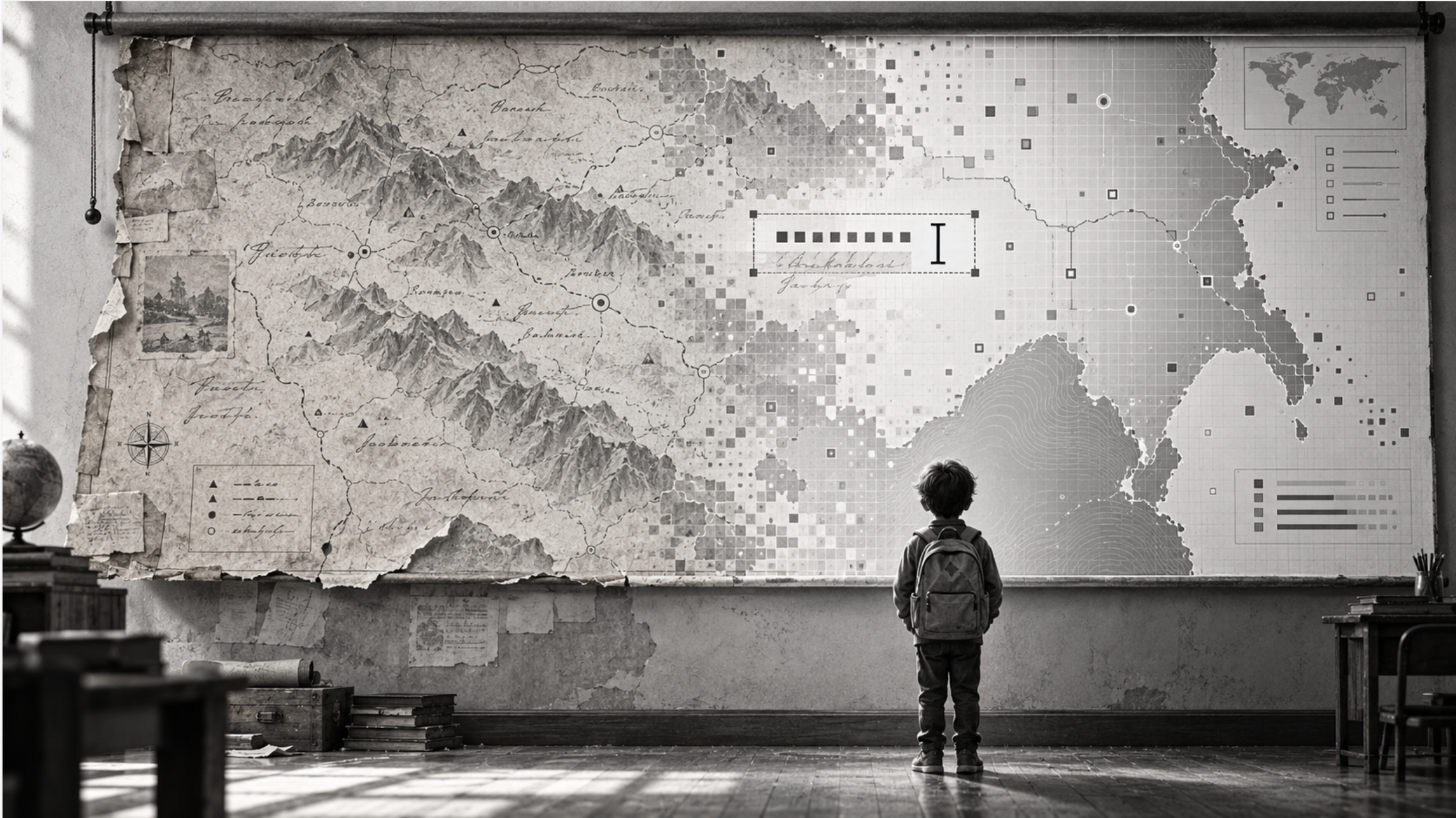
Alaska spent forty years renaming one mountain. Now it takes thirty days and a database, and the past gets rewritten right along with the future.
Read the full essayFull show notes
Alaska spent forty years renaming one mountain. Now it takes thirty days and a database, and the past gets rewritten right along with the future.
Generational futurist Ryan Vet reads his COLLIDE essay on what happens when renaming a place stops being a slow, public process and becomes a database edit. He remembers the mnemonics he learned as a kid for the Great Lakes and the planets, and how hard it is to rewrite memory. Then he flew to the Caribbean in February over a map that read Gulf of Mexico on the way down and Gulf of America on the way back.
The polling did not move with the map. A Marquette Law School poll found 71 percent of Americans opposed renaming the Gulf, including 82 percent of independents. Ryan’s point is not whether you favor the change. It is the speed. Within weeks, the EPA, the FAA, NOAA, Google Maps, Apple Maps, Bing, Britannica, Rand McNally, BP, and Chevron had all updated. The EPA’s page on the 2010 Deepwater Horizon disaster now carries the new name, which rewrites the name of a historical moment where eleven men died.
From there he follows the pattern. Fort Bragg became Fort Liberty and then Fort Bragg again, three signs in three years, with a different Bragg behind the name. Gen Alpha spreads six seven through recess with no mandate at all. Master bedroom becomes primary suite. Language has always changed, but now it changes faster than human memory can keep up.
The frame is the Velocity Gap. The Persian royal road took couriers nine days to cover what normally took three months, and Alaska needed forty years to rename one mountain. Today one person retypes an entry and two billion Google Maps users see it instantly. Orwell’s slogan applies: who controls the past controls the future.
In this episode:
- How the Gulf of America and Lake Ontario renamings spread across maps and databases in weeks
- Why the Marquette poll and the speed of the change are two different stories
- The Deepwater Horizon page and what it means to rename a historical moment
- Fort Bragg, Fort Liberty, and the two Braggs
- Top-down renaming versus bottom-up language change, from six seven to primary suite
- The Persian royal road, Alaska’s forty-year petition, and the Velocity Gap
- Why Ryan will always call it Lake Ontario
Go deeper: Read the original essay at ryanvet.com/collide. Ryan writes about generational shifts in leadership, work, and culture every week in his COLLIDE newsletter. Read it free at ryanvet.com/collide.
About Ryan Vet
Ryan Vet is a USA TODAY bestselling author, futurist, and international keynote speaker whose insights on generations, culture, and the future of work have been featured in Forbes, Financial Times, ABC, NBC, and CBS. His research helps leaders understand emerging generational patterns and anticipate societal shifts before they fully unfold.
Join 20,000+ Leaders for Weekly Insights
If you want deeper research and behind-the-scenes insights on generations and the future of culture and society, join Ryan’s weekly newsletter:
👉 https://ryanvet.com/collide