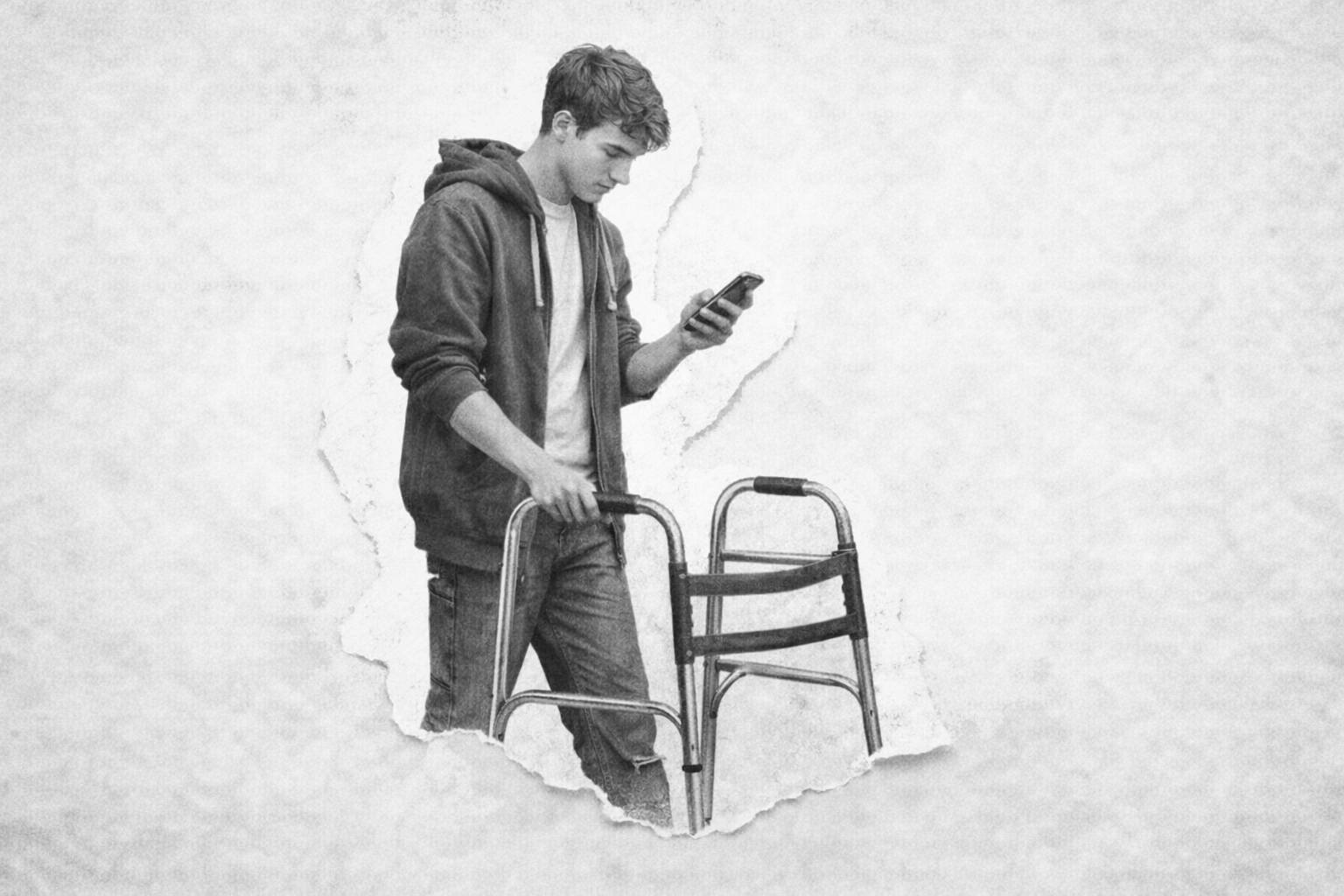
The Retirement Home That isn’t for Boomers, it's for Gen Z
What Malaysia's hottest new retirement home tells us about Gen Z and society as a whole.
Read the full essayThe data behind this essay. Every figure traces to a source the essay cites. Hover any card to share it.
A 26-year-old in Malaysia opened what the internet called a retirement home for Gen Z, and the comment sections filled with young adults trying to reserve a room.
The elder care math is not theoretical. Roughly 10,000 Baby Boomers turn 65 every day, and by 2031 one in five Americans will be over 65 (U.S. Census Bureau, 2018). More than half of nursing facilities face workforce shortages severe enough to restrict capacity (AHCA/NCAL, 2023), and assisted living now runs past 64,000 dollars a year (Genworth, 2024). So when Ryan saw headlines about a new retirement-style community, he assumed it was aimed at that problem. It was not. It was built for Gen Z.
In the late 1960s a U.S. Senate subcommittee worried that computers would make Americans so productive they might retire before 40. The fear was abundance: too much leisure, too much free time. Instead we built a culture of acceleration, with longer hours, constant connectivity, and performance measured in real time. The program in Gopeng offers the opposite for a few hundred dollars a month: tech-light living, three homemade meals a day, limited screens, slow mornings.
Ryan's read is that this is not indulgence, it is a generation doing what it was trained to do. Gen Z learned to socialize asynchronously and to process identity in isolation, connected to everyone while physically alone. Unplugging entirely does not feel dramatic to them, it feels logical. Millennials escaped by traveling and curating it for an audience. Gen Z's version is quieter, and it looks like structured solitude.
There is a second story underneath. The original TikTok has been removed, the facility has no verifiable website, social presence, or business listing, and reputable outlets reported it anyway with differing details on price, amenities, and the founder's backstory. We talk about truth-seeking and then accept a believable headline without challenging it.
Roughly 10,000 Baby Boomers turn 65 every day, and by 2031 one in five Americans will be over 65 (U.S. Census Bureau, 2018), while more than half of nursing facilities restrict admissions for lack of staff (AHCA/NCAL, 2023).
The assisted living community making headlines was not built for the Silent Generation, Boomers, or Gen X. It was marketed to burned-out Gen Z adults.
In the late 1960s the Senate worried computers would let Americans retire before 40. The fear was too much leisure. We built a culture of acceleration instead.
Gen Z learned to be alone while digitally connected, so full withdrawal does not feel dramatic to them, it feels logical. Millennials escaped by traveling with an audience, Gen Z escapes into structured solitude.
The facility has no verifiable website, listing, or surviving source video, and reputable outlets reported it anyway. The virality is the real signal, both about how Gen Z is perceived and about how rarely we challenge a believable headline.
Plain-language definitions for the ideas in this episode. Structured for search and AI answers.
Ryan Vet's framework for reading a generation through the events that shaped it rather than through its behavior alone, which keeps a cohort from being caricatured by its most visible habits.
In this episode: Why Ryan pushes back before labeling Gen Z fragile.
The lasting imprint of a specific event experienced at a formative age, distinct from the effects of simply getting older or of the era in general.
In this episode: Livestreamed graduations, Zoom orientations, and friendships filtered through glass.
Deliberate, scheduled withdrawal from noise. Tech-light living, shared meals, and slow mornings chosen on purpose rather than imposed by circumstance.
In this episode: How Gen Z's version of escape differs from the Millennial travel-and-post version.
Lines worth keeping, verbatim from the episode.
It's not indulgence. It's withdrawal from noise because that is what Gen Z has been programmed to do.
If you are already accustomed to being alone while digitally connected, then unplugging entirely doesn't feel dramatic. It feels logical.
Straight answers to the questions this essay raises. Open by default, structured for search and AI.
What is the 'Gen Z retirement home' in Malaysia? +
It is a retirement-style living concept in Gopeng, Malaysia, opened by a 26-year-old entrepreneur and marketed as a sanctuary for burned-out young adults. It offers tech-light living, shared meals, structured quiet, and intentional rest for a few hundred dollars a month. With three homemade meals a day, limited screens, and slow mornings, it resembles assisted living for exhausted Gen Zers.
Is the Gen Z retirement home actually real? +
It is unclear. While the Gopeng Sanctuary may exist, the original TikTok video that introduced it has been removed, and the facility has no verifiable website, official social media, or online business directory listing. The story was still widely reported by many outlets, each with slightly different details, which raises questions about how readily we accept believable headlines without challenging them.
Why does Gen Z's version of escape look like solitude instead of travel? +
Gen Z is the first generation to grow up entirely inside the digital ecosystem, learning to socialize asynchronously and process identity in isolation. For Millennials, escape meant travel and curated experiences that still had a virtual audience. For Gen Z, already accustomed to being alone while digitally connected, unplugging entirely feels logical rather than dramatic.
What does the essay say shaped Gen Z's relationship with isolation? +
The essay points to the Generational Prism and moment effects, noting that this generation navigated smartphones before adolescence and a global pandemic during prime developmental years. Their graduations were livestreamed and their orientations happened on Zoom. Isolation was first imposed by screens and algorithms and then by the pandemic, and now they are choosing a version of it on their own terms.
What should leaders take away from the viral story? +
Whether the retirement home is fact or fiction, its virality reflects how Gen Z is perceived and how eager many young adults are for reprieve. The essay argues that if young people are willing to pay for simulated retirement, they may not believe rest is possible inside the system we built. It frames Gen Z as recalibrating by slowing down in structured solitude rather than escaping to exotic destinations.
Full show notes
A viral story recently circulated online about a “Gen Z retirement home” in Malaysia — a quiet sanctuary where burned-out young adults can unplug, eat communal meals, and live in structured solitude for a few hundred dollars a month.
It sounds bizarre.
Retirement homes are supposed to be for Boomers, not 25-year-olds.
But the deeper story reveals something profound about the world Gen Z grew up inside.
In this episode, Ryan Vet, generational futurist and USA TODAY bestselling author, explores what this strange cultural moment tells us about Gen Z, burnout, digital life, and the psychological effects of growing up in the algorithm.
Gen Z is the first generation raised entirely inside the digital ecosystem — a world of constant connectivity, social metrics, and identity performed in public. Nearly half of teens report being online almost constantly, and young adults consistently report higher levels of stress, anxiety, and loneliness than previous generations.
For Millennials, escape meant travel and experiences.
For Gen Z, escape increasingly means quiet, solitude, and disconnection.
Ryan examines why some young adults are experimenting with simulated “retirement” environments — and why the idea resonates so strongly across the internet.
But there’s another twist.
The viral story itself may not even be real.
Which raises an even bigger cultural question:
Why are so many people willing to believe it — and why do so many Gen Zers wish it existed?
This episode explores the intersection of:
Gen Z burnout and mental healthSocial media and algorithm-driven identityIsolation in the digital ageGenerational psychologyViral misinformation and cultural narrativesWhat leaders should understand about the youngest generation entering the workforceWhether the retirement home exists or not, the reaction to it tells us something important about the society we’ve built — and the generation now inheriting it.
Send us Fan Mail
About Ryan VetRyan Vet is a USA TODAY bestselling author, futurist, and international keynote speaker whose insights on generations, culture, and the future of work have been featured in Forbes, Financial Times, ABC, NBC, and CBS. His research helps leaders understand emerging generational patterns and anticipate societal shifts before they fully unfold.
Join 20,000+ Leaders for Weekly InsightsIf you want deeper research and behind-the-scenes insights on generations and the future of culture and society, join Ryan’s weekly newsletter: 👉 https://ryanvet.com/collide