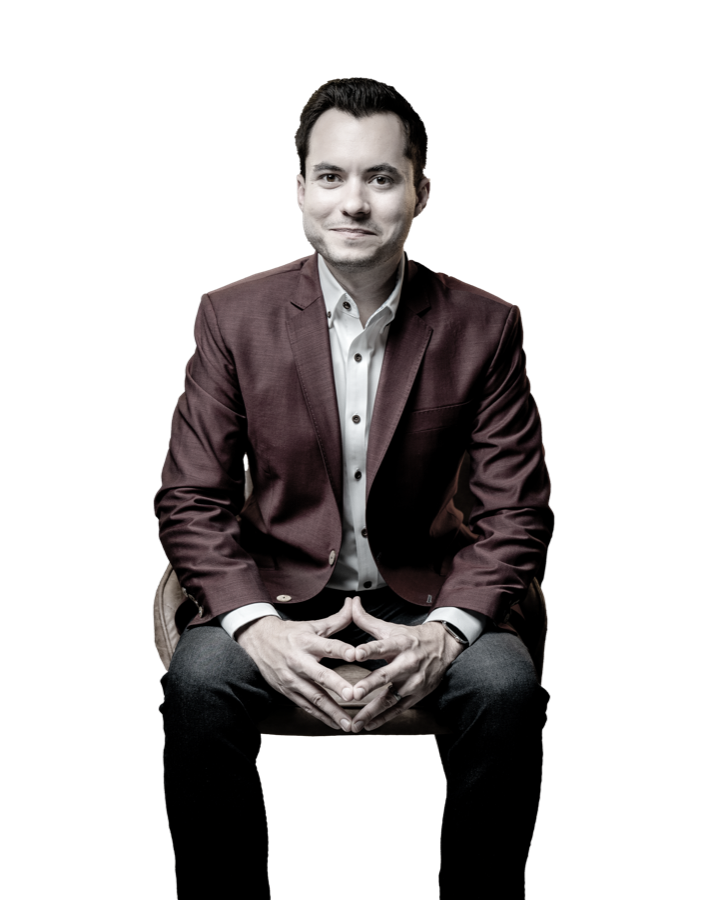
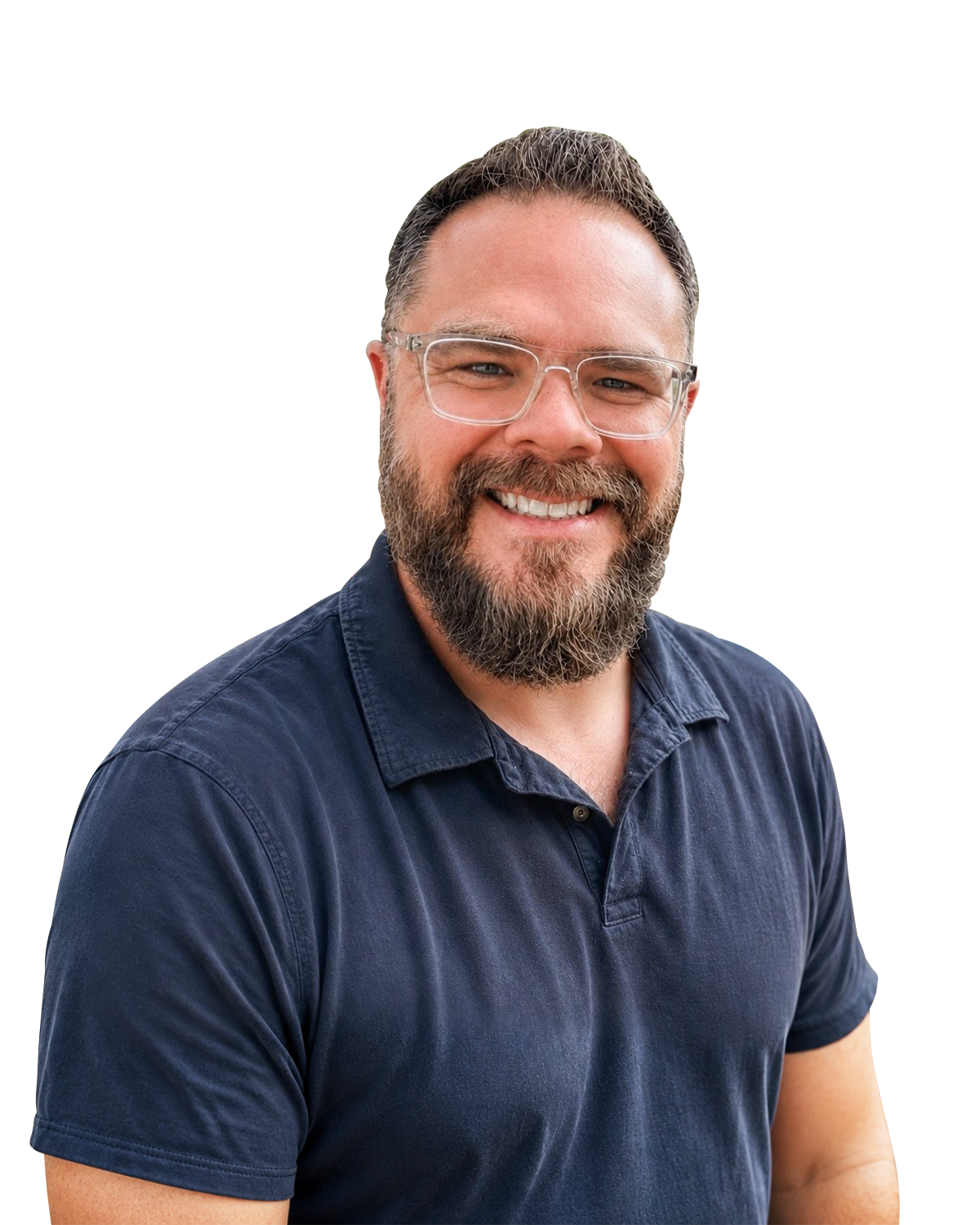
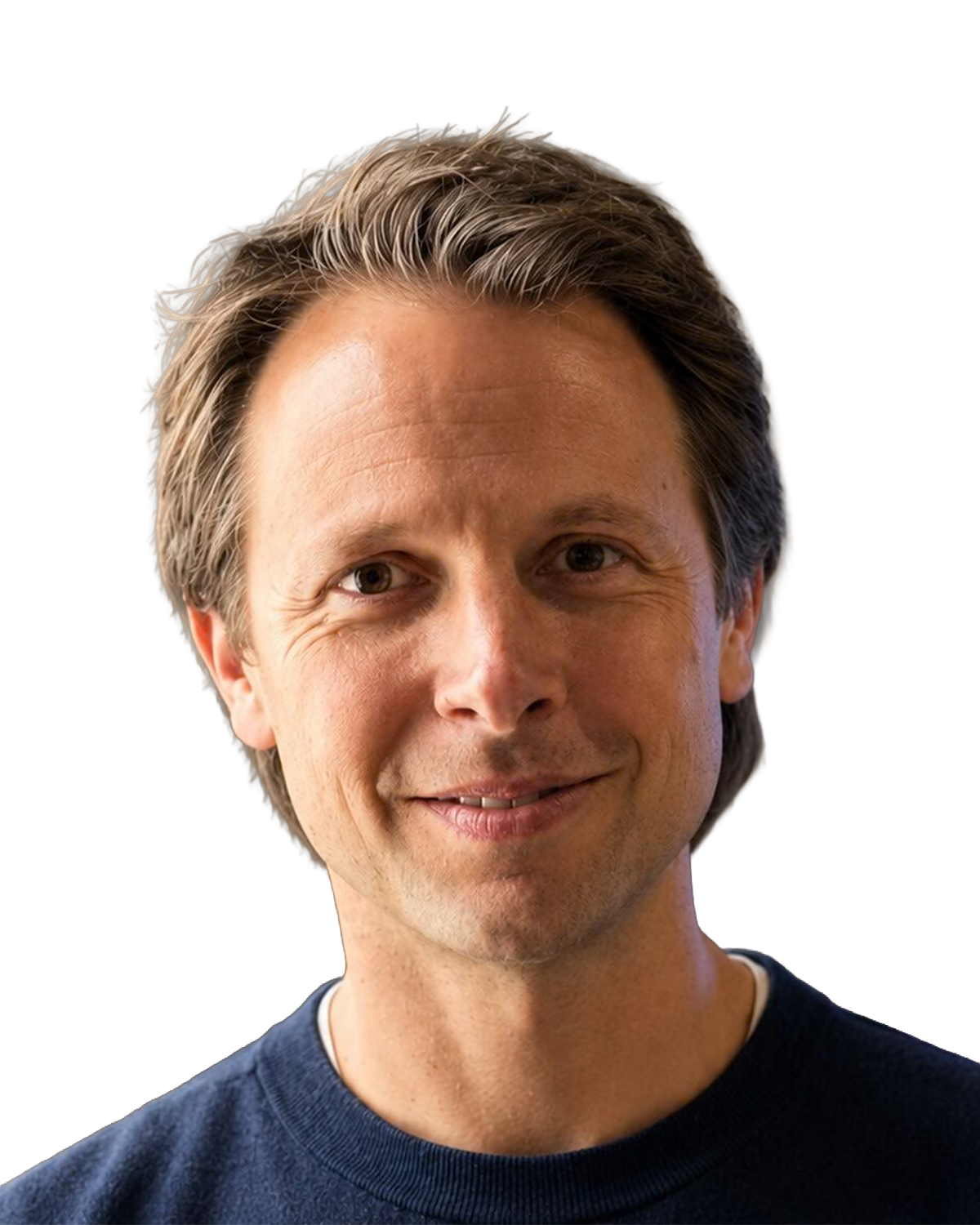
Kevin Stinehart
Third-grade teacher · Play advocate
Kevin Stinehart is a third-grade teacher at Central Academy of the Arts in Pickens County, South Carolina, and a childhood-play advocate featured in chapter 11 of Jonathan Haidt's The Anxious Generation. He founded his school's Let Grow Play Club and argues that unstructured play is a developmental need, not a want.
Reviewed July 2026Kevin Stinehart teaches third grade at Central Academy of the Arts in Pickens County, South Carolina. He is a District Teacher of the Year, a South Carolina State Teacher of the Year candidate, and a Golden Apple Award winner, and he is featured in chapter 11 of Jonathan Haidt's The Anxious Generation. An elder millennial who grew up playing outside until the streetlights came on in West Michigan, he came to the classroom by a winding road, after an undergraduate degree in film and video production and a childhood of struggling in school with undiagnosed ADHD.
Now in its seventh year, the Let Grow Play Club he founded runs on the model from the nonprofit Let Grow, with no budget and no curriculum. An adult opens the playground before and after school and lets children play. His argument is plain and, to many schools, still countercultural: play is not a reward to be earned but a developmental need, and much of what gets labeled a behavior problem is really a design problem, a consequence of school systems not built around how children actually develop.
On The Ryan Vet Show, Kevin makes the case that we engineered the friction out of childhood and then acted surprised when kids could not handle it. The data is the part that stops people. After the Play Club started, physical incidents at his school fell from about 65 in one year to 32 the next, and the school earned 100 percent parent approval on its report card, a number that almost never appears in public education.
The clearest case Kevin tells is a boy who arrived with a chip on his shoulder and a stack of office referrals, his recess taken away as punishment week after week. Kevin invited him to Play Club instead. For the first hour the boy stood at the edge with his arms crossed. Then someone kicked him a ball, he kicked it back, and by the end of the session he was laughing. The referrals stopped, and he never had another one at the school. Kevin reads a story like that against how other countries build the day, Finland's 45-15 rhythm of 45 minutes of instruction and 15 of recess, and the American Academy of Pediatrics guidance of 60 minutes of play a day. A lot of what gets counted as a behavior problem, he argues, is a child doing what a developing brain is wired to do inside a schedule that never made room for it.
The conversation connects directly to Ryan's Loss of Friction thesis: every scraped knee and every game where the rules break down is a rep, and it is in those reps that children build the capacity to adapt. Kevin's fix costs nothing. Stop being the cruise director, he says, and start being the park ranger, there to cultivate what is already growing rather than control it. It is also why he argues the case matters more in the age of AI, not less. The capacities play builds, creativity, adaptability, and self-direction, are exactly the ones that grow more valuable as machines take over the routine work.
Protection can turn into overprotection.
A lot of our behavior issues are not necessarily behavior issues. They're just a consequence of school systems not being designed around healthy child development.
Look at yourself more as like a park ranger. I'm here not to control the wildlife, I'm just here to cultivate what's growing.
Who is Kevin Stinehart?
Kevin Stinehart is a third-grade teacher at Central Academy of the Arts in Pickens County, South Carolina, and a childhood-play advocate featured in chapter 11 of Jonathan Haidt's The Anxious Generation. He founded his school's Let Grow Play Club and is a District Teacher of the Year and Golden Apple Award winner.
What is the Let Grow Play Club?
The Let Grow Play Club is a before- and after-school program with no budget and no curriculum, based on the model from the nonprofit Let Grow. An adult opens the playground and lets children play freely, including the mixed-age play that Kevin argues rebuilds skills structured time cannot.
What does Kevin Stinehart believe about recess and play?
That play is a developmental need, not a want, and that many childhood behavior problems are really design problems, the result of school systems not built around healthy child development.
Does unstructured play actually reduce behavior problems?
At Kevin's school, physical incidents dropped from about 65 in one year to 32 the next after the Play Club started, and the program earned 100 percent parent approval on the report card.
Where can I hear Kevin Stinehart's interview?
On The Ryan Vet Show, in the episode Rebuilding Recess and Why Play Is a Developmental Need, Not a Want, available on the show page, YouTube, Apple Podcasts, and Spotify.
A clip from Kevin's conversation, replayed later in the show. Not a separate appearance.
Read the thinking behind every episode.
Join 23,000+ leaders reading Every Tuesday at 4pm ET.
Check your inbox to confirm. The next COLLIDE lands Every Tuesday at 4pm ET.