We engineered the friction out of childhood, then acted surprised when kids could not handle it.
Kevin Stinehart teaches third grade at Central Academy of the Arts in Pickens County, South Carolina, and is featured in chapter 11 of Jonathan Haidt's The Anxious Generation. A District Teacher of the Year and Golden Apple Award winner, he founded his school's Let Grow Play Club: a before and after school program with no budget and no curriculum, where he opens the playground and lets kids play.
In this conversation with host Ryan Vet, Kevin makes the case that play is not a want but a developmental need. They dig into what happens when you give children back unstructured time, why many behavior problems are really design problems, and why the creativity play builds matters more in the age of AI, not less. Ryan ties it to his Loss of Friction thesis: the friction of real play builds capacities kids cannot learn any other way.
Play is a developmental need, not a reward to be earned. Removing unstructured time removes the friction where kids build real capacities.
The Let Grow Play Club runs on no budget and no curriculum. You open the playground before and after school and let kids play.
After the club started at Kevin's school, physical incidents dropped from about 65 to 32 in a single year, with 100 percent parent approval on the report card.
Many behavior issues are not behavior issues. They are a consequence of school systems not designed around healthy child development.
Finland runs a 45-15 model all day, 45 minutes of instruction and 15 of recess. The American Academy of Pediatrics recommends 60 minutes of play a day.
Plain-language definitions for the ideas in this episode. Structured for search and AI answers.
A before and after school program with no budget and no curriculum, where an adult opens the playground and lets children play freely.
In this episode: Kevin founded his school's club; incidents fell and parents approved.
The idea that removing every obstacle and difficulty from life also removes the formation of character, resilience, and skill.
In this episode: Play is where kids meet the friction that builds capacities they cannot learn any other way.
Finland's schedule of 45 minutes of instruction followed by 15 minutes of recess, repeated throughout the day.
In this episode: Offered as a contrast to the American approach to recess.
A mindset for adults: cultivate and protect what is growing rather than control or entertain it.
In this episode: Kevin's image for the shift teachers and parents need to make around play.
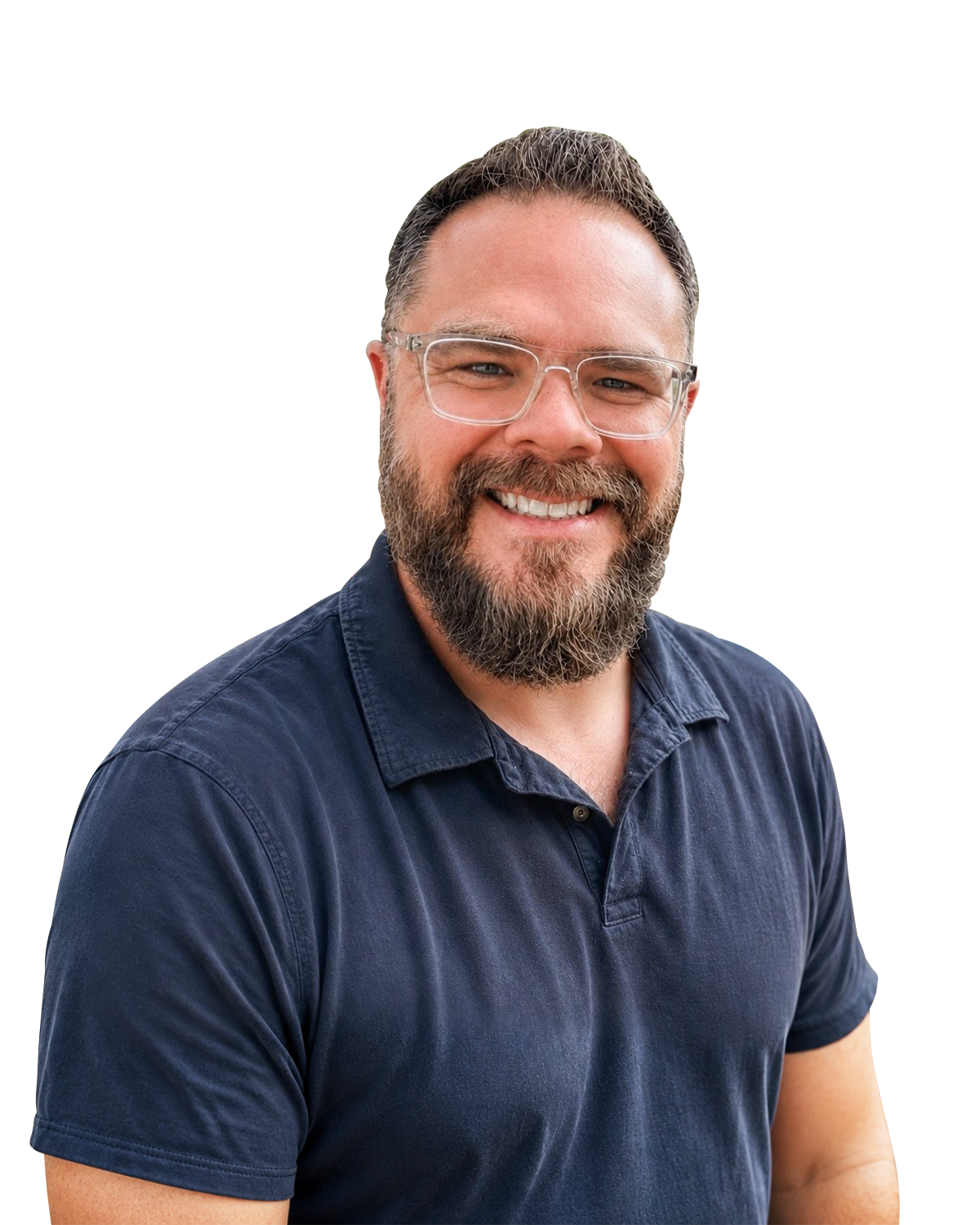
Kevin Stinehart
Third-grade teacher · Play advocate
Kevin Stinehart is a third-grade teacher and play advocate featured in Jonathan Haidt's The Anxious Generation. His work focuses on rebuilding recess and unstructured play as a developmental need, not a want.
Who is Kevin Stinehart? +
He is a third grade teacher at Central Academy of the Arts in Pickens County, South Carolina, a District Teacher of the Year and Golden Apple Award winner, and the founder of his school's Let Grow Play Club. He is featured in chapter 11 of Jonathan Haidt's The Anxious Generation.
What is the Let Grow Play Club? +
It is a before and after school program with no budget and no curriculum. An adult opens the playground and lets children play without structure, which Kevin argues rebuilds skills that structured time cannot.
Does unstructured play actually reduce behavior problems? +
At Kevin's school, physical incidents dropped from about 65 to 32 in a single year after the club started, and the program earned 100 percent parent approval. He argues many behavior issues come from systems not designed around how children develop.
Why does play matter more in the age of AI? +
Kevin and Ryan argue that the creativity and adaptability unstructured play builds become more valuable as AI automates routine work, not less.
Full show notes
We engineered the friction out of childhood, then acted surprised when kids could not handle it. Kevin Stinehart, the third grade teacher and play advocate featured in chapter 11 of Jonathan Haidt’s The Anxious Generation, joins The Ryan Vet Show to make the case that play is not a want. It is a developmental need.
Kevin Stinehart teaches third grade at Central Academy of the Arts in Pickens County, South Carolina. He is a District Teacher of the Year, a South Carolina State Teacher of the Year candidate, and a Golden Apple Award winner. He also founded his school’s Let Grow Play Club, a before and after school program with no budget and no curriculum. He opens the playground and lets kids play. In this conversation with host Ryan Vet, Kevin walks through what happens when you give children back unstructured time, and why the results are anything but soft.
The data is the part that stops people. Inside the Play Club, physical incidents dropped from about 65 in one year to 32 the next, cut by more than half. The school hit 100 percent parent approval on its report card, a number that almost never happens in public education. And Kevin reframes the behavior conversation entirely. A lot of what gets labeled a discipline problem, he argues, is really a design problem. The third grader who cannot sit still after an hour of math is not misbehaving. He is doing what a developing brain is wired to do inside a system that was never built around healthy child development.
Ryan connects this directly to his Loss of Friction thesis. Every scraped knee, every argument with a friend, every game where the rules break down is a rep. That is where kids build the capacity to adapt. Remove the friction and you remove the practice. Kevin’s fix is not expensive, it is a mindset shift: stop being the cruise director, start being the park ranger. As he puts it, he is not there to control the wildlife, he is there to cultivate what is already growing.
The conversation closes on why this matters more now, not less. AI will do the fast, factual work faster than any human brain. The capacities built through play, creativity, adaptability, and self direction, are exactly the things that get more valuable from here. Play was never frivolous. It is how kids become capable.
In this episode:
Why protection can quietly turn into overprotection, and how to tell the differenceThe Let Grow Play Club model: no budget, no curriculum, just unstructured play before and after schoolThe data behind the club: physical incidents cut from about 65 to 32 in a single year, and 100 percent parent approval on the school report cardWhy a lot of behavior issues are not behavior issues at all, but a consequence of school systems not designed around healthy child developmentFinland’s 45-15 model: 45 minutes of instruction, 15 minutes of recess, all day longThe American Academy of Pediatrics recommendation of 60 minutes of play a dayThe park ranger versus cruise director mindset for parents and teachersHow friction in play builds the capacities kids cannot learn any other wayWhy play and the skills it builds, creativity and adaptability, become more important in the age of AI, not lessWhat it means to treat play as a fundamental need rather than a reward to be earnedReferenced in this episode:
The Anxious Generation by Jonathan Haidt (Kevin is featured in chapter 11)Let Grow: letgrow.orgCentral Academy of the Arts, Pickens County, South CarolinaFinland’s 45-15 recess modelAmerican Academy of Pediatrics: 60 minutes of play a dayConnect with Ryan Vet:
Website: ryanvet.comCOLLIDE Newsletter: ryanvet.com/collideLinkedIn: linkedin.com/in/ryanvetInstagram: instagram.com/ryancvetBook Ryan as a Keynote Speaker: ryanvet.com/generational-speakerSubscribe to The Ryan Vet Show on Apple Podcasts, Spotify, YouTube, and wherever you get your podcasts. The guest era continues every Monday at 6am ET. Next week: Lenore Skenazy, founder of Free Range Kids and president of Let Grow, on why we stopped trusting kids with independence and how to give it back. The COLLIDE essay podcast continues every Thursday at 7am ET.
Send us Fan Mail
About Ryan VetRyan Vet is a USA TODAY bestselling author, futurist, and international keynote speaker whose insights on generations, culture, and the future of work have been featured in Forbes, Financial Times, ABC, NBC, and CBS. His research helps leaders understand emerging generational patterns and anticipate societal shifts before they fully unfold.
Join 20,000+ Leaders for Weekly InsightsIf you want deeper research and behind-the-scenes insights on generations and the future of culture and society, join Ryan’s weekly newsletter: 👉 https://ryanvet.com/collide