

Jared Cooney Horvath
Educational neuroscientist · Director, LME Global
Jared Cooney Horvath, PhD, MEd, is an educational neuroscientist and the director of LME Global, where he translates learning research for teachers, students, and schools. He is the author of The Digital Delusion, which argues that classroom technology is the reason Gen Z is the first generation on record to score lower than its parents on measures of cognition. In January 2026 he testified before the US Senate that getting phones out of schools is only step one, and that the laptops need the same scrutiny.
Reviewed August 2026Jared Cooney Horvath is a teacher turned neuroscientist. He started in the classroom teaching grades 6 through 12, went to study the brain during what he calls the decade of the brain so he could bring the science back to his students, and has now spent about 16 years in academia. He earned a master's in mind, brain, and education from Harvard, did a research fellowship at Harvard Medical School under Alvaro Pascual-Leone, and completed a PhD in cognitive neuroscience at the University of Melbourne. He lectured at the Melbourne Graduate School of Education from 2013 to 2024 and remains an honorary researcher at Melbourne and at St Vincent's Hospital Melbourne. He is the director of LME Global and the creator of The Learning Blueprint.
He built his reputation debunking overclaims rather than making them. His most-cited work found no reliable cognitive benefit from transcranial brain stimulation, directly against the commercial hype of the mid 2010s, and he has spent years pushing back on pop neuroscience that outruns its evidence. He now applies the same standard to educational technology. His argument is not that screens are distracting. It is that student-facing, internet-connected devices conflict with the mechanics of learning itself, which he calls a category problem rather than a software problem. He describes himself as pro-rigor, not anti-tech, and draws a hard line between teacher-facing technology, which he considers largely fine, and one-to-one student devices, which he does not.
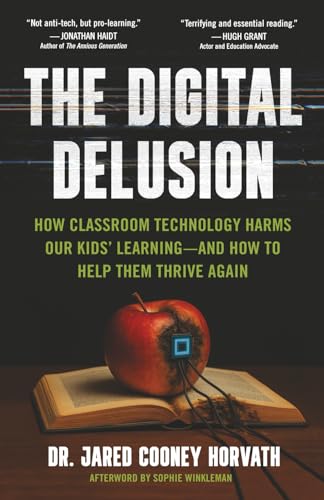
His book The Digital Delusion was self-published in December 2025 and is re-released by Harmony, an imprint of Penguin Random House, on August 18, 2026, with roughly 25% more material. In January 2026 he testified before the US Senate Commerce Committee on technology in schools, arguing that removing smartphones is only the first step. He writes the Substack The Digital Delusion and posts learning research to his YouTube channel.
On The Ryan Vet Show, Jared Cooney Horvath makes the case that the decline in Gen Z's cognition is not a mystery. Cognitive measures have been recorded since the late 1800s, and every generation had outperformed its parents on literacy, numeracy, working memory, executive function, and IQ. School was the engine, and each generation spent more time in it. Gen Z spends more time in school than the generations before it and is the first to move backward, which means something decoupled cognitive development from schooling. His argument is that the something was the technology.
The mechanism he keeps returning to is transfer. Learning only travels in one direction, hard to easy. You learn to handwrite before you type and to do arithmetic before you reach for a calculator. Technology exists to remove friction, so a child who starts easy has nowhere harder to go. That leads to his distinction between offloading, what an expert does when they hand a task to a tool they could do themselves and can immediately vet, and outsourcing, what a novice does with no knowledge of the process and no ability to judge the result. His illustration is a rented e-bike that runs out of battery. The fit rider pedals home. The unfit rider calls an Uber.
He and host Ryan Vet work through AI tutors, which he says produce most of their measured gains on the tutor itself and little that survives off the program, the way physiological synchrony with a human teacher drives learning at an effect size of 0.68 with no equivalent on a screen, and why creativity grows out of knowledge rather than replacing it. He is blunt that AI has no place in K through 12, and he is hopeful about the reversal, noting that proposed state ed tech bills went from 3 to 31 in seven months. Asked whether it is too late for Gen Z, his answer is immediate: heck no.
They won't learn facts, they won't learn skills, they'll just learn dependence on the tool.
It takes human beings a couple years to learn how to speak, but it takes them decades before they have anything meaningful to say.
Your generation uses technology. My generation invented technology, which means it represents our way of thinking way more than it represents yours.
Who is Jared Cooney Horvath?
He is an educational neuroscientist and the director of LME Global, a teacher turned researcher who studies how humans learn. He holds a PhD in cognitive neuroscience from the University of Melbourne and a master's in mind, brain, and education from Harvard, and he lectured at the Melbourne Graduate School of Education from 2013 to 2024. He is the author of The Digital Delusion.
What is The Digital Delusion about?
It lays out the data showing that student outcomes fell as technology entered education, and then explains the mechanisms behind it. Horvath's central claim is that classroom technology conflicts with how humans actually learn, which makes it a category problem rather than a software or teacher-training problem. It was self-published in December 2025 and re-released by Harmony on August 18, 2026, with about 25% more material.
Is Jared Cooney Horvath anti-technology?
No. He describes himself as pro-rigor rather than anti-tech, and he draws a line between teacher-facing technology and student-facing devices. PowerPoints, whiteboards, and smart boards driven by a teacher are fine by his standard. One-to-one student laptops and internet-connected devices in the hands of children are where he says learning collapses. He is fine with a locked-down computer lab where kids go to learn the tool itself.
What did Jared Cooney Horvath tell the US Senate?
He testified in January 2026 that getting smartphones out of schools is only step one. His point was that the common assumption, that phones are the danger and laptops are still fine for learning, is wrong, and that the rest of the classroom technology needs the same scrutiny. He has since pushed back on how his line about Gen Z being less cognitively capable was flattened in coverage, stressing that it describes a documented reversal in generational cognitive trends, not an innate deficiency.



Read the thinking behind every episode.
Join 23,000+ leaders reading Every Tuesday at 4pm ET.
Check your inbox to confirm. The next COLLIDE lands Every Tuesday at 4pm ET.