America Turns 250 - They Signed the Declaration Without Agreeing
That room in 1776 turned two men into enemies. Fifty years to the day, something happened.
 Ryan Vet
·
Ryan Vet
· 
The Pennsylvania State House stood on Chestnut Street in red Georgian brick on a cool July morning in 1776. It was 68 degrees at dawn, recorded by Thomas Jefferson, who kept a weather diary for fifty years (Jefferson Weather Records, Library of Congress). Inside, 56 opinionated men from all walks of life argued, anticipating the prospect of freedom and a better future than the one they were living in.
One of the stories that is seldom told is that two of those men, with incredible differences between them, chose to be united in that room. They would go on to spend the next five decades as enemies, two future presidents who stopped speaking to each other for eleven years. But on that day, in that room, they chose to be united for the greater good. Hold that thought. We will come back to them.
When we think of July 4th, 1776, we remember the signatures, the bold, oversized autograph of John Hancock, the lines we had to memorize in school. We seldom remember the human beings behind the words endorsed in that sweaty room, or what they actually wanted for the society they were building. These were men who wanted the future to be better for the next generation than the moment they were standing in.
We all want that. Our parents wanted it for us, and their parents wanted it for them, and the men in that room wanted it for a country they had been dreaming up. It is the reason I write what I write, whether the subject is screen time, or social media, or the fragility we keep seeing in our kids, or the housing a generation cannot break into, or the elder care crisis bearing down on so many families. Different subjects, one instinct. We are all trying to hand the next generation a better path than the one we were given. It is the oldest American instinct there is, older than America itself.
This year, in anticipation of the 250th anniversary of the United States, I started digging into the founding the way I dig into every generational study. At the core of my findings, I found a group of people that were united. Not uniform. United. That distinction is potentially the most significant part of our origin story, and yet it seems to be the one we have most forgotten.
Let me take you back to 1776 in a way you have probably never seen it. Not the painting. Not the 1,320-word Declaration of Independence. The people.
The room was united, not uniform.
The signers of the Declaration of Independence ranged in age from 26 to 70, with the average man around 44 (National Archives). Benjamin Franklin was the oldest, clocking in at 70-years-old. Edward Rutledge of South Carolina was 26. More than two generations stood shoulder to shoulder. Some were born in the 13 colonies, and some had stepped off ships from England, Scotland, Ireland, and Wales and were new to America. Some touted prestigious degrees from Harvard and Yale, and some never spent a day in a classroom past grade school. Lawyers and merchants and physicians and ministers and planters, men of different faiths and fortunes and convictions about how a people should be governed. Nearly every perceivable excuse to disagree was present in that room. And yet they remained united, toward a common goal, toward a better collective whole.
If you are like me, when you imagine the signing of the Declaration of Independence, you picture John Trumbull’s painting, the one on the back of the two-dollar bill, the calm and orderly men in powdered hair and frilled collars, signing in complete agreement. But Trumbull was not in the room. The image we inherited of that day is not the most accurate one. By most accounts, the debates leading up to the signatures was not calm, compliant, agreement.
Congress had appointed five men to draft the document. History named them the Committee of Five: Adams, Sherman, Livingston, Franklin, and Jefferson. They kept no minutes. We do not know exactly who said what. What we do know is that the youngest of the five, Jefferson, was only 33.
You would think the pen would have gone to the most prolific writer in the room. Benjamin Franklin was publishing as a teenager, under the pen name Silence Dogood, before he ever ran his own paper or published an almanac. He stepped forward as a leader his whole life. But Franklin understood something we seem to have lost today. He knew when leadership meant stepping up, and when it meant stepping back to let a younger person take the lead. That restraint Franklin demonstrated is its own kind of power, and a lesson in itself. I could have written this whole essay on it.
So the pen went to Jefferson, and when his draft came back, only a few words had changed. Most notably, he had written that certain truths were “sacred and undeniable,” and later refined those words to say, “self-evident.” The historian Carl Becker noted it was the only correction Jefferson made before he even showed the draft to Adams (Becker, 1922). It is a small change that carries the whole argument. A “sacred” truth is one you receive on authority, namely from a higher power. A self-evident truth is one that any reasoning person can see for themselves (Zuckert, 1987). The common ground was never meant to require that we all believe the same things. It only required that we be willing to reason together.
Not everyone agreed on how to solve the problems or how to reach freedom. New York abstained from the vote. John Dickinson would not sign at all. Jefferson signed even though his own passage condemning the slave trade was struck out in the hope of holding the coalition together. And still, most of the room found its way to common ground that was already there, not because the differences stopped mattering, but because the central goal mattered more.
One essay every Tuesday on how the generations are colliding, from Ryan Vet. Join 24,099 leaders. Free.
In humans we trust.
One of humankind’s oldest struggles is that we so often put our trust in other humans. And here is a little acknowledged truth: humans are imperfect. The founders knew it and they wrote it into the document itself. “Governments,” they said, are “instituted among men.” Among men. They admitted their own humanness on the page; in the same breath, they used to declare a nation. We are flawed human beings, looking at life through our own lenses, through our own experiences, and our own unique perspectives.
The founding fathers wrote that “all men are created equal.” And yet, 41 of the 56 who signed owned slaves at some point in their lives. They held other human beings in bondage and yet simultaneously inscribed their names beneath the line “all men are created equal.” The promise was freedom. The practice was not.
It took almost a century, and a war between North and South that cost more American lives than any before or since, to begin closing that distance. It took a proclamation freeing the enslaved, and an address at Gettysburg asking whether “a nation conceived in liberty could long endure.” And almost 200 years after the signing, a man stood on the steps of the Lincoln Memorial and read the country its own sentence back, “all men are created equal,” calling it a promise the nation had made and had not kept for its Black citizens (King, 1963).
Many have alluded to the USA as the Great American Experiment. An experiment, in and of itself, is an observation, a hypothesis, and a test run to reach a conclusion. These men made their observation, wrote their hypothesis about how free people might govern themselves, and signed their names to the test. We do our best to run controlled studies, but there are always variables outside of our control. The biggest variable is the human factor. People are messy. Our greed, our pride, our ego keep whispering that our way is plainly better than theirs. Our humanness converts our differences into an us-versus-them battle.
And history keeps repeating itself. We saw a need to bring people closer, so we gave them smartphones and social media with the promise of better communication, more connection, and more closeness. Yet, we have never been more lonely. The modalities have evolved. The human factor has not.
Every generation is trying to fix the one before it.
Every generation is formed by forces it did not choose, reacts against what it feels is unjust, overcorrects, and hands its children a fresh set of problems to correct in turn. If you have been around this newsletter, or my speaking, or my writing for any amount of time, you know this as the Generational Pendulum. It never stops swinging.
Gen Alpha is being formed with artificial intelligence as familiar to them as the air. Gen Z grew up as digital natives in a way no generation before them could be. Millennials were tossed in the churning waves of rapid technological advancement. Gen X had one of the freest childhoods on record, which was itself a correction against the rigid, unaffectionate parenting many Boomers were handed, in homes where a child could feel more like a utility than a joy.
Each of us looks at how we were raised, decides what to do differently for the future. We correct, and often overcorrect. Then our kids inherit the overcorrection and correct again. We are all just trying, with the tools we were handed, to give our children something better than we felt that we received.
It was never I versus we.
Each man in Congress that day in 1776, inside that Georgian brick house on Chestnut Street, saw himself as one part of a whole. His opinion mattered, and he knew it, and he argued hard for it. But he did not mistake his opinion for his purpose. That is something our society seems to have lost.
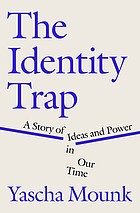
The political scientist Yascha Mounk has a name for one version of what replaced it. He calls it the “identity trap,” the moment we let the category stand in for the person (Mounk, 2023). It is not a left problem or a right problem. Every camp falls into it. We have started deciding, before a single word is exchanged, that if you do not share my politics, my faith, my race, my way of living, then there is nothing between us worth building. We lead with the label and never reach the human underneath it.
The men in that Philadelphia room did the opposite. They chose to lead with a shared and united front, and not lead with the many labels that they each carried across the threshold of that room. For instance, Charles Carroll was the only Catholic to sign the Declaration. He was also regarded as the wealthiest man in all the colonies. When he put his name on that document, it was against the law for a Catholic to vote or hold office in his own colony. The richest man in the room could not legally have held the office his signature helped create, and he signed anyway.
John Witherspoon was not even born in America. He was a Scottish-born Presbyterian minister, an immigrant, and a clergyman. He was both an outsider by birth and by creed. Put that same room together today and they would likely walk in wearing the label first: the Catholic, the immigrant, the minister. But in 1776, they shed their labels and identities for a greater good. They walked in as citizens of a shared experiment, and they led with that.
Here is the irony I cannot get past. Gen Z and Millennials, more than any generation before them, say they want to belong to something bigger than themselves. Survey after survey illustrates that they want their work to mean more than a paycheck. And yet, as a society, we have never been more consumed by the self, by our race, our sexual preferences, our political party, our religion or lack of one. We are so wrapped up in our identity label that we cannot climb out long enough to find the bigger thing we say we want. The founders did the hard version of exactly what we claim to be after.
And they did not do it by going quiet on their convictions. This is the part worth slowing down for. They did not sacrifice their positions. They separated their identity from their position. Who they were was not the same as what they believed. Underneath every fight, who each of them was, was a citizen of the same new country. You can hold your ground and still refuse to make the person across from you your enemy. They proved it. Two hundred and fifty years later, we seem to have forgotten it.
The two men I asked you to hold in your mind a moment ago found common cause in that room, and then spent the next fifty years becoming enemies.
We still agree more than we are told.
Here is the good news. In a Gallup survey from May of 2026, 69% of Americans said the country has achieved at least a fair amount of its founding ideals, a majority that held across party lines and age groups (Gallup, 2026). Roughly 9 in 10 say the right to vote, equal protection under the law, and freedom of speech are core to who we are (AP-NORC, 2024). Ask the average American what unites us, and the most common answer is, simply, freedom (AP-NORC, 2026). That should be a glimmer of hope. Humankind agrees more than it disagrees. We have just built a world that profits from hiding it. The algorithm feeds you what you love or what you hate, because both keep you scrolling. You get sucked into an echo chamber of the polar opposite sides of society. The middle ground topics are rarely trending. And yet, it is still the ground most of us are standing on.
Those 56 men walked into that room looking for the middle ground, not for opposing sides. Today, it feels like so many walk in with their fists up or swords drawn, hunting for what divides us. We have it backwards.
Somewhere, we forgot that sameness was never the design. No two fingerprints match. No two strands of DNA. Nothing in nature repeats itself exactly, and yet we have decided that everyone should think the same, vote the same, even say the words the same way.
Let me be my own example. Earlier in this piece, I wrote “slave owners,” not “enslaved people,” very intentionally, to prove a point now. Some of you read right over it and did not think twice. Some of you have continued reading with gritted teeth, angry I used that phrasing. And, there could be a few that have read this far because of it. For some readers, that single word choice was all the proof they needed to declare which “side” I must be on. But the conviction underneath my phrasing and the conviction underneath the phrasing you would have chosen are the same. We agree completely, and still found a way to fight over how it was said.
We do the same thing with the three attributes of a free life the founders named in one breath. The polls cited earlier affirm that most Americans still believe in “life, liberty, and the pursuit of happiness.” We just each interpret them to benefit our own side.
Take liberty. The two men at the center of this essay both signed their names beneath that word, then spent fifty years disagreeing about what it asked of them. Adams feared a republic could die of too much liberty, a people with no check on themselves. Jefferson feared it could die of too little, a government that forgot who it answered to. Same word. Same pledge. Two definitions they never reconciled.
We still do it, only now we each pull a different word from the same sentence. Our hardest fight is two people doing exactly that. One stands on life, the life of the unborn. The other stands on liberty, a woman’s claim to her own body. Both are holding a word the founders wrote side by side. They are not even arguing about the same promise, and each is sure the other is in bad faith.
Money divides us along a different word: “equal.” One American hears equality, the same ladder and the same rules for everyone, and cries out the moment the rungs get moved for some and not others. Another hears equity, a floor beneath everyone so no child starts the climb in a hole. Both are standing on the same four words, “all men are created equal.” One reads them as a rule we apply to each other. The other reads them as a debt we owe each other. So which is right?
The “pursuit of happiness” splits the same way, along a different seam. To the generation raised after the Depression, it meant provision, a house and a job that held steady. To Millennials, work you could build a life around that you are in control of. To Gen Z, happiness may mean an escape from the noise and constant oversight in which they were raised. None of these pursuits is inherently wrong. They are reading the same three words from different moments. We perceive them differently, and we do not have to resolve that to remain one people.
We do not have to be uniform. We have to be united.
Oneness does not require complacency.
Now, hear me clearly. This is not a call to be complacent. The founders were anything but complacent. They argued until they could not argue anymore, and then they found the middle ground they could, knowing it was an imperfect middle. The document itself states: “it is the Right of the People to alter or to abolish it,” meaning the government if it becomes destructive. The government “deriv[es]…powers from the consent of the governed.”
Notice the words “People” and “governed.” These refer to the collective whole. Not my side or your side. Not left or right or conservative or progressive or rich or poor. The people. All of us. Humans.
These are the debates pulling us apart right now, in our politics and at our own dinner tables. They are real, and they are hard. But they are not a fight over whether liberty matters, or whether happiness matters. We agree on the words. We are fighting over the meanings, and we have talked ourselves into believing the fight makes us enemies.
The middle is the place you find, not the thing you build.
We talk about the middle as if it is gone, as if it has to be rebuilt from nothing. It was never gone. It is right where it has always been. We have just stacked walls in front of it. We have piled on our labels, assumed our identities, and waved our flags so proudly that we can’t even hear the rational arguments in the middle. We’ve drawn battle lines instead of finding common ground.
The work is not to build a middle. It is to stop building walls. When was the last time someone sat at your table who shared none of it, your politics, your faith, your background, not to be converted or debated, just to be a neighbor?
I have a friend like that. On paper, we should not be friends. Our religions are different, our skin tones are nothing alike, our diplomas are several degrees apart, and we were raised in worlds that look nothing like each other. We disagree about a long list of things, not in theory, but in how each of us has chosen to live. And still, we look forward to seeing each other. There are certain topics that we tread lightly on, but we don’t shove those down. We have healthy conversations and realize that we may never agree, but that does not prohibit us from being friends. There is his side, there is mine, and there is what is actually happening.
Two men, fifty years.
Which brings me back to the two I left in that room.
John Adams and Thomas Jefferson built the Declaration together. Adams fought for it on the floor of Congress. Jefferson held the pen. And the moment the common enemy was gone, they turned on each other. Two bitter elections, Adams beating Jefferson in 1796, Jefferson beating Adams in 1800, Federalist against Republican, a rivalry so personal that the two signers stopped speaking for 11 years. These were not men who agreed on much. They disagreed about the size of government, about France and Britain, about what the American Experiment was even for.
And then, as old men, one of them picked up a pen and wrote to the other. The letters did not stop. Historians note that more than 150 letters were exchanged across the last fourteen years of their lives, two former enemies arguing, remembering, needling, and forgiving. They never did come to agree on most of it. That is the part I want you to walk away from this (very long) essay with. The reconciliation did not require uniformity. They made their peace without surrendering their positions for the greater good, the very thing they had done as young men in that room, and somehow forgotten in all the years between.
They, and all of the other 54 signers, closed the Declaration of Independence by mutually “pledging to each other their lives, their fortunes, and their sacred honor.” To each other. Two hundred and fifty years ago, two men who could not have been more different made that pledge. Two hundred years ago, they proved they had meant it, not by finally agreeing, but by choosing each other again after everything.
You see, in poetic irony, Adams and Jefferson died on the same day. The 4th of July, 1826. Within hours of each other. Fifty years to the day after they signed the thing that bound them together in the first place.
Despite our differences, we can choose to be united. Not uniform. United. They were strangers to each other in nearly every way we now use to sort ourselves, and they fought like it, and they chose each other anyway. The middle they found is still here. It was never a perfect middle, and it does not have to be. It has been here the whole time. We only have to do the one thing they did. We have to choose it.
Inspire Forward,

Works cited (12)
- 1 Jefferson, T. (1776-1818). Volume 2: Weather record, 1776-1818 [Manuscript/Mixed Material]. Thomas Jefferson Papers, Manuscript Division, Library of Congress. loc.gov ↗
- 2 National Archives. (n.d.). Signers of the Declaration of Independence. U.S. National Archives and Records Administration. Retrieved June 30, 2026, from archives.gov ↗
- 3 Becker, C. L. (1922). The Declaration of Independence: A study in the history of political ideas. Harcourt, Brace and Co. oll.libertyfund.org ↗
- 4 Zuckert, M. P. (1987). Self-evident truth and the Declaration of Independence. The Review of Politics, 49(2), 319-339. jstor.org ↗
- 5 King, M. L., Jr. (1963, August 28). I have a dream [Speech]. March on Washington for Jobs and Freedom, Lincoln Memorial, Washington, DC, United States.
- 6 Mounk, Y. (2023). The identity trap: A story of ideas and power in our time. Penguin Press.
- 7 Kemp, A. (2026, June 24). At 250 years, 77% say U.S. founders would be disappointed. Gallup. news.gallup.com ↗
- 8 AP-NORC Center for Public Affairs Research. (2024a, April 3). Most say democracy is important for the U.S. identity, but few think it is functioning well. apnorc.org ↗
- 9 AP-NORC Center for Public Affairs Research. (2024b). The March 2024 AP-NORC Center poll [Topline results]. apnorc.org ↗
- 10 AP-NORC Center for Public Affairs Research. (2026a, June 8). AP-NORC America 250 poll. apnorc.org ↗
- 11 AP-NORC Center for Public Affairs Research. (2026b). The April 2026 AP-NORC Center poll: America 250 [Topline results]. apnorc.org ↗
- 12 National Park Service. (n.d.). Signers of the Declaration of Independence: Biographical sketches. U.S. National Park Service. Retrieved June 30, 2026, from nps.gov ↗
More on culture and society