The $1.2 trillion communication problem in Corporate America is not a generational issue; it goes much deeper.
Words are incredibly powerful.
In fact, for all of humankind, words have been the predominant way to communicate, whether spoken or written, and they remain one of the clearest distinctions between the human world and the animal world. Words can build up and words can tear down; they can lead to peace, or they can absolutely destroy.
This is true in companies, on teams, within organizations, in communities, in politics, and even in families and marriages. In fact, communication has long been cited as one of the most common contributors to divorce. In one study of divorced individuals, 70% of wives and 59% of husbands cited communication as a contributor to their divorce (Williamson et al., 2016). The disparity between those two numbers, in and of itself, should be telling.
And when you look at unproductivity in the workplace, communication also racks up a big bill. The Harris Poll estimated that poor communication costs U.S. businesses as much as $1.2 trillion annually (Grammarly & The Harris Poll, 2022). Words matter because broken communication is never cheap. It costs trust, productivity, relationships, and in many cases, the future of the thing we were trying to build in the first place.
It is no secret that one of the big areas where we see this is communicating across generations.
Often, I get asked to speak to the different styles and communication modalities across generations, whether that be spoken word, written word, or even perceived attitudes of respect and disrespect in the workplace across generations. Where there once used to be a very clear pecking order in the workforce, a chain of command if you will, it seems that respect has eroded to some level and created a whole new world of confusion.
And to be clear, I am not dismissing the fact that there are real linguistic barriers, real respect barriers, and real communication tool differences between generations. Those are real. Whether you are texting or calling matters. Whether you are writing in Gen Z shorthand matters. Whether one generation hears brevity as efficiency while another hears it as disrespect matters.
Devices, linguistics, respect, and norms are different across generations, and that will inevitably lead to conflict.
But I do not think that is the deepest issue.
What If the Barrier Is Not the Medium?
What if there was no real communication barrier in the workforce? At least, not one primarily caused by linguistics or communication style.
What if the real barrier was our unconscious perceptions of each generation?
That is a bold claim, but I think a large part of our communication block in the workplace has less to do with generations speaking differently and more to do with perception: perception of age, perception of background, perception of work ethic, and perception of whether someone is credible before they have even finished speaking.
In other words, what if the greatest barrier to cross-generational communication is not the words that are said, but how quickly we decide whether the person saying them is worth hearing?
That is the part I think we miss.
A large body of research suggests that perceived similarity affects how positively people respond to one another. Research found that both actual similarity and perceived similarity were strongly associated with interpersonal attraction (Montoya et al., 2008). And that does not stay in the realm of attraction. It shapes credibility too.
In a 2022 study, both liberals and conservatives judged misinformation (yes, inaccurate, untrue content) as more accurate when it came from a political source they felt aligned with (Traberg & van der Linden, 2022). As human beings, we are often inclined to give greater weight to what someone says when we already feel aligned with them, and less weight when we do not. This is not isolated to politics, but it may be one of the clearest illustrations.
That is why I do not think the deepest issue in cross-generational communication is communication style at all. I think it is our subconscious biases that impede our ability to effectively understand one another across generations.
A Word from Our Sponsors
Actionable “how-to’s” for bridging the tax tech gap
One of the biggest challenges facing tax leaders is the shrinking pool of qualified talent.
The Three Sides of Every Conversation
This is a fundamental communication issue across all leadership.
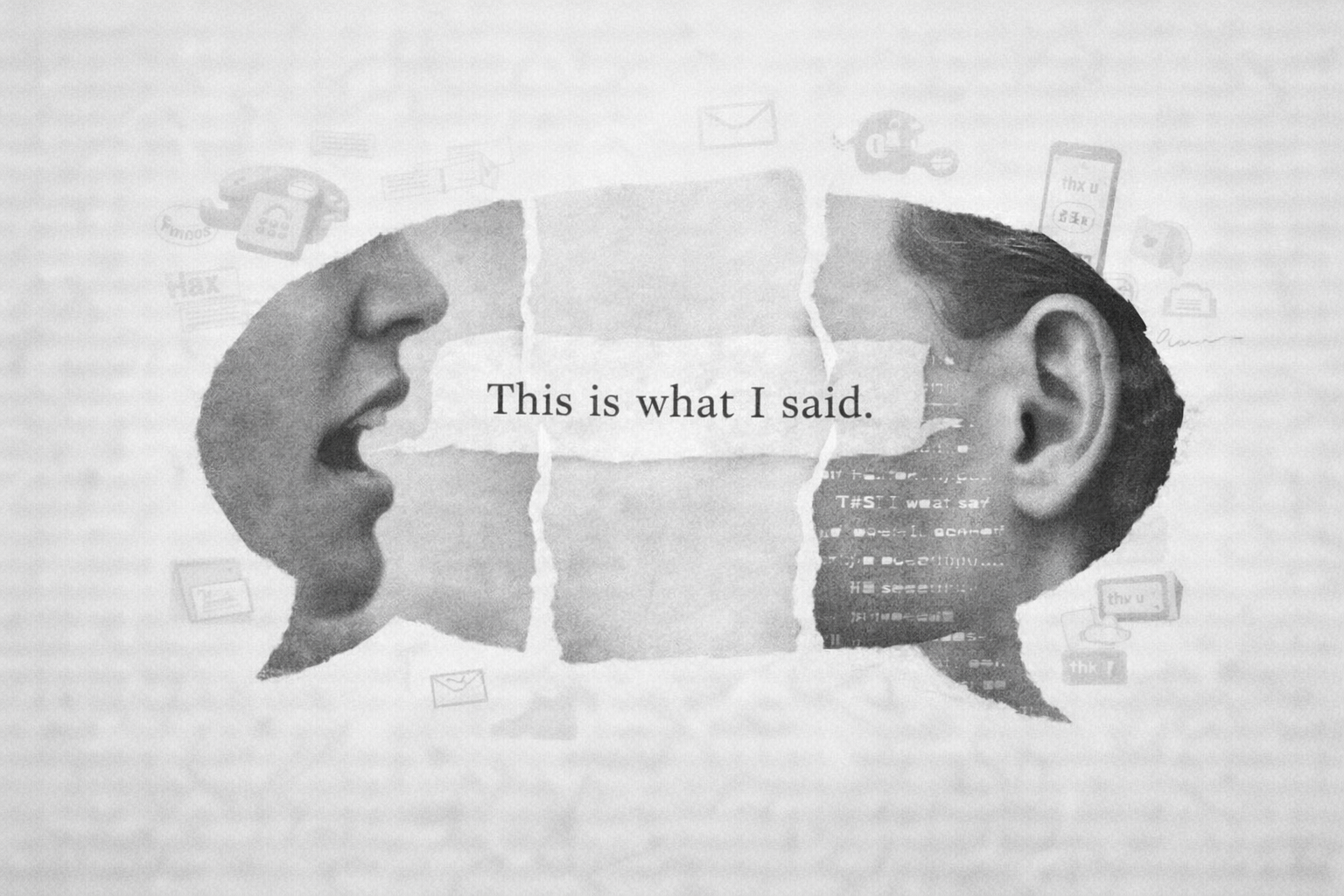
There are at least three things happening in every conversation: what I meant, what was actually said, and what was understood.
Or, as I often think about it, there are three sides to every story: your side, my side, and what actually happened.
I said one thing. The words came out of my mouth. That is what actually happened. What I meant to say might have been different in my own mind, and what you heard might be different than either the words that I said or what I intended to communicate.
That is true in every relationship. It is true in marriage. It is true in leadership. And it is certainly true across generations.
But across generations, those gaps widen because we are not only dealing with different words or different devices. We are dealing with different assumptions, different expectations, and often different levels of trust before the conversation even begins.
So yes, text versus phone call matters. Email versus face-to-face matters. Formality versus shorthand matters. But do not get distracted by the modalities of communication. Do not let that become the whole diagnosis. There is a more fundamental issue underneath it, and that issue is trust.
Trust Precedes Effective Communication
If you do not trust someone, you automatically have a blocker in being able to communicate effectively.
Trust precedes effective communication.
That is why Patrick Lencioni’s framework in The Five Dysfunctions of a Team still resonates so deeply. Trust is the bottom layer. If you do not have trust, you cannot do anything else. You cannot have healthy conflict. You cannot have real commitment. You cannot have accountability. You cannot have results. The entire structure begins to wobble the moment trust is missing (Lencioni, 2002; Table Group, n.d.).
And I think that is where this conversation gets more interesting.
Each generation views trust differently.
Baby Boomers tended to trust what was reliable, stable, and institutional. They trusted what had staying power. A good company, a stable paycheck, a respected title, a proven system. Trust was often tied to reliability.
Gen X is naturally more skeptical. Trust was eroded as they grew up watching institutions wobble and Washington continue to lose credibility. Skepticism became part of the air they breathed.
For Millennials, trust moved toward transparency. They wanted information. They wanted access. They wanted to be in the know. A large part of that stemmed from growing up in a world where information became instantly accessible and where parents often talked with them, not just at them.
For Gen Z, trust has moved further still. It is no longer merely about information. It is about authenticity. Tell me the good, the bad, and the ugly. Lose the filters. Do not fake it. If someone feels polished but hollow, many young adults will dismiss them immediately.
That is not just a difference in style. That is a difference in what each generation uses as evidence that someone is trustworthy.
So there is a trust breakdown. And when there is a trust breakdown, communication is already limping before the first words are uttered.
Respect Has Evolved Too
The same is true of respect. We have redefined who needs to respect whom.
In an earlier book and in many of my talks, I use the example that Baby Boomers often feel greatly disrespected by Millennials because many Millennials moved to a first-name basis and dropped proper titles like “Doctor” or salutations like “Mr. Smith.” To many Boomers, that feels like erosion. To many Millennials, it feels normal.
A large part of that is due to the fact that Millennials grew up with parents as “friends” instead of authority figures, school counselors as peers walking them through trials in school, and coaches who were no longer allowed to demand running laps or incessant push-ups if a player was late or disrespectful, but instead were expected to become guides and relational leaders.
That does not mean one generation is right and the other is wrong. It means the script changed.
And technology accelerated that shift by removing friction.
Social media has been a great leveler. Anyone can slide into the DMs of their congress representative or even send a direct message to the President of the United States. Not that they are going to read it. But that barrier to authority has been deteriorated, removing friction.
Before you need to go through an operator, the white pages, or some other layer of access. There were limiting factors. Now we have removed many of those barriers. We have flattened a lot of organizations and made leaders feel more accessible. Before, to access the CEO of a company, you could not just fire off an email and hope it landed. You probably had to sit outside an office and see if you could get past the secretary. Now, you are not even allowed to use the word secretary.
We removed friction, and in removing friction, we changed the felt distance between people.
That changes how respect is signaled. It changes how authority is perceived. And it changes how easily one generation can interpret another generation’s tone as disrespectful, even when no disrespect was intended.
A Word from our Sponsors
Experts Would Invest $100,000 in This Alternative Now
A new Knight Frank report made an unexpected declaration. It revealed that 44% of family offices are investing more in residential real estate now. And, you don’t need to be Warren Buffet to see why.
I Watched Trust Change in the Room
This hits home for me. Having launched my first company as a teenager, I often hid behind my @juno.com email address so people would not hear my age on the phone. If the relationship stayed virtual, and they assumed they were working with an agency, they almost always loved the work. But the moment I stepped out from behind the dial-up tones of that email address and into a meeting room at a local business, the tune changed quickly from “Wow, you’re a proficient marketing agency” to “Who are you, why are you working on my stuff, why are you here, and have you tried Acutane, it could do wonders?”
Sometimes the bias was not even unspoken. Sometimes it was directed right at me.
As I stepped into management roles in my late teens and early 20s, the number of board meetings I sat through where people asked if I was old enough to be doing this, or made jokes about whether my mom drove me to work, or whether I was the intern who could fetch their coffee, were immense.
And the research backs up what I experienced. A scoping review on ageism against younger populations found that younger workers are often stereotyped and disadvantaged because of age, and that bias against younger people is real and understudied (de la Fuente-Núñez et al., 2021). More specifically, a 2025 study titled, “Too Young to Lead?” found that young adults were perceived as less congruent with leadership roles, and that this effect was stronger among older observers (Daldrop et al., 2025).
What I learned from that experience is simple: I could watch trust fade from people’s eyes the moment I stepped away from behind the computer and into the room as a teenager, an acne-faced teenager with a suit that did not fit quite right. You could feel the trust change even though nothing had fundamentally changed.
The work had not changed. The capability had not changed. The output had not changed.
The perception had.
Now a quick aside, I’m sharing my own experiences when I was younger, but I’m not saying that this is a one-sided problem with those who have been in the workforce longer looking down on those who are younger. I’m just simply using this as a one-directional example of my own personal experiences years ago. To be authentically transparent (that’s for you, Millennials and Gen Z), as someone now having people a decade to my junior working for me, I sometimes have the same sentiment, and I realize that I am part of the communication and trust problem.
The Real Barrier
Here is what I am getting at: perceived difference often reduces initial trust and receptivity.
I think one of the biggest issues with cross-generational communication in the workplace is not the communication styles in and of themselves, though there is great room for improvement there. Instead, it is a fundamental trust that seems to be missing across generations.
So yes, acknowledge the linguistic barriers. Acknowledge the respect barriers. Acknowledge the device differences, the shorthand, the texting, the calling, the emails, the expectations, the tone mismatches, all of it.
But before you dive into diagnosing the problem there, zoom out. Because maybe one of the most overlooked factors beneath what we call communication breakdown is that we are not always giving one another a fair hearing to begin with.
Maybe the real barrier is not simply what was said.
Maybe the real barrier is what we assumed about the speaker before they ever said it.
And that is why words matter so much.
Even this morning, as I was driving my kids to school, my oldest, who is extremely logical and can be quite argumentative, (surely he does not get that from me) was running his mouth. And I told him to carefully measure his words. “Each word you let out of your mouth is like money that you’re spending,” I said. “Don’t waste it, invest it.”
Not just because words can wound or heal, build or destroy, but because if we are the communicator, if we are the one giving out words, then we must learn to invest them carefully.
Not casually. Not recklessly. Not wastefully. Words are an investment. And if trust really does precede effective communication, then every word we speak is either building that trust or burning it down.
Works Cited
Daldrop, C., Homan, A. C., & Buengeler, C. (2025). Too young to lead? Role incongruity explains age bias against young leaders. The Leadership Quarterly, 36(4), Article 101878.
de la Fuente-Núñez, V., Cohn-Schwartz, E., Roy, S., & Ayalon, L. (2021). Scoping review on ageism against younger populations. International Journal of Environmental Research and Public Health, 18(8), 3988.
Grammarly, & The Harris Poll. (2022). The state of business communication: The backbone of business is broken.
Lencioni, P. (2002). The five dysfunctions of a team: A leadership fable. Jossey-Bass.
Montoya, R. M., Horton, R. S., & Kirchner, J. (2008). Is actual similarity necessary for attraction? A meta-analysis of actual and perceived similarity. Journal of Social and Personal Relationships, 25(6), 889–922.
Traberg, C. S., & van der Linden, S. (2022). Birds of a feather are persuaded together: Perceived source credibility mediates the effect of political bias on misinformation susceptibility. Personality and Individual Differences, 185, Article 111269.
Williamson, H. C., Nguyen, T. P., Bradbury, T. N., & Karney, B. R. (2016). Are problems that contribute to divorce present at the start of marriage, or do they emerge over time? Journal of Social and Personal Relationships, 33(8), 1120–1134.
Thanks for reading,