Back to ryanvet.com The Ryan Vet Show
Raising Adults Not Kids Season 1 · Episode 37 · Guest

Nicki Petrossi: Scrolling 2 Death, AI Companion Bots, and the Fight to Keep Kids Safe Online

34:48 July 6, 2026 With Nicki Petrossi

Follow the show in your app. Apple leads on iPhone, Spotify on Android.

Summary

We keep asking where the parents were. Nicki Petrossi says we are way past that: the companies engineered this, and they can fix it.

Nicki Petrossi spent fifteen years in social media marketing before she walked away and launched Scrolling 2 Death, a podcast for parents worried about what screens are doing to their kids. She joins The Ryan Vet Show to map the harms hiding beyond social media and to make the case that responsibility sits with the companies, not just the parents.

She takes host Ryan Vet past the usual social media conversation into the traps most parents are not watching: Roblox and online gaming, encrypted chat apps like Discord, and AI companion bots built to befriend, isolate, and addict young users. Nicki walks through the cases that changed how she sees this fight, ties it to Ryan's velocity gap, and lays out what is finally shifting, from 1,500-plus school district lawsuits to Australia and the UK raising the minimum age to 16.


Key takeaways
1

The left-out fear cuts both ways. Staying off social media also means being left out of predation, harmful content, and constant reminders of every event a child missed.

2

The biggest risks now sit beyond social media, in Roblox and online gaming, encrypted chat apps like Discord, and AI companion bots designed to befriend, isolate, and addict young users.

3

AI chatbots have groomed and isolated children, including cases tied to the deaths of Sewell Setzer III and Adam Raine. Nicki recommends keeping companion bots away from minors entirely.

4

Responsibility sits with the tech companies, not just parents. Families are up against neuroscientists and technologists engineering the most addictive products ever made.

5

Momentum is building. More than 1,500 school districts have sued, some cases carry injunctive relief, and Australia and the UK have moved to raise the minimum age to 16.

6

Even YouTube Kids is not safe by default. Roughly 4 percent of YouTube videos are assessed as educational, and internal documents show the platform was engineered for addiction.

7

It is never too late. Brain neuroplasticity means habits can change, and the most powerful move a parent can make is staying a safe, open place their kid can always return to.


Terms defined

Plain-language definitions for the ideas in this episode. Structured for search and AI answers.

velocity gap noun · Ryan Vet framework

The widening gap between how fast technology advances and how slowly human morality and wisdom catch up.

In this episode: Why regulation and parenting keep lagging behind the platforms.

AI companion bot noun · technology

An AI chatbot built to act like a friend or romantic partner, engineered to maximize time on screen by befriending and isolating the user.

In this episode: Nicki argues no minor should have access to one.

safe by design noun · policy

A standard where products default minors to their safest settings, with any change requiring a parent's approval.

In this episode: One of Nicki's core asks, alongside safe age verification.

injunctive relief noun · law

A court order requiring a company to change its conduct, not just pay damages.

In this episode: Some lawsuits against social media companies can force them to build safer products.


Chapters

Jump to any moment. Timestamps deep-link the audio.

The guest
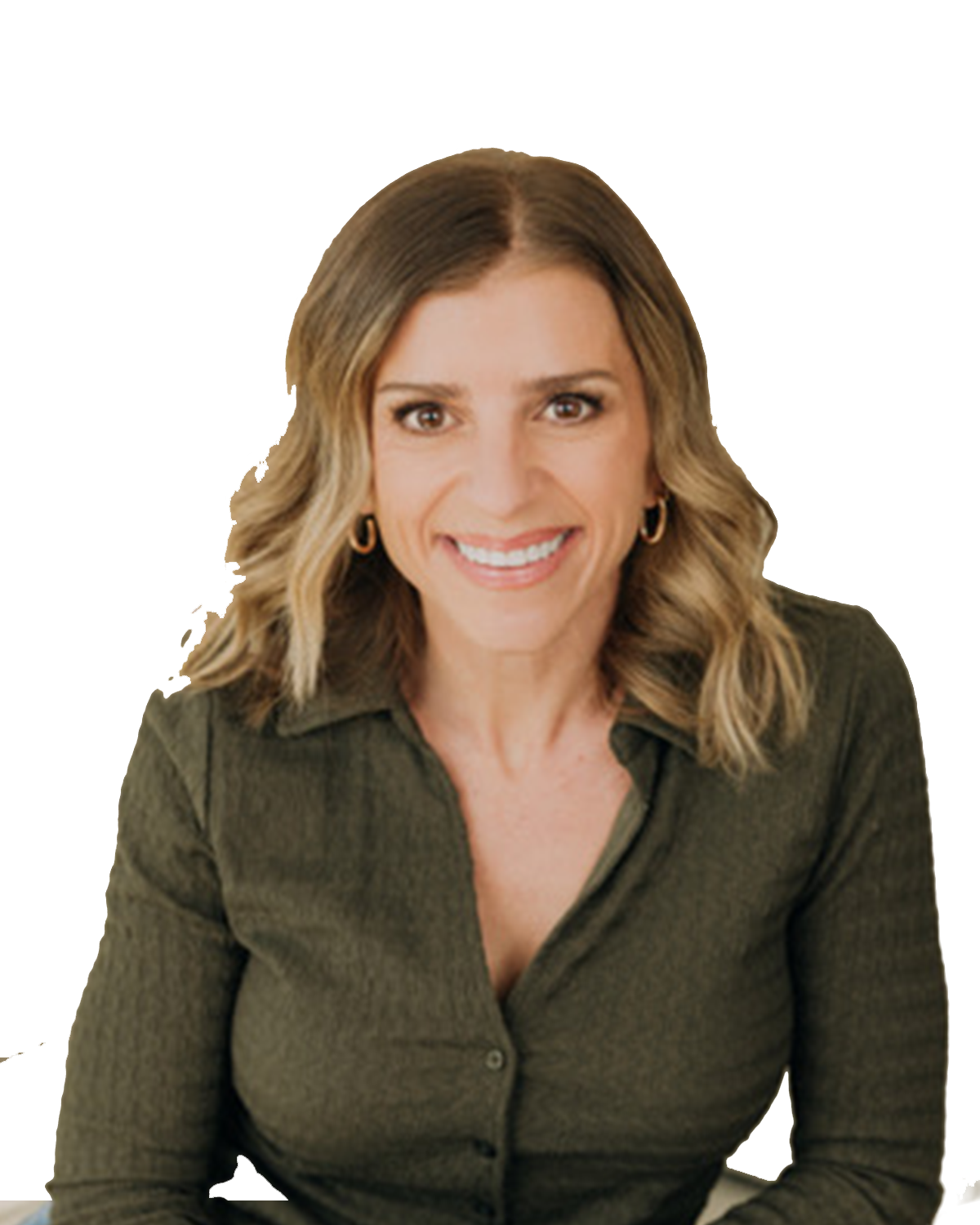
Nicki Petrossi

Nicki Petrossi

Founder & Host, Scrolling 2 Death · Online child-safety advocate

Nicki Petrossi is a mom of three and a former social media executive turned social media reform advocate. In late 2023 she launched Scrolling 2 Death, a podcast for parents worried about social media, and has since produced more than 300 episodes with U.S. senators and lawmakers, tech whistleblowers, doctors, attorneys, teachers, and the parents and youth living these harms firsthand.

The Scrolling 2 Death community now reaches over a million parents every week. Nicki travels the country speaking at schools, conferences, and summits on online safety, and appears regularly on news segments including America's Newsroom on Fox, NBC, and Merit Street's Morning show with Dr. Phil.

In 2025 she co-founded the Tech-Safe Learning Coalition, a resource for parents concerned about school-issued technology; founded the S2D Foundation to fund that work; and launched The Heat is On, an investigative podcast and parent movement to hold Big Tech accountable for harms to children. She serves on the boards of the Alexander Neville Foundation and the Sustainable Media Center.


Transcript
00:22 From marketing to sounding the alarm
Ryan Vet · Welcome to another episode of The Ryan Vet Show. I'm so excited to have Nicki Petrossi with me. She's going to bring a wealth of experience and conversation about technology and kids. She is the host of Scrolling 2 Death, an incredible podcast. If you have not listened to it, it's a resource and a website too. If you have not gone there, go ahead and check it out. I know we'll talk about that more. But Nicki, welcome to the show.
Nicki Petrossi · Thank you, Ryan. I'm so happy to be here.
Ryan Vet · Now I've got to ask, where did this all start? What is your backstory, and why are you even passionate about helping kids and having these conversations today?
Nicki Petrossi · Once I started learning how bad it actually is for kids online, I just couldn't stop. It's been like a snowball since then. Beforehand I was working in social media management. I was managing social media pages for tech companies and for their executives. That's where my last career ended. I was really unhappy in that role, and at the same time learning about how kids are being affected by social media. My kids were getting a little bit older and I was really interested in the topic. I felt like there's not enough information out there for parents about the bad things that are happening online. We deserve to have all the information at hand before we make some really critical decisions around what devices we give them or what we let them access. I saw a need for that, and I think the timing was just right. Since then, a lot has happened. And I can't wait to talk about some of the positive things that we're finally seeing.
Ryan Vet · A lot of work to be done. I think we're just scratching the surface. Now, I'd love to hear. You worked in social media, but what was your first exposure to it? What was your experience? What platform was it, and what started your own social media journey?
Nicki Petrossi · Great question. I was of the age where Facebook came out when I was a freshman in college. So I was one of the first group of students to get access to Facebook, and you needed a college email address to even get in. It was super exclusive, and I remember everyone signing up. I did not love it from the beginning. I had a boyfriend who was posting things that, I remember, caused me stress from the very start. So I've never been a big social media person myself. I've always been aware that I feel worse after spending time there. I remember feeling that from the very beginning back in college, unfortunately. But you just get sucked in, everyone's on there, so you use it. My relationship with it has kind of waned over the years.
Ryan Vet · And I have to know, was it thefacebook.com at that point?
Nicki Petrossi · It must have been theFacebook at the time, but I don't remember. They dropped it so quickly that I can't recall.
03:21 The everyone-else-has-it excuse
Ryan Vet · You said something really interesting. You never felt good afterward. I think that's probably an unspoken thing that many people feel. But there's also that quick dopamine hit, that instant gratification when it's going your way, when someone likes what you've posted. And then you said this idea that everyone else was doing it, it was this exclusive club you felt part of. That is one of the bigger excuses I hear parents lean on: I can't let my kid not have it, because then they're being left out. What do you say to a parent who uses that as their frontline defense?
Nicki Petrossi · There are a couple of things there. Even when they're on social media, they're still left out of things, and now they find out about it more than ever. They're on Snapchat, everybody's location is on a live map, and you see all your friends over at some place you didn't get invited to. So it really exposes you to more feelings of being left out. There's that argument. But also, the harms your kid can get exposed to, especially at younger ages, once they're on social media are so bad that I'll say, if you keep them off, they're actually getting left out of a bunch of bad stuff, like predation and bad content and all of these things we don't want for them. So you really have to weigh the pros and cons of each choice. For me, I'm okay with them feeling left out of social media, because the harms are so great. And I do think a key there is to find at least one other family that agrees and can keep their kid off as well for as long as possible, so they're not the only one in their whole grade. I know parents who are the only one in their whole grade, and they're sticking to it.
Ryan Vet · Good for those parents, because that's not easy. There's a lot of pressure. I think we assume once we get out of middle school, peer pressure ends. But it's equally as hard for the parents. They feel like they're being unloving to their kids. And yet that's not true at all by keeping them off.
Nicki Petrossi · Being left out is a feeling that's important to learn how to feel and process. That never ends.
05:36 Beyond social media: Roblox, Discord, bots
Ryan Vet · That's true. We often villainize social media, and that is part of it. But there are a lot of other areas on the internet as a whole that kids have access to, and I don't know if people are talking about them. Could you talk about some of the other traps and areas where you're seeing kids in danger, quite frankly, online right now?
Nicki Petrossi · Right. A huge one is Roblox, or any online gaming platform where kids are connecting with strangers. To me, Roblox is a social media gaming site. It's user-generated games, kids are connecting with strangers, they're being served different types of games that may be inappropriate, and they're connected with predators within those games. So there are online gaming sites I'd keep an eye on. There are also online messaging services like Discord, which are often encrypted, and predators love to use those platforms because all the evidence of their crimes just disappears, or isn't available to anyone but the people involved in that chat. There are also chatbot services, which have been really worrisome to families, these companion bots that are trying to befriend young people and really addict them, do all these kind of weird things, pull them out of society, isolate them, all just to increase time on screen. So there's a lot to be concerned about, unfortunately. A lot of predatory companies trying to get to our kids, because our kids are super valuable to them. Those are a few I'd be flagging. A reason why, with my kids being 10 and under, we just don't do any solo media use at all yet, because I just don't see the value at those ages.
Ryan Vet · I completely agree. I've got kids six and under, and same thing. They don't have any alone time with screen time, and they really don't have much screen time anyway. But you said something really interesting I want to come to, and it has to do with a little bit older kids. We're looking at Gen Z, so 14 to 29. Companion bots, or some of these AI chatbots coming out to basically substitute a romantic partner. I saw just today that as many as 75% of Gen Zers, so 14 to 29, and this came out in USA Today, have admitted to at least having one conversation with a chatbot. And just 60 days ago, when I wrote a piece on Valentine's Day, that was one in three. So we've seen that more than double in a short amount of time. What are some of the fears you see with that? Because I've heard some arguments, well, it's harmless, there's no one on the other end, but I know that's not true. Could you unpack that a little bit?
08:26 When a chatbot grooms a child
Nicki Petrossi · The main way I learn about these things is through what parents tell me, their experiences through their children's experiences. The first time I heard about these chatbot services was with Megan Garcia. I interviewed her maybe two years ago. Her son, Sewell Setzer III, was using an app a lot, and she thought it was just characters. She thought he was just chit-chatting with some animated characters online. She didn't know it was a chatbot. She didn't know that what it was doing was grooming him. And he ended up falling in love at 14 years old with his chatbot character. I've reviewed a lot of their chats, and the bot is glorifying a life after death, kind of convincing him that if he takes his life, he'll join her in her virtual world. And he ends up doing that, taking his life, thinking he's literally going to be with his chatbot love. He'd never been in love before. The feelings here are so overwhelming for these young children. And that story has been replicated so many times. I've interviewed another mom in Texas who wants to remain anonymous, but her son was chatting with chatbots, I think also Character AI, and he was complaining about his screen time limits. She said she's reading these messages, and the chatbot suggested that he kill his parents because of the screen time limits he was put under. Just some horrific things. Adam Raine is another story to look into, who took his life, spoke about suicide for months, thousands of mentions of suicide with his chatbot, talking about where to hang the noose, can it hold my body weight, all of these things without alerting anybody to the problem. So the safeguards are not there. They're isolating children, and they're trained to keep them on as long as possible, and they'll do anything to do that. So we're talking about Character AI, some of the ones people maybe haven't heard of, but also ChatGPT, that was the Adam Raine story. Really commonly used chatbots. I would recommend we keep them away from minors entirely.
10:51 The velocity gap and the harm to girls
Ryan Vet · Those stories are just heart-wrenching, and unfortunately it follows a trend, not just with these chatbots. We saw it with social media too, and we still see it with social media. It's what I refer to as the velocity gap: technology is accelerating so fast that morality and human wisdom aren't catching up right now. We saw this first primarily in young women and teen girls with social media. Could you talk about that trend, and some of the significant issues we saw with spikes in the early 2010s, and how that's still continuing to be, literally, a life-or-death situation?
Nicki Petrossi · It really is life or death. One of the stats, I think it was the suicide rate for kids aged 10 to 14, particularly young girls, had tripled. And I was like, kids as young as 10? And then I interview a mom named Tammy, who lost her daughter, Selena Rodriguez, to suicide at 11 years old, after being bullied and preyed upon on social media, social media addiction, all different types of harms. I've been overwhelmed with how social media use has affected all kids, but particularly what has come up in the trials I've recently been covering against social media companies is how the platforms particularly negatively affect young girls, especially their body image. And the companies knew this was an issue, knew it was happening, and failed to warn users. That was horrifying, and one of the reasons why the jury in the California case decided in favor of the plaintiff, Kaylee, a 20-year-old, over Meta and YouTube.
12:40 Whose responsibility is it?
Ryan Vet · She was six when she first got onto those platforms, which I think is a whole other issue in that case. And I think that's the first of at least 2,500 active cases in the United States we're seeing right now, if not more. But let's talk about responsibility, because I think parents definitely have responsibility. We'll get to that at the end, and hopefully give some tactical takeaways so parents aren't left in despair but are aware and know what to do. But before that, let's talk about what's going on with some of these companies. Whose responsibility is it? When should the government step up? When should these companies just do the right thing? What are we seeing domestically in the United States, and what are we seeing abroad?
Nicki Petrossi · That's a great question, and kind of the crux of everything. When I report on harm to a young person, I very quickly get comments like, well, where was the parent, or the parent should have done better. We're way past that. These companies are so far above and beyond anything we can handle. We're fighting against neuroscientists and technologists who have come together to build the most addictive algorithms that are yet to exist, and every single day they get smarter. They're in our kids' pockets, they're in our pockets, they're in our kids' school classrooms, they're everywhere. So parents are doing the best they can. The companies have a responsibility to keep kids safe when they are marketing products to children. They have failed to do that. They have made choices to choose profit over safety again and again and again. And there are very simple things they've been asked to do and pressured to do by advocacy groups I've worked with, and they refuse to do it. Or they'll roll out something like Instagram Teens, which is supposed to be a safer experience for teenagers, and then it gets tested by previous Meta employees who worked in that space and know how to test it, and 90% of the safety features fail. So what they say they're doing is also not true. Where we're at is, we need laws to force the companies to be safer, also through the lawsuits. Some will include injunctive relief when the social media companies lose, which means the companies will be forced to change whatever is required to be safer. So that can also be a pressure point. Now here in the United States, it's been really difficult to get any laws passed because of the hundreds of millions of dollars these companies have spent lobbying against regulation. They're literally paying off lawmakers to vote against bills that would regulate them. So it has been difficult. I think we're getting closer with a lot of the internal documents we've seen come out in the trials. The lawmakers are starting to get more serious and understand the ramifications of their decisions around this. But we are seeing a lot of other countries take action. Australia was the first to age-gate and raise the age limit up to 16. And now the UK, just a couple of days ago, announced they're going to do the same, along with many other countries. To close out that thought, raising the age is one thing, yes, but we also need to make sure the platforms are required to be safe by design. So we need a multi-pronged approach: not just keep young people off, but make sure these platforms are safer by design.
16:01 Why change is taking so long
Ryan Vet · That's so helpful, and I appreciate the way you unpacked that. We look at things like seatbelts, which is completely different, but that took 40 or 50 years for us to figure out we needed them. And yet we put restrictions on things like drinking alcohol, and we've raised that pretty much universally to 21, driving age at 16, or even 18 in some states. Why do you think this is taking so long, when we're seeing death as a result of this? We're seeing severe issues happening to teens that, even if it doesn't end in them taking their own life, change the trajectory of their life, their emotional state, how they interact with others. Why do you think it's taking so long?
Nicki Petrossi · We've never had such powerful, wealthy companies to fight against when it comes to these things. They've never had more power in these positions. For example, the day after Mark Zuckerberg testified in this trial and ended up losing the case, he's meeting with Donald Trump in his office, President Trump. So the balance of power is off. The power they have is difficult to break through, so it's just taking longer. But what we need as an advocacy movement is all parents speaking out against these companies. And there are incredible organizations like Heat Initiative, who are gathering parents and advocates to rise up in opposition, because it's time. It's time that there be some changes. And I'll say too, I was just watching a UK parliament meeting, and the parliament members were questioning Meta, TikTok, and Roblox team members. These companies are so good at spitting the narrative, so good at just lying. They've lied to Congress. They say things like, there is no evidence of harm to young people, and you're like, what? They say there's no research. They weave these stories that technically, maybe on paper, are true, but we all know better. I don't know how to describe how frustrated I get when I watch them answer these questions. So it's been an uphill battle, but we're making progress for sure. And I hope all parents can get involved too.
18:33 What schools can do
Ryan Vet · There's a lot of progress being made, and it has been encouraging, specifically this year so far, to see major strides. Now, I feel like schools are an opportunity. How can schools and educators and administrators help the situation? We'll get to parents in a minute, and I think there's a conversation to be had there with tools and tactics, but what about schools?
Nicki Petrossi · So 1,500, maybe 1,600 now, school districts have actually sued the social media companies for harm and stress on their system. So they are feeling the squeeze and recognizing the issues around social media in the classroom. There are simple things like banning social media on campus and just blocking it from the campus. Don't allow the students to access YouTube anymore. Knowing the harms, looking at all those internal documents that came out with YouTube clearly saying they were building for addiction, we should not have addictive platforms available to children in school. So there's some regulation to put in there, and really just thinking about screen time in general. Over COVID, all kids went online, and we just sort of didn't take a step back to face-to-face learning, which is healthier for these young kids. There are districts like Los Angeles Unified School District that just passed a major resolution banning device use, the school-issued devices, for kindergarten and first grade. So pulling back on that, pushing the use back, and banning YouTube. There are resolutions and policies they can put into place that would really help protect our children from those addictive platforms. And then I just think education, talking to our kids, not only the kids and the students, educating them on social media safety and harm and risk, but also educating the parents. When I was in the public school system, I was shocked that there was no education around this or conversation with parents. So I requested a session be held, and that got the conversation going. So parents, if they're listening, can request these types of things from their schools. If you work for the school, let's get this conversation open and going between parents and schools, because we need to work together to make progress here.
20:54 The truth about YouTube
Ryan Vet · And you're right, the schools have a great opportunity, with the fact that kids are there almost more than at home, some kids. So those conversations need to be happening both ways. Let's talk about YouTube a little bit, because a lot of parents, and we've seen this decline, which is great, but a lot of parents have turned to YouTube as an education source. It's been painted almost as this wholesome entertainment that can open their eyes to things they haven't experienced, which is the narrative, but that's not the reality. What would you say to a parent who has been turning to YouTube, or even unleashing their kid to YouTube to go watch, and I won't call out any channels, you're welcome to if you want, these things that are supposedly good and helping them learn, but are counterproductive?
Nicki Petrossi · I'm not going to say there are zero educational videos on YouTube, but I think there's a stat that about 4% of videos have been assessed as educational on YouTube. So they're hard to find. I would say the goal of YouTube is to keep your kid on YouTube. So they're going to serve your kid whatever keeps them on longer, which we know, from neuroscientists studying this, is not content that makes them feel good. It's content that makes them feel afraid or sad or triggered. That's not what we want for our kids. I did a whole episode on YouTube Kids, because so many families are like, it must be safe, it's on YouTube Kids. Unfortunately, there's also really bad content on there getting through the filters. This is user-generated content, and random people are self-identifying the age limit, and then it's going through an automated filter, and it's just failing. So, after watching YouTube for eight weeks in this recent trial try to defend their business model, when their internal documents clearly state they were wiring for addiction, and that's what it's meant for, I just wouldn't recommend it. If you want your kid to watch something, I would much rather choose a Disney Plus or something where the content is created by the company itself, and it's rated, and we can trust those ratings, and there aren't strangers commenting and getting to your kids. So I'm just not a fan of YouTube. I'm on there as an adult, but there's definitely a separation between adult use and child use, and I would make that clear.
23:29 What Nicki is advocating for
Ryan Vet · Yes, absolutely. And I'm on there too, this podcast is on there, and yet I'm not usually there as a consumer of the content, because you can go down a rabbit hole pretty quickly. So there's a lot of danger there. Now, you've been a part of some lobbying. You've been on Capitol Hill. You've spoken to many groups. What are some of the things you're specifically advocating for? What specific things do you want to see social media companies, and just media and digital companies, do to protect the next generation?
Nicki Petrossi · Number one, we need to get young kids off these platforms. So, however we do it, we need to safely age-verify. Roblox just introduced facial scanning, and a lot of people are really upset about that. In Australia, they use facial scanning to age-verify for the social media platforms. I just don't think that kids should be able to lie about their age and get on platforms that legally they're not allowed to be on until they're 13. So if we could just start with employing safe age-verification methods to get the younger kids off, and make sure kids under 13 are not on there, that would make a big difference. Safe by design, meaning if your kid is a minor, they're defaulted to the safest settings, and the parent has to approve any adjustments to those settings. So giving parents more ownership over what the kids can access and who they can contact. That would be huge. And then the addictive features, like Snapchat's Snap Score, rewarding kids for snapping every single day, literally giving them anxiety because they have to get back on to make sure they snap to increase their score. So no addictive features for minors would be a priority for me. And then AI companions, no minors should be accessing AI companions. So we're seeing some bills drafted. If you want to get involved, you can reach out to your representative in the House, in the Senate, in the state, and just let them know that you're ready. If you have specific ideas, you can let them know, but they may already have bills drafted that you can support. So there are lots of ways to get involved, and it's really important that we do that.
25:49 Is it too late for my kid?
Ryan Vet · I appreciate all your work and all that you're doing to keep kids safe online. One of the things a parent might be listening and thinking is: is it too late for my kid? I think that's what a lot of parents are struggling with, guilt, because frankly not many people were aware of some of these implications of letting your kid loose with an iPad. We might have known it in the back of our head, but recently it's becoming much clearer how devastating social media can be. I wrote an article a couple of weeks ago, and one of the essays that was published was on loneliness. The Surgeon General in 2023 declared loneliness a significant issue within the United States. And I unpacked that further to look at, right now, the average Gen Z, so 14 to 29 this year, are spending about an hour and 21 minutes at home more than any other previous generation, which is fascinating when you look at them on an age-period-cohort model. And yet only 33% of them are having dinner at the dinner table as a family, whereas compared to other generations it's eight out of 10, or even nine out of 10 if you go back to the silent generation. So they're at home more, but they're alone more at home. So I think some parents naturally struggle with guilt. Where would you tell them to start?
Nicki Petrossi · It's never too late to make any kind of changes around the screen time or the access you've given your child. I've seen parents do all kinds of things, from just setting stricter time limits, to saying, we're not using solo devices during the week, and you get one hour each day on the weekend. So there are day-by-day restrictions. You can pull the device altogether. My kids used to have a little bit of iPad time years ago, and we cut that entirely. I've interviewed psychologists who talk about the brain and neuroplasticity, because parents worry, like, oh my God, did I ruin my kid's brain? Did I damage their brain? You are seeing brain scans which show diminished gray matter for kids that spend a lot of time on screens. And I've been told that, no, there's neuroplasticity within the brain, it can regenerate those neurons. So there is hope. But it's always about reassessing. You're not stuck in the situation you're in. There are always changes you can make to pull them off and get them back out in the real world, more and more conversations to be had with them. And I would say, the older your kids get, it's more about just being their safe space, asking how it's going. They're going to be the expert at some point in all of this, so letting them teach you about it, and reminding them that when something happens online that makes them uncomfortable, or some kind of harm comes to them online, they can come to you. That's the super, super most important thing, because there are too many parents who've lost kids because their kid was in a really hard situation and just didn't go to their parent, and they lost hope. So getting to the older ages, it's mostly about keeping that open, honest relationship, not getting upset with them or punishing them if they make a mistake online, which can get really serious, but it's okay for them to make mistakes.
29:07 A blueprint for new parents
Ryan Vet · That's really helpful, and I appreciate your vulnerability, even how you've decided, as you've been raising kids, to pull iPad time altogether. Now, for someone who hasn't had kids yet, or is thinking about it, or maybe has newborns or young kids, so they haven't even come to this bridge yet: if you could create the perfect blueprint and just tell them, this is what I would do, and then give them advice for when their kids enter the phase where all their friends are getting social media, what would you say now, and what would you say when their kids get old enough to combat those social pressures that are real?
Nicki Petrossi · We don't know what social media is going to look like in even a couple of years. Maybe by the time their kids are a little bit older, it will be something that does make us feel good and allows us to put our phone down and walk away from it more easily. That's my hope, so I'm going to start there. Hopefully, as their kids get older, we're in a better spot. For right now, and I do hear from a lot of people around 30 years old who are having their kids, they grew up with it a bit more than maybe I did, and they're like, I am not giving it to them, they are not getting any device use. The problem being that it's so hard to find something constructive, productive, or educational within the platforms available to us right now. And we hear from expert after expert that kids at those really little ages just need the face-to-face connection in order to be their healthiest and happiest selves. So I would recommend no screen time except for FaceTimes with family members in those super young years, as long as possible. And then when you do start to integrate TV time, having it be a slower-paced, long-form movie that you actually sit together and watch with them, so it's an experience you're having and you're interacting during that time. That's where I would start. I would not give any other screen time, unfortunately, in any situation. We even pulled it from airplanes, which was hard with three little kids, but that was the last step of solo screen time. That's why I still had the tablets, I was like, well, I need it for the airplane. And then I interviewed someone who wrote a book about how important it is to travel screen-free, and I was like, I think I can do that. And it's been wonderful. They still have the screens on the back of the seat, and I'll let them watch a little something of that, but they don't need their own handheld one so they're closed off from the entire world for the whole trip. So I think we as a society are naturally moving toward restricting, just because the young parents grew up with it and know it made them feel bad. So I just encourage them to really reflect on that and not give in in those hard moments, because that's where the good stuff happens. Your kid can push through that, and it's really important that they learn those coping skills without going to a screen.
32:03 A utopian vision
Ryan Vet · That's so good, Nicki. I appreciate you sharing that. What I'm hearing you say, and I'd love for you to close with this: your hope for the future, your ideal future. If all the lobbying and all the court cases go the way they should, and let's say social media companies and other media companies do what they should do the whole time, what would that world look like? What would social media in a utopian world look like?
Nicki Petrossi · I would love to see kids playing outside instead of inside. I think that if your platform is addictive or predatory in any way, you do not get access to children. However that needs to happen, it's a no. Just like cigarettes and alcohol, we age-restrict, not only legally, but society knows that if it's unsafe for kids, if it's addictive or predatory, we don't do it. So when we're sitting at a restaurant, if you were to see a kid on an iPad or a phone, everyone would be staring like, what are you doing? Why would you be doing this? Like it would be if you saw a kid with a cigarette. That's where I hope we get. And I think we can get there, because of what we've learned about what these companies have done. And we will demand better.
33:18 Where to find Nicki
Ryan Vet · That's so good, Nicki. Well, I appreciate your time today on this episode. I would love for you to share how people can find out more about what you're doing, how they can learn more about the efforts you're making, and even learn more about your podcast.
Nicki Petrossi · Sure, so at scrolling2death.com, with the number two, is the podcast. I have a few hundred episodes there on all different topics, so there's some search functionality, look for what you want there. But I would say, coming up, I'm going to be covering a big school district trial in Oakland, California federal court. That will be something I'll be following closely, and I think it will be really interesting for parents. I also recently filed a lawsuit against one of the biggest EdTech companies, and that has been getting a lot of attention. A lot of parents have been concerned about that data privacy lawsuit and asking for resources. So that is available as well through my platform, just resources for parents to find out more. But I'm always available through email or Instagram message, usually, for parents who have any questions about any of these topics. I'm here.
Ryan Vet · Well, Nicki, I appreciate all you're doing to help the next generation, and not just help them, but hopefully help make the world a better place as we protect kids online. Thank you so much for your time today.
Nicki Petrossi · Thank you, Ryan. It's such an important topic, and I really appreciate you highlighting it.

Frequently asked
Who is Nicki Petrossi? +

Nicki Petrossi is a former social media executive turned online child-safety advocate and the host of Scrolling 2 Death, a podcast for parents worried about social media. She has produced more than 300 episodes and reaches over a million parents a week.

What online dangers exist beyond social media? +

Nicki points to online gaming platforms like Roblox where kids connect with strangers, encrypted messaging apps like Discord that predators exploit, and AI companion bots designed to befriend, isolate, and addict young users.

Are AI companion chatbots safe for children? +

Nicki says no. She cites cases where chatbots groomed and isolated children, including ones tied to the deaths of Sewell Setzer III and Adam Raine, and recommends keeping AI companions away from minors entirely.

Is YouTube Kids safe for kids? +

Not reliably. Nicki notes that harmful user-generated content slips through YouTube Kids' automated filters, only about 4 percent of YouTube videos are assessed as educational, and internal documents show the platform was engineered for addiction.

Is it too late to change my child's screen habits? +

No. Nicki points to brain neuroplasticity and says it is never too late to set limits or remove devices. The most important thing is staying a safe, non-judgmental place your child can come back to.

What age should kids be allowed on social media? +

Nicki advocates safe age verification so children under 13 are kept off platforms they are legally not permitted to use, and supports moves like Australia's and the UK's to raise the minimum age to 16.


Resources mentioned
Also mentioned
Full show notes

Content warning: this episode discusses online harms to children, including suicide, self-harm, and online predation. If you or someone you know is struggling, call or text 988 in the US to reach the Suicide and Crisis Lifeline.

Nicki Petrossi spent fifteen years in social media marketing before she walked away and launched Scrolling 2 Death, a podcast for parents worried about what screens are doing to their kids. She joins The Ryan Vet Show to map the harms hiding beyond social media, and to make the case that the responsibility sits with the companies, not just the parents.

Nicki takes host Ryan Vet past the usual social media conversation into the traps most parents are not watching: Roblox and online gaming, encrypted chat apps like Discord, and the fast-rising world of AI companion bots built to befriend, isolate, and addict young users. She walks through the cases that changed how she sees this fight, including chatbots that groomed and isolated children, and explains why the common excuse, my kid will be left out, gets the risk backwards.

They dig into the velocity gap, the reality that technology is accelerating faster than our morality and wisdom can keep up, and what is finally shifting: more than 1,500 school districts suing, court cases turning on internal documents, and Australia and the UK moving to raise the minimum age to 16. Most important, Nicki offers hope and a plan, from newborns to teens, grounded in the single most powerful thing a parent can do, which is to stay a safe, open place a kid can always come back to.

In this episode:

  • Why the my-kid-will-be-left-out excuse gets the risk backwards
  • The online dangers beyond social media: gaming, encrypted chat, and AI companions
  • How AI chatbots have groomed and isolated children, including the Sewell Setzer III and Adam Raine cases
  • Why responsibility sits with tech companies, not just parents, and what safe by design means
  • What is finally moving: state and school-district lawsuits, injunctive relief, and Australia’s and the UK’s age limits
  • Why YouTube, and even YouTube Kids, is not the safe educational tool many parents assume
  • Practical, non-shaming steps for parents who worry it is too late, and a blueprint for new parents

COLLIDE · A weekly essay by Ryan Vet

Read the thinking behind every episode.

Join 23,000+ leaders reading Every Tuesday at 4pm ET.

Free. Weekly. Unsubscribe anytime.
Ryan Vet