Same Footage, Two Verdicts
Why more proof is making us trust each other less.
Read the full essayThe data behind this essay. Every figure traces to a source the essay cites. Hover any card to share it.
In part three of the childhood surveillance series, the cameras finally work exactly as promised. That turns out to be the problem.
In the late 1990s thyroid ultrasounds got cheap, so South Korea folded them into routine screening. Diagnoses climbed roughly 15 times between 1993 and 2011, thyroid cancer became the most commonly diagnosed cancer in the country, and surgeons removed thyroids by the thousands. The death rate never moved (Ahn et al., 2014). The machines were not wrong and the scans were accurate. What the ultrasound could not say was what any of it meant. A country was told to look for cancer, so it found cancer.
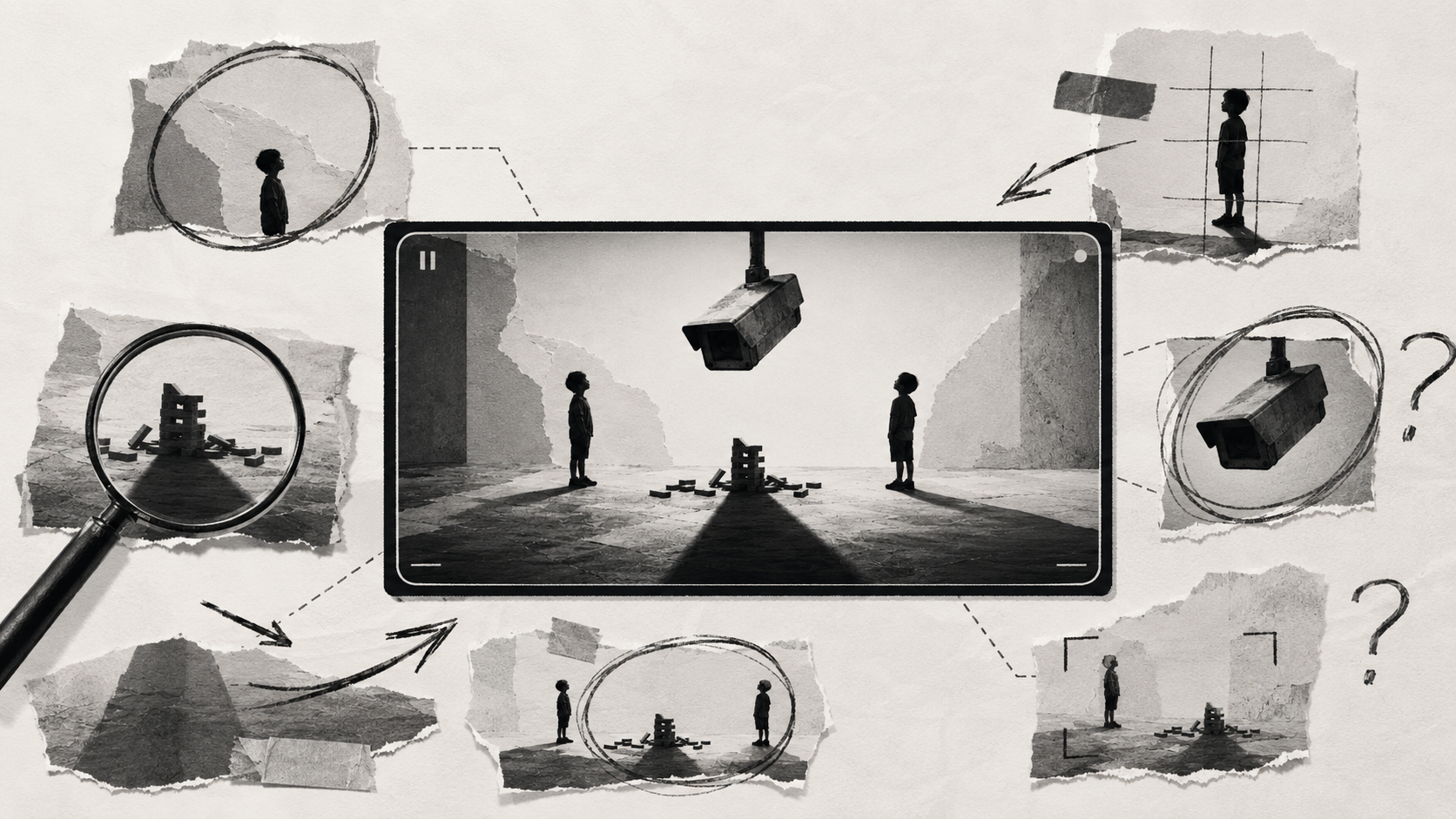
Ryan takes that pattern and turns it on the thing this series has been building toward. Proof is not a verdict. Proof is a mass on a scan, a video from a doorbell, a number on a dashboard, a location on a map. Someone still has to decide what it means. And the research on what people do with identical evidence is unusually blunt: Princeton and Dartmouth students counted about twice as many infractions against the other school while watching the same 1951 football film (Hastorf and Cantril, 1954), people on both sides of the death penalty rate whichever study agrees with them as the rigorous one and walk away more convinced (Lord, Ross and Lepper, 1979), and moving a camera three feet from a dash to a body changes whether 2,119 viewers think an officer intended to use force (Turner et al., 2019).
Which brings him back to his son and the knocked-over tower from part two. The boy was not asking for the truth. He was asking to skip a step, and to have a machine render the verdict so his brother would not have to be believed. Ryan's argument is that polarity is not what happens when we disagree about the proof. It is what happens when we agree the proof is the only thing worth believing, and then read it differently.
Proof is not a verdict. It is a mass on a scan, a video from a doorbell, a number on a dashboard. It sits there, and a human still has to decide what it means and what to do about it.
South Korea's thyroid cancer diagnoses climbed roughly 15 times between 1993 and 2011 and the death rate never moved (Ahn et al., 2014). The scans were accurate. A country was told to look for cancer, so it found cancer.
In a Finnish autopsy study, 35.6% of people had tiny thyroid cancers they never knew about and died of something else entirely (Harach et al., 1985). Detection is not the same as danger.
Handed the same evidence, people move apart rather than together. Princeton and Dartmouth students watching one football film counted roughly twice as many infractions against the other side (Hastorf and Cantril, 1954), and readers given identical death-penalty studies with the methods swapped rated whichever one agreed with them as the rigorous one (Lord, Ross and Lepper, 1979).
The angle changes the answer. Shown the same use of force, viewers of dash camera footage were more likely to say the officer acted intentionally than viewers of body camera footage, across 2,119 people (Turner et al., 2019). Move the camera three feet and the verdict moves with it.
The known harm is rarely the real harm. With social media the named risk was oversharing, while the quieter damage was to community, comparison, and a curated version of reality. Childhood surveillance has nameable harms too, including cameras in kids' bedrooms being hacked (Burke, NBC News, 2019), but the deeper cost is where we have decided to put our trust.
Polarity is not disagreeing about the proof. It is agreeing that the proof is the only thing worth believing, and then reading it differently.
Plain-language definitions for the ideas in this episode. Structured for search and AI answers.
Correctly detecting a condition that was never going to cause harm. The test is accurate and the finding is real, but treating it produces side effects without extending a life (Ahn et al., 2014).
In this episode: The South Korean thyroid screening story Ryan uses to show that a working machine can still produce the wrong outcome.
The tendency to judge evidence by whether its conclusion matches what you already believe, rating agreeable findings as rigorous and disagreeable ones as flawed, so identical evidence pushes opposing groups further apart (Lord, Ross and Lepper, 1979).
In this episode: Why Ryan says handing both sides more proof arms them instead of settling anything.
Ryan Vet's framing for the state we reach when two sides no longer argue about whether the proof is trustworthy, but agree it is the only thing worth believing and then read it differently. The disagreement stops being about facts and becomes about the other person's honesty.
In this episode: The closing argument, and the reason he says more proof is producing less trust.
Lines worth keeping, verbatim from the episode.
A country was told to look for cancer. So it found cancer.
It sits there. It has never once rendered a verdict.
The evidence did not pull them together. It armed them and divided them.
Move it three feet, and the verdict moves with it.
In a world where we are producing more proof, we are eroding more trust.
Straight answers to the questions this essay raises. Open by default, structured for search and AI.
What is the "Same Footage, Two Verdicts" episode about? +
It is Ryan Vet reading part three of his five-part COLLIDE series on childhood surveillance. The argument is that proof is not a verdict. A scan, a doorbell video, a dashboard number, and a location dot all just sit there, and a human still has to decide what they mean. Ryan uses medical overdiagnosis and decades of psychology research to show that handing people more evidence tends to divide them rather than settle anything.
What happened with thyroid cancer in South Korea? +
Cheap ultrasounds were folded into routine screening in the late 1990s, and thyroid cancer diagnoses climbed roughly 15 times between 1993 and 2011, making it the most commonly diagnosed cancer in the country. Surgeons removed thyroids by the thousands and the death rate never moved (Ahn et al., 2014). The scans were accurate. What they could not report was whether any of it mattered, and many patients were left with side effects like vocal cord paralysis and lifelong hormone supplements.
Does more evidence make people agree? +
The research says it usually does the opposite. Princeton and Dartmouth students shown the same 1951 football film counted about twice as many infractions against the other school (Hastorf and Cantril, 1954). Readers given identical death-penalty studies with the methods swapped between them rated whichever study agreed with them as the rigorous one, and both groups walked away more convinced they had been right (Lord, Ross and Lepper, 1979).
Do body cameras and dash cameras produce different verdicts? +
Yes. Researchers showed 2,119 people the same use of force by a police officer, some from a dash camera and some from a body camera. Dash camera viewers were more likely to say the officer intentionally used force; body camera viewers, where the officer is strapped to the camera and barely visible, were more likely to say it just happened (Turner et al., 2019). Same event, same officer. Only the camera moved.
What does this have to do with raising kids? +
It is the third installment of a series that began with a six-year-old asking whether his dad had already seen the camp photo, and continued with a son asking Ryan to check the security footage instead of taking his brother's word. Ryan's concern is not that a camera would get the tower incident wrong. It is that both his boys would take a device's answer over each other's word, and that Gen Alpha and Gen Beta are growing up in a world full of proof and short on reasons to ask.
Is this episode part of a series? +
Yes, it is part three of five on childhood surveillance, in this order: "Did You Get the Photo of the Goat?", "Just Check the Camera, Dad," "Same Footage, Two Verdicts," "Anyone Can Clone Your Voice," and "Gen Alpha Is the Experiment." Part four picks up the thread this episode ends on, which is that every argument here assumes the footage was real in the first place.
Full show notes
The cameras work. The scans are accurate. That is what makes this the uncomfortable one.
In part three of my five-part series on childhood surveillance, I read the essay about what happens after the machine gives you the answer you asked for. It starts in South Korea in the late 1990s, when thyroid ultrasounds got cheap enough to fold into routine screening. Diagnoses climbed roughly 15 times over the next two decades. Thyroid cancer became the most commonly diagnosed cancer in the country. Surgeons removed thyroids by the thousands. And the death rate never moved. The ultrasound could report a mass. It could not report whether that mass was ever going to matter. A country was told to look for cancer, so it found cancer.
That is the shape of the argument. Proof is not a verdict. Proof is a mass on a scan, a video from a doorbell, a number on a dashboard, a location on a map, a sleep score in an app. It sits there. Someone still has to decide what it means, and that is where all the trouble lives.
The psychology on this is old and unusually blunt. In 1951 Princeton and Dartmouth played a famously ugly football game, and when researchers showed students from both schools the same film and asked them to count infractions, Princeton students saw Dartmouth commit about twice as many as Dartmouth students did. Same film, two different games, nobody lying. Hand people on opposite sides of the death penalty the same two studies with the methods swapped between them, and each side rates whichever one agrees with it as the rigorous one, then walks away more convinced than before. Show 2,119 people the same use of force and simply move the camera three feet, dash to body, and the verdict moves with it.
Which brings me back to my son and the knocked-over tower from last week. When he told me to check the camera, he was not asking me to find the truth. He was asking me to skip a step, and to let a machine rule so his brother would not have to be believed.
In this episode
- South Korea’s thyroid cancer surge, and what overdiagnosis actually costs a patient
- Why 35.6% of people in a Finnish autopsy study had cancers they never knew about, and died of something else
- The known harm is rarely the real harm: what social media taught us, and what we ignored
- Why you find what you are told to look for, and the keynote experiment that proves it on a live audience
- Princeton, Dartmouth, and one football film that produced two different games
- Why handing both sides the same evidence pushes them further apart instead of closer together
- Body camera versus dash camera, and a verdict that moves three feet
- The dress, and why your perception felt exactly like proof
- What my son was really asking when he said “just check the camera”
- Polarity: agreeing the proof is the only thing worth believing, then reading it differently
The full five-part series on Childhood Surveillance
This episode is Part 3. Read the series in order, or start with the Childhood Surveillance framework:
- Did You Get the Photo of the Goat? — how a live-feed childhood reprogrammed “how was your day?”
- Just Check the Camera, Dad — the moment a child reaches for the footage instead of his brother’s word
- Same Footage, Two Verdicts — why more proof is making us trust each other less
- Anyone Can Clone Your Voice — what happens when the proof itself can be faked
- Gen Alpha Is the Experiment — what a fully watched childhood produces, and what to do about it
Every study cited here is listed in the full essay. New COLLIDE essay episodes release every Thursday at 7am ET, and guest episodes release Monday mornings at 6am ET. Join the COLLIDE newsletter for the research, reflections, and frameworks behind every episode.