
Parents spend an average of 3 hours and 23 minutes a day on their kids' sports on days with a game or a practice. That is a part-time job, and almost nobody chose it on purpose.
Linda Flanagan is a journalist, a competitive runner for most of her life, and a cross-country and track coach of 19 years. Take Back the Game came out of the gap between those roles: what she knew sports could do for a kid, and what she watched the system actually do. She got disillusioned in her first season of coaching, went looking as a reporter, and found an industry.
It is a $40 billion one, and private equity has been buying up the organizations that run it. The Aspen Institute puts average family spending at close to $1,500 a year, which Linda calls a lowball number once travel, tournament fees, and parking to watch your own child are counted. Thirty years ago kids started organized sports around age eight. Now at age eight they can compete for so-called national championships.
The shift she names is from a participation model to a performance model. Norway keeps 93% of its kids playing with local leagues, low costs, mixed ages, and no published scores. America sorts eight-year-olds into A, B, and C teams. Host Ryan Vet brings the generational frame, economic anxiety in the 1970s, shrinking families, milk cartons, and Annette Lareau's concerted cultivation, and Linda keeps returning to the through line underneath all of it: anxiety. The finding that should stop every sports parent is that the more money parents spend on a child's sport, the less the child enjoys it and the more pressure the child feels.
Parents spend an average of 3 hours and 23 minutes a day on their kids' sports on days with a game or practice, according to the Aspen Institute Sports and Society program. Most of it is driving, because games are not in the backyard anymore.
The Aspen Institute puts average spending at close to $1,500 a year per child, roughly $1,000 on a main sport and $500 on a second one. Flanagan calls that a lowball number once travel, tournament fees, and parking to watch your own child are counted.
Youth sports is an estimated $40 billion industry, and private equity firms have been buying up the organizations that run it. Flanagan points to the Let Kids Play Act as the first real pushback.
30 years ago kids typically started organized sports around age eight. Now at age eight they can compete for so-called national championships. Commercialization and professionalization moved together.
The research runs the opposite way from the spending. The more money parents spend on a child's sport, the less the child enjoys it and the more pressure the child feels.
Norway keeps 93% of its kids playing by making sport local, cheap, and mixed-age, with no published scores and no travel until around 13. The system is built to keep kids in. America's is built to sort them out at eight.
In an NCAA study of 10 well-being metrics, collegiate women scored worse than men on all 10. Asked whether they felt overwhelmed by all they had to do every day, 44% of the women said yes against 17% of the men.
Plain-language definitions for the ideas in this episode. Structured for search and AI answers.
The sociologist Annette Lareau's term for a parenting style in which the parent's job becomes actively developing every ability and interest a child might have, so the child ends up with options in the future.
In this episode: Flanagan's answer for why parents in the 1970s and after felt they had to enroll kids in everything, sports included.
A youth sports system organized around identifying and developing the best players, with hierarchies, year-round seasons, paid coaches, and travel. Its opposite is a participation model, which is organized around keeping as many kids playing as possible.
In this episode: The single shift Flanagan says explains most of what went wrong, and the difference between America and Norway.
Unstructured, unrefereed play that children organize themselves, with no adult keeping score or correcting them. It is where kids practice negotiating, getting along, and handling themselves.
In this episode: What Flanagan says parental anxiety and the focus on skill building quietly eroded, and what one sports organization is now building back into practice.
What you give up by choosing one thing over another. Applied to a family, it is the hike, the beach day, the Sunday meal, and the ordinary time that a sports schedule takes without anyone ever deciding to trade it away.
In this episode: Flanagan's closing argument, and the reason she tells parents not to sleepwalk into it.
Lines worth keeping, verbatim from the episode.
30 years ago, kids started playing sports typically around age eight, and now at age eight, they can compete for national championships, so-called.
Parents spend an average of 3 hours and 23 minutes a day on their kids' sports when those kids have games or practices, which is mind-boggling. That's basically a part-time job.
There's research showing that the more money parents spend on their kids' sports, the less the kid enjoys it and the more pressure they feel.
We're kind of alienating them from family life, and taking away their responsibilities to the family.
The more serious and intense and overprogrammed we make it, the worse it is for kids.
Youth sports seem a lot more important than they are. This is why we have fights in the stands and referees getting punched in the parking lot, because it seems so important. And in fact, it isn't.
The essence of youth sports is human relationships, children's relationships with their peers and with the adults running the stuff. And technology can't replace that.
They already know how to be kids. So let them be kids, let them play, let them experience that.
Jump to any moment. Timestamps deep-link the audio.
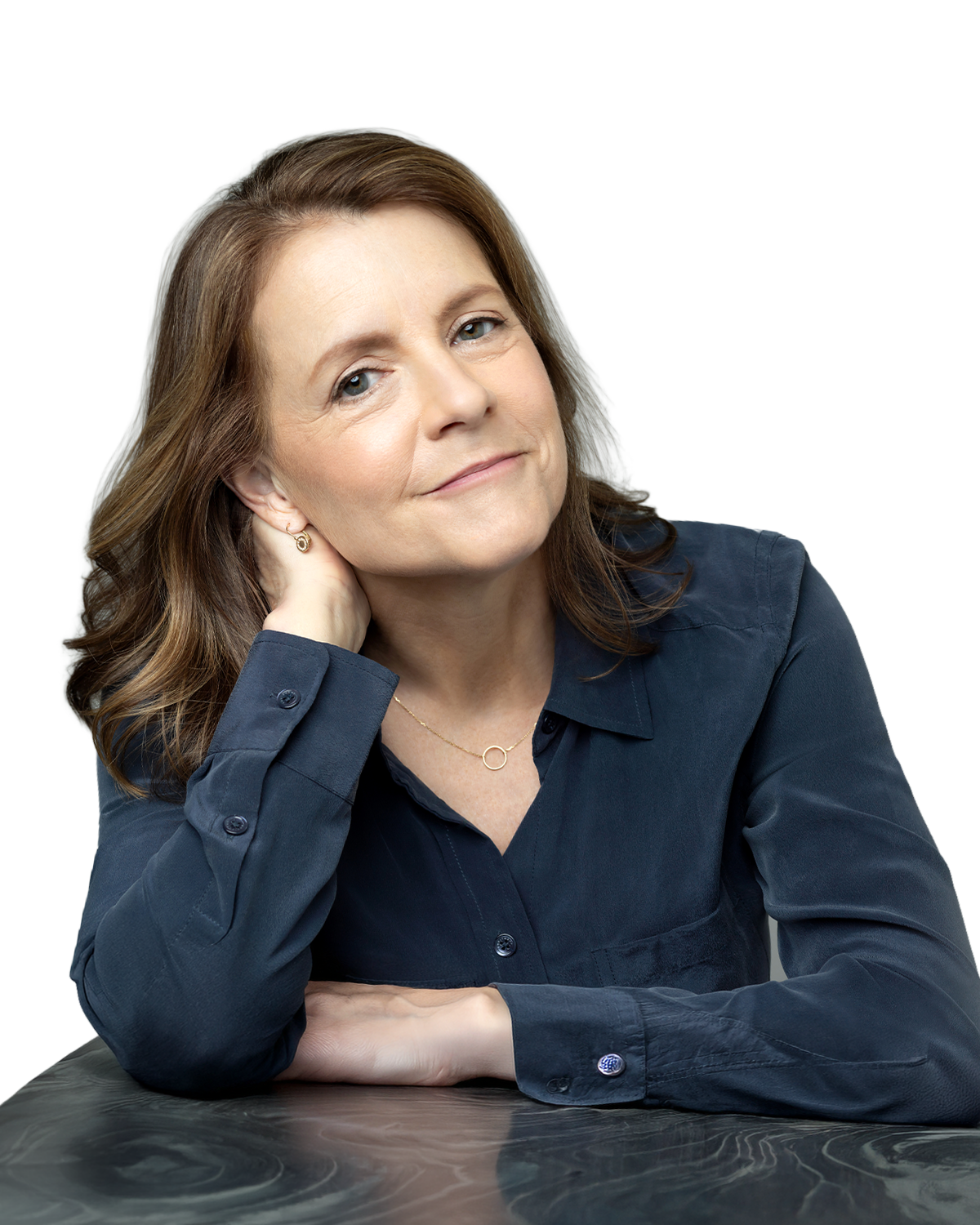
Linda Flanagan
Journalist · Author, Take Back the Game
Linda Flanagan has seen youth sports from every side of the field. She competed as a runner for most of her life, raised three children through the travel-team era, and, because she was a good runner and serious about it, was invited to coach cross-country and track at a school. She stayed 19 years. Her disillusionment came fast. She went in thinking that being an accomplished runner and a mother would make her intentions obvious, and found instead that the relationship with parents could be adversarial in ways she had not expected. That turned out to be the tip of the iceberg.
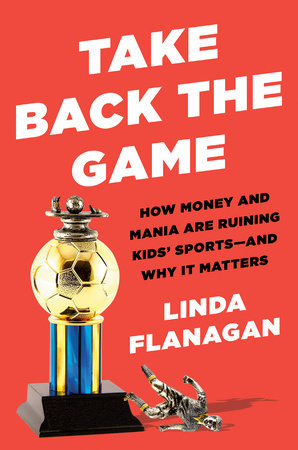
She is also a journalist, so she went looking. Take Back the Game, published by Portfolio in 2022, is the result: an account of how youth sports became a $40 billion industry, and of what that industry does to the children inside it. Her case is that the money did not just make sports expensive. It changed what sports are for. Thirty years ago kids typically started organized sports around age eight. Now at age eight they can compete for so-called national championships. Commercialization and professionalization moved together, and the intensity landed on parents who were only trying to do right by their kids.
A graduate of Lehigh University, Flanagan holds master's degrees from Oxford University and the Fletcher School of Law and Diplomacy, and was an analyst for the National Security Program at Harvard University. She is a founding board member of the New York City chapter of the Positive Coaching Alliance and served on the advisory group for the Aspen Institute's Reimagining School Sports initiative. Her writing on sport has appeared in The New York Times, The Atlantic, Runner's World, the Aspen Institute's Project Play, and NPR's education site MindShift, where she is a regular contributor. She lives in New Jersey.
She is currently co-producing Beyond Stigma, a four-part documentary series on mental health among collegiate women athletes, with a team led by Villanova professor Rick Eckstein. The team has been at it for a couple of years, and as of August 2026 they are working on distribution and hoping to have it out this year.
Straight answers to the questions this essay raises. Open by default, structured for search and AI.
How much do parents really spend on youth sports? +
The Aspen Institute puts it at close to $1,500 a year for a child playing a main sport plus a second one they dabble in, roughly $1,000 and $500. Linda Flanagan calls that a lowball average, because it does not carry the full weight of travel, tournament fees, and the parking you pay to watch your own child. Baseball and hockey run far higher. The cost she finds more startling is time: 3 hours and 23 minutes a day on days with games or practices.
Why is private equity investing in youth sports? +
Because youth sports is an estimated $40 billion industry, and parents feel they cannot opt out of the options in front of them. Flanagan says private equity firms have been buying up youth sports organizations, with travel and tournament fees as the big expense families carry. She points to the Let Kids Play Act as the beginning of real pushback.
Does spending more money on youth sports help kids? +
The research points the other way. Flanagan cites work showing that the more money parents spend on a child's sport, the less the child enjoys it and the more pressure the child feels. Her explanation is that the spending raises the expectation, so the child starts playing to please the parent or to avoid letting the parent down.
What does Norway do differently in youth sports? +
Norway keeps 93% of its children playing by making sport local, very cheap, and mixed-age, with no scorekeeping, no published scores, and no travel competition until around age 13. The system is designed to keep kids playing rather than to identify the best ones. America sorts eight-year-olds into A, B, and C teams to develop talent early.
What does Linda Flanagan say about AI in youth sports? +
She thinks the enthusiasm is overblown. She attended a conference where roughly two thirds of the sessions were about technology for evaluating kids, filming them for college coaches, and wearables tracking VO2 max and sleep. Her position is that it can be a useful tool for a conscientious coach, but that youth sports are fundamentally about human relationships, and technology cannot replace those.
Are collegiate women athletes struggling more than men? +
An NCAA study of 10 well-being metrics found women scored worse than men on all 10, some significantly worse. On feeling overwhelmed by everything they had to do each day, 44% of the women said yes against 17% of the men. Flanagan is co-producing a four-part documentary series, Beyond Stigma, on the subject, with a team led by Villanova professor Rick Eckstein.
Full show notes
Parents spend an average of 3 hours and 23 minutes a day on their kids’ sports on days with a game or a practice. That is a part-time job, most of it spent driving, and almost nobody signed up for it on purpose. Linda Flanagan has spent 19 years coaching high school cross-country and track, most of her life as a competitive runner, and several years as a journalist reporting on what happened to kids’ sports. Her answer is that an industry grew up around parents’ anxiety and quietly changed what sports are for.
Youth sports is an estimated $40 billion business, and private equity has been buying up the organizations that run it. The Aspen Institute puts average family spending at close to $1,500 a year, roughly $1,000 for a main sport and $500 for a second. Linda calls that a lowball number once travel, tournament fees, and the parking you pay to watch your own child are counted. Thirty years ago kids typically started organized sports around age eight. Now at age eight, they can compete for so-called national championships.
The shift underneath all of it is from a participation model to a performance model. Norway keeps 93% of its children playing, because sport there is local, cheap, mixed-age, and scores are not published. America sorts eight-year-olds into A, B, and C teams to find the best ones early. Host Ryan Vet brings the generational frame: economic anxiety starting in the 1970s, families shrinking until each child was scarcer and more precious, missing kids on milk cartons that turned constant supervision into a moral duty, and the sociologist Annette Lareau’s concerted cultivation, where a parent’s job became developing every ability a child might have. Put those together and organized sports looks like the responsible choice. Anxiety, Linda says, is the through line.
The finding that should stop every sports parent runs the other way from all of it: the more money parents spend on a child’s sport, the less the child enjoys it and the more pressure the child feels.
In this episode:
- The $40 billion industry, and what private equity is actually buying
- 3 hours and 23 minutes a day, and why $1,500 a year is a lowball number
- Why eight-year-olds now compete for so-called national championships
- Participation versus performance, and what Norway does differently
- Concerted cultivation, stranger danger, and the 1970s roots of sports mania
- The research showing more spending means less enjoyment and more pressure
- How the focus on performance quietly strips kids of their role in the family
- Why free play eroded, and the organization building it back into practice
- AI, wearables, and why Linda thinks the tech enthusiasm is overblown
- Whether 10-year-olds need anyone keeping their stats
- Beyond Stigma, her documentary series on collegiate women athletes and mental health
- The NCAA well-being study where women scored worse on all 10 metrics
- Michael Phelps, narrowed identity, and who you are when the sport ends
- The mother who wishes she had emphasized kindness over lacrosse
- Sunday games, church, and what a family trades without deciding to
- Opportunity cost, and why the real risk is sleepwalking into it