It didn't start with AI
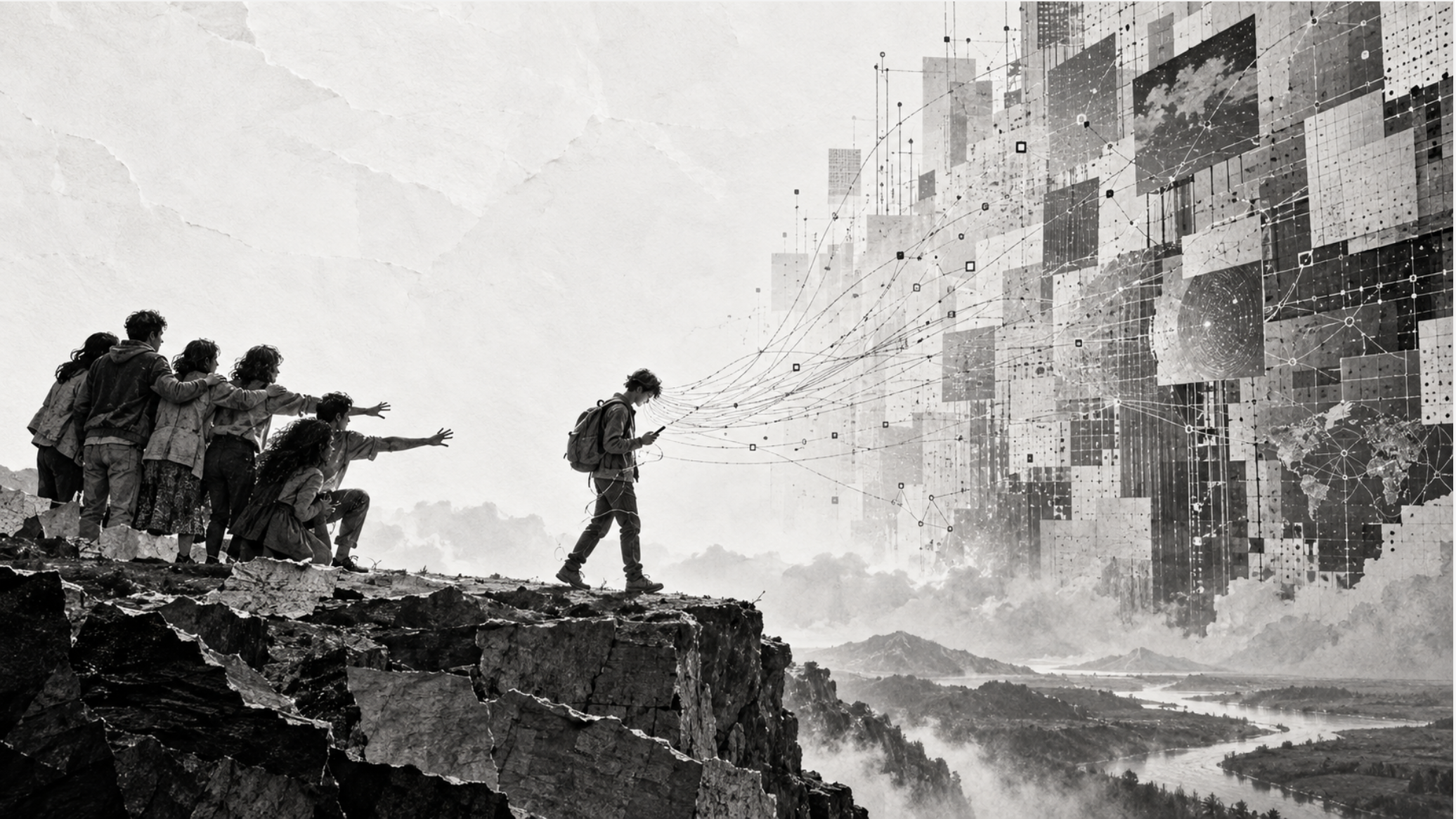
For a long time, since the 1970s, we've been relying on artificial intelligence. We just didn't label it as such. It started with spell check, the red underline that only told you a word wasn't in the dictionary. Then we replaced our ability to navigate with GPS and turn-by-turn maps. Somewhere along the way we stopped memorizing phone numbers, because our devices remembered them for us. Each step handed a small mental task to a machine.
None of those handoffs felt like a loss. That's exactly the point. Cognitive Erosion is quiet. It never arrives as a single dramatic moment. It arrives one convenience at a time.
Why I call it erosion
There's a difference between offloading a task and losing the capacity for it. Cognitive offloading is the single act: you hand a piece of thinking to a machine. You let the calculator do the math. You let the map find the turn. On its own, that's harmless. Useful, even.
Cognitive erosion is what happens when the offloading never stops.
Picture a hillside. The soil holds as long as there's grass anchoring it in. Strip the grass away, and every rain carries a little more of the hill down the slope. No single storm does the damage. The erosion is the accumulation: the same small loss, repeated, until the ground itself is gone. Cognitive offloading is one rainfall. Cognitive Erosion is the hillside after a thousand of them. Offloading is the mechanism. Erosion is the result.
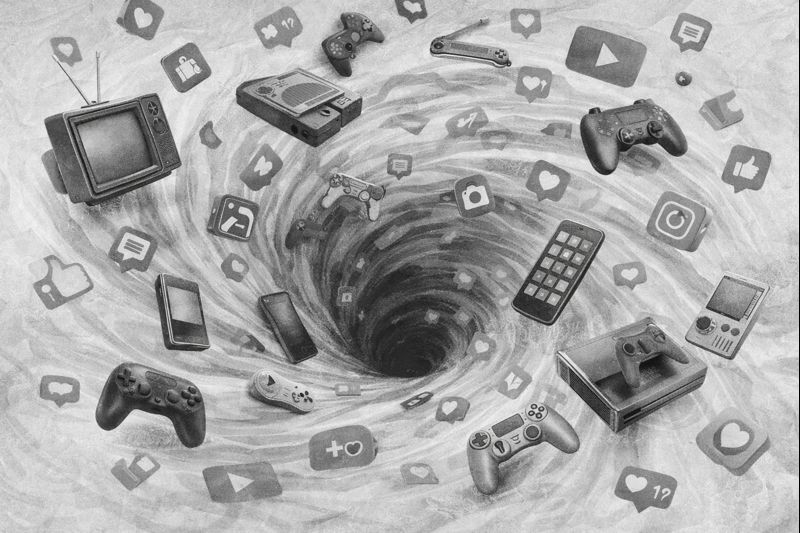
This is also where "brain rot" fits in. I don't think our brains are literally rotting. They are as capable as they have ever been. But the term names something real: brain rot is the symptom you can feel, the fog and sludge after hours of frictionless scrolling and one-tap answers. Cognitive Erosion is the deeper, slower process underneath it, the one impeding the whole mind. Brain rot is what a single eroded day feels like. Cognitive Erosion is what the hillside looks like after a thousand of them. The pop-culture phrase captures the symptom; the framework names what is quietly causing it. So Cognitive Erosion sits in between the two: more grounded than the panic of "brain rot," more human and cumulative than the clinical "cognitive offloading."
What we're actually handing over
Here's the progression that should get a leader's attention: we started by outsourcing memory, and we're now outsourcing thinking itself. We used to know every street name and exit by heart. Now the phone tells us how many minutes until we arrive, and we stop reading the road as our own. We ask Siri for arithmetic a child once did on paper. And with generative AI, we can speak an essay, an argument, or a decision into existence without doing the mental work underneath it.
That's the part that matters. Knowledge is very different from wisdom and experience. When you stop experiencing the process, working the problem, sitting with the difficulty, making the judgment, you don't just lose a skill. You lose the formation that the skill was quietly producing.
There's now hard evidence pointing the same direction. A 2025 study in the journal Societies found a significant negative correlation between frequent AI-tool use and critical thinking, driven by exactly this cognitive offloading, and the youngest participants showed the highest dependence on AI and the lowest critical-thinking scores (Gerlich, 2025). The mechanism is measurable. So is the generational skew.
The generational stakes
Cognitive Erosion is a risk for all of us, but it lands hardest on the youngest. The danger for Gen Alpha and Gen Beta isn't only screen time. It's that curiosity itself may get outsourced before it has a chance to form. When a child can generate an answer by speaking a prompt, the muscle that would have grown from wrestling with the question never gets built. Each handoff is small. The sum is a skill that never forms.
And this is happening faster than any shift before it. Broadband took about seven years to reach half the country. Smartphones did it in five. Generative AI reached 100 million users in two months, and by mid-2025, 58% of adults under 30 were already using it. We are adopting the most cognitively powerful tool in history faster than we can understand what it's doing to our minds.
Where it fits with the other frameworks
Cognitive Erosion doesn't stand alone. It's the downstream cost of the Velocity Gap: the technology races ahead, and our wisdom about its effect on our own minds lags behind. And it's the Friction Doctrine turned inward. We have always tried to remove friction from life, from the Egyptians rolling bricks on logs to the Pascaline calculator to generative AI. But the friction we're now removing is the mental effort that builds character, judgment, and our sense of right and wrong. Remove the struggle of thinking, and you remove some of the thinking itself.
What leaders, parents, and the rest of us do about it
This isn't a call to fear AI or refuse the tools. It's a call to stay awake to what they quietly cost. Keep doing some hard things by hand. Let a child sit in the discomfort of not knowing before you hand them the answer machine. Protect the practices, real reading, real problem-solving, real judgment, that build wisdom rather than just retrieve knowledge. The grass is what holds the hillside. The tools will keep getting easier; the discipline is to keep some of the difficulty on purpose.
For the deeper takes, read how I'm thinking about 2026 and what we lost when life got easier.
Frequently asked questions about Cognitive Erosion
What is Cognitive Erosion?
Cognitive Erosion is a framework from generational futurist Ryan Vet describing the gradual loss of human mental capacities, memory, navigation, arithmetic, critical thinking, and even curiosity, as we hand each one to machines. Individually the handoffs seem harmless; cumulatively, and now accelerated by AI, they atrophy skills or keep them from forming.
How is Cognitive Erosion different from "cognitive offloading"?
Cognitive offloading is the single act of transferring a mental task to a device. Cognitive Erosion is the cumulative result when that offloading never stops. Think of a hillside: offloading is one rainfall, erosion is what the slope looks like after a thousand, once nothing is left to anchor the soil. Offloading is the mechanism; erosion is the outcome.
Isn’t this just "brain rot"?
Not quite. "Brain rot" is the popular name for the symptom, the mental fog after hours of frictionless scrolling and one-tap answers. Cognitive Erosion is the deeper process underneath it: the slow, cumulative loss of skills as we hand them to machines. Our brains aren’t literally rotting, they’re as capable as ever, but they’re being rewired by what we hand away. Think of brain rot as one visible symptom of the wider erosion. Cognitive Erosion is the bridge between the pop-culture term "brain rot" and the clinical term "cognitive offloading."
Is there evidence Cognitive Erosion is real?
Emerging research points that way. A 2025 study in Societies found frequent AI-tool use was negatively correlated with critical thinking, mediated by cognitive offloading, with the youngest users most affected (Gerlich, 2025). Ryan argues the pattern started decades ago with spell check and GPS and is now accelerating sharply with AI.
Who created the concept of Cognitive Erosion?
Generational futurist and USA TODAY bestselling author Ryan Vet, who has been writing and speaking about it since 2025.
Source: Gerlich, M. (2025). AI Tools in Society: Impacts on Cognitive Offloading and the Future of Critical Thinking. Societies, 15(1), Article 6.