Did You Get the Photo of the Goat?
My six-year-old expected me to already know how his day went. That is the part I can't shake.
Read the full essayIn the opening essay of a five-part COLLIDE series on childhood surveillance, Ryan Vet reads the piece that started it all — and makes the case that we quietly reprogrammed the oldest question in parenting.
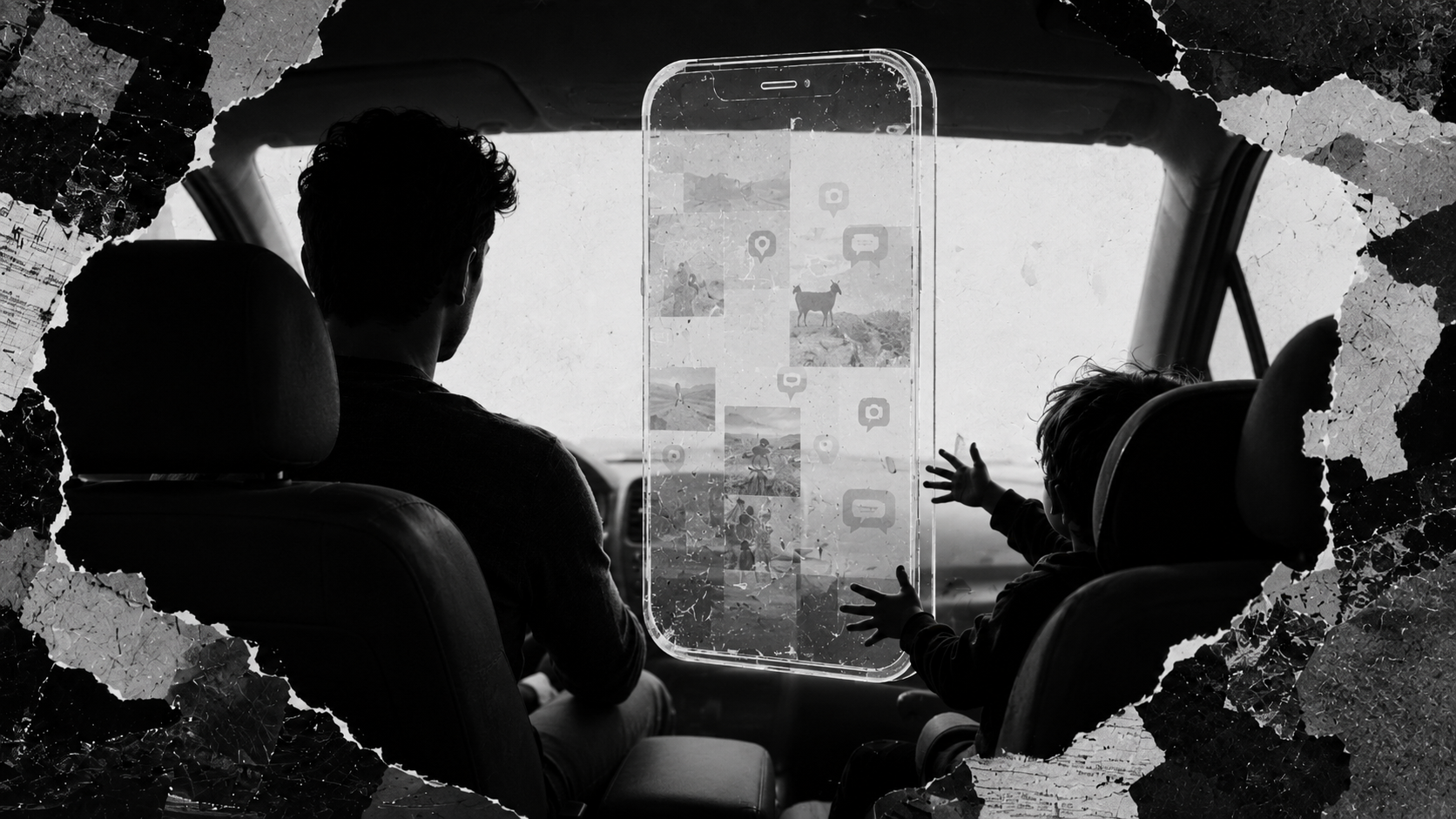
Ryan's six-year-old came home from his first day of farm camp and, before saying a word about his day, asked whether Ryan had already seen the photo the camp texted. The boy's baseline expectation was that he had already been reported on. That single question is the moment the whole series turns on.
The open-ended "how was your day?" — the version that let a child choose their own story — has been replaced by a child who assumes the parent already knows. Ryan connects that shift to trust, autonomy, and the workforce these kids will enter within the decade, and argues that a generation trained to verify before it trusts will lead, hire, and work differently than any before it.
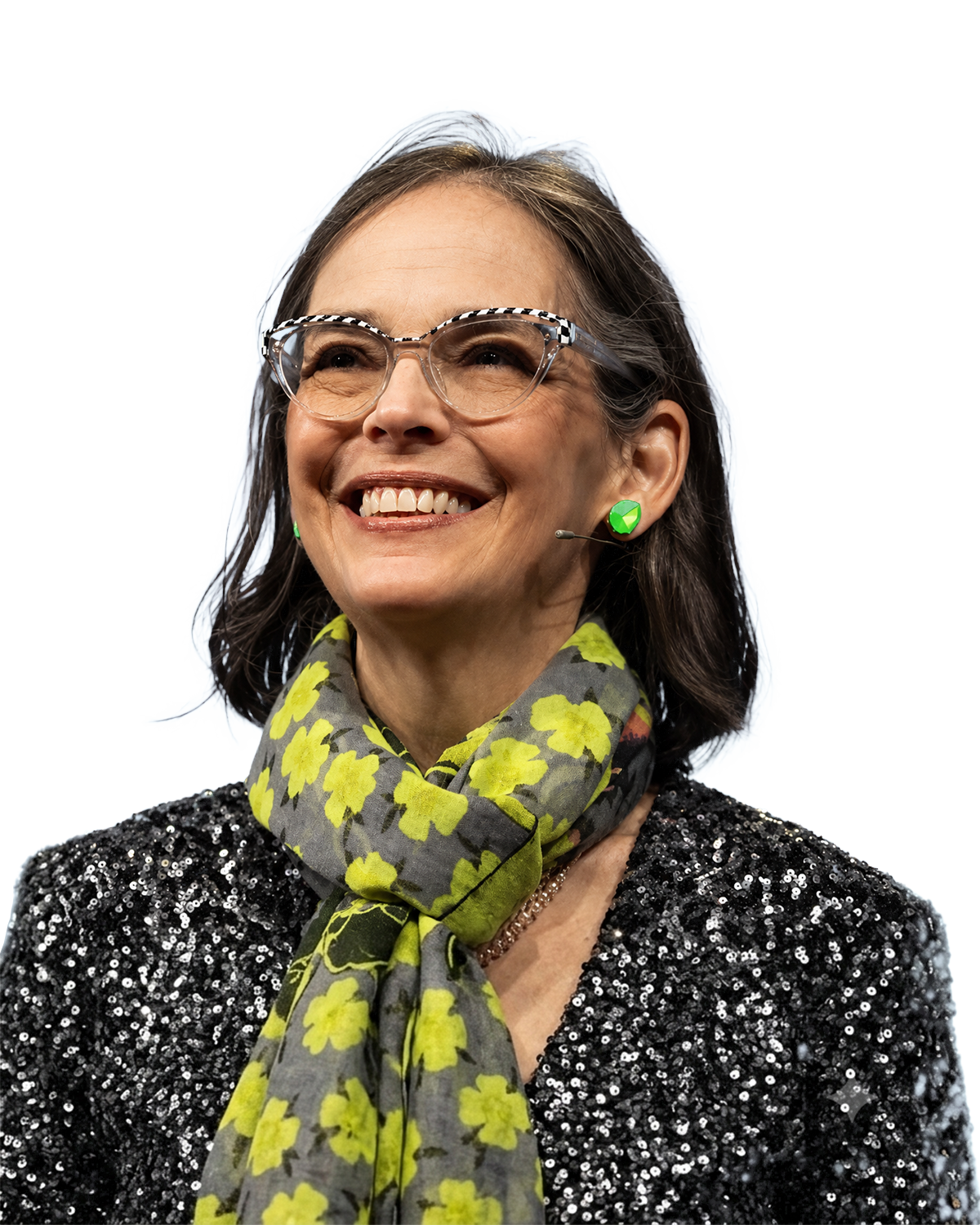
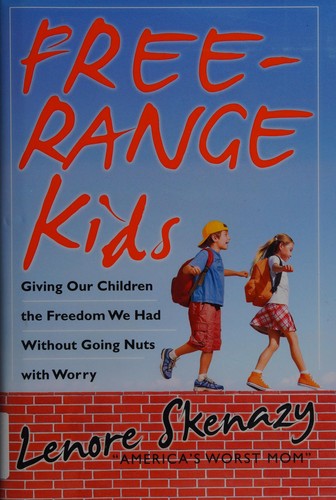
He brings in his conversation with Lenore Skenazy, founder of Free-Range Kids, who called childhood surveillance "the thing that I think about the most and talk about the least," and who framed the trade at the heart of the series: we are replacing faith with certainty, and certainty is the more anxious way to live because it has to be re-checked every few minutes.
A six-year-old's first instinct after camp was to ask whether his dad had already seen the photo the camp texted. His baseline expectation was being reported on — and that is the part Ryan can't shake.
We reprogrammed "how was your day?" The open-ended question that let a child choose their own story has become a child who assumes you already know.
About half of parents now track their child's location in some form (Burnell et al., 2023), but the promise underneath the tracker — that you'll never have to worry again — does not deliver peace.
Certainty is a more anxious way to live than faith, because certainty has to be renewed every few minutes and faith does not.
This is not only a parenting issue. Gen Alpha is eligible to enter the workforce within about five years, and a generation that verifies before it trusts will run companies differently.
The question the whole series turns on: does seeing more of our children's days give us more of our children, or less?
Plain-language definitions for the ideas in this episode. Structured for search and AI answers.
The continuous monitoring, tracking, and recording of children — by parents, schools, apps, cameras, and algorithms — as a normal condition of growing up. Each layer is added for safety; the cumulative effect is a generation coming of age with little expectation of unobserved space.
In this episode: The pattern Ryan traces from a single question in the back seat all the way to the future workplace.
Lines worth keeping, verbatim from the episode.
the thing that I think about the most and talk about the least
We're replacing faith with certainty, and certainty is a lot more tenuous, because you have to keep checking it, than faith
When you remove the not-knowing, you have removed the experience of the gift.
Does seeing more of our children's days give us more of our children, or less?
Clips replayed from earlier conversations on the show. Each links to the full episode.
Straight answers to the questions this essay raises. Open by default, structured for search and AI.
What is the "Did You Get the Photo of the Goat?" episode about? +
It is Ryan Vet reading the opening essay of his five-part COLLIDE series on childhood surveillance. After his six-year-old came home from farm camp and asked whether Ryan had already seen the photo the camp texted, Ryan realized the boy expected to be reported on. The episode uses that moment to examine how constant monitoring reprograms the question "how was your day?" and what a watched childhood does to trust, autonomy, and the future workforce.
What is childhood surveillance? +
Childhood surveillance is the continuous monitoring, tracking, and recording of children, by parents, schools, apps, cameras, and algorithms, as a normal condition of growing up. Each layer tends to be added for safety, but the cumulative effect is a generation coming of age with little expectation of unobserved space. It names the environment a child grows up inside, not any single parenting decision.
How many parents track their children's location? +
Peer-reviewed research finds that about half of parents digitally track their children's location in some ongoing form (Burnell et al., 2023). Ryan's point is not that tracking is inherently wrong, but that the promise underneath it — that you will never have to worry again because you can always check — does not actually deliver peace.
Is this episode part of a series? +
Yes. It is the first of a five-part series on childhood surveillance, in this order: "Did You Get the Photo of the Goat?", "Just Check the Camera, Dad," "Same Footage, Two Verdicts," "Anyone Can Clone Your Voice," and "Gen Alpha Is the Experiment." You can read all five, and the framework behind them, at ryanvet.com/frameworks/childhood-surveillance.
What did Lenore Skenazy say about surveillance on the show? +
Lenore Skenazy, founder of Free-Range Kids, told Ryan that childhood surveillance is "the thing that I think about the most and talk about the least." She framed the trade at the heart of the series this way: "We're replacing faith with certainty, and certainty is a lot more tenuous, because you have to keep checking it, than faith."
Full show notes
My six-year-old climbed into the back seat after his first day of farm camp and, before he told me a single thing, asked whether I had already seen the photo of the goat. His first instinct was to check whether he had been reported on. That is the moment this episode is about.
In the opening essay of a five-part series on childhood surveillance, I read the piece that started it all: a painted goat, a squirt-gun bath, a thirty-minute interrogation on the drive home, and one small question that revealed how a generation now expects to be watched. Gen Alpha, and Gen Beta right behind them, is being raised in a world so tracked, so monitored, and so analyzed — from sleep scores and step counts to location pings and instant grade alerts — that it is quietly rewriting what “how was your day” even means.
I make the case that we reprogrammed the oldest question in parenting. The open-ended “how was your day,” the version that let a child choose their own story, has been replaced by a child who assumes you already know. I connect that shift to trust, autonomy, and the workforce these kids will enter within the decade, and argue that a generation trained to verify before it trusts will lead, hire, and work differently than any before it.
I also bring in my conversation with Lenore Skenazy, founder of Free-Range Kids, who called childhood surveillance “the thing that I think about the most and talk about the least,” and who framed the trade at the heart of the whole series: “We’re replacing faith with certainty, and certainty is a lot more tenuous, because you have to keep checking it, than faith.”
In this episode
- The goat story, and the one question from the back seat that reframed how I think about monitoring kids
- How “how was your day” got reprogrammed from an open question into a report card the parent already read
- Why roughly half of parents now track their child’s location, and the promise underneath the tracker that never actually delivers peace
- Faith versus certainty, and why certainty is the more anxious way to live because it has to be renewed every few minutes
- The gift analogy, and why removing the not-knowing removes the experience itself
- Why this is not just a parenting issue, and what a “verify before you trust” generation means for the future workplace
- The question the whole series turns on: does seeing more of our children’s days give us more of our children, or less?
The full five-part series on Childhood Surveillance
This episode is Part 1. Read the series in order, or start with the Childhood Surveillance framework:
- Did You Get the Photo of the Goat? — how a live-feed childhood reprogrammed “how was your day?”
- Just Check the Camera, Dad — the moment a child reaches for the footage instead of his brother’s word
- Same Footage, Two Verdicts — why more proof is making us trust each other less
- Anyone Can Clone Your Voice — what happens when the proof itself can be faked
- Gen Alpha Is the Experiment — what a fully watched childhood produces, and what to do about it
Referenced in this episode
- Lenore Skenazy on The Ryan Vet Show (Episode 33): Free-Range Kids and Why Overprotection Is the Real Danger
- Burnell, Andrade, and Hoyle (2023), on parental digital monitoring and adolescent adjustment
- Henkel (2014), on how taking photos changes what we remember
- The COLLIDE newsletter, home of the full five-part surveillance series
New COLLIDE essay episodes release every Thursday at 7am ET. Guest-era episodes release Monday mornings at 6am ET. Join the COLLIDE newsletter for the research, reflections, and frameworks behind every episode.