Back to ryanvet.com The Ryan Vet Show
The Future of Childhood Season 1 · Episode 38 · Guest

Tom LeNoble: Facebook Employee Number 57, the Adult in the Room, and Finding Unity

33:06 July 13, 2026 With Tom LeNoble

Follow the show in your app. Apple leads on iPhone, Spotify on Android.

Summary

When something is polarized, there is only one place left to go, and that is toward something new we build together.

Tom LeNoble was employee number 57 at Facebook, recruited out of Palm, the Palm Pilot and Treo company, back when it was still 'the Facebook' and still lived inside college networks. At 50, on a floor full of people fresh out of Brown, Harvard, Yale, and Stanford, he became the person the company called the adult in the room, running service and operations as a tiny unknown startup grew into a global power.

In this conversation, Tom pulls back the curtain on the human side of that story: interviewing with a 19 year old Mark Zuckerberg above a Chinese restaurant, a goodbye that turned into a lunch invitation ten years later, and the safety calls no one on the outside ever saw, from the first hand-built moderation policies to law enforcement subpoenas. Then he and host Ryan Vet widen the lens to responsibility, the human cost of moderation, older users targeted by scams, and how a deeply polarized world might find its way back to unity for the sake of the next generation.


Key takeaways
1

Tom LeNoble was Facebook's 57th employee, hired at 50 from Palm to run global service operations, and became known internally as 'the adult in the room' on a staff mostly fresh out of college.

2

Early Facebook built its first content-moderation rules by hand. The very first, informally called 'nips and cracks,' decided which photos came down, and each rule took hours of debate.

3

LeNoble helped establish Facebook's early relationships with the National Suicide Hotline and the National Center for Missing & Exploited Children, reporting through NCMEC to get people help while limiting company liability.

4

His warning to parents: if you assume your child is not already on social media, you have missed it. Young users route around age gates and barriers, so the responsibility sits with the business to protect all of its users.

5

That responsibility is not only about children. Older adults increasingly become targets of scams and AI voice-clone fraud, and LeNoble argues every business has to stay conscious of how it protects the people it serves.


Terms defined

Plain-language definitions for the ideas in this episode. Structured for search and AI answers.

the adult in the room noun · workplace

The seasoned, often older person on a young team who supplies judgment and steadies fast-moving decisions.

In this episode: LeNoble's role at early Facebook, joining at 50 among staff barely out of college.

nips and cracks noun · content moderation

Early Facebook's informal name for its first photo-takedown policy, deciding which images were removed.

In this episode: An example of how hand-built and debated the earliest moderation rules were.

NCMEC noun · child safety

The National Center for Missing & Exploited Children, the clearinghouse platforms report exploitation to; reporting through it helps users and limits company liability.

In this episode: LeNoble built the early relationship so the company had somewhere to turn.

voice-clone scam noun · fraud

A scam that uses AI to mimic a familiar person's voice to trick someone, often an older adult, into sending money.

In this episode: Raised as today's version of the protect-all-users problem.


Chapters

Jump to any moment. Timestamps deep-link the audio.


The guest
Tom LeNoble

Tom LeNoble

Facebook employee #57, executive advisor, speaker, and coach

Tom LeNoble was employee number 57 at Facebook, hired out of Palm, the Palm Pilot and Treo company, back when it was still 'the Facebook' and lived only inside college networks. Older than almost everyone in the building, he became known as the 'adult in the room,' running the operational and human side of a company that was about to change the world. He interviewed with a 19-year-old Mark Zuckerberg over a Chinese restaurant, sat outside the controller's office where there were no phones because everything was done by email, and helped stand up some of the platform's earliest content-moderation policies, subpoena and law-enforcement processes, and its first relationships with suicide and child-safety hotlines. It gave him a rare, human view of both the promise and the hidden cost of building social media at scale.

Today Tom is a confidential advisor to founders, C-level executives, and nonprofit leaders, the CEO of the Academy for Coaching Excellence, which trains coaches around the world, and the founder of Opening Pathways Collective. Before Palm and Facebook he led customer service at MCI and ran customer service for Walmart.com. He is the five-award-winning author of My Life in Business Suits, Hospital Gowns, and High Heels, with a second book, My Life at Facebook, The Adult in the Room, on the way, and he hosts the podcast Opening Pathways. A metastatic cancer survivor of 14 years and a self-described philanthropist who has worked with underserved communities, youth in the arts, first-generation students, and women's causes, he speaks widely on resilience, the responsibility businesses have to protect their users, and how a deeply polarized world might find its way back to unity.


Transcript
00:00 A cold open on unity
Tom LeNoble · I think we have that opportunity today in humanity. How do we take this polarization that's happening and find something new, knowing that if nothing else, our world, the lives of our children, the future of society and humanity depend on us finding at some level unity.
Ryan Vet · Welcome to another episode of The Ryan Vet Show. I am excited to be here. I thought about dropping the 'the' from The Ryan Vet Show, and part of that's because of our guest, Tom LeNoble. Tom, welcome to the show.
Tom LeNoble · It's great to be here, Ryan. I've been looking forward to this and being with your viewers.
Ryan Vet · Well, thank you so much. And the reason I made the joke about the 'the' is because you joined the Facebook, or at least interviewed at the Facebook, and then went to work for Facebook.com. Could you tell us a little bit about your story as kind of the oldest, the adult in the room, as I think you put it? And your early days of Facebook, and we'll talk about what that means for us today.
01:04 From Palm to 'the Facebook': becoming employee 57
Tom LeNoble · Yeah, it's a great story. I was running global service operations for Palm, the Palm Pilot and Treo people, and I got a call from a recruiter, and it was from a little company that was unknown to me: Facebook, 'the Facebook' at the time, which was in colleges. I thanked the recruiter and hung up the phone. And a buddy called me and said, I referred you to Facebook, you didn't talk to them. To which I said, well, what's Facebook? So, long story short, and it's a great story you can find in my book, I went and interviewed with Mark Zuckerberg when he was 19. And boy, was that an experience. Going upstairs in a suit and arriving at the top of this little office over a Chinese restaurant, and as I came up the stairs there was graffiti art everywhere by the famous David Choe, who worked for stock and is probably worth a quarter of a million dollars or more today for it. And I came around the corner to a bunch of people young enough to be my child, and then was taken to a room to meet Mark Zuckerberg in his signature shorts, sandals, and t-shirt. And I was there in my suit. All I could think was, I need to take something off. So I took my jacket off.
Ryan Vet · That's fantastic. I can't say the natural inclination for most people going to interview is, hey, I need to take something off. So that's wonderful. Now, you interviewed at the Facebook shortly before it became Facebook.com, and you were employee number 57. You got the job, and you were sort of an outlier from who they had hired so far. Could you talk about your role compared to the others who were already there?
Tom LeNoble · I interviewed at that little office that was very tiny, and I started a few weeks later after I gave notice. I ended up, believe it or not, working both places at the same time the last week. It was pretty wild, which I'll never do again. When I started, they had moved across the street and taken over half of a floor, which they ended up taking over the whole building and half of Palo Alto. But I remember walking in the door, and as they took me into this huge room of triads of desks, all I could see was one office across the room. Having left my cushy office looking over the bay at Palm, I thought for sure they were taking me to that office. Well, no. I was taken to the desk right outside the office. That was the controller. They wanted me, I think, to block the door somewhat. But as I sat there with the two people who were going to report to me, on these desks that literally had very little on them, the first thing I noticed was there were no phones. And I remember asking, where are the phones? And these two people turned white, just white, and looked at me and said, phones? We don't want phones. We ask everything by email. And I was like, okay, I know somebody's gonna talk on the phone, likely me. But it was still the Facebook, and shortly became Facebook, as things started ramping up to one of the wildest rides I've ever had in my career. The thing about it was, everybody there was fresh out of college. It was still in colleges. This was their dream job. They were deferring business school, law school, medical school just to work at Facebook. Everyone 20, 21, from Brown, Harvard, Yale, Stanford, and here I was at 50. They called me the adult in the room.
04:37 Ten years later: lunch with the fifth richest man in the world
Ryan Vet · So, Tom, as employee number 57, there had to be some camaraderie at Facebook. I remember many of the startups I've been a part of, when you had that employee number you remembered, especially when it was double digits before you hit triple digits, there was something special. Are there any traditions you all have upheld over the years?
Tom LeNoble · One thing I have to share with you and your viewers, Ryan. When I was leaving Facebook, I went to Mark and said, I want to see you in 10 years. And he looked at me and said, you're leaving. Why do you want to see me? I said, I just want to see what happened to you. You're in your early 20s, I met you when you were 19. I just want to see what happened. So I left and went on with my life and forgot all about it. Ten years later, I was sitting at my desk and a Facebook message popped up that said, still want to have lunch. I looked at that message from Mark Zuckerberg and thought, do I want to have lunch with the fifth richest man in the world? Because he was at the time. To which I responded, heck yes, I want to have lunch with the fifth richest man in the world.
Tom LeNoble · So we arranged to have lunch, and I went to Facebook, still growing madly. I couldn't find parking. I think they moved somebody out of their parking place to give me one. I went through enormous security, was taken upstairs, and there were two glass conference rooms, one was Mark's, he was in there with a group of people, and one was Sheryl's. I positioned myself on a couch where I could look in both directions. And in front of me, in the building I had opened, where there was graffiti art, they had cut out the sheetrock, one of my favorite images, framed it and memorialized it. That was very touching to me. Here I was, back for the first time in all that time. So Mark comes out of his meeting, we greet each other, and a photographer comes up and starts taking pictures. I remember thinking, oh, how sweet, they're going to put me in the newsletter or feature me at the company meeting. And then it hit me. No, you're talking to the fifth richest man in the world. They're taking photos in case something happens. They have evidence you were here. But Mark and I were supposed to have 30 minutes, and we ended up together almost 45. It was a really engaging conversation, and you'll be able to learn more about that later this year when the book comes out, My Life at Facebook, The Adult in the Room. This year, Ryan, is 20 years. Believe it or not, I've had a Facebook account for 21 years. And Mark and I agreed we would see each other in 20 years. A lot has changed, so I don't know what will happen, but that's coming up later this year. I'm hoping that Facebook message pops up again and says, wanna have lunch? Because I'd say yes again.
Ryan Vet · That's such a powerful story, and it brings the humanity back to it. We are still people serving other people, and we often forget the human side when we characterize people in the news. But they're still humans wrestling with the same things we've discussed on this episode.
Tom LeNoble · Absolutely. I remember the first time I met Mark, it felt like I was talking to someone who had five computers going at the same time. You were in the conversation, but there were all these other filters happening. And what was really refreshing at the ten-year mark was that while he had grown up some for sure, I still had the experience of speaking to someone very human, very thoughtful, very bright, and I still felt that processing going on. It was fascinating to me.
08:23 Behind the scenes: policies, subpoenas, and the human cost
Ryan Vet · That's amazing, Tom. I think they needed an adult in the room. We all do at different phases of life. But what's so interesting, you say employee 57, and that's, you're not the first 10, but as of the day of this recording, Bloomberg says Facebook's parent company, Meta, has 79,000 employees worldwide. So 57 is significant. There have been a thousand, 1,500 times more employees since you were there. A lot has changed since those early days on college campuses. Facebook launches in 2004, and within a few years social media is adopted by more than half of Americans, becoming really transformative on culture and society. That's why I wanted you on today, because you have so much insight on how social media evolved and its impact. But you also had to deal with some really tough things being the adult in the room, answering the phone, fraud response, law enforcement requests. Could you talk about some of the things going on behind the scenes that we didn't know about?
Tom LeNoble · Yeah. It was an interesting time because I was working with really, really smart, unbelievably gifted individuals of the millennial generation, which was just coming into its own in the workforce. I could be the mentor and director, which I was, but I quickly learned this generation loved to work in groups, and allowing that to happen created so much space. As we unfolded some of the fun stuff, I remember when photos launched. We would launch it internally and then it would expand, expand, expand. As it did, we needed policies and procedures. One of the first ones was, what do we do about photos when people are exposing things? The actual policy was called 'nips and cracks.' If the photo showed nips or cracks, the photo came down. If not, it could stay up. This might sound simple, but it was hours of discussions about what qualified. Did a sheer count? Was it partially a crack? What did that mean? Some of those things were hysterical.
Tom LeNoble · And then there were the users. As we expanded, all the requests came to me, law enforcement, subpoenas, because we didn't just give information. Even kids had rights. If you were 13 or older, you had a right to what you were doing, which obviously continues to be somewhat controversial. But we were very focused at the time on protecting young people. Parents would call. I remember one in particular, this woman had escalated, and I finally got on the phone with her. I said, ma'am, how can I help you, what in the world is going on? And her response was, you have to make her stop. I said, what? Help me, tell me what you're talking about. And her daughter, I guess, was exposing herself. As she shared this, I had to remind the woman, ma'am, she's your daughter.
Tom LeNoble · And then there were some really difficult things to handle. I helped create the relationship with the National Suicide Hotline and the National Center for Missing and Exploited Children, because at the time, and unfortunately it continues, the suicide rate in this young population was very high, and that troubled me. I wanted to build that relationship so we had somewhere to get help for people when we recognized it, and we even worked on how to identify it and what to do as a policy. Most people don't realize this, but when you report things, you would think you're reporting to the authorities, but you become liable, the company becomes liable. Reporting through the National Center for Missing & Exploited Children removed that liability, so I could report things. The downside is I never got to know the outcome. But as you've heard about many sites, dating sites, all of this, there's the fraud, the pornography, the things that happen with children that we were very, very aggressive about managing.
13:15 Your kids are already on the platform
Ryan Vet · That's so helpful. We've had several conversations now and they've all been enlightening, but one thing that stuck out was when you talk about parents assuming their kids are not on the platform, and you're like, no, they already are. Here we are 20 years after the launch of Facebook and mainstream social media. Kids have been getting on it way under 13, and parents don't think they're there or don't understand what's going on. Could you talk about that?
Tom LeNoble · I know for me, if you told me I couldn't do something, that typically meant I needed to find out more about it. That's natural curiosity some of us have. I'll start from something that just happened last week. I was talking with a friend who said their child had just turned 16 and they were going to let them have their first Facebook. I looked at this mother and said, their first Facebook? And she said, yes, we've not allowed it. I said, if you think your child isn't on Facebook yet, you've missed everything. Even back then, younger people knew the ins and outs of technology and computers better than many of us who'd been seasoned with it over the years. By nature, people find workarounds. Even with policies, strict guidelines, and checkpoints, it doesn't stop the human being, the young mind, from finding a way around something. That happened back then, and we were quite aggressive about it. People would report when children were in there because they felt passionate about it.
Tom LeNoble · And I look at today. There's recently been a judgment in the courts about social media, and I think it goes beyond social media. It's a call for businesses to pay attention to their responsibility to their users. We get into these high-growth startups and businesses, and I find so many clients I work with are so into their ecosystem, they don't see what's coming from the outside. We need to remember that one of our major responsibilities is to protect our users, all users, especially young ones with young minds who are going to try to find ways around whatever barrier and boundary you put in place.
16:01 Responsibility beyond kids: elder care, scams, and knowing the line
Ryan Vet · That's so good. You brought up this word responsibility, and it goes into so many aspects. We've seen the court cases in California, and as of yesterday, which will be old news by the time this airs, the Supreme Court overturned a ruling as well. So there are conversations about who's responsible for what. I don't want to target any one leader of these companies, because that's a big, heavy burden wherever you are. Let him who's without fault cast the first stone. But as a company, what is the responsibility? We've seen the nips and cracks policy, you saw an opportunity to protect. But at some point you have to figure out what's right and wrong, what can be said and what can't, and there's inherent danger with a human trying to decide. Could you talk about your thought process on that? How do you know what's right and what's wrong?
Tom LeNoble · I can speak to back then. I can't speak about current stuff because I'm not there. But we took it very, very seriously, not only the policies we were putting in place, but the legal side of it. Our general counsel, who still speaks on this today, Chris Kelly, an amazing human being and leader, we would look at it from all angles, because it wasn't fair just to impose our thoughts and beliefs. What were the legalities? How are people protected by the law? You may not agree with the law, and then you need to find a way to change it, but it is the current law, so that's part of what you go by. We were quite rigorous about it.
Tom LeNoble · Now, as things grow and change, I look at some of these businesses that, while they may not charge, very much mimic a subscription model. As people time out or age out of the system, you have to bring new people in. For all of business, we need to think about how we do that, what it means, how we're validating it. For me, it's about remembering the totality of it: what's the right thing to do, what's legal, what is the responsibility legally, as well as what people's rights are. And then we need to be conscious and thoughtful about how we treat these groups of people. And it's not only young people. Today I'm seeing it with older people. I remember going to my father's assisted living. We had launched Facebook Groups years earlier, and I was in a meeting with family members, and somebody raised their hand and said, we should have a Facebook group. I thought I was going to fall out of my chair. I'm in an assisted living facility, gosh, Facebook has made it. Through the years, it became a lot of older people on Facebook. As we get older, we have some interesting issues. We become targets of scams and many different things. Our mind may not be as sharp as it once was. So this protection businesses need to look at is far broader than just children. I tend to believe we have some responsibility to be conscious of all our users, all our customers, no matter what business. I reflect that in my coaching practice today. I need to know as a coach when it's time to refer someone to a professional. Many coaches will cross that line. There's a very clear line for when someone needs something more than coaching, a different level of professional than what I offer.
20:06 The hidden human cost of moderation
Ryan Vet · That's good, Tom. You're wise to pivot from just kids, because that's the easy conversation. It seems the most vulnerable, but you brought up those in elder care. As we see an aging population with prolonged life from modern medicine, people are living longer, which leaves time for other things to creep up, like dementia and Alzheimer's, that I've even seen in my own family, that don't allow you to process some of these scams. And with generative AI, we're seeing voice-clone scams, kids calling parents, air quotes for those just listening, and it sounds like they're actually in need, giving wire information, and a parent can't tell the difference. That's not even necessarily older people, that could be anybody. You said there's a hidden cost of moderation and safety, a human cost, because someone behind the scenes has to make these tough decisions. You shared some heart-wrenching stories about the things you had to be part of to help set these policies. Do you mind sharing any of those?
Tom LeNoble · Yeah. It's interesting, Ryan, because this is the side people don't see. At one point I worked as a consultant at a dating site running HR and their customer care organization, and boy, that will open your eyes to what people do on dating sites. But back in the day, things would get escalated to me because people would want subpoenas, and law enforcement would come, over some of the horrific things that go on in our world and what people can do to each other. I remember getting one phone call: a guy had literally dismembered his girlfriend and was barbecuing her on a grill, and they wanted photos that were on Facebook because this person had posted photos. I of course said, get me the subpoena, I want to help, but I also have a responsibility to the company, I can't just give them freely. Another example: someone called me heart-wrenched. Their nephew, they were calling for the parents, had been in an auto accident, and they were convinced someone had done something to the car. I could see clearly on Facebook this person had been drinking with friends on the way there and unfortunately had an event as a result. I can't tell them that. It's not my responsibility, it's not my place. Was my heart hurting? Of course. I'm a human being, and I can't imagine being in that situation. I tried to guide them as best I could, but they got a subpoena and learned on their own that what they thought had happened was not what happened. These things are heartbreaking.
Tom LeNoble · And then there's what we'll just put in the bucket of pornography. At one point certain pictures would get categorized by the system, and I'm working with these kids, really old enough to be my child, and I'd say, let me do those pictures, I'd rather you not have to look at them. I can remember what it felt like to do them. If you look at history, that got outsourced, and even outsourced out of the country in many places, not just Facebook, and the ramifications it has on people to look at those images. Hopefully by now, I know we wrestled with it back then, trying to create technology to handle it without a human being involved. Sometimes it required a human to make a judgment call. So while nips and cracks sounds funny, and it was to us at the time, the policy itself was not funny at all. It became a very stringent and appropriate name later, once we were not all kids in a fun startup. These are real-world things people aren't exposed to, that behind the scenes we were working on, and I'm sure they still wrestle with today. You have a responsibility to look at that and address it, not only for the people having to review it, but for the audience that has to see it. We've gotten a little desensitized to some of this stuff today, and I think businesses suffer because of it.
24:44 Technology, disruption, and the human in the loop
Ryan Vet · That's profound. You just brought up an existential question so many people wrestle with. You basically said you all tried to create technology to solve problems, but at the end there is still a human who has to judge it. We so often rely on and trust technology to solve these problems, but even as good as it's gotten, even in the last five years, with accelerations in computing power and energy that let generative AI take shape and force unlike ever before, there's still humans somewhere making that decision. Technology isn't doing that. And that's a real toll. What are your thoughts?
Tom LeNoble · Well, I'm going to date myself first. I remember the first fax, and there are people listening who are going to go, what the heck's a fax? We thought it was magic. I was there when we took the paper off people's desks and put computers on their tables. Everybody thought they were going to lose their job. Email came along, we thought that was the end of the world, and now we just love to end email. Then the internet and that revolution, and now we're getting into AI. Here's what I see, two things. Technology, as we develop it, is what creates more technology, all the things we get to do today that we never could before. I also think people disrupt the technology. Just like we're talking about looking at images, people come along and disrupt that, and that creates new technology. As people try to break things and get around things, it creates even more. One of my pet peeves right now, I don't know if it's happened to you, is people putting meetings on my calendar from people I've never spoken to. They think I'm going to click on it and think I belong in that meeting and get hooked in somehow. Watch, I predict very soon someone will create technology to stop it, and then someone will disrupt something else. So technology builds on the beauty of our minds creating new things, just like AI. Yes, things are going to get disrupted, things are going to change, that's what happens. But think of all the information that will be available and how we might use it to create new opportunities. It's a scale that goes back and forth, but there will always be someone trying to break it. I remember back in the day at Facebook, it was not uncommon, and I think at other companies too, for very young hackers to become new hires.
27:36 Tom's story: reinvention, cancer, and a life of service
Ryan Vet · Yeah, absolutely. The hackathons and everything else, they make great developers. They figured out the ways around it, they were critical thinkers, and I think we've lost a lot of that critical-thinking ability today. Now, you've shared so much insight, but you're not just a Facebook employee. You didn't just work at Palm or a dating site. You have your own story, a story of a cancer survivor, and you speak, you coach, you consult, you've got a podcast that, thank you for having me on. Everyone, listen to that episode of Tom's podcast and his whole podcast. But Tom, could you share a little about your story and what shaped you to be who you are today?
Tom LeNoble · Yeah, thank you, Ryan. I love that you asked me this. And by the way, viewers, Ryan's episode on my podcast should be out in just a couple of weeks, probably you've already seen it by the time you hear this. I'd like to say I retired to be inspired. I had this great corporate career. I led customer service at MCI, the long-distance company that broke up all the Bells. I was head of customer service at Walmart.com, ran global service operations at Palm. You've heard the Facebook story, you've heard the dating site. Startups and their boards would send me in as the VP of HR or the CEO to address some perceived problem, which was never the problem. And I fell in love, got married, traveled the world, kicked back a bit, and then knew I had more to share. So today I'm a confidential advisor to founders, C-levels, nonprofit executives, and professionals. I'm the author of a five-award-winning book, My Life in Business Suits, Hospital Gowns, and High Heels, that tells a lot of this story. I'm also a professional speaker, and I have my own podcast, which you were on, Ryan, thank you, Opening Pathways. I'm the CEO of the Academy for Coaching Excellence. We train coaches around the world. It's 24 years old, and I love my team there. What I love to share with people is two things. One, I'm actually a philanthropist. I do everything I do to serve others. I've worked with underserved communities, youth in the arts, first-gen students, and women's issues. And two, through everything I've told you, I've had two life-threatening illnesses. All of those jobs, I was sick and no one ever knew it. The first one, I was told, was terminal. I've had metastatic cancer now for 14 years, and Ryan, as you can see, I'm still here.
30:16 Technology, trust, and finding unity
Ryan Vet · Well, Tom, I appreciate that, and I appreciate all you do to have these conversations and make a positive impact. I want to leave with this last thought. What do you think the relationship is between technology, trust, and humanity?
Tom LeNoble · I think we've gotten into a time where we as a world, not just our country, have become polarized. And one thing I know to be true: when something is polarized, and if you can watch my hands, that tension is happening, there is only one place to go, and that's somewhere new. The only way to break polarization is to find something new to go to. That's what we see technology often do. Something is built, it becomes stale, or someone has a new idea, and somebody creates something new. I think we have that opportunity today in humanity. How do we take this polarization and find something new, knowing that if nothing else, our world, the lives of our children, the future of society and humanity depend on us finding at some level unity? What I believe is that when you can turn off a lot of the noise, most of us are wonderful, loving, caring people who want the best for other people. We hear a lot of noise that tells us something different. I encourage all of us to take the first step, to look at ways where we can break that cycle, because this polarization just gets tighter and tighter, and something will break badly. Let's find a way to lift ourselves up and come together.
32:13 Where to find Tom LeNoble
Ryan Vet · Tom, I love that. Thank you so much for sharing it. I could not have said it better myself. How can people find you, get in touch, listen to more of your podcast, and get your book that's already out, or the one that may or may not be coming soon? How can they find you?
Tom LeNoble · You can find me at openingpathwayscollective.com. I'm on all the socials, I'm on LinkedIn, and while my team goes crazy when I do this, my email address is resilience@tomlenoble.com. I'd love to hear from you.
Ryan Vet · Well, Tom, thank you so much for being on the show today and sharing your wisdom, your insight, your story, your journey, and words for the future.
Tom LeNoble · Thank you, Ryan. It's been great.
Ryan Vet · Thanks, Tom. And for everyone listening, thanks for listening to another episode of The Ryan Vet Show. Inspire forward.
Tom LeNoble · Thanks for tuning in to The Ryan Vet Show. Be sure to subscribe, comment, and like this episode, plus share it with someone who needs to hear it.

Frequently asked
Who is Tom LeNoble? +

Tom LeNoble was Facebook's 57th employee, recruited from Palm to run global service operations in the company's earliest days. Today he is an author, professional speaker, and executive coach, CEO of the Academy for Coaching Excellence, and founder of Opening Pathways Collective.

What was Tom LeNoble's role at early Facebook? +

He ran service and operations as one of the only seasoned executives on a very young staff, earning the nickname 'the adult in the room.' He helped build Facebook's first user-safety policies and its early relationships with organizations like the National Center for Missing & Exploited Children.

Did Tom LeNoble meet Mark Zuckerberg? +

Yes. He interviewed with a 19 year old Zuckerberg in a small office above a Chinese restaurant, and a decade after leaving, Zuckerberg messaged him for lunch. He recounts both moments in the episode and in his forthcoming book about his time at Facebook.

What is Tom LeNoble's message about technology and society? +

He argues that every business has a responsibility to protect all of its users, not just children, and that a polarized world can only move forward by finding something new to unite around, for the sake of the next generation.


Resources mentioned
Books
Also mentioned
Full show notes

Tom LeNoble was employee number 57 at Facebook, recruited out of Palm, the Palm Pilot and Treo company, back when it was still “the Facebook” and lived inside college networks. As the older “adult in the room,” he had a front-row seat while a tiny unknown startup became one of the most powerful companies in the world. In this conversation with Ryan Vet, he pulls back the curtain on the human side of that story, from meeting a 19-year-old Mark Zuckerberg to the goodbye that turned into a standing 20-year lunch date, then widens the lens to responsibility, the parts of tech most people never see, and how a polarized world might find its way back to unity.

What you’ll learn

  • How a Palm executive running global service operations became Facebook employee number 57 and the “adult in the room.”
  • What it was like to interview with a 19-year-old Mark Zuckerberg over a Chinese restaurant, and the goodbye that became a standing 20-year lunch date.
  • Why early Facebook had no phones, and what it taught Tom about a generation that wanted to work in groups.
  • The real story behind early content moderation, from the “nips and cracks” policy to subpoenas, law enforcement requests, and building the first ties to suicide and child-safety hotlines.
  • Why “your kids are already on the platform” and what that means for how businesses think about protecting users.
  • Why responsibility extends beyond children to older users facing scams, voice-clone fraud, and cognitive decline.
  • The hidden human cost of moderation, and why there is still a person behind the technology making the hard call.
  • How Tom thinks about technology, disruption, and using that same cycle to break polarization and find unity.

Connect with Tom LeNoble

About Ryan Vet

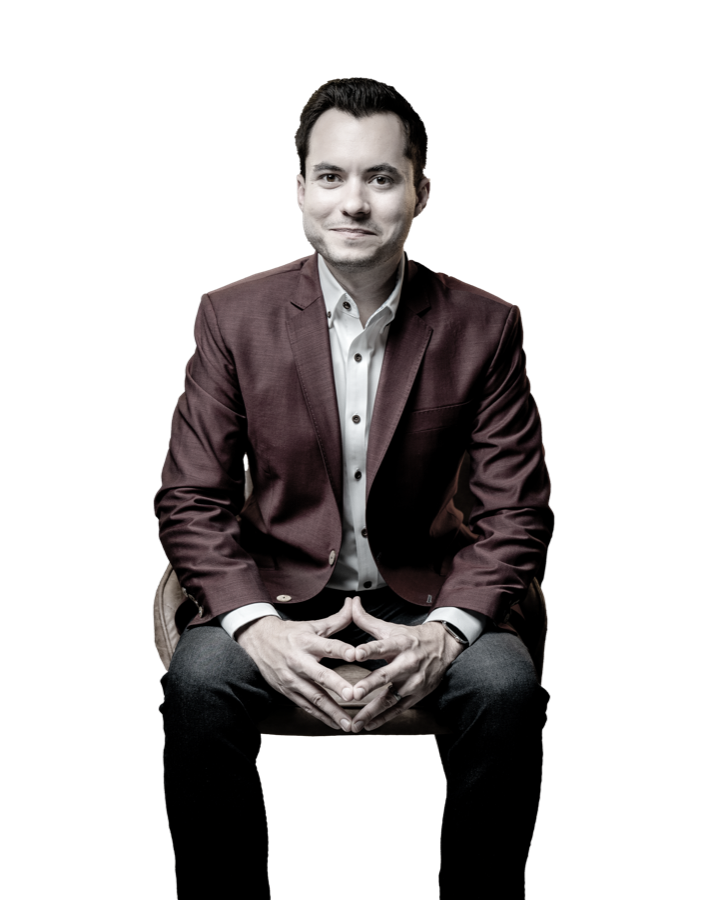
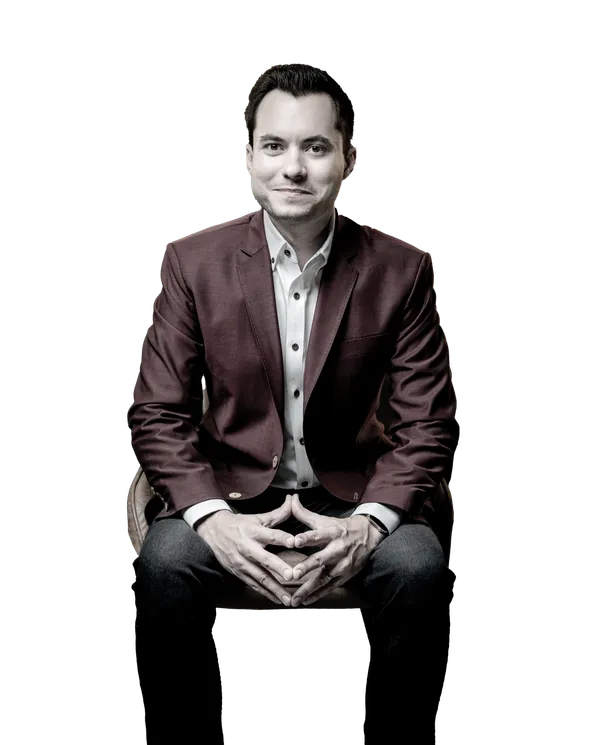
Ryan Vet is a USA TODAY bestselling author, futurist, and international keynote speaker whose insights on generations, culture, and the future of work have been featured in Forbes, Financial Times, ABC, NBC, and CBS. If you want deeper research on generations and the future of culture and society, join his weekly newsletter at ryanvet.com/collide.
COLLIDE · A weekly essay by Ryan Vet

Read the thinking behind every episode.

Join 23,000+ leaders reading Every Tuesday at 4pm ET.

Free. Weekly. Unsubscribe anytime.
Ryan Vet