

Trish Leigh
Cognitive neuroscientist · Neurofeedback practitioner
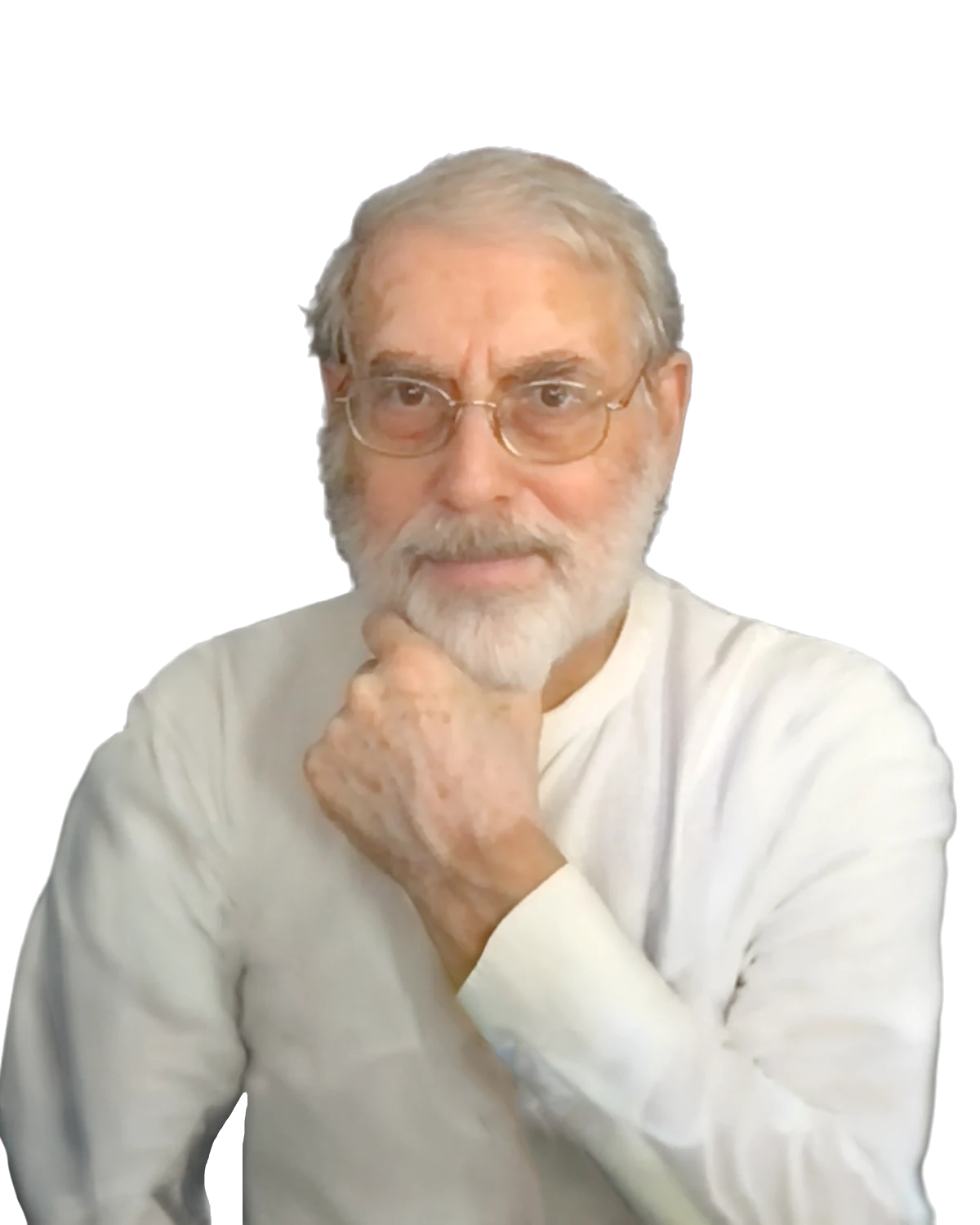
Dr. Trish Leigh is a cognitive neuroscientist, author, and board-certified neurofeedback practitioner with more than 25 years of experience. She uses QEEG brain mapping to see how a person's brain is actually performing, which gives her a rare view of what screens and algorithms do to the wiring underneath a habit. She leads the Super Normal Project, a nonprofit focused on children and screens, and she is the author of Mind Over Explicit Matter.
Reviewed August 2026Trish Leigh is a cognitive neuroscientist and a board-certified neurofeedback practitioner with more than 25 years of experience. Her vantage point is unusual: through QEEG brain mapping, quantitative electroencephalography, she can measure the electrical activity running through a person's brain and compare it against the known pattern of an optimized one. She describes it as looking into the engine. It shows her not just what somebody is doing, but what in the brain is driving them to do it.
That view is what makes her position on technology different from most. She argues that what people consume online is a supernormal stimulus, engineered to be more rewarding than anything in ordinary life, and that the reward system does not treat it as entertainment. It treats it as training. The brain learns, through repetition, to expect constant novelty, and the ordinary world stops registering. She ranks the stimuli by intensity, with hypersexualized content at the top, then social media and parasocial relationships, then short-form video, then long-form. She is direct that what follows is measurable dysfunction rather than weak willpower, and she connects the pattern to the rise in anxiety, depression, and attention problems in young people.
Her message is agency, not fear. She teaches what she calls the instant rewire, built on the finding that a person has roughly 3 seconds between feeling the pull toward a screen and acting on it, and that the pivot has to be decided in advance. She leads the Super Normal Project, a nonprofit focused on children and screens, and is building a program called Unwired for young people and their parents. She is the author of Mind Over Explicit Matter, hosts a YouTube channel where she publishes 4 pieces of practical brain-training content a week, has a further book in the works, and is the mother of 5 children between 15 and 23, all of them digital natives she has been running this experiment alongside for two decades.
On The Ryan Vet Show, Trish Leigh starts with the sentence that frames the whole conversation: you open your phone and you think you are seeing the world, and you are not. You are seeing the world the algorithm curated for you. She had her family read their Google feeds out loud to each other and every one was different. Hers was coffee, neuroscience, personality tests, and Bernedoodle puppies. Her husband's was golf. The point is not that the feed is bad. The point is that there is no shared world behind it anymore, and that the loop runs both ways. You trained it, and now it is training you.
The mechanism she keeps returning to is dopamine, laid out as what she calls the 4D cycle. The pull back toward the screen is already a drip. Staying in it is the deluge, then the drowning. The part most people miss is the fourth stage: when you come out and go back to your life, you are in a deficit. Your baseline for what feels good has been raised, so work, hobbies, and relationships stop landing and start reading as stress. She calls that state strained brain, and it is why she says someone who used to enjoy shooting pool simply stops going.
She and host Ryan Vet trace the same pattern through the places people do not think of as algorithmic. Food delivery apps that make cooking a meal feel like an imposition. Dating apps, where she argues the format itself distorts how attraction is supposed to work, because walking into a room and approaching 50 people at once is not how intimacy gets built. A voice assistant that had quietly been steering her music toward country until she noticed. And AI, where the friction drops to nothing and the machine will build whatever the arousal template asks for. Her answer is the instant rewire: know your pivot before the 3 seconds run out, and go do the real-world version of the thing you actually wanted.
She lands on something more practical than doom. She calls the pull a dopamine hijack, and describes the state it leaves behind as strained brain, a wired and tired pattern where the brain runs too fast and too slow at once and reaches for the screen for both stimulation and soothing. Breaking that loop is the work. Her own version of it is discipline rather than willpower: brain breaks scheduled into her calendar and taken on the days she wants to skip them, a 23-minute break every 90 minutes with 15 minutes every 2 hours as the floor. And she is blunt about what online connection is not. You do not need 100 authentic relationships, you need 1 or 2, people who will tell you the things you do not want to hear. The name she is putting on all of it is the desire rewire: work out what you authentically want in the real world, prioritize it, and go after it.
You open your phone and you think you're seeing the world. You're not. You trained it, but now it's training you.
You're seeing the world that has been curated for you by the algorithm.
Real life can't compare anymore.
Who is Dr. Trish Leigh?
She is a cognitive neuroscientist, author, and board-certified neurofeedback practitioner with more than 25 years of experience. She uses QEEG brain mapping, a measurement of the electrical activity in a person's brain, to identify the performance patterns underneath a behavior, and she works with clients worldwide on screen compulsions, focus, and anxiety. She leads the Super Normal Project, a nonprofit focused on children and screens.
What is QEEG brain mapping?
QEEG stands for quantitative electroencephalography. An EEG measures the electrical energy flowing through the brain, the way an EKG measures the electrical signal in the heart, and the quantitative part means the result is measurable against known patterns. Leigh uses it to see whether a brain is running in the optimized pattern, calm but alert and able to shift gears, or in a dysregulated one.
What is a supernormal stimulus?
It is a stimulus engineered to be more rewarding than the real thing it imitates, which is why it outcompetes ordinary life for your attention. Leigh's argument is that most online content qualifies, and that the ranking runs by intensity: hypersexualized content at the top, then social media and parasocial relationships, then short-form video, then long-form. The shorter and more intense the content, the stronger the effect.
What is the instant rewire?
It is Leigh's term for the pivot you make in the roughly 3 seconds between feeling the pull toward a screen and giving in to it. The rule is that the alternative has to be chosen in advance, because 3 seconds is not enough time to decide. Instead of ordering delivery, you go to the store, cook the meal, and eat it with someone. The point is to get the joy and the pleasure from the real-world version of what you were reaching for.
What does Trish Leigh say about screens and young people?
She argues that for the first time in recorded history the younger generation carries more mental and physical health problems than the one before it, and that the top three she sees are anxiety, ADHD, and depression, alongside a loss of focus. Her explanation is repetition. Time in front of a screen is practice at one set of behaviors and no practice at the rest, including greeting people, self-advocacy, and physical activity.


Read the thinking behind every episode.
Join 24,000+ leaders reading Every Tuesday at 4pm ET.
Check your inbox to confirm. The next COLLIDE lands Every Tuesday at 4pm ET.