Back to ryanvet.com The Ryan Vet Show
AI, Up Close Season 1 · Episode 52 · Guest

Dr. Trish Leigh: Miswired by the Algorithm, the Dopamine Hijack, and Three Seconds to Pivot

49:46 August 31, 2026 With Trish Leigh

This conversation discusses compulsive behavior and explicit content in a clinical context.

Follow the show in your app. Apple leads on iPhone, Spotify on Android.

Summary

You trained the algorithm. Then it started training you, and a cognitive neuroscientist can watch the rewiring happen on a brain map.

Dr. Trish Leigh has spent more than 25 years reading brains. Through QEEG brain mapping, a quantitative EEG that measures the electrical energy moving through the brain the way an EKG reads the heart, she can see whether someone is running in the optimized pattern, calm but alert and able to shift gears, or in a dysregulated one. That is what makes her account of screens different from the usual one. She is not describing a habit. She is describing a measurable change in how the machine is wired.

Her argument is that most of what people consume online is a supernormal stimulus, engineered to be more rewarding than the thing it imitates. The reward system does not file that away as entertainment. It files it as training. Repetition raises the baseline of what feels good until, as she puts it, real life can't compare anymore. She lays out the mechanism as a 4D dopamine cycle: the drip you feel when the phone pulls at you, the deluge once you are in, the drowning if you stay, and the part almost nobody accounts for, the deficit waiting on the other side, where work and hobbies and relationships stop landing and start reading as stress.

Host Ryan Vet follows her into the places nobody thinks of as algorithmic. Food delivery. Dating apps. A voice assistant quietly steering her music toward country. AI, where the friction drops to zero and the machine will build whatever you ask it for. Her answer is not to be afraid of any of it. It is the instant rewire: you get roughly 3 seconds between the pull and the scroll, that is not enough time to decide anything, so the pivot has to already be chosen.


Key takeaways
1

QEEG brain mapping measures the electrical energy moving through the brain the way an EKG measures the heart. There is a known pattern for an optimized brain, calm but alert and able to shift gears, which is what makes screen compulsion visible as a performance pattern rather than a character flaw.

2

A supernormal stimulus is engineered to be more rewarding than the real thing it imitates. Leigh ranks online content by intensity: hypersexualized content at the top, then social media and parasocial relationships, then short-form video, then long-form. The shorter and more intense, the stronger the pull.

3

Leigh's 4D dopamine cycle runs drip, deluge, drowning, deficit. The fourth stage is the one people miss: after the screen, the brain's baseline for what feels good has been raised, so ordinary work and hobbies and relationships register as stressors. She calls that state strained brain.

4

You have roughly 3 seconds between feeling the pull toward a screen and acting on it. That is not enough time to decide what to do instead, which is why Leigh teaches choosing the pivot in advance. She calls it the instant rewire.

5

Everyone's feed is different, which Leigh's family proved by reading their top 10 suggestions out loud to each other. Her conclusion is that there is no shared world behind the phone anymore, and that the loop becomes self-referential, shaping not just what you enjoy but what you know and who you think you are.

6

For the first time in recorded history, Leigh says, the younger generation carries more mental and physical health problems than the one before it. The three she sees most are anxiety, ADHD, and depression, and her explanation is repetition: hours of practice at one set of behaviors and none at the rest.

7

Leigh's prescription is discipline rather than willpower. She schedules brain breaks into her calendar and takes them on the days she wants to skip them. Her target is a 23-minute break every 90 minutes, with a 15-minute break every 2 hours as the floor.

8

The answer to online connection is not more of it. Leigh argues a person needs 1 or 2 authentic relationships rather than a hundred, people who will be there in the real world and will tell you the things you do not want to hear.


Terms defined

Plain-language definitions for the ideas in this episode. Structured for search and AI answers.

QEEG brain mapping noun · neuroscience

Quantitative electroencephalography. An EEG measures the electrical energy flowing through the brain, the way an EKG measures the electrical signal in the heart, and the quantitative part means the reading can be compared against known performance patterns.

In this episode: How Leigh can see what is driving a behavior instead of guessing at it. She describes it as looking into the engine.

supernormal stimulus noun · behavioral science

A stimulus engineered to be more rewarding than the natural thing it imitates, so it outcompetes the real world for attention. It capitalizes on evolution and then distorts it.

In this episode: Leigh's category for most online content, ranked by intensity from hypersexualized material down through social media, short-form video, and long-form.

the 4D dopamine cycle noun · Trish Leigh framework

Four stages of a screen session: the drip, the pull you feel before you have even opened anything; the deluge, once you are in; the drowning, the longer you stay; and the deficit, the low that follows when you return to ordinary life.

In this episode: Her explanation for why someone who used to enjoy shooting pool simply stops going.

strained brain noun · Trish Leigh framework

The stressed state a brain enters after the screen, when its baseline for what feels good has been raised so far that normal work, hobbies, and relationships read as stressors instead of rewards.

In this episode: The reason real life stops competing, and the state the instant rewire is designed to interrupt.

instant rewire noun · Trish Leigh framework

A pre-chosen real-world substitution made in the roughly 3 seconds between feeling the pull toward a screen and giving in to it. The alternative has to deliver the joy as well as the pleasure, which is why it is a decision made in advance rather than in the moment.

In this episode: Instead of ordering delivery again: go to the store, cook the meal, and eat it with someone.

desire rewire noun · Trish Leigh framework

Working out what you authentically desire from your life in the real world, prioritizing it, and going after it, so there is something specific to pivot toward instead of a vague instruction to use the phone less.

In this episode: The idea she is rebuilding her work around, and the note the episode closes on.

arousal template noun · neuroscience

The specific image, scenario, or platform a person's brain has linked to its dopamine response through repetition. It is learned, not fixed, and it differs from person to person.

In this episode: Why Leigh says generative AI is a step change: it lets someone customize, with specificity, exactly what their template already responds to.


Notable quotes

Lines worth keeping, verbatim from the episode.

You open your phone and you think you're seeing the world. You're not. You trained it, but now it's training you.
Trish Leigh 00:04
You're seeing the world that has been curated for you by the algorithm.
Trish Leigh 12:58
Real life can't compare anymore.
Trish Leigh 00:17
For the first time in history, the younger generation has more mental and physical health issues.
Trish Leigh 00:17
Their brain is literally hijacked and it creates a miswiring in the brain.
Trish Leigh 00:35
You basically have three seconds to pivot.
Trish Leigh 00:35
And then your relationship, your work, your hobbies actually become like stressors because they can't compete with the supernormal stimuli.
Trish Leigh 32:10
Even if you make the person look like a real person, they are not a person in your life in AI.
Trish Leigh 35:36
We are being programmed more than we're programming the algorithm.
Ryan Vet 00:13
We're removing friction from absolutely everything we do, and we're becoming at the same time more isolated and lonely.
Ryan Vet 38:33
The brain becomes hijacked by dopamine. That's what pulls it back into the screen. So it's not even a person choosing to go back.
Trish Leigh 39:30
You need to be seen, understood, accepted by a couple people in the real world who will be there with you, who will tell you the things you don't want to hear.
Trish Leigh 39:30
I've got 10,000 followers, but those are not authentic relationships.
Trish Leigh 39:30
I like to encourage people to use discipline, not willpower.
Trish Leigh 45:34
I want people to figure out what they authentically desire from their life in a healthy way in the real world, and then prioritize that and go after it.
Trish Leigh 48:22
I always say you have to be an early adopter right now, more than ever.
Trish Leigh 39:30

Chapters

Jump to any moment. Timestamps deep-link the audio.

The guest
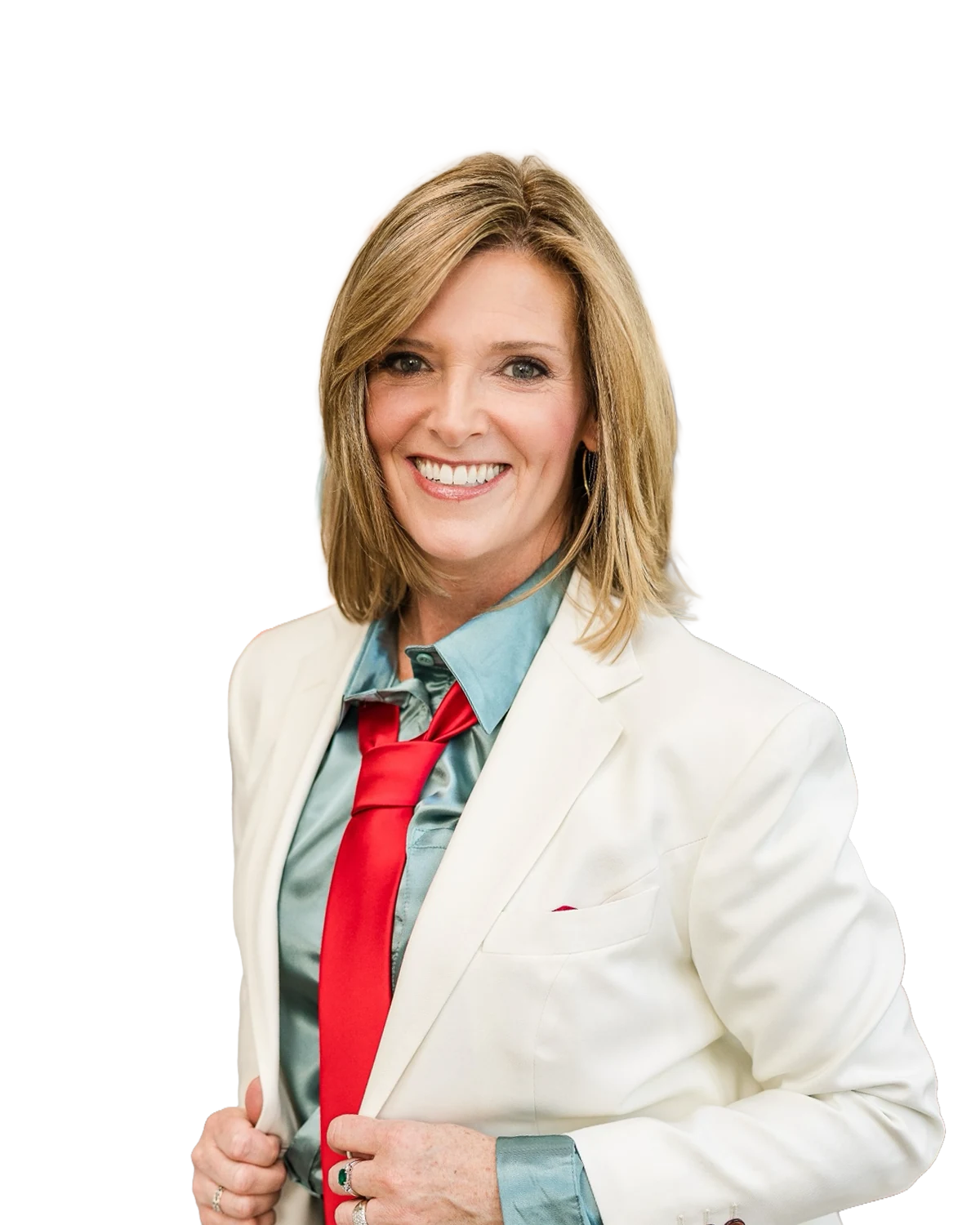
Trish Leigh

Trish Leigh

Cognitive neuroscientist · Neurofeedback practitioner

Trish Leigh is a cognitive neuroscientist and a board-certified neurofeedback practitioner with more than 25 years of experience. Her vantage point is unusual: through QEEG brain mapping, quantitative electroencephalography, she can measure the electrical activity running through a person's brain and compare it against the known pattern of an optimized one. She describes it as looking into the engine. It shows her not just what somebody is doing, but what in the brain is driving them to do it.

That view is what makes her position on technology different from most. She argues that what people consume online is a supernormal stimulus, engineered to be more rewarding than anything in ordinary life, and that the reward system does not treat it as entertainment. It treats it as training. The brain learns, through repetition, to expect constant novelty, and the ordinary world stops registering. She ranks the stimuli by intensity, with hypersexualized content at the top, then social media and parasocial relationships, then short-form video, then long-form. She is direct that what follows is measurable dysfunction rather than weak willpower, and she connects the pattern to the rise in anxiety, depression, and attention problems in young people.

Her message is agency, not fear. She teaches what she calls the instant rewire, built on the finding that a person has roughly 3 seconds between feeling the pull toward a screen and acting on it, and that the pivot has to be decided in advance. She leads the Super Normal Project, a nonprofit focused on children and screens, and is building a program called Unwired for young people and their parents. She is the author of Mind Over Explicit Matter, hosts a YouTube channel where she publishes 4 pieces of practical brain-training content a week, has a further book in the works, and is the mother of 5 children between 15 and 23, all of them digital natives she has been running this experiment alongside for two decades.


Frequently asked

Straight answers to the questions this essay raises. Open by default, structured for search and AI.

What does it mean to be miswired by the algorithm? +

Leigh's argument is that the algorithm is not just holding your attention, it is training your brain through repetition. Every time a novel, highly stimulating post triggers the reward system, the brain learns to expect that level of stimulation, and the electrical pattern shifts with it. She is clear that what results is measurable dysfunction rather than weak willpower, which is why she describes it as a miswiring rather than a bad habit.

What is the 4D dopamine cycle? +

It is Leigh's four-stage description of a screen session. The drip is the pull you feel before you have opened anything, when you want to check a text or an email. The deluge is the dopamine flowing once you are in. The drowning is what happens the longer you stay, and it gets worse the more intense the content. The deficit is the stage people miss: you come out with a raised baseline, so ordinary life feels flat and your own work starts to read as stress.

How long do you actually have to resist the pull of your phone? +

About 3 seconds, which Leigh points out is an instant, not a window for deliberation. That is the whole basis of what she calls the instant rewire. Because 3 seconds is not enough time to decide anything, the alternative has to be picked in advance, and it has to be the real-world version of whatever you were reaching for, so you get the joy along with the pleasure.

Why does Trish Leigh say dating apps are risky? +

Her objection is to the format rather than to online dating itself. She frames it as walking into a room and approaching every single person in it at once, which is not how attraction or intimacy is built. That produces intensity and novelty instead of connection, and 49 non-responses out of 50 get computed as rejection. She also argues the format is hard on people with low emotional intelligence, and cites research indicating that men's self esteem drops while using the apps.

What does Trish Leigh recommend parents do about screens? +

Balance the screen time with an equal amount of off-screen life, and give a child something real to go do. Her example is her youngest daughter, who rides horses and uses social media mostly to follow other equestrians, which Leigh points to as intentional use rather than a feed running the person. She is also building a program called Unwired to teach young people and their parents why these compulsions form in the first place.

Resources mentioned
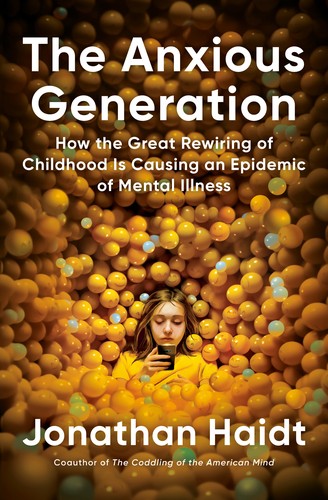
Books
Also mentioned

Transcript
00:01 Cold open
Ryan Vet · On this episode of The Ryan Vet Show.
Trish Leigh · You open your phone and you think you're seeing the world. You're not. You trained it, but now it's training you.
Ryan Vet · We are being programmed more than we're programming the algorithm.
Trish Leigh · It's terrifying because it is affecting the vast majority of people. Real life can't compare anymore. For the first time in history, the younger generation has more mental and physical health issues.
Ryan Vet · Reminds me of WALL-E, where they're all sitting in chairs and they're plugged in and they can't get unplugged.
Trish Leigh · Their brain is literally hijacked and it creates a miswiring in the brain. You basically have three seconds to pivot. I call it the instant rewire. Figure out what they authentically desire from their life, prioritize that, and go after it.
00:53 Meet Dr. Trish Leigh
Ryan Vet · Welcome to another episode of The Ryan Vet Show. I'm excited to have with me today Dr. Trish Leigh. She's a cognitive neuroscientist. She's an author, a board-certified neurofeedback practitioner with 25 years of experience. And if you want to understand what that means, we're about to dive into it. I'm so excited to talk with Dr. Trish Leigh. Trish, thanks for being here today.
Trish Leigh · Hey, you're welcome. I'm very excited to be here, and I can't wait to go deep and wide, hopefully.
Ryan Vet · Absolutely. Well, we have a lot to cover because you bring just a unique perspective to issues that we've talked about on the show before that we're going to be talking about. And really the crux of a lot of your work is around addiction, but what the brain is actually doing. So, first of all, let's talk about you and your client base because you've got a worldwide client base and you can help clients worldwide by basically mapping what's going on in their brain. So before we even get into algorithms and the fun things that I know listeners are here to hear about, I want to talk about what you're doing right now because it's interesting, it's fascinating, and it's different.
Trish Leigh · Yeah, and it applies. So thank you for that because I do hold a unique perspective because I can see how people's brains perform, which has allowed me to see the brain performance or functioning patterns behind screens, addiction, what I really like to consider compulsions more than addiction, like when a person feels the need to go back to something. So, you know, my perspective is unique in that I can see how people's brains are performing and what is driving a particular behavior.
02:20 What a QEEG brain map actually shows
Ryan Vet · And when you say see how brains are performing, you're talking about visually seeing it. Can you talk a little bit about the technology you use before we even get into the impact it's having?
Trish Leigh · Yeah, for sure. So it is called QEEG brain mapping. It's called quantitative, which means measurable. EEG is electroencephalogram. So electroencephalogram, EEG, is a way that we can measure the electrical energy that's basically flowing within a person's brain. Many people are accustomed or have some knowledge about an EKG that reads the energy signal in a person's heart. So EEG works very similarly, but it's measuring that electrical energy in the brain. There are known performance patterns. There's a known pattern for an optimized brain. And basically, what an optimized brain gets you is you feel calm but alert and focused, right? Sounds amazing. And it allows your brain to flow with neuroplasticity in what is called circadian rhythms. People have heard that term before, and it really means that your brain's able to shift gears throughout your day in your life so that you can get to the state that you want to, like being calm and alert or like sleeping all night, right? So the brain is behind these different states and different behaviors. So, you know, that's an important thing for people to realize is that your brain is the supercomputer that is running your mind and your body. I can basically see into the engine and what's happening and if it's working optimally or if it's working in a pattern that's dysregulated or dysfunctional.
03:57 What the algorithm is really capturing
Ryan Vet · So you just said the brain is a supercomputer for the body. And I think that's so interesting because if you're able to see it, there's other people who are able to see how the brain is working. And we live in a world in which there are tons of people out there, tons of large corporations and even small businesses trying to figure out the thing that you know and are trying to program algorithms and other things to effectively program society and culture. So could you talk a little bit about maybe some of the shifts you've seen over the last maybe 10 or 20 years? I know you've been practicing for a little bit longer than that, but since social media and since these algorithms have become so prominent, where are you seeing this show up?
Trish Leigh · Yeah, sure. And just to kind of qualify one more second, like you said, these brain performance patterns, they do show up in not only the body, right? Physical functioning, but the mind. That's one thing I want people to know. Like when you linger on a post, your mind is telling you to stay there, right? That's your attention system. It's the reward system in your brain that is driving even just lingering on a post to see what's there, the novelty or the stimulation of it, whatever it might be. So, yes, there's large corporations and even small businesses that they might not be looking into your brain in terms of the performance patterns, but the connection to the behaviors are known. And that's what big business and the algorithm is capitalizing on is that if they can capture your attention, what it's going to do is to engage the reward system. It's going to get the dopamine flowing, which is going to change the electrical energy signature, and you're going to stay on that post and you're going to look at another one like it. So, this is what has shifted in the last 15 years or so. So, you'll hear some of the disinformation campaign out there saying, oh, high-speed internet, you know, what is that? How is that any different? It's very different because the algorithm and the powers that be behind it, they know how to engineer it to capture your attention and reward systems.
06:05 Dial-up, high speed, and the supernormal stimulus
Ryan Vet · That's really fascinating. You made a correlation there I want to dig deeper into. So you talked about high-speed internet in particular. And a while ago, I wrote a piece on the last dial-up. It was last year in 2025, the last dial-up connection dialed up for the last time. And I do miss that nostalgia. I don't miss waiting, but there's something special about that dial-up sound. So you're saying part of the aggressive move towards high-speed internet, maybe even Wi-Fi or unlimited connectivity, wasn't just to get people more connected. It could be to feed these algorithms.
Trish Leigh · Yeah, absolutely. You know, that is the essence behind, most people can relate to what I'm about to say. What comes along with high-speed internet is multiple tabs open, is endless novelty, especially on social media. It's literally being served to you. You no longer have to search, right? That's a very big difference between, you know, back in the dial-up day. Yes, it was more delayed gratification inherently because it was slower, you know, and now it's instant gratification, but it is just incredible amounts of novelty. Most, and I can dive deeper into this, but when you're online, most of what you're consuming, not just the essence of being online, but the content that you're consuming is considered a supernormal stimulus. So, what this does is it capitalizes on evolution, but then distorts it and keeps you caught in the screen, going back for high levels of artificial stimulation because of the reward system. So essentially what happens is when you see something novel and interesting, and if it has a high level of arousal, it can even be violence or drama, that keeps you caught in that kind of content through that reward system. It's highly rewarding, more rewarding than real life activities. That's why it's called supernormal. And then that's how it captures your attention system in the reward system. But the more important aspect of this is that it is training your brain what to expect. And that's why all of the shifting of the content and the multiple tabs and the scrolling and the seeking that is keeping your system up here, expecting constant novelty. And we know this through most likely other people that you have interviewed, but from books and research that's being put out is that there is a very strong correlation in mental health issues like anxiety, depression, and ADHD, and the amount of screen time that children and now young adults are spending. So it's because the algorithm is capturing these brain systems that then is changing behavior of the mind and making it so that real life can't compare anymore. It's training through repetition.
08:57 Has anything like this happened before?
Ryan Vet · The fact that real life can't compare anymore, or that supernormal concept, is frightening. It's technology that is effectively trying to move into the place of a human. We're seeing this in relationships with teenagers. We're seeing this in people binge watching, whether it's Netflix or what, and hey, I'm guilty of that occasionally too. As much as I do try to put those parameters in place, it's addicting. You know, I've got the screen time limits on my phone and all that, but you still have this supernormal experience where that is where you're getting fulfilled. Where else have we seen this show up? If we were to go back through history, has this ever shown up in history or is this new and native to the technological world that we live in?
Trish Leigh · Well, that's a great question that I have not spent lots of time pondering, but I can speak to it off the top of my head is that, you know, when new novel anything comes on the scene, right? Like, of course, then there is a draw to it. So, of course, that has happened over history. So I don't want to say no new novel thing has ever shown up in history and captured people's attention, but it has not been able to do it at a cultural mass scale, at the lightning speed of the supernormal stimulus. So that is the difference, right? Because historically speaking, like if something new and exciting happened, it would take a very long time to spread. Like, for example, I was watching the new Michael Jackson movie the other day, which is interesting from an intergenerational aspect. But, you know, think about Michael Jackson, how hard he had to work to get known back in that era, right? In the 90s. So now an artist would take off or not, you know, on TikTok. So it is very different, the speed that the level of stimulation can take off. And in the past, it was a very small amount of people that could have that, you know, wealthy people who had jesters and harems, right? So you know what I mean? So, on a mass scale, we've not seen it like this in the past.
11:05 Blockbuster, binge structure, and the vanishing ending
Ryan Vet · That's really interesting. I think of even the movie example, you know, growing up, I'd go to Blockbuster, and there was, I don't know if it was three or four dollars, but you saved your dollars to do that, and you went, you picked out a movie, you looked through all the covers, you took it home, you watched it, definitely popped some popcorn, and then you had to be kind and rewind. And that was part of the process. And then you returned it.
Trish Leigh · Exactly.
Ryan Vet · And now you don't leave your couch, you don't even have to. I mean, there's no effort at all in Netflix or Hulu or Paramount, whatever you pick, it is telling you what you'll want to watch next. It's really fascinating to watch this change.
Trish Leigh · And it's actually terrifying. It's terrifying. I always say this is interesting, but terrifying. It's terrifying because it is affecting the vast majority of people. Many of them are young who can't use discernment, and most people are not educated on the effects, so they don't understand. You know, like when I watch a show and then it's like playing the next episode four, three, two, and I'm like, remote control, where are you? Because I don't want to be sucked into it. And even story structure has changed. I think this is fascinating. Story structure used to be, you know, building action, rising action, falling action. That doesn't even happen anymore. Now within an episode, it's rising action, falling action, rising action for the binge watch. That's interesting. That's changed because of the nature of the platforms trying to get binge watching happening. It's a rare show that buttons it up at the end anymore.
12:38 There is no world anymore, only your feed
Ryan Vet · That's true. And we talk a lot about algorithms and we jump to social media as the easy place to point our fingers. And even streaming platforms for TV shows and movies. But where else have you seen algorithms? I know your body of work is much more extensive. Where else have you seen algorithms actually influence how people's minds are being rewired?
Trish Leigh · Yeah, well, I can name them, but they are everywhere online. This is what I want people to know. Anytime you go online, this is the overarching theme. And I'm happy to dive in to specifics. But the overarching theme is you open your phone and you think you're seeing the world, quote unquote the world. You're not. You're seeing the world that has been curated for you by the algorithm. You trained it, but now it's training you. So I did this with my family. I have five children. They are all young adults now. My kids are considered digital natives. So not only has my work focused on this over the last, you know, 25 years, my oldest child is 23, my youngest is 15. I've been doing this very hands-on with five growing brains and minds for decades now. And my family and I did this, you know, we sat around and we're like, okay, everybody open your Google feed and read your top 10 suggestions. And they're all different, right? They're all different. And so they can be very healthy if you, one of my sayings is curate your feed. If you're curating your feed to serve your real life, like for me, it's always different coffee things, always different neuroscience things, personality tests, most psychological things, shoes, you know, like Bernedoodle puppies because I want one. Like these are all things that serve my actual real life, right? But then my husband's is totally different. His is all golf. He does like to play video games. I forget the one he's playing now. Like, you know, he gets the suggestions about that. But this is the difference, is everybody's feed's different. There is no world anymore. So that's a positive, but it also can be a trap. That is the algorithm. So now if you have some unhealthy habits and you're on your feeds, it becomes self-referential. And self-referential means you've created one loop between you and the algorithm, not only for pleasure and stimulation, but also for information, also for your unique interests. It's fundamentally changing people's identity because people are on their screens all the time. There's no or limited downtime. And I'm sure you know this. Back in the 80s, you know, psychologists said boredom is the place of creativity, right? Having no inputs and no outputs. That's what boredom is, right? Sitting around on your couch, literally doing nothing, no input, no output to your brain. That's when you can figure out what you like, right? Okay, I'm super bored. What should I go do? What do I like to do? Right. So there's very little of that because people are in front of their screen all the time, and then they're being fed what they should like based on what they've trained the algorithm, either consciously or unconsciously, most times.
15:54 The Discman rule, and where else the algorithm lives
Ryan Vet · I think what's so scary about what you're saying, and I don't think we stop to think about it, is that we are in effect being programmed more than we're programming the algorithm. And I think that's really, really terrifying. I'll never forget, around the time I was starting to ride the school bus, Walkmans were already a thing, but the Discman, right? The one that would actually have the CD in there, started to be the thing. And my parents said, you can have it. And I had to buy it, I had to earn my own money, part of that entrepreneurial background. You can have it, but you're never allowed to wear those headphones in public around other people. And because you always need to be aware, and it wasn't a safety thing, it was a be present thing. But I think we're so glued. Oh, go ahead.
Trish Leigh · No, I was just gonna say, absolutely, that's the rule that I have with my children, you know. My kids don't walk around with their earpods in, like many adults, young adults, kids do. You know, it's about being present, absolutely. And I did just want to throw out, because I don't want to blow off the question, I do want to throw out a couple of places in the algorithm that we're already talking about. So food might be one of them, right? For me, we tested, my family and I tested the algorithm. We were talking excessively about Brussels sprouts, and then of course I'm served a Brussels sprout recipe the next day. Right. So this is my point, is if I'm focused on healthy food, I'm being served more information on healthy food. But you know, if I get into a DoorDash situation, I'm being served more junk food, which is an instant gratification type of thing, and I'm getting more notifications and now I want to order DoorDash. I have many clients that just order DoorDash for every meal. Like your number one job is to cook a meal at home. You know, people who are looking for a relationship, dating apps, which are incredibly toxic. The science behind dating apps shows that it can be a volatile place for people with low emotional intelligence. So if you're looking for an emotionally intelligent partner, you have to be very careful and intentional if you go on a dating app. Many people don't realize that, right? They're like, oh, dating app is a good place to find a partner, but they don't understand the perils of it. If they understand the algorithm, they can begin to understand the perils of it. Even Amazon, right? Or even music, going back to music. I think that's fascinating because I have realized too. I use Spotify, I use Alexa a lot. I realized Alexa in particular is shifting my music. It's actually become more country, which isn't necessarily a bad thing. I asked her to play me chill music yesterday, and I've been noticing it. Like every little bit, there's a different, more country artist. I'm like, where's this coming from? That's not my agenda. Now, unless I correct the agenda or I tell her don't do this, before you know it, I could be a huge country buff. Do you know what I mean? Without even realizing how it happened.
19:00 The perils of dating apps
Ryan Vet · That's interesting. I think any addiction or temptation in all of history starts slowly. And I think you don't realize it happens, but now it's being done to us, and we're not even aware it's happening. You said two things that, one we've talked about before on the show, but one we haven't. So I want to get to the DoorDash thing in just a minute because that's interesting because I've never thought, I mean, I get those Uber Eats and DoorDash alerts all the time. We don't order them all the time, but I get them. So it's really interesting. But you said something about low emotional intelligence in online dating. And we've talked about online dating here on the show before, but I want to unpack that and talk about how the algorithms target certain people and why, you know, that's where a lot of modern couples are meeting and we're seeing more and more relationships start there. What are some of the perils?
Trish Leigh · Well, some of the perils are, new scientific studies show that there's more married men on dating apps than unmarried. That's peril number one.
Ryan Vet · Wow.
Trish Leigh · From a woman's standpoint, at least. And that is a rollover effect of explicit content. I have a book out on explicit content and addiction. It's called Mind Over Explicit Matter. So dating apps become a place to enjoy variety of different images and interacting with people. Social media has become a platform for these parasocial relationships, also. And that is a very large concern, even more than explicit content itself, these parasocial transactional relationships where people are kind of getting their emotional, they're actually distorted emotional or arousal needs met, and we can dive more into that. But the idea is that I'd like any for my clients like this. If you're gonna go on a dating app, think of it as you've just walked into a room. If you were looking for a partner because you were interested in developing a relationship, you wouldn't go up to every single person in that room and hit on them, right? You'd walk into the room and you would try to feel the energy between you and a person. And then, actually, my son was just telling me a funny story about this kid who he hangs out with who was just trying to get some action going with this girl at a party for like three hours. He tried to build a connection with her. That is healthy attraction and desire, right? But if you walked into a room and you did that to every single person, it would feel off, in terms of building true intimacy. But this is what happens in the apps, right? You're going through and you're deciding which 50 people you want to now start going back and forth with. So that is increasing intensity, it's increasing novelty, it's getting people's reward systems going in terms of hypersexuality and unhealthy connection. So those are just a few examples of how, and they're scientifically validated. Another scientific validation is that men's self esteem is tanking when they're on dating apps.
21:59 Rejection, self esteem, and how intimacy is built
Ryan Vet · Interesting.
Trish Leigh · Because it's like competition, right? Threat detection, competition, feeling like they can't compare, rejection. A lot of the people I work with, rejection is a term that I hear over and over. And I always reframe it. I'm like, if you try to connect with someone, it's not a good fit, it doesn't inherently mean that they rejected you. It means it wasn't a good fit. But if you're reaching out to 50 people and 49 of them don't want to move forward with you, that can be, you know, you can compute that as rejection. And then just one other thing before I throw it back to you is that what often happens on the dating apps, going back to unhealthy or low emotional intelligence, is people come over immediately to hook up. And I always tell my clients, if someone's willing to get into their car and come over to your place immediately without going for coffee first and then lunch and then dinner, that's not an emotionally intelligent person because that's not how true intimacy is built. That's distorted stimulation.
Ryan Vet · There's so much there. I think we could have two or three episodes on all of that conversation. There's just so much. But one thing I thought about, and this is a trend that I'm seeing growing. You're seeing either younger millennials or older Gen Z, and I forget the name of this trend, you might know it, but they're basically taking their best friends' phones and they're doing the hard work on Tinder or Hinge and they're going in and picking for their friends. I forget there's a phrase for it. But in what you're saying, there's actually a concern. So if you have someone that may or may not be in a relationship now trying to find a partner for someone else, what's that doing to that person's brain?
Trish Leigh · Yeah, absolutely. It's all a distortion of evolution. And so you enter another person in, and of course it depends on their intention, right? If it's funny, no matter what, it's arousal of some sort, right? They're enjoying it to some level. And you know, that's the matchmaker thing, but the idea behind it is it's taking again, it's taking the work and the delayed gratification out of it even one more step. Now you have a person doing it for you. It's a distortion of how a real true connection would be made. And you know, I guess we could go back to, if your friend set you up on a date with someone and they are just connecting the dots, that's one thing. But looking for a partner for your friend by swiping right, you know, that inherently has some distortions.
24:43 DoorDash, Declan, and the first instant rewire
Ryan Vet · Significant implications. That's really interesting and probably worth unpacking later. But let's go back to food. Because I don't think a lot of people think about food, those food apps on your phone, whether that be DoorDash, Uber Eats, fill in the blank, Instacart even, being algorithm driven. But they are. What are some of the habits that are forming with people? You said some of your clients are eating every meal there. Not only is that a financial habit that is devastating, but it's probably a health habit. What's causing people to empty their wallets doing that?
Trish Leigh · Okay. Now this is a domino effect, right? So we have to track the dominoes that fall. And it all goes back to staying in their chairs for the most part, right? And my son Declan is 22. We have these conversations all the time. And it's very interesting talking to him because he basically is this generation, right? So the idea is, and this is what holds true for my clients too, is that they basically work at their computers and then they live at their computers too. So when they're done working, they play video games or they're on their phones. So the idea is no time even taken out to grocery shop. Just the same thing like you were talking about, right? Like the Blockbuster. I think this is fundamentally one of the best things a person can do just to start. I love to give people pragmatic tips. I call them instant rewires. I call it the instant rewire. The instant rewire is the next time you're going for that dopamine hit on your screen, whatever thing it is, instead, you pivot into the real world experience that would give you joy plus the pleasure. So the idea is you want to hit DoorDash again to have fried chicken sent your way. Instead, get out of your chair, go to the grocery store, prep a delicious meal, come home, learn how to make it, make it with a friend or with someone you care about, sit down and eat it with someone, laugh, enjoy the full experience of eating. Eating's supposed to be the break in the day, right? To engage with other people. And so the conversation Declan and I have been having is Declan contends, is it so bad? Because if people are living their lives, if you work and you have meetings with your friends, but then you go into a video game and you're on Discord with your friends, can't life just be in the screen now, like Ready Player One? And I'm like, I don't think it can be in a healthy way, back to the health implications. We know there are serious health implications because people are doing this. And for the first time in history, the younger generation has more mental and physical health issues. So it's because they're sitting in their chairs all the time.
27:27 Anxiety, ADHD, and the practice you stop getting
Ryan Vet · That's powerful. Can we unpack that a little bit more? What type of, I know anxiety is obviously characteristic. Jonathan Haidt made that very famous.
Trish Leigh · Yep. Anxiety, ADHD, depression are the top three, or just lack of focus, right? Not being able to focus on anything. Socialization skills, you know, being able to socialize or self-advocacy in the world, right? If you don't practice it, another thing I try to teach people is everything that is happening to a person, it's through repetition, right? And it goes back to your Walkman days. If you were not wearing your Walkman and now you're walking into a restaurant and somebody says hi to you, you say hi back. But if you're plugged in, that person doesn't say hi to you, and now you just didn't get one practice at greeting people in the world. This is what's decreasing, also, because people are in front of their screen so much. So it's all repetition of certain behaviors, no exposure or repetition of other real world behaviors, which has implications. I mean, just physical fitness is one, right? We know that kids are worse off in terms of physical health, in terms of fitness levels, because they're not outside playing like they used to be. Socialization, finding relationships is tough. You know, I'm always talking to my kids because, let me think, two of my kids have partners and the other three are single and they're like, find a partner, they want to. But I'm like, I don't know the strategy that I tell people, but I'm like, I don't know where to find the emotionally intelligent people. You know, I know where not to find them. But the very best case scenario is joining something in the real world with like-minded people. That's your best bet. Again, another instant rewire. So my son Declan's a good example. He joined ski club. And so then he's on all these skiing trips with people who love to ski, like he does. He just graduated, so he just said, I've got to find some new groups, not at the college level, because now he has to invent that for himself at the adult level, but he's practicing it through repetitions. He loves, he went to Japan, he loves speaking Japanese. He went to a Japanese language class, but it was all much older women, you know. So he's like, that's not the group for me, but he's trying, you know.
29:53 WALL-E, a barn, and having something to do every day
Ryan Vet · So he's doing it. And I think a lot of people aren't. They'll go get Duolingo on their phone to learn Japanese or get a video game or do VR of skiing. And so they aren't leaving. It reminds me of Disney's movie WALL-E, where they're all sitting in chairs and they're plugged in and they can't get unplugged. It's dystopian, but you know, I don't think we're as far away from that world if we're not careful as people think. That's supposed to be in 3120 or something, and we're not a thousand years away from that.
Trish Leigh · We're not a thousand. I mean, many people are living it primarily right now. And that's why I want people to think, okay, what do I do? What do I do in the real world? Do I have balance between my screen time? Do I feel the pull back to my screen? So after a long day and you go to relax in the evening, are you going back on a screen, right? Because most people are working or learning on screens. So it's really about making sure for as much as you're on a screen, you are off a screen also. My youngest daughter rides horses. So she's a really great example of, she uses social media primarily to follow other equestrians and stay in the loop on equestrianism. So cool, right? Just a great example of how to use social media to connect intentionally. And you know, then she said it yesterday, she was really cute. We're on our way to the barn. She's like, I'm so glad I have something to do every day. She's like, so many people I know don't have anything they go do, you know, and that's what we're talking about.
31:27 The 4D dopamine cycle and strained brain
Ryan Vet · I think that's an interesting comment too, because the phones have replaced so much free time. They take up all this time, whether it's staying in touch with friends online or just doomscrolling or listening to podcasts or binge watching something. But we're not actually, I would argue we're not actually busier. You're seeing a decline in extracurricular activity right now for students. Millennials had almost 48 hours a week, and you're seeing that drop down to normal, what I would say normal levels before Millennials, because they were a little bit hyperactive. But now you're seeing an atrophy for the first time. Why do you think people are replacing what makes a screen so much more enticing than just getting out and riding a horse or being able to do it?
Trish Leigh · It's the dopamine. It's the dopamine and it's the training. That's my point about the repetition. So in my book, I talk about the 4D cycle, the four-dopamine cycle of screens. And of course, explicit content, or maybe not, of course, but just to share with you, explicit content is at the top of supernormal stimuli. We know this. And then social media and the parasocial relationships that I'm talking about, for most people, they're underneath. And then underneath that is more short form video. Underneath that, long form video. Shorter with more intensity is going to be higher supernormal stimulus. That's why hypersexualized content's at the top, drama, violence, you know, is just underneath. Cat videos are underneath that. But so the idea is that when you feel the pull back into the screen, that is a dopamine drip. It's already started. So even if you feel like you want to check your email or a text, it's because you get a little hit off of that, right? So that's the pull you feel. And we know scientifically that you basically have three seconds to pivot. In my programs, I teach people how very short three seconds is. You know, very short. It's an instant. That's where I came up with the instant rewire. You need to know what you're going to do in that instant. Because if not, you move towards the dopamine deluge, the flood. More dopamine starts flowing. The longer you stay in the screen, that's when you end up in a dopamine drowning. Higher the supernormal stimulus, the more the drowning. But this is the part that's fascinating. When you're out of the screen and you go back into your life, you actually are in a dopamine deficit. There's not enough dopamine there. And that's why people's work becomes a stressor. You actually become in a stressed-out state, which I call strained brain. The idea is your brain's used to all this dopamine. So now your homeostasis of what feels good is elevated with more arousal and more dopamine. Like, you know, you need more to feel just normal. And then you go back into your normal regular life, which should be amazing. And it doesn't hit anymore because there's not all the stimulation like there is in the screen. And then your relationship, your work, your hobbies actually become like stressors because they can't compete with the supernormal stimuli. And that's when people start checking out on things. And then if they used to like playing pool, they just don't go to play pool anymore because the pull to social media is stronger through the dopamine link.
34:45 Arousal templates, AI, and the friction that disappeared
Ryan Vet · That's terrifying. And we haven't talked about AI yet, but we've got to go there. Especially when you're talking about the explicit images and things like that and these relationships, we're seeing anywhere, depending on the study, a quarter to half of Gen Z have spent time in a relationship with some sort of LLM, you know, a chatbot of some variety. And that's concerning. But now, and we've seen court cases in both Boston and in Berkeley, California, where students, young students, minors have generated images of other minors to fulfill their own desires outside of a relationship. Obviously you have famous cases like Taylor Swift's and some of those images that have been created. So, my question is now we're playing God. I can speak a prompt and get the perfect relationship, the perfect image, the perfect whatever. What is that going to do to us?
Trish Leigh · Yeah, it's already doing it. So going back to that 4D dopamine cycle, basically whatever thing you're going back to in the screen becomes the image or the avatar or the scenario or the platform, whatever it might be, where your brain is becoming linked for the dopamine. And that can be different for all people. So that is what I consider a person's arousal template. And again, it's formed through repetition. So if you're a person who really loves cat videos and you spend every evening watching two hours of cat videos because it's easier to talk about than explicit content, we'll just use cat videos. It's because you've gone back and you're repeating the cat video neural pathway, basically, and that's where you're getting the dopamine. So that becomes your arousal template. So now you go into AI and you make yourself a cat image. You just customized with specificity what is best for your arousal template. And you know what that's gonna do? It's going to link the brain even more into the screen, into unreality. This is not reality. Even if you make the person look like a real person, they are not a person in your life in AI. When we're talking about language learning models, right? These are not even human beings. So you're having conversations, and don't get me wrong, I use AI, and my AI still glazes me, as my son says. Like, he's telling me I'm the most fabulous neuroscientist in the whole world. I'm like, all right, everybody, just answer my question. You know what I mean? But the idea is real relationships don't work that way. They're not instantly gratifying. There's a lot of delayed gratification, and you have to work for that relationship, and the friction's being lowered through AI, which is why we have people going in that direction. And I just want to share one more thing, which I have permission from my precious children. My youngest daughter, who's 15, this happened to her in her school. There was a Discord where the kids were doing this. And the reason I'm mentioning it is because you know what happened to them in terms of consequences? Nothing. They were kicked out of school for a couple days, and then, schools don't know how to handle this, right? They got out-of-school suspension for a few days, and then it's just poof, because there's no, you know, I'm like, we need to teach these kids why they're doing it, for the dopamine. I know all the mechanisms on why this happened, but I wasn't in a position to make that change. And I can tell you, I have a nonprofit organization for children. It's called the Super Normal Project. And I have programs, but I'm pivoting because of this experience, and I'm creating a program called Unwired that is developed exactly to teach young people and their parents why this happens and how to go about making sure it never happens again.
38:33 Friction, isolation, and the compassionate case
Ryan Vet · That's terrifying and sad, and the stories keep coming out. And I think, you know, Tom LeNoble, one of the early employees of Facebook was on here not too long ago, and he said, it's already happening and you just don't know it. The things that were happening on Facebook when it was still .edu, it was already happening and you just don't know it. And I think that needs to be a lesson for all of us to slow down. And my concern is as we're playing this creator in our own worlds, we're removing, you used one of my favorite words, is friction. We're removing friction from absolutely everything we do, and we're becoming at the same time more isolated and lonely. We're doing these things because we want pleasure, we want connection, we want intimacy, we want you name it, and yet we're pushing ourselves away. And so we have a generation that is more anxious, has higher depression, has higher ADHD. But what do you think loneliness is going to do and isolation is going to do?
39:30 The dopamine hijack, and what strained brain is
Trish Leigh · It's awful. And this is why I want to just be clear that my standpoint is compassionate. And I know I can rant and be, you know, it comes out as passion, but this is happening because people don't understand. And so when I'm on a rant, I'm trying to empower people to just look at their own situation. And I always say you have to be an early adopter right now, more than ever. You have to be a top 5% person, is what I say. Because I reserve the top 1% for the people in my program who are really hardcore, you know, fixing the situation for themselves. But you have to be an early adopter and it's lonely on the extra mile, right? So it's important that people understand this is all unconscious and subconscious, and it is creating loneliness, but in a way that people don't really identify, right? Actually, my son Declan, he's such an emotionally intelligent kid, it's unbelievable because he communicates the loneliness that he feels. You know what I mean? And he and I are problem solving it together. And it's really important that you look at it and go, okay, I'm connected to many people online, but I don't have any authentic relationships. That's why he's trying so hard. And, you know, I've always contended you don't need a hundred authentic relationships. You just need one or two. You need to be seen, understood, accepted by a couple people in the real world who will be there with you, who will tell you the things you don't want to hear. And if you can hear it, you'll become a better person. So I would really love people to look and go, okay, I've got 10,000 followers, but those are not authentic relationships. All right, I talk to my AI all the time. That's not authentic real world relationships. Those relationships should serve not just pleasure, but joy. Joy is serotonin. And I just want to share one other thing too. I call it the dopamine hijack. The brain becomes hijacked by dopamine. That's what pulls it back into the screen. So it's not even a person choosing to go back. Their brain is literally hijacked and it creates a miswiring in the brain. That goes back to my work with EEG. The brain becomes wired for strained brain. Strained brain is a brain that's running too fast. That's the anxiety piece or the ramped up, stressed out, which then the brain wants to go back to the screen for soothing. Simultaneously, the brain's running too slow. So it's fatigued. It's a wired and tired pattern. But the too slow makes you want to stimulate your brain. The screen causes strained brain, but it also makes it feel good, soothed and stimulated. It's what keeps people in the loop. And breaking the loop and rewiring your brain back to your real life is the journey. That's the journey at hand.
42:29 How to actually start rewiring
Ryan Vet · That's so powerful. So how do we do it, right? In our closing time together, I know you've got a book that you're working on that will be out in the future, but how do we actually start this process of rewiring, and tell us a little bit about your book too?
Trish Leigh · Yeah, sure. So the rewiring process, that's why I wanted to share with everybody the instant rewire. I think it's the easiest way to get this process going. It requires you to use your mind and your body, right? So you're using your mind and your body in those moments. First, let's create self-awareness because self-awareness is the first pillar of emotional intelligence. So when you become aware, oh, I'm reaching for my phone. What do I really need right now? And how can I get that served through my real life? So, like for me, if I sit in this chair too long, I start to feel squirrely, right? And so I might reach for my phone just to give myself a hit of dopamine before I get back to work, but I don't. I get up, I go chat with anybody who's around, I get a big glass of water and I hydrate. If I'm hungry, I eat. I go for a walk, get out in nature and sunlight. All of those are dopamine-producing activities. Then I come back. What I really needed was a break from my work and to move my body. Mind and body, instant rewire. But what I want people to know is if you really have a compulsion or an addiction, you're being pulled back to social media or explicit content or anything, long form videos. I have clients that are addicted to YouTube. They can't stop watching YouTube. The idea is that's where my work comes in. Because if you can't do it with your mind and your body, I use top-tier technology, neurotechnology, that actually helps to rewire your brain for you. The map that I do, the QEEG brain mapping, it identifies which areas of the brain are caught in the dopamine dependency. It is true dysfunction. On the Mayo Clinic and the National Institute of Health, they talk about these issues as brain dysfunction. So we can identify that dysfunction and then optimize functioning. That's what the work that I do involves. And that's the step that I play. If people can't do it with their mind and body, then we use the tech.
44:47 Brain breaks, discipline, and productivity
Ryan Vet · That's really good. And you actually just gave me an illustration that I haven't thought about recently. But you talked about you're sitting at your computer, like most of us do, probably many listening right now, and you want that break. And so you reach for your phone and you've said, no, I'm going to rewire that. I'm going to go do something else. But now I'm thinking about workplace productivity because so many people are working remote. They're on Zoom all the time, and they probably have the cat videos up next to them while they're on a Zoom call simultaneously. But there's something to be said about going up and talking over the cubicle to somebody or standing around the water cooler. There has to be some value in that that was actually helpful and healthy, even though employers would say that's wasted time. But you're almost saying that's actually...
Trish Leigh · There's actually a fairly large study. I forget when it's from now, but I reference it in my program. Fairly large study that shows that optimal productivity, essentially what people who take a, I tell people to take a 23-minute break. It's actually a little longer than that, but a 23-minute break, because there's another neuroscience study that shows after 23 minutes the brain downshifts even more. But essentially, if you take a 23-minute break every hour and a half, you refresh your brain and you reduce stress and fatigue. So many people say, I can't do that. So I say, even if you take a 15-minute break every two hours, you are now changing the trajectory of your productivity. And that's actually how I have my schedule scheduled in my Google Calendar. Those breaks are in there. And so I'm a true proponent. I like to encourage people to use discipline, not willpower. Discipline. Discipline is I put my schedule into my Google Calendar. And when I'm scheduled to go take the 15-minute brain break, I go do it. And many of the days I want to skip it. I'm just like every other human being. I'm like, I've got way too much to do, and time's closing in on me. But I take the breaks because then I come back and I increase my productivity. I get double the amount done in half as much time. And now I'm feeling that success. So the longer you stay at your desk without these breaks, the more you're putting your brain in strained brain. The more you're gonna want your screen at the end of the night, which is going to perpetuate it and you'll be stuck in the loop.
47:12 Sleep, overwork, and living a full life
Ryan Vet · Wow, that's good. And it makes me think of, for the longest time I prided myself on how little sleep I could get. And as I got older, and really once I started having kids and they were up all night, the hour or two of sleep I prided myself on, I didn't have anymore. You know, I said, no, I'm gonna try to have a good sleep schedule. And my productivity maintained the same or went up with taking many hours out of my day. And so I think there's a lot of truth to that. I don't think we're wired to work 24-7 as much as we might want to, but I think work in and of itself can be a dopamine hit that some of us return to.
Trish Leigh · It can. Yeah. Well, me, I would work all day, every day if I allowed myself to, because I really love it. I enjoy it so much, but it's not healthy for me. And that's why I joke that that's why I have five kids, because it inherently creates the balance that is good for me, because then I get out and I live a full life, as I say it. But creating that discipline, because I could easily blow all that off, but I don't. I prioritize it.
48:11 Desire rewire, and where to find Trish
Ryan Vet · That's good. Well, Trish, it's been wonderful having you on the show today. How can people find out more about you, your work, your book, get in touch with you, and learn more about what you're working on?
Trish Leigh · Sure. It's all at Dr. Trish Leigh, it's L-E-I-G-H dot com. I actually have had some new web pages made and I'm doing a full website rebrand, but all roads lead out from there, and it'll be even more efficient with a new website. I am rebranding so I'm not shadow banned everywhere, which I tend to be because of much of the content that I talk about, but I'm talking about it as desire rewire, and I'm really excited about this. I came up with this idea a couple years ago, but I want people to figure out what they authentically desire from their life in a healthy way in the real world, and then prioritize that and go after it. So I have a large YouTube channel where every week I put out four pieces of content to help people. I know many people have broken their screen addictions based solely on that YouTube channel. So that's a great resource, also. My book is available everywhere they sell books, but especially on Amazon makes it easy. But if you go to drtrishleigh.com, everything's there.
Ryan Vet · Well, I appreciate that, and I love that you have so many resources for free for people. And if they want more, they can go deeper with you. So, everyone, this has been Dr. Trish Leigh on The Ryan Vet Show. Everyone, thanks for listening. Until next time.
Ryan Vet · Thanks for tuning in to The Ryan Vet Show. Be sure to subscribe, comment, and like this episode. Plus, share it with someone who needs to hear it.
Full show notes

You open your phone and you think you are seeing the world. You are not. You are seeing the world the algorithm curated for you, and Dr. Trish Leigh can show you what that curation is doing to the wiring underneath.

Leigh is a cognitive neuroscientist and a board-certified neurofeedback practitioner with more than 25 years of experience. Through QEEG brain mapping, a quantitative EEG that reads the electrical energy moving through the brain the way an EKG reads the heart, she can see whether someone is running in the pattern of an optimized brain, calm but alert and able to shift gears, or in a dysregulated one. So when she talks about screens, she is not describing a habit. She is describing a measurable change in the machine.

Her core claim is that most of what people consume online is a supernormal stimulus, engineered to be more rewarding than the thing it imitates. The reward system does not file that as entertainment, it files it as training. Repetition raises the floor of what feels good until, in her words, real life can’t compare anymore. She lays the mechanism out as a 4D dopamine cycle: the drip you feel when the phone pulls at you, the deluge once you are in, the drowning if you stay, and the stage almost nobody accounts for, the deficit on the other side, where work and hobbies and relationships stop landing and start registering as stress. She calls that state strained brain.

Host Ryan Vet follows her into the places nobody thinks of as algorithmic. Delivery apps that make cooking feel like an imposition. Dating apps, where she argues the format itself distorts how attraction is supposed to work. A voice assistant quietly steering her music toward country until she caught it. And AI, where the friction drops to zero and the machine will build whatever the template asks for. Her answer is not fear. It is the instant rewire: you get about 3 seconds between the pull and the scroll, which is nowhere near enough time to decide, so the pivot has to already be chosen.

In this episode:

  • What a QEEG brain map shows, and why Leigh describes it as looking into the engine
  • Why high speed internet changed the brain and dial-up did not
  • Supernormal stimuli, and the ranking that puts short and intense content at the top
  • How Leigh’s family proved that there is no shared world behind the phone anymore
  • Why a feed that becomes self-referential starts shaping identity, not just taste
  • The places people forget are algorithmic: food delivery, dating apps, Amazon, a voice assistant
  • What she tells clients about dating apps, rejection math, and how intimacy is actually built
  • The 4D dopamine cycle: drip, deluge, drowning, and the deficit waiting on the other side
  • Strained brain, and why your own work starts to feel like a stressor
  • Arousal templates, generative AI, and what happens when the friction goes to zero
  • The instant rewire, and why 3 seconds means the decision has to be made in advance

Referenced in this episode:

  • QEEG brain mapping and neurofeedback
  • Mind Over Explicit Matter by Dr. Trish Leigh
  • The Super Normal Project, and Unwired, her program in development
  • Tom LeNoble, Facebook employee number 57, on this show
  • WALL-E and Ready Player One

Connect with Ryan Vet:

Website: ryanvet.com · COLLIDE Newsletter: ryanvet.com/collide · LinkedIn: linkedin.com/in/ryanvet · Instagram: instagram.com/ryancvet · Book Ryan as a Keynote Speaker: ryanvet.com/generational-speaker

Subjects in this episode
COLLIDE · A weekly essay by Ryan Vet

Read the thinking behind every episode.

Join 23,000+ leaders reading Every Tuesday at 4pm ET.

Free. Weekly. Unsubscribe anytime.
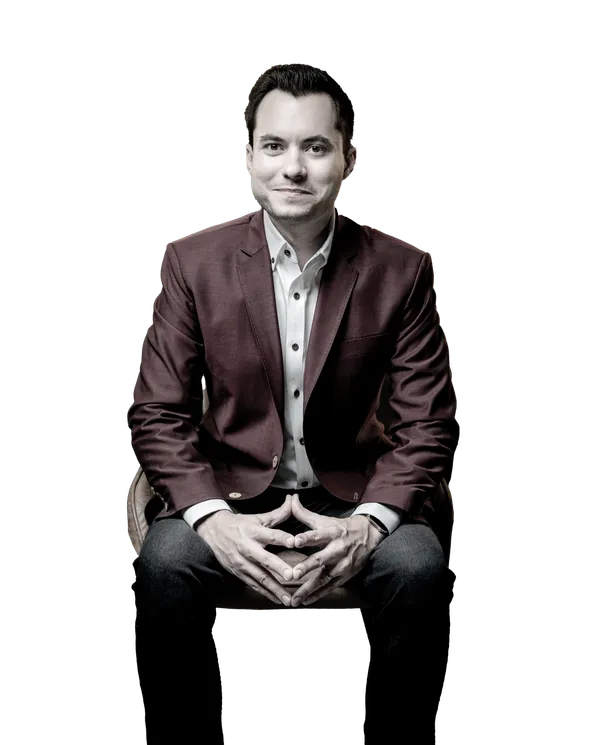
Ryan Vet