Follow the show in your app. Apple leads on iPhone, Spotify on Android.
Summary
A former university president says his biggest worry about AI is not cheating. It is that people are losing the ability to be curious about each other.
Dr. Brian Ralph spent 32 years in higher education, nine of them as a university president, and he watched millennials arrive on campus as a very social generation and Gen Z arrive more introverted, a shift he says he saw build over his last five to seven years on campus. Ryan Vet opens on the claim he hears constantly, that Gen Z is the last generation that will go to college. Dr. Ralph does not buy it. His larger worry is what happens if higher education, the military and other formative pathways get devalued: employers would receive young adults who never had mentors, safe places to fail, or the chance to learn things they did not think they needed. He is also clear that college is not the right path for everyone, and that the trades are a viable one AI is not taking anytime soon.
His case for college rests on what it produces. One of its greatest outputs, he says, is graduates who have learned how to learn, because content is a few taps away and what society needs is people who can think critically, solve problems and ask the big questions. That leads to the line the episode turns on. He thinks it is more important to be curious about individuals than about information, and he says people losing their curiosity about each other is very dangerous. His simple rule for the search box: ask the big questions about a topic before you look it up. For his own work, he takes the first pass at any new creative project before a prompt is involved, so clients get his experience rather than curated content.
He remembers his first reaction to ChatGPT as raw fear, and he draws a contrast that stays with you: social media was a slow car accident everyone could see coming, while AI is moving too fast for anyone to fully understand the impact. Ryan asks what he would tell a millennial parent whose child could be walking onto a campus in 2044. His answer is to avoid the huge pendulum swing, but to swing the pendulum back some. For leaders, the advice is shorter. Do not put the technology ahead of your people, and do not be surprised if companies start hiring student development professionals to help 20-year-olds learn to work on a team.
Key takeaways
1
Dr. Ralph does not believe Gen Z is the last generation to go to college. His concern is what happens if college, the military and other formative pathways are devalued: the workforce would inherit young adults who never had mentors, safe places to fail, or exposure to things they did not know they needed to learn.
2
He argues one of the greatest outputs of college is graduates who have learned how to learn. Information is a few taps away, so the job is high-level thinking, processing and problem solving, and he warns against expecting what a student learns to map linearly onto an economy that will contain industries no college is pondering yet.
3
He says AI is not taking jobs in the trades anytime soon. He expects robotics and automation to touch parts of that work, but argues the economy needs skilled workers, and that trades and the liberal arts should coexist because a nurse, an HVAC technician and a university president all need to think critically.
4
His central distinction is between curiosity about information and curiosity about individuals. A search box satisfies the first. He says the second matters more, and that people losing their curiosity about other people is very dangerous.
5
His rules for his own AI use are self-imposed. On any new creative work, such as a coaching framework or a university strategy, he takes the first pass himself before any prompt is involved, so the work carries his own experience, mistakes and wins rather than curated content.
6
If Gen Alpha is taught by AI, his worry is socialization more than learning. He expects AI to replicate some experiential learning well, possibly better than colleges still parked in the Socratic method, but questions what is lost where students do not get hands-on, person-to-person experience.
7
He describes social media as a slow car accident that everyone could see coming, and AI as something moving so fast he does not think anyone will fully understand its impact in time.
8
His advice to millennial parents preparing a child for college in 2044: avoid the huge pendulum swing, but swing the pendulum back some, and question the use of technology more. For leaders: prioritize people, do not put the technology ahead of them, and do not chase every fad.
Terms defined
Plain-language definitions for the ideas in this episode. Structured for search and AI answers.
learning how to learnnoun phrase · education
Dr. Ralph's description of what college should produce when information is freely available: graduates who can think critically, process, solve problems and ask big questions, rather than graduates who have stored a body of content.
In this episode: His answer to what college is for if AI can tutor anyone.
curiosity about individualsnoun phrase · culture
Interest in other people, as distinct from curiosity about information. Dr. Ralph argues a search box can satisfy the second but not the first, and that a decline in curiosity about other people is the more dangerous loss.
In this episode: The distinction he draws when Ryan asks whether Googling or asking ChatGPT counts as being curious.
created versus curated contentnoun phrase · AI use
Dr. Ralph's test for his own AI use. Created work starts from his own first pass and carries his experience; curated work is assembled from what a tool returns.
In this episode: Why he takes the first pass at any new framework or strategy before a prompt is involved.
the Generational Pendulumnoun phrase · generational
Ryan Vet's framework for how each generation pushes back against the one before it. Dr. Ralph's advice to millennial parents, to swing the pendulum back some without a huge swing, echoes it.
In this episode: Ryan says on air that he expects the pendulum to swing back as millennial parents push against screen time.
Notable quotes
Lines worth keeping, verbatim from the episode.
“
Social media was kind of like a slow car accident. Like we could see where it was going. AI is moving so fast, I just don't even think we're going to fully understand the impact.
Dr. Brian Ralph32:52“
I think it's more important to be curious about individuals than it is about information.
Dr. Brian Ralph20:28“
One of the greatest outputs that college could have is graduates who have learned how to learn.
Dr. Brian Ralph15:46“
Avoid the huge pendulum swing, but man, swing the pendulum back some.
Dr. Brian Ralph30:57“
Don't put the technology ahead of your people.
Dr. Brian Ralph34:37
Chapters
Jump to any moment. Timestamps deep-link the audio.
The guest
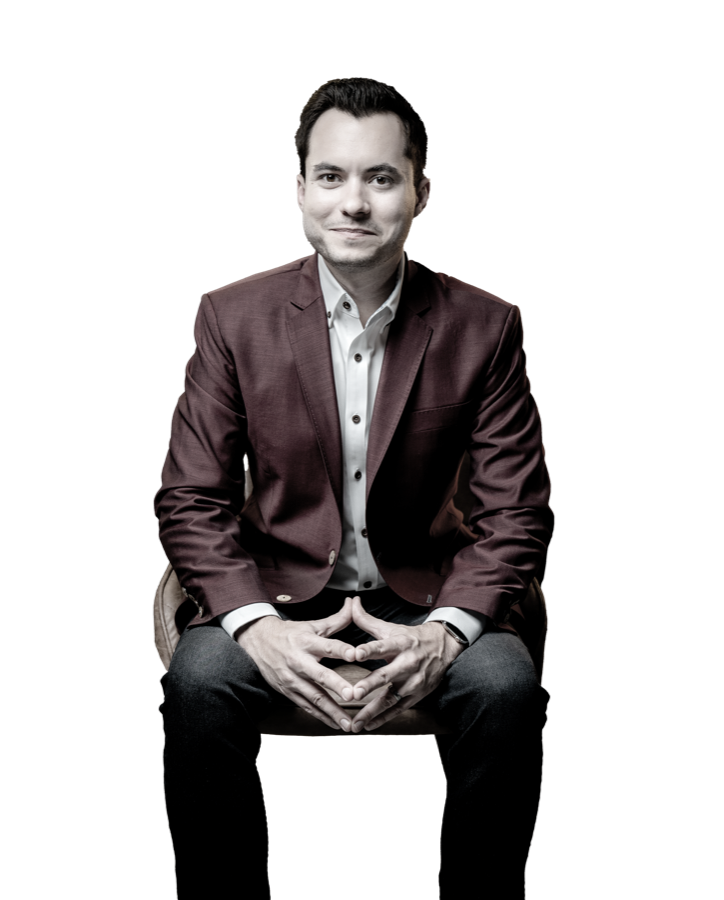
Dr. Brian Ralph
Executive Coach & Strategic Consultant · Former University President
Brian Ralph is a seasoned executive leader with over three decades of experience in higher education. He has served as a University President for nine years and held various Vice President roles in Enrollment, Athletics, Student Life, Student Success, and Marketing. He also has served on and chaired numerous non-profit boards and professional associations.
With a Ph.D. in Organizational Communication and Culture, an M.B.A., and an undergraduate degree in Business Administration, Dr. Ralph possesses a strong academic foundation. He earned a certificate in Executive Coaching and is a published author on enrollment strategy. His expertise has been recognized through keynote speaking engagements at local, regional, and national conferences.
Straight answers to the questions this conversation raises. Open by default, structured for search and AI.
Who is Dr. Brian Ralph?+
Dr. Brian Ralph spent more than three decades in higher education, including nine years as a university president and vice president roles in enrollment, athletics, student life, student success and marketing. He holds a PhD in Organizational Communication and Culture and an MBA, and he is the founder of Brian Ralph, LLC, offering strategy advising and executive coaching for corporate, higher education and nonprofit leaders.
Is Gen Z the last generation to go to college?+
Dr. Ralph does not think so, and he does not believe people will stop going in four years. His larger worry is what happens if higher education, the military and other formative pathways get devalued: the workforce would receive generations that never had mentors, safe places to fail, or a chance to learn things they did not think they needed. He also says college is not the right path for everyone and that the trades are a viable one.
What is college for if AI can tutor anyone?+
Dr. Ralph says one of the greatest outputs of college is graduates who have learned how to learn. Information is a few taps away on a phone, so he argues the job of college is high-level thinking, processing and problem solving. He also says it is a mistake to expect what a student learns to translate linearly into the economy of tomorrow, because whole industries will emerge in the next 10 years that no college is pondering yet.
Will AI take jobs in the trades?+
Dr. Ralph says AI is not taking those jobs anytime soon. He expects some robotics and automation to affect parts of the work, but says the economy needs skilled workers in order to thrive, and argues trades and the liberal arts should coexist at some schools because society needs critical thinkers in every role.
Is searching Google or asking ChatGPT the same as being curious?+
Dr. Ralph says it can be both, and long term it is probably a threat to curiosity. His simple rule is to ask the big questions about a topic before you search for it. He says it is more important to be curious about individuals than about information, and that people losing their curiosity about other people is very dangerous.
How should millennial parents prepare a child for college in 2044?+
Dr. Ralph's answer is to avoid the huge pendulum swing, but swing the pendulum back some. He says millennials should remember how much technology reshaped their own lives and question its use more, and he is glad schools are now limiting phones.
What should leaders do now to get ready for Gen Alpha and AI?+
Prioritize people and do not put the technology ahead of them. Dr. Ralph says leaders should understand the human impact of how technology is introduced, avoid chasing every fad, and pay attention to what is changing in K-12 so they know what kind of learner is coming. He also expects companies may start hiring student development professionals to help 20-year-olds mature into a team setting.
Dr. Brian Ralph ·Social media was kind of like a slow car accident.
Dr. Brian Ralph ·Like we could see where it was going. AI is moving so fast, I just don't even think we're going to fully understand the impact. Hopefully before it's too late, but I'm not sure.
Ryan Vet ·A lot of people are saying that Gen Z is the last generation that's going to go to college.
Dr. Brian Ralph ·It was just raw fear. Like, I cannot believe that this thing exists. I was a very mediocre student in college.
Ryan Vet ·But she would be very disappointed if she ever pulled up my transcript. But that's beside the point.
Dr. Brian Ralph ·We're going to have entire industries that are going to emerge in the next 10 years that no college on the planet right now is even pondering. I think it's more important to be curious about individuals than it is about information. Individuals have lost their ability to be curious about other individuals, and that I think is very dangerous.
00:44Welcome and introduction
Ryan Vet ·Welcome to another episode of The Ryan Vet Show. I'm excited to have with me today Dr. Brian Ralph. Dr. Ralph has been part of higher education for three decades now, basically since the day millennials stepped foot on college campuses all the way to present day, seeing the transition with Gen Z and in just a few years, Gen Alpha. He's worked with institutions in multiple capacities from athletics to student life to even serving as a president of a university for nearly a decade. And now he consults and helps other universities really figure out what's going on in this rapidly changing world. And I'm excited to learn from him today. So, Dr. Ralph, welcome to the show.
Dr. Brian Ralph ·Thank you, Ryan. It's a pleasure to be here.
01:27Three decades on campus: what millennials looked like arriving and leaving
Ryan Vet ·So if we rewind, almost 30 years ago, you have millennials stepping on campus for the first time. They're just turning 18, and that millennial looked very different than the millennials we saw coming out of campus about 15 years ago when they stepped off of campus for the last time. Could you talk about that generation? We'll start there and what you saw in those 18 to 20 years.
Dr. Brian Ralph ·Sure. It's obviously a very impactful generation. When you look back to the volume of graduates from high schools, especially through the mid-2000s, those were one of the peaks of the entire history in the United States. So you had a very large populace that was going to college, graduating at higher rates. And frankly, it was really good for a lot of higher education, just as far as the growth that was taking place on campuses. That's also when online started really starting to evolve. And so it opened doors for maybe non-traditional millennials who maybe didn't want to go to college in the traditional sense, but still wanted to get a college degree. It opened up some different opportunities for them. They were able to work full-time, go to perhaps a community college or take online courses while they got a job and got started. So it was just a really great season of opportunity for that generation, in particular in higher education.
Dr. Brian Ralph ·Of course, 2008 hit, which was challenging across the board, and those families felt that in some pretty distinct ways. And what you see now is the birth rate has dropped substantially since then, and we're not going to recover for another probably 15 years minimum. Most people would say we probably will never get back to the replacement rates that we've had in this country historically.
Dr. Brian Ralph ·It was a great group to work with. I really enjoyed connecting with them. They were a very social group in general. Certainly there were exceptions to that, but they were more social than I think a lot of other generations with whom I've worked. In particular, in these last five or seven years when I was on a college campus, I definitely saw, and of course we know the pandemic impacted some of that, a lot more introversion and less social engagement.
Dr. Brian Ralph ·Millennials really were focused on how they get the most of the college experience. In particular going to traditional colleges, but even at community colleges, you saw more and more student groups being formed on campuses, which traditionally were more adult leaning, and all of a sudden you've got this really large group of traditional age students coming out of community colleges. Part of that was driven by costs and access. It was driven by some of the educational models that were in place that allowed students to start at a community college and transfer to a four-year school pretty easily. That's where a lot of the growth took place. And of course, that's changed a bit now with a focus more on career and technical education. But it was a great group to build a career with. It was a lot of fun.
04:19Overprogrammed millennials and the tipping point
Ryan Vet ·That's great. And you talked about millennials being involved and starting more activities and clubs and being social on campus. Do you think that has anything to do with how they were raised, being overprogrammed, going from soccer practice to drama and then something else every day? Do you think that had something to do with it?
Dr. Brian Ralph ·I do. I would say that the early millennials were not as stretched as the second group, the second wave of millennials, if you will. I know it's probably not good to talk about two waves, but there was a continuation of a lot of those activities. And then as those activities ramped up in levels of commitment and cost, frankly being a potential ticket for getting into college, whether it's athletics or the arts, the number of hours that those students had to commit were just really extraordinary. I don't know all the details, but I know employment rates dropped for that group in the second part of their generational movement. So I do think that played in to a degree.
Dr. Brian Ralph ·And now, especially in the last 10 years or so, we saw a little bit of a drop-off on that because they were exhausted. When they would get to campuses, they were like, "I just want to be in one club," or actually, "I just want to meet five people and not be in anything right now." So I do agree with you. I think there was a push there for a while, and then I think we hit a tipping point.
05:39Do students party less than the generations before?
Ryan Vet ·You talked about some generations almost taking a step back. I was recently in a meeting at a university that I get to serve on an advisory board for, and one of the student members asked the director of this group, "Does our generation party less on campus?" I'm sure this is a question that you love as a former college president. Does our generation party less than the generations before? Because it seems like some of the Animal House and other stereotypical movies that came out don't exist on college campuses. Did you see that at all?
Dr. Brian Ralph ·Great question. I think they party differently for sure. I don't think there is as much of the large-scale stuff you're talking about, whether it's Animal House or raves. Certainly they still exist, but a lot of these students party in different ways: smaller groups, safer places, especially because of a lot of the things that were happening from a safety standpoint in a lot of those large venues, when you'd have drug challenges or sexual assault challenges in places that just didn't feel safe. So I think there's been a migration to safer environments.
Dr. Brian Ralph ·And as we're seeing a lot of the research now emerging about alcohol use in particular, we're seeing it at the lowest point in the history of the United States, or at least in the last 50 years. And these last two generations have been leading the way away from alcohol. Obviously we know there are other forms they might use, including none, which is great. But in general, there is less of the chaotic, wild environment. I think it's a lot more controlled and safe, and I think they focus a bit more on community. People want to be in places where they're building connection, and it's not just one big party, if you will.
07:23Social media, privacy, and the push toward authenticity
Ryan Vet ·Do you think social media had an impact on people wanting to live more privately and not be in some of these big public scenes? Because when I was in college, I remember "don't do anything your future employer could see." That was the mantra. And I don't think that's the mantra today, but do you think that shaped culture at all, or was that just a phenomenon of social media becoming widespread?
Dr. Brian Ralph ·I absolutely think it has. And I think it went two ways. One, the novelty of it early on, so everybody's out and filming everything. And then, to your point, people started to realize, holy cow, my entire life is on display here. So I do think there has been a push away from that to a degree. I only have some anecdotal evidence, but I've got three adult daughters who are 26, 25 and 23, and even watching their social media use change over the last 10 or 15 years has been interesting to watch.
Dr. Brian Ralph ·I also believe that the pushback against social media, "revolt" is probably too strong a word, is also around the idea of authenticity. We really struggled with that when we went through the pandemic. You'll talk to faculty and staff who were on campuses during the pandemic, and students' lives were on display in very different ways than the curated things on Instagram or TikTok. Their lives were on display because they were on a Zoom camera and their younger sibling was running around in the back because they were providing care for them, because the parents were trying to figure out how to work two jobs and keep the family afloat while these kids were learning remotely. There was this window into the life of students during the pandemic that was really challenging for the faculty, but most importantly for those students and their families. So I think all of those things have conspired to a little more authenticity, but definitely a little more privacy.
09:18The pandemic window into students' homes
Ryan Vet ·That's a really unique perspective that you bring. I was sitting in a corporate role during the pandemic, so I saw into different people's houses, and the company that we were at did their version of MTV Cribs. As an activity to get people engaged, you could either show part of your house or your family or do a cooking demonstration, something to just try to create connection. But now students often can run away to college. They can choose a college away from home or go somewhere else and escape from the world that they came from, and I think that's a lot of times where people find themselves. But you just brought up an interesting point. You're opening that window back to where you grew up. And I think that's profound. Do you think that had an impact on these students finding their identity as an independent adult at all?
Dr. Brian Ralph ·That's interesting. I would say probably to a degree, and I'm obviously not a psychologist or a sociologist, but just observing behaviors on campuses, the pandemic normalized a lot of things that had not been occurring in society. One of those things was a shared journey around the world through grief and challenge. With that, I think there was a normalizing of "okay, we're all in this together," at least to a degree. We're all at least experiencing something similar. On the college campuses I was involved with, those were moments where different types of relationships emerged between faculty and students, because faculty were now grappling with how to support a student who was navigating, say, having to care for two younger siblings doing schooling at home because their schools were closed, and then maybe juggling a part-time job, or the fact they couldn't go back to work because of the pandemic and now they were under financial duress.
Dr. Brian Ralph ·So I do think it created an environment where people just had to be more vulnerable and more raw about their circumstances, because otherwise they were not going to be able to succeed or ask for help. I think part of that was really helpful.
Dr. Brian Ralph ·We were able to stay open on my campus the entire time except for the federally mandated close down. We obviously had a ton of precautions in place. What was fascinating is, of course, we heard from both groups: people who couldn't believe that we were even opening, and others who were like, "Why do we even have to wear masks?" and everything in between. But what we saw were students who were desperately hungry to be on campus, at least on our campus. We did everything we could to provide as safe an environment as possible. Part of that, I think, was because they wanted community. They did not want to be isolated during this very challenging journey.
12:00Is Gen Z the last generation to go to college?
Ryan Vet ·Yeah, I think isolation has plagued Gen Z, and we've seen that time and time again. We've seen even in the news now with Meta, showing how social media has forced these individuals into isolation. They think they're curating community, but really it's an algorithm training them on exactly what they need to see, and not even what their best friend is seeing. So I think we're seeing a lot of that. And a lot of people are saying, and these are naysayers, of course, that Gen Z is the last generation that's going to go to college, which puts about a four-year timer on generations going to college, and then Gen Alpha is going to go elsewhere. Has this been said at any other point in history, that a generation is not going to college? And if so, when was that? And if not, do you think it's true?
Dr. Brian Ralph ·I'm not enough of a historian to know if it's ever been said. I'd be surprised, just because of the trajectory of high school graduation rates in the United States in particular. I also don't think it's true that in four years everybody's just going to stop going to college. There are a lot of right arguments about the value of college right now, and I completely understand a lot of those. But I think there are a couple of things we need to keep in mind.
Dr. Brian Ralph ·One, in the relatively young history of the United States, in particular the advent of widespread higher education opportunities, it has been either higher education, two-year or four-year, or the military that has been largely driving the social formation of generations for a very long time. Those have been the mechanisms in place where traditional age students, after they complete high school, have had a pathway where they develop and grow as individuals in structured environments. I think one of the challenges we're going to see is, if we as a society choose to devalue the military or higher education or any other pathways like that, we are going to be welcoming generations to the workforce that have not had developmental opportunities, that have not had mentors, that have not had safe places to fail, that have not had chances to learn things that they, in some cases, didn't want to learn or didn't think would be valuable, that ended up being some of the most impactful courses they've ever taken in their lives. Whether that is welding or something in the fine arts. So as a society, we're going to have to grapple with the potential impact of this decline in college enrollment.
Dr. Brian Ralph ·Now, I do not believe college is the end-all, be-all for everybody who's coming straight out of high school. I think there are a lot of very viable pathways, including a lot of the trades, which I think we're really going to be struggling with in this economy if we don't see more people moving into some of those, because AI is not taking any of those anytime soon. While there certainly will be some robotics and some automation that will impact some of that, the reality is that we need those types of really skilled workers in this economy in order for it to thrive.
Dr. Brian Ralph ·I do think there are some other things people need to be thinking about with college. Of course, I'm a huge advocate of going to college. First and foremost, college is changing dramatically right now, in many ways, and importantly, in good ways. There are obviously some federal policy changes that are making it very difficult for colleges to operate in their current environment. And I do think the focus on accountability around outcomes, on what kind of opportunities people have when they graduate, those are very reasonable things for society to be asking about. How we're measuring some of those things, I think, is really flawed. I don't think it's entirely appropriate to continue to focus exclusively on career preparation and to drive that toward an economy that exists today.
Dr. Brian Ralph ·I'm a big believer that in many cases one of the greatest outputs that college could have is graduates who have learned how to learn. I believe that creates the most agile society that we need in order for people to be entrepreneurial, to create new technologies, to learn things that are going to continue to evolve more and more quickly. If we only focus on content, two things are going to happen. One, you can get access to almost any piece of information you want on a little six by nine device. So this isn't about information acquisition. This is about high-level thinking and processing and solving problems. If we're not creating an environment where students are being exposed to those types of challenges in a collegiate setting, whatever that might be, then I think we're going to have a society that has learned how to not solve problems and think creatively and constructively.
Dr. Brian Ralph ·Where that scares me the most is how AI is becoming a part of our lives. I think AI is a fantastic tool, and I think the ceiling is going to be incredibly high about where AI is going to go. But if we are not critically evaluating the use and the function of AI in society, if we are not testing it and questioning it, I think we're going to be in significant trouble.
Dr. Brian Ralph ·And Ryan, I know you were a great student in college. I was a very mediocre student in college. And I will tell you that if I had access to AI right now, as much as I would say, "Oh yeah, I'm going to really use it responsibly," when I was a college student, I did whatever was expedient and fast. If that meant using AI, as long as it wasn't against the rules for my institution, I am confident I would have used it as far as it would have taken me to produce the work to get my work done in college. I just wasn't mature enough to think about it critically. Now in my business, I use AI a lot, and I have to really work hard to say, "All right, Brian, this is the time when you really need to think and critically evaluate this work and not just ask AI to assemble something for me." I'm a mature adult, and I still have to fight against that every day.
17:40The rules Dr. Ralph sets for his own AI use
Ryan Vet ·I think that's really important. I want to go a little bit deeper there, on your own parameters for when you can and can't use AI. Do you have guidelines set up, or anything you've written down or thought through as to, "Hey, this is when I say no, and this is where I draw the line"?
Dr. Brian Ralph ·Yeah, and these are all just self-imposed. The first one is that on any new creative content, I always want to make sure that I've taken a first shot at it. I have found AI to be an incredible tool when I create a framework, whether it's an engagement with a coaching client or with a college or university or a corporate client with strategy, whatever it might be. I want to always take my first pass at creating a framework and structure that will ultimately feed into my prompts. It is very easy to drop something into a prompt, and then immediately I know my client isn't getting my best work, because I'm using curated content instead of created content.
Dr. Brian Ralph ·And that's really supportive to me because I was in higher ed in leadership roles for 32 years. I accumulated some experiences and made a lot of mistakes and also had some wins that are really important for me to share with my clients. If I'm not bringing those out in ways that are helpful to them, then frankly, anybody could do what I'm doing.
18:56Curiosity: asking the big questions before you Google
Ryan Vet ·That's really profound, and I appreciate you sharing your personal philosophy, and I agree with a lot of that. I was not a good student in college, and I just had Dr. Book on the show. She was not president at the time while I was there, but she would be very disappointed if she ever pulled up my transcript. But that's beside the point. On your leadership website, you talk about one of your core competencies being curiosity. A lot of people talk about being curious, and so for the longest time they'd Google it, and now they'll go to ChatGPT and ask a question. Do you think that's actually being curious, or is that actually replacing the pursuit of knowledge?
Dr. Brian Ralph ·Probably both ends. It's probably a threat to curiosity long term. A simple takeaway to me would be that curiosity is asking the big questions before you Google it, getting a good sense of what the big questions are around a topic or an issue. As we know, the algorithms out there are designed to deliver in certain ways. There are biases built into every single one of them, especially the larger models, which are working with existing content and then creating new content through existing content. So I do worry that creativity will continue to fall if people don't push themselves to be curious.
Dr. Brian Ralph ·Where that can get a little muddy is that I think it's more important to be curious about individuals than it is about information. Because we are living in a society that has such immense and simple access to information, curiosity can sometimes be simply dropping something in a Google search or an LLM. You can get it quick, and that can sometimes drive more curiosity, which is great. What I worry about is how that impacts relationships, and how individuals have lost their ability to be curious about other individuals. And that I think is very dangerous.
21:06What an AI-taught Gen Alpha could cost
Ryan Vet ·You mentioned AI a lot, and so I want to dive deep into that. There are AI schools now. There are several organizations internationally that have said, "We have the best way to raise the next generation," specifically Gen Alpha and even Gen Beta, who's just being born now. They're like, "We know your kids will be tutored and taught in a way that's unique to them, and their unique learning style is going to be the best outcome ever." There are obviously some pros to that, and obviously some potential risks. What's your perspective as this next generation could be applying for college in, say, five or 10 years? They could be AI taught.
Dr. Brian Ralph ·Yeah, I think it's inevitable. I think it'd be silly for colleges and universities to not be prepared for that and to not be thinking now about how different those learning experiences are going to be for those students. I do worry about the continued lack of socialization and social environments for students. Homeschooling overcame that. Early on when homeschooling started, it was very isolated and there was a lack of social interaction. Homeschooling associations figured that out, and they said, "If we're going to value this type of educational experience, we've got to make sure that they're developing socially and cognitively and psychologically." A lot of those organizations did great work with that. So I have no doubt that those types of organizations will emerge to walk alongside AI-instructed individuals.
Dr. Brian Ralph ·I do think it's interesting to learn in an environment that's not necessarily going to be contingent on social learning. In other words, group projects and things like that. I'm certain things will emerge for how that can work, but that will likely all be behind a screen and not in physical space. There is a lot of research around how people learn in spatial constructs and in proximity to others, because you learn from social cues, which are much more difficult to see and experience through a screen.
Dr. Brian Ralph ·I'm also interested in this: if we're really looking at AI instruction, and again, I don't want to undersell where AI is going, when I think about relationships between teachers and students, when I think about what it means to be cared for in an environment where a student might be mastering the content but may have a really difficult family situation at home, or maybe just lost a sibling, those are really complex human experiences. It would make me very uncomfortable if AI starts diving into that realm. But I certainly believe it's well within its parameters to do that. If you look at the proliferation of AI dating sites and those kinds of things, it's happening.
Dr. Brian Ralph ·So I worry more, as you probably figured out, about the individual and social challenges here than I do about how content is delivered and how learning takes place. The other thing that worries me a little about that kind of AI approach is the brain and learning. When you look at where we are today, that is one of the greatest areas of growth in our understanding about human function. So I do wonder how AI is going to keep up and assimilate all that we're learning about the brain and about learning theory and how different humans learn in different ways. Experiential learning is going to be critically important. AI will be able to replicate some of that pretty easily. In fact, it may do far better than what some colleges are doing today, especially those that are still parked in the Socratic method. But I do wonder about some of those other environments where you're just not getting a good hands-on experience, [unclear] opportunity.
25:02Dr. Ralph's first encounter with ChatGPT
Ryan Vet ·Yeah, I think that person-to-person is something that you can't trade. No matter how much technology comes, as human beings we were designed for community. We were designed to be in relationship with one another. And as close as technology can get, and we're seeing the trends of people having relationships with AI chatbots, that's still not going to replace human-to-human interaction. I would love to know, you were a university president at the time that ChatGPT was released to the public. What was your first encounter? Was that with faculty or was it with a student? When did you first see that bubble up in your own institution?
Dr. Brian Ralph ·Great question. It might have been a parent, actually, of a student, who came to me and said, "Hey, did you know that my kid can go on this website?" And at the time it must have been really early, because I had not even heard of this. "Tell me what..." And then of course it felt like within weeks everybody on the planet knew about ChatGPT. I remember first it was just raw fear. Like, I cannot believe that this thing exists. This is something straight out of Minority Report or The Jetsons. Just this crazy perspective.
Dr. Brian Ralph ·Then my next iteration of the depth of what was coming was actually from a board member at my university who's in that space. He and I were having lunch and he pulled out his phone, and this was probably a year before Sora was released, and he showed me the girl on the train video, which was kind of iconic in the early launch days, and he explained to me that this took about 15 minutes. He was walking me through all this, and I was like, "This is crazy." That was the first moment I had of, "Oh wow, this is way bigger than anything I thought it was going to be."
27:01Trades, the liberal arts, and building critical thinkers
Ryan Vet ·Yeah. And I think we still don't know. It took us almost a decade to figure out the implications of social media on teenagers, and I think we're not going to know the implications of AI for a long time. I think it's already happening. I think we're already seeing cognitive erosion. We're seeing test scores across the board in lower schools and high schools declining because of cognitive offloading. So it'll be really interesting to see how this shapes and evolves with new applicants going into college and the workforce. But one of the things parents are talking a lot about right now is not the traditional four-year degree. You even mentioned the trades. Do you think there's a world in which the trades will ever integrate with the four-year traditional liberal arts education? Or do you think those will coexist in separate universes?
Dr. Brian Ralph ·I think there should be some schools thinking about it for sure. They should coexist. And when we talk about liberal arts and sciences, there are a lot of different views on what that means. One is a distinct group of disciplines: philosophy, et cetera. Another view is that it's looser than that. It's a way to approach learning by exposing people to a lot of different ideas and ways of thinking, some of which may not be comfortable for them, but it allows their brain to grow and develop and allows them to see the world more holistically. Whatever you want to call it, we need to have critical thinkers in our society. That can be whether you are the president of the university, a nurse on the front line, or somebody doing an amazing job repairing an HVAC system. We need critical thinkers because our society is not simply built around building careers. It is about being a society, like you were talking about earlier. It's about building connection and building community. We have got to have people who know how to think critically about things much greater than a career. We need folks who really understand what building a great life is all about and who ask the big questions about life. College, for the most part, has been a great place to do that at all levels.
Dr. Brian Ralph ·As we're seeing a decline in trust in higher education and a focus on career orientation, which I think is important, I think college should lead to important outcomes from a career standpoint. But if we think that what somebody learns in 18 months or six months or two years or four years or 10 years in college is going to translate linearly into the economy of tomorrow, we're being silly. We're fooling ourselves. We need folks who are agile, nimble learners who can jump. I know you've done the research, but if you look at the longevity in a single career path from 50 years ago versus today, it's unbelievable how much that has changed. That's only going to accelerate. We're going to have entire industries that are going to emerge in the next 10 years that no college on the planet right now is even pondering. It's going to come out of somebody's garage or somebody's office, and all of a sudden we're going to be there. So we've got to have people who know how to think critically. Up to this point in our history in the United States in particular, college and the military have been two great places for that to emerge.
30:16Advice for millennial parents preparing a Gen Beta college student
Ryan Vet ·You're talking about thinking critically, and one of the concerns with a lot of conversation around human formation, especially for elementary-age kids, is that they're not thinking critically because the thinking is being done for them, either by technology or by parents who are helicoptering or overprotecting. So let's fast forward 18 years to 2044, and you've got Gen Beta, the first Gen Beta person maybe, walking across the university campus for the first time, walking across that quad. Their parent is mainly a millennial. What would you say to that parent now in 2026 to prepare their 18-year-old, the adult that they're eventually raising, for college in 2044?
Dr. Brian Ralph ·Yeah. Avoid the huge pendulum swing, but man, swing the pendulum back some. I think about "Baby on Board" signs and how iconic that was of an overprotective generation of parents. Millennials need to remember how pivotal the intrusion of technology was in their lives and how it fundamentally changed the landscape, and how now they're grappling with how to build relationships in different ways, how to build them in a healthy way. And I think just not questioning the use of technology enough.
Dr. Brian Ralph ·My wife and I joke all the time. We've got some friends who are about five or eight years younger than us, and we talked about the fact that smartphones literally landed in the marketplace when our kids were in middle school. We were like, "Oh, this is the coolest thing in the world." And then 18 months later you're realizing, holy crap, I cannot believe what's out there. We were just fumbling as parents trying to figure out how to create protections. And now we're seeing a rise of schools not even allowing phones in the classroom or sometimes even in the building, which I think is great. So I would hope that millennials are saying to themselves now, critically think about the impact on the development of your children. The technology we're seeing, while novel, is going to have a sociological and psychological impact. It's just going to. If you look at every other intrusion of technology in the last 50 years, all of it has impacted society.
Dr. Brian Ralph ·Ryan, one of the things you said earlier, which terrifies me in some ways, is that we don't know the impact of social media, or we're learning the impact of social media now. We don't know the impact of AI. The super big danger in my mind with AI is that it's moving so fast that the impact is going to occur much more quickly and perhaps much more deeply than what we grappled with with social media. Social media was kind of like a slow car accident. Like we could see where it was going. AI is moving so fast, I just don't even think we're going to fully understand the impact. Hopefully before it's too late, but I'm not sure.
33:04What leaders and organizations should do now
Ryan Vet ·That's really insightful. And I think the pendulum will swing back. We're already seeing millennial parents revolt and push back against screen time. We're not seeing it when you go to a restaurant as much as we did even 10 years ago, which is a sign of positive movement. At the same time, we have a generation that's constantly monitored. They've got the baby monitor, they've got the pulse socks, they're being tracked with AirTags when they leave the house. So they've got childhood independence on a leash, and it's a digital leash. I think that will have interesting implications. Parents are going to know exactly what their kids are doing. They're probably going to get transcripts of the classes in college in 18 years. We've obviously seen parental involvement increase, but I think it's going to change and evolve over time.
Ryan Vet ·So what do you think colleges and universities or any organizations, because I know you work with CEOs and executives and leaders, what do you think they should be doing right now, today, to start planning and be prepared for the changes we don't know are coming? We don't have a crystal ball. We couldn't have predicted the impact of AI accelerating in two months to almost half the adults in the United States having it. We could never have predicted that. So what would you give to leaders and executives today to start preparing for the future, so they're ready to have that individual human connection that you were talking about?
Dr. Brian Ralph ·Yeah, well, for one, prioritize people and understand all the dynamics that people are dealing with. That is going to affect how technology is integrated in your workplace, which is important. You need to be doing that. But don't put the technology ahead of your people. Make sure that you understand the human impact of how you're putting the technology into place. I'm seeing some very thoughtful things happening on university campuses about how they're using AI and other forms of technology. I'm also seeing some other places that are just scrambling to show that they've got AI embedded in the curriculum, and they're not doing it very responsibly. So I think that would be a biggie.
Dr. Brian Ralph ·Another part of it is that these organizations really need to continue to see where technology is going and try to anticipate it as best as possible. Don't chase after every fad, but also make sure you understand how it can be optimized on your campuses or in your organizations. It will be interesting to see what transpires in the next 20 years in the K-12 system in particular, as far as learning modalities and pedagogies. I think organizations need to be paying attention to that now so that they understand what type of learner is going to be coming into their place.
Dr. Brian Ralph ·I would not be shocked at all if a lot of organizations, corporations, et cetera, started hiring student development people to work in their companies to help them know what it means to have a 20-year-old, because we know these corporations are going to reduce some of the barriers to entry by not necessarily requiring a college degree. So I think we're going to have a whole wave, I would imagine, of student development professionals employed by companies, asking, "Help us help this person transition into the workplace. We have no idea how we help this person mature from 20 to 24 so that they can function on a team." Those are going to be really interesting challenges, and companies need to be thinking about that now, how they invest in people. Because you may have a technocrat who is highly literate in technology, but if they don't know how to work with others, if they don't know how to function on a team, if they don't know how to think critically and ask hard questions, you're not going to have a high-performing organization, period.
36:50A fractured K-12 system and what comes next
Ryan Vet ·That's fascinating, the idea of the corporation or the organization having to take on education that, in my opinion, should have happened a decade earlier in grade school. But I think you're right. I think it's the way this generation is being raised, very outcome-based. They're not thinking as critically, a lot of times they're teaching to a test, and we're seeing a more fractured K-12 than ever before. Homeschooling doubled, which was only from 2 to 4%, but that doubling is significant. We're seeing private school accelerate, we're seeing public school decline or go to charter. So we're seeing a lot of evolution in the system. I think the next few years are going to be really telling, because we're going to have students entering college from a fractured educational background. It'll be interesting to see what happens when they all come to the same campus.
Dr. Brian Ralph ·Yeah, no question. I kind of joke that it's [unclear] in K-12. There's just so much focus on what's next, what's the best opportunity. And please hear me, I think there are some very good things about that. I do not think it is good for kids to be bounced around every two to four years just trying to find the next best and greatest place. I think that's really damaging from a biological and psychological standpoint.
37:59Closing thoughts and where to find Dr. Ralph
Ryan Vet ·I agree, I agree. Well, Dr. Ralph, you've provided so much insight into where we're at in culture and society, where colleges and universities are, and really where companies need to be ready to receive this next generation as they enter the workforce. Do you have any closing thoughts, anything you want to share? And how can people find out more about you and the way you coach and consult with companies and organizations?
Dr. Brian Ralph ·Yeah, sure. Thank you. I think this is a fascinating topic, so I really appreciate this. It's been a lot of fun, a little scary, but also, I think, filled with hope, because I do think a lot of people are taking this seriously. While a lot of people are adopting AI in some foundational ways, I do think some of the pushback around it, even something as foundational as data centers, shows that people are starting to recognize that we need to be more responsible in how we're doing this for the next generations to come. So I love the work that you're doing, and I think this is a great topic.
Dr. Brian Ralph ·In regard to finding out more about me, you can find me at brianralphleadership.com. I do strategy advising and executive coaching, working with corporate and higher ed leaders primarily, and also nonprofit leaders. I do a wide range of work with strategy advising, working with boards in the nonprofit and higher ed sector, and then I have some terrific leaders that I get the privilege to coach and help them be the best versions of themselves.
Ryan Vet ·Well, I appreciate all you're doing to inspire the next generation and to make our world a better place. And to all of our listeners, thank you for listening to this episode of The Ryan Vet Show. Until next time, inspire forward.