Follow the show in your app. Apple leads on iPhone, Spotify on Android.
Summary
A university president says public confidence in her own sector is falling, and that the decline crosses every party line.
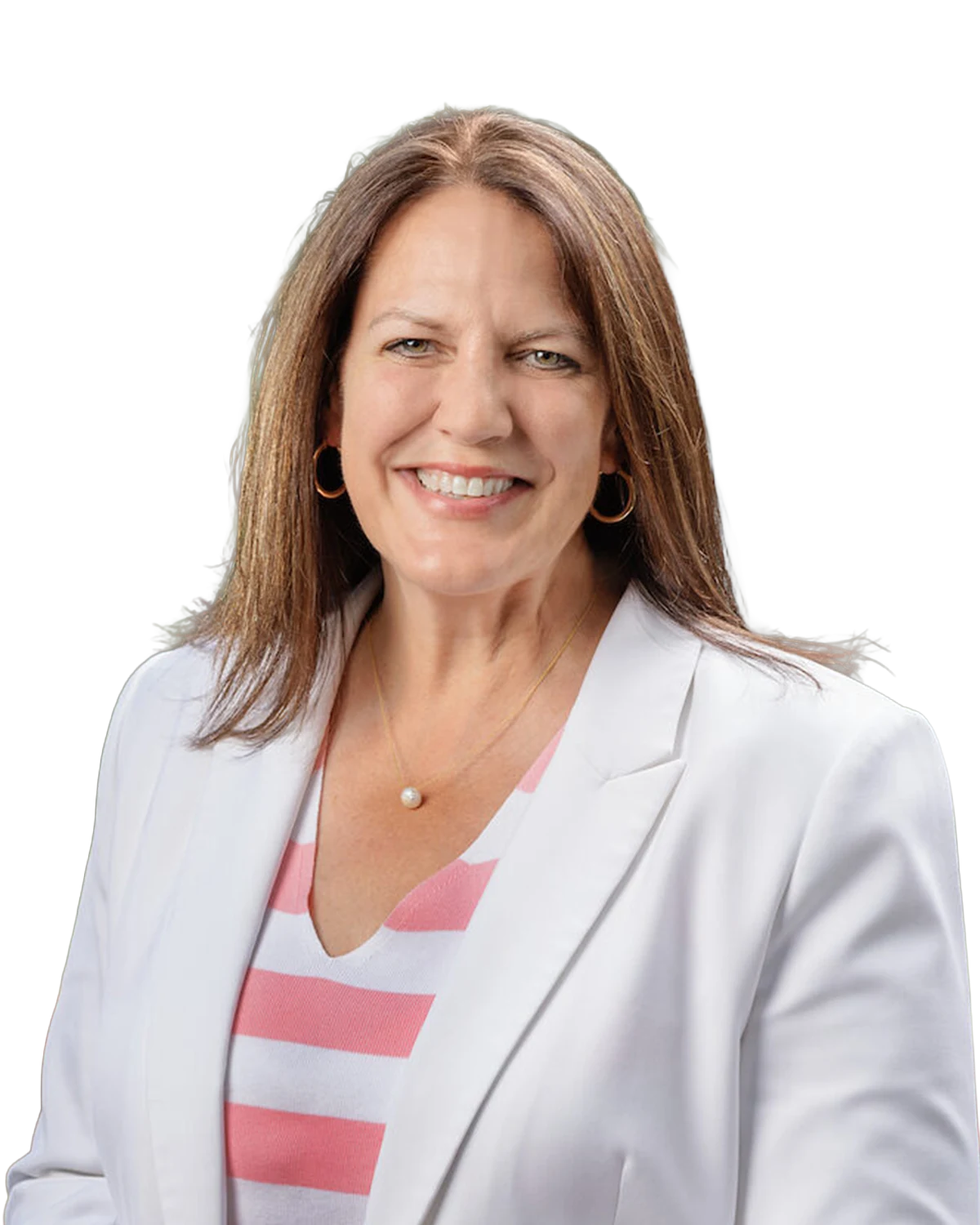
Dr. Connie Ledoux Book has been president of Elon University since 2018, and before that she was the first female provost in The Citadel's 175 year history. Ryan Vet is an Elon graduate, which is why he opens with the question he says he gets more than any other from listeners and COLLIDE readers: what is actually happening to higher education, and will colleges still be there when his kids are. Her answer starts with Gallup's annual poll, which shows confidence in higher education declining. She is careful about the detail that matters most to her: the decline is nonpartisan. It is steepest among Republicans, but Democrats and independents are trending down too. She attributes it to rising cost and to graduates who carry real debt without the career payoff they were promised, and she says the sector has to do a better job of listening to employers.
Her defense of college is not that everyone should go. The line she offers instead is one that travels precisely because of who said it: not everybody needs to go to college, but everybody needs to make a living. What she will defend is the residential model, and she goes further than hedging when Ryan asks her to vote on a century. Face-to-face education will exist in a hundred years, she says, though it may be the more expensive option. The harder problem on her own campus is not whether students use AI, it is how anyone proves learning happened. Essays, research papers and worked problems were the evidence, and her faculty are now rebuilding assessment discipline by discipline while learning the tools at the same time as their students.
The back half turns to what is arriving. Elon is merging with Queens University of Charlotte, 700 acres joining a 20 acre campus in a city Elon was already expanding into, and she explains why colleges merge where churches usually just close. She describes a generation putting purpose first and profession second, and an institution that now struggles to reach students through the channels it owns. Then she concedes to the machines she had just argued against: 30 minutes in a self-driving car convinced her it drove better than she does, and she expects personal robots to follow. Ryan pushes back with his friction thesis, that the hurt is where the learning is. Her closing question is the one she says matters most. If the machines hand back the time, what will the next generation do with it?
Key takeaways
1
Gallup's annual polling shows public confidence in higher education declining, and Book's emphasis is that the decline is nonpartisan. It is greater among Republicans, but Democrats and independents are falling too. She ties it to rising cost and to graduates carrying debt without the employment payoff college promised them.
2
Her defense of higher education does not require that everyone attend. In her words, not everybody needs to go to college, but everybody needs to make a living. She points to the range of American options, from community college to culinary school to large publics to small privates, and argues every one of them owes students value for the investment.
3
Asked to vote on whether the classroom survives a century, she says yes: face-to-face education will exist in a hundred years. Her caveat is about access rather than demand. It may become the more expensive option, with online and virtual formats widening the range of choice beneath it.
4
The hardest problem AI creates on her campus is assessment, not cheating. Essays, research papers, multiple choice questions and worked math and science problems were the evidence that learning happened, and faculty teams are now rebuilding assessment by discipline so a degree still certifies a capable graduate.
5
Elon is merging with Queens University of Charlotte, a 700 acre university joining a 20 acre campus in a city where Elon had already started rolling out programs. Elon gains the graduate facilities it would otherwise have had to build; Queens gains new programs against declining enrollment. She contrasts it with churches, which she says tend to close and consolidate rather than merge.
6
Of higher education's three cornerstones, she expects teaching to be the least disrupted. Athletics is being pulled apart by name, image and likeness, and she expects the big football schools to spin off into something separate. Research is under pressure from federal challenges to the overhead funding model, which she warns matters because one university lab can serve many experiments where a corporate lab serves one company.
7
She describes a generation arriving with purpose ahead of profession, a reversal from her own generation, which expected to find purpose by picking a profession. Elon's HealthEU program treats purpose as a pillar, including no-charge January term courses where students reflect on finding it.
8
She cites her own university's research on people turning to chatbots for emotional support, and her reaction to it: this is a very different student than even a decade ago. On air she described the finding as one in four teenagers; the study actually surveyed adults (see the editor's note on the transcript).
9
Her 25 year forecast is that machines give time back. She trusted a car's self-driving software within 30 minutes, and describes a personal robot that would mop, vacuum and cook, at a target price she says developers are trying to reach. The question she says matters most is what the next generation does with the time, and Ryan counters that friction is where learning comes from.
Terms defined
Plain-language definitions for the ideas in this episode. Structured for search and AI answers.
a nonpartisan declinenoun phrase · higher education
Book's framing of the drop in public confidence in higher education: it is larger among Republicans but present among Democrats and independents as well, which means it cannot be explained away as one party's politics.
In this episode: Her starting point for the whole conversation, drawn from Gallup's annual poll.
The reversal Book sees in students arriving on campus. Her own generation expected to find purpose by choosing a profession; this generation starts from the question of meaning and asks college to amplify it.
In this episode: Why she thinks spiritual and purpose-driven programming is growing, and what Elon's HealthEU purpose pillar responds to.
the assessment problemnoun phrase · education
The challenge of proving a student learned something when the work product is available from a chatbot. Essays, papers and worked problems were the proof of learning, so faculty have to rebuild what counts as evidence, discipline by discipline.
In this episode: What Book calls the hardest piece of AI on campus, harder than adoption.
co-learningnoun · education
Faculty and students learning a new technology at the same time rather than the faculty arriving already expert. Book calls it unusual and specific to how fast AI landed, since it ran on infrastructure campuses already had.
In this episode: How Elon is handling AI in the classroom without giving up a values-based education.
The wave of college mergers and closures driven by enrollment decline and cost, in which stronger institutions absorb or combine with smaller ones. Elon and Queens University of Charlotte is Book's working example, and she calls it a catalyst rather than a rescue.
In this episode: Prompted by Ryan's parents' own college closing after a decade of trying to reboot.
Notable quotes
Lines worth keeping, verbatim from the episode.
“
Public confidence in higher education is declining, and that is a non-partisan decline.
Connie Ledoux Book03:43“
Not everybody needs to go to college, but everybody needs to make a living.
Connie Ledoux Book23:26“
I would say face-to-face education will exist in 100 years.
Connie Ledoux Book13:11“
We are seeing purpose first, profession second.
Connie Ledoux Book29:48“
We're in the business of human transformation.
Connie Ledoux Book33:27“
What will the next generation do with the time they have?
Connie Ledoux Book38:44“
The most meaning in life comes from helping other people live a good life.
Connie Ledoux Book40:46“
That's my closing pitch, Ryan, is pick up the red pen.
Connie Ledoux Book46:07“
You need friction in life. That's how we learn. It's through the hurt, through the pain.
Ryan Vet35:13
Chapters
Jump to any moment. Timestamps deep-link the audio.
The guest
Connie Ledoux Book
President, Elon University
Connie Ledoux Book is the president of Elon University, elected in October 2017 and installed on March 1, 2018 as the ninth president and the first woman to hold the office. She describes herself as the granddaughter of Louisiana farmers. She earned a bachelor's degree in journalism from the Manship School at Louisiana State University, a master's in education administration and supervision from Northwestern State University, and a PhD in journalism from the Grady College at the University of Georgia, where her dissertation studied how municipal officials viewed cable television regulation.
She is a communications scholar by discipline, with work centered on digital media and television, and she wrote Digital Television: DTV and the Consumer, the first book devoted to how the analog to digital transition landed on the people watching. She taught at Georgia College & State University, North Carolina State University and Meredith College before joining Elon's communications faculty in 1999, becoming associate provost in 2010. In 2015 she left to become provost and chief academic officer at The Citadel, the Military College of South Carolina, the first woman in that role in the institution's 175 year history, a post that carried the rank of brigadier general.
As president she led the creation of the ten year Boldly Elon strategic plan, established the Division of Inclusive Excellence, launched the Alamance Scholars Program, and completed the Elon LEADS campaign, which raised $260 million and funded 287 new endowed scholarships. She opened Elon's Charlotte campus and is steering the university's merger with Queens University of Charlotte, which will operate as Elon University | Queens College on the Myers Park campus. She has chaired the National Association of Independent Colleges and Universities and serves on boards including the American Council on Education, SACSCOC and Project Pericles.
Straight answers to the questions this conversation raises. Open by default, structured for search and AI.
Who is Dr. Connie Ledoux Book?+
She is the president of Elon University, a role she has held since 2018. Before returning to Elon she was provost and chief academic officer at The Citadel, the first woman to hold that role in the institution's 175 year history. She holds a doctorate from the Grady College of Journalism at the University of Georgia and wrote Digital Television: DTV and the Consumer.
Why is public confidence in higher education declining?+
Book points to Gallup's annual poll and stresses that the decline is nonpartisan: greater among Republicans, but also falling among Democrats and independents. She attributes it to the rising cost of college and to graduates carrying significant debt without the employment payoff they were promised, and she says higher education has to do a better job of listening to people and working with employers.
Will colleges still exist in the future?+
Her answer is yes, and she is willing to put a century on it. Face-to-face education will exist in a hundred years, she says, because of what happens in a room with another person and because the residential model produces mentoring and lifelong relationships that keep paying off. Her caveat is cost: it may become the more expensive option, with online and virtual formats filling out a wider range of choice.
Why are colleges merging, and why is Elon merging with Queens University?+
Enrollment decline and cost are driving consolidation across the sector, with some institutions merging and others closing outright. Elon, at 700 acres, is merging with Queens University of Charlotte, a 20 acre campus in a city where Elon had already begun rolling out academic programs. Elon gets the graduate student facilities and classroom space it would otherwise have had to build; Queens, which had excess classroom space and declining enrollment, gets new programs. Book calls it a catalyst for both. The merger is not finished: she describes herself as in the middle of it, the accreditor approved the change in June 2026, the United States Department of Education review is still underway, and the tentative completion date is June 30, 2028. On September 23, 2026 the two universities announced the undergraduate unit will be called Elon University | Queens College.
How is AI changing college teaching?+
The hardest change is not student use, it is assessment. Essays, research papers, multiple choice questions and worked math and science problems were the evidence that learning had happened, and all of them are now available from a chatbot. Faculty teams at Elon are reconsidering assessment within each discipline so a degree still demonstrates a capable graduate. Book also describes faculty learning the technology at the same time as their students, which she calls co-learning.
What does Book mean by purpose first, profession second?+
She means students are arriving with meaning as the starting question rather than the outcome. Her generation expected to find purpose by choosing a profession, and she sees this generation reverse the order and ask college to amplify a decision about meaning. Elon's HealthEU program makes purpose a pillar, including January term courses offered at no charge where students reflect on finding it.
Connie Ledoux Book ·One in four teenagers told us that they had sought out emotional support from a chatbot.
Ryan Vet ·Because you need friction in life. That's how we learn. It's through the hurt, through the pain.
Connie Ledoux Book ·Public confidence in higher education is declining, and that is a non-partisan decline.
Connie Ledoux Book ·And not everybody needs to go to college, but everybody needs to make a living.
Connie Ledoux Book ·Within 30 minutes, I knew that car was driving safer than me.
Connie Ledoux Book ·You tell me you're not buying what—
Ryan Vet ·Oh, yeah... you think.
Connie Ledoux Book ·Yeah. I would say face-to-face education will exist in 100 years.
Connie Ledoux Book ·What will the next generation do with the time they have?
Connie Ledoux Book ·I said pick up the red pen.
00:50Welcome: Elon, and an alma mater
Ryan Vet ·Welcome to another episode of The Ryan Vet Show. I'm excited to have with me Dr. Connie Ledoux Book, who is the president of Elon University. And this is really special for me because Elon is my alma mater, and it has been a privilege for me to watch the Elon University just evolve and change. I would not be able to get into Elon now, uh, but I'm grateful for the experience and the time I was able to get into Elon. So Dr. Book, welcome to the show.
Connie Ledoux Book ·Thank you, Ryan. We-- Elon was lucky to have you. So, uh, I definitely think of you as an exemplar of Elon education in practice, so definitely deserved.
Ryan Vet ·Well, thank you, Dr. Book. I, I am really excited for this conversation in particular because one of the questions I get most from both listeners and from readers to my newsletter is, "What's going on with higher education? What's going on with Gen Z and higher education? And are colleges and universities going to be around in the next 10 years when my kid gets into college?" So I'd love to hear just kinda your perspective on the landscape today in higher education and maybe dis- uh, explain some of the myths about, uh, these, these stats that we're seeing and the cliffs that we're seeing and, and we'll unpack it as we, we chat today.
Connie Ledoux Book ·Yeah. I'm happy. I'm been looking forward to a chance to talk with you. And certainly higher education is in, uh, a moment. Um, I would-- when you look at higher education history, uh, it's very rare that it hasn't, but we are in an accelerated time, particularly around... And I think there's several tensions driving it. But, uh, I try to start with common ground that most people agree, and is that an education is a good thing, um, that it helps us advance our lives. And so I try to start there.
02:32Public confidence is falling, and today's student has changed
Ryan Vet ·That's wonderful. Well, Elon has continually been nationally ranked. Especially under your leadership, we've seen some really exciting things. It's the number one nationally ranked, uh, institution undergraduate teaching five years in a row, and for 11 years straight now, it's been the national leader in different student experience programs, including number one in first year student experiences, in learning communities, uh, highly ranked in study abroad and writing. So y- the list is long, and we don't even have enough time. That's a whole nother episode to look at the credentials. But you all have spent a lot of time trying to cultivate an experience on campus, and you have seen many different generations walk through the doors in the beautiful quads there at Elon. What have you seen that's most different with the students currently enrolled on campus right now, and what do you see different than maybe what we even saw five years ago?
Connie Ledoux Book ·You know, I would say, um, I'm gonna talk about it in two buckets. One, I'm gonna talk about public opinion around higher ed, and then what we're seeing with this generation that's arriving on our college campuses. One, on public perception of higher ed, we know, uh, from the Gallup poll that's done every, every year, um, that public confidence in higher education is declining, and that is a non-partisan decline. Uh, it is greater with Republicans, but it's also with Democrats it's declining, and independents. So across the board. Um, I have a lot of confidence in this study by Gallup because the leader who runs it at Gallup is an Elon grad. And- There you go ...
Connie Ledoux Book ·there you go. And she talks a lot about what she's seen over the last decade of running this poll. And she believes that in part, I mean, obviously, there's some very public media fights going on between higher ed and the current administration, but also in addition to that, it's the rising cost of college. So you have a group of, um, graduates who carry a lot of debt, um, from their collegiate experience, and if they're not feeling the reward of that through employment, it, it causes, you know, a dissatisfaction and a disgruntledness that college didn't deliver the results that it had promised me. So I do think this question of higher ed doing a better job of listening to people, a better job of working with employers, um, a better job of ensuring students get the value of the investment that they've made are all critical at this time.
Connie Ledoux Book ·Uh, because I, I work with a lot of folks who are deeply invested in the success of college students, I know, I know that they carry, um, this job has a great sense of purpose, and their purpose is that students will succeed, the people on our college campuses. And what I love about the United States is that it, there's a diverse offering. You can go to community college, you can go to culinary school, you can go to a large public institution like UNC Chapel Hill or a smaller private like Elon. So there's a great diversity of choice, but we all need to be committed to students that invest their time and m- m- and resources in our institutions on making sure that they graduate with an education that prospers their, their hopes for employment and professional life.
Connie Ledoux Book ·Um, the second bucket I'll talk about today's student, which, uh, is what you asked about. Um, you know, I find today's student, uh, they are different than obviously my generation that went to college. It's not any more right or wrong. It's just different. Times change. Um, I find that they are much more STEM-focused. Part of that is the K through 12 has put a big emphasis in STEM over the last 20 years, and you really feel that with the students coming to college. They're more analytic-focused, so even if they're journalism, they'll have a, a minor in, um, analytics or environmental science, um, business students who couple their degrees with other areas of, of the campus.
Connie Ledoux Book ·And so we see a growing trend with double majors. Um, and at Elon, and I think around the, the country, this, you know, that we continue to see, even though we have the world of AI, you know, that there is high value proposition in the humanities and being able to understand history and being able to connect the dots. And there's actually an increasing need for the-- for those skill sets in a technology-driven culture. So the next-- this next generation, even though they're STEM, they're still very much interested in, um, you know, the, the, what we consider to be the core, uh, liberal arts and sciences that serve as the foundation of a strong education.
07:46AI on campus, and the problem of measuring learning
Ryan Vet ·That's really helpful. And you used the word tension, and I think that's so important right now because you focus so much on student experience, b-more than most universities, and you've won the awards for that. But at the same time, you all have gone, uh, really head-on into AI, a-and you've been pioneers in the AI and hegit-- uh, higher education space. So how would you say those two live together in, in harmony? Because there's a world in which they're both going to coexist into the future, and you haven't neglected one for the other, and I think you've done that well. So could you talk a little bit maybe what you're doing with AI, but still keeping that human element alive and well on campus?
Connie Ledoux Book ·Yes. You know, this is AI, um, the rapid deployment of it, um, partly because it didn't require us to have any new device, you know. It wasn't like the cell phone or even the internet where we needed upgraded computers and broadband. AI is running on the infrastructure we already had. So it did. We knew at Elon that it was going to be quickly adopted, and sure enough, it was the fastest adopted technology, um, in our lifetime. So w- be- preparing students to work with this technology is, is essential. And because, uh, we are believers in a values-based education, we wanna make sure that as people use this new technology, that they are doing so ethically, that they're doing so with consideration to what's downstream, uh, the impact of, of technology.
Connie Ledoux Book ·So i-i-- those skill sets are best taught through-- that discernment is best tho-thought through the core topics in our, um, liberal arts and science classes. And we've also coupled it with engaged learning. So we want students to use AI as a tool so that the-- in their classes, they're working through projects where they use AI, uh, where they're being mentored, you know. And, uh, the other piece of this that I wanna lift up that is unusual is that im-- they are learning this new technology at the same time as their faculty. So we have lifted up these co-co-learning moments, um, because I think it's, it's unique to the, to the phenomenon, you know, that AI came out and that faculty are needing to develop themselves.
Connie Ledoux Book ·The hardest piece of this is measuring learning. We have relied on essays, research papers, multiple-choice questions, uh, working math problems and science prob-- as evidence of learning. And now we ha-- the faculty, and you can imagine how challenging this is, how do we know that our students have learned something that is available to them w-with ChatGPT? How do I know that the student has learned something? Those assessments we take very seriously. The faculty are, are working in teams in each of their disciplines to reconsider assessment of learning in this environment. We are going to see a lot of innovation in this space because we have to be able to determine that an education, you know, that it does lead to, um, a capable human at a certain level, uh, and we need to be able to demonstrate proof of that.
Connie Ledoux Book ·So this assessment work is critical.
11:21Is college going away, and what survives a hundred years
Ryan Vet ·That's really helpful. There's a lot of naysayers out there that say college is not important for the next generation, go to trades, uh, high, you know, liberal arts in particular, especially private schools. Elon's not the cheapest one out there. You know, it's all going away. What would you say to someone that, that might have that standpoint?
Connie Ledoux Book ·Well, it certainly is being disrupted. I, uh, and people are having fewer children largely because they're having them later, right? And just biologically, um, a shorter window of time to have children as they delay marriage. And I, you know, uh, there is definitely, you know, since Aristotle, we have documented the learning, um, the teacher-student relationship. Uh, I, I know that it's critical to our success as a country and as a, as a world. Um, so I'm completely confident we're gonna going to continue to have higher education learning systems. I do. And, you know, for the most part, the residential college model, um, has been a good, good strong one. We know residential colleges like Elon, um, like many others in the ecosystem, deliver strong results for the rest of someone's life.
Connie Ledoux Book ·It, it... The reason the relationship college works is because it is through those relationships that we find mentoring, lifelong relationships, many find our partners, um, you know, that you have this community that gets invested in your success, and we know how important that community becomes when life gets hard and challenging. So I'm also a deep believer in the residential college, which may, this may surprise you, Ryan, but I also, if you asked me to vote will this exist in, in 100 years, I would say face-to-face education will exist in 100 years. There is something so powerful about being in a classroom with another person. Um, so I'm, I'm, I'm confident that r- face-to-face will be an option.
Connie Ledoux Book ·It may be the more expensive option, and not everyone may be able to afford it. Um, and so I do think we'll see more diversity of choice, whether that's online, virtual, whatever this, whatever it, artificial, a robot teaching me in my house . You know? I think all of those things might exist in the future, um, uh, in deep ways, but I believe the traditional residential one that engages me with new people and new ideas at the same time that it teaches me about the old ones, about great pieces of art and history and politics, I, I still think that's a winning model in this new world of higher education.
14:16The app in the dorms, and witnessing learning
Ryan Vet ·I think you're, you're so right because even for me, the, the classes were great at Elon, uh, and nothing against that, but the, the times with the professors outside of the classroom or with the friends that I made that are now lifelong friends or even meeting my wife on, on campus and, uh, you know, a, a happy marriage and three kids later, you know, there, there's so much to be said for that, that residential experience and so much that you've invested in. And you've really doubled down in your tenure as president of Elon. You've doubled down on the future of the university in some really powerful ways, adding doctoral programs, uh, and you just completed, I believe it was $260 million campaign.
Ryan Vet ·Uh, and y- so you're, you're investing, and others are investing in the growth of higher education. So while there might be some people saying, "Hey, you know, higher education isn't here to stay," there's people that are doubling down on it. Why do you think some people are doubling down on it?
Connie Ledoux Book ·I, you know, g- uh, you know, because we have the privilege of witnessing learning, you know, I think it's not just an article we're reading online, that we actually witness aha moments and the transformative power of, of an education model. Uh, it-- that's what causes you to really believe in it. Um, and just being around so many lives that have been impacted positively because of the experience, not just to your point, not just in the classroom. Uh, I'm just gonna let our audience know that I first met Ryan, he knows he knows this story, but I first met him when he was demonstrating an app that he had created, um, as a resident assistant in our res life program.
Connie Ledoux Book ·So basically, he worked in the dorms, um, and, uh, he had figured out an app to help do a better job of checking a student out of their room, taking a paper system and putting it online and, a- and as a result, improving through data and access at, at that moment. And I remember thinking, "Wow, this, this student is a problem solver." And he ended up making something that was e- economized and benefited lots of colleges and, and the concept ended up, um, taking off. Uh, and it's that kind of moment where I really believe in the power of education and, and what we're doing here at, at Elon and that you, you, you can't, you can't fabricate that, you know, that those moments, um...
Connie Ledoux Book ·Student employment is a great one too. We've really doubled down on that as well, that student employment creates those kinds of learning opportunities and, and, uh, you can see innovation in action when you watch a student.
17:02She flips the table: incubator or accelerator
Ryan Vet ·That's really helpful, and thanks for sharing that story. Um, it, it was a good memory, and the little-known part of that story was I risked the money I'd saved for my wife's engagement ring to go to Las Vegas to the, um, oh, I think it was called ACUIO, uh, Conference for the housing. Yeah, I know. And, and we made all of our money back, uh, in, in that conference selling it to other colleges and universities. But it was a, a, a great learning experience and one that Elon e- empowered and enabled.
Connie Ledoux Book ·And great businesses help us solve problems, right? They, they, they help solve challenges. I saw, Ryan, that you're working with an accelerator. Um, and I, I'm curious, uh, and I know I'm not supposed to be asking the questions, but I'm gonna flip the table a little bit. So tell me what the difference between an incubator and an accelerator is.
Ryan Vet ·Yeah, an accelerator, uh, i- is not so much-- Like incubator, you're, you're kind of working in one single ecosystem. An accelerator is really giving some of the funds, more like the fuel to go, go run in their own ecosystem and grow and accelerate there.
Connie Ledoux Book ·So are most of the businesses in accelerators young, just a year or two old, or do you have some that are 10 years old and they, they're s- you know, coming to you all?
Ryan Vet ·There's different stages, but most would be in their earlier days trying to figure out where they're going, how you can, uh, get that next step. They're not always spinning their tires, but trying to figure out that first traction, and that's one of the hardest places to, to get going, and so that's, that's exactly, uh, where we try to help.
Connie Ledoux Book ·Are we overly, um, focused on AI, or do you find that some of the businesses in the accelerator are more traditional?
Ryan Vet ·I think, uh, especially in probably early twenty twenty-three, after about six months of ChatGPT being open to the public, uh, we-- everyone slapped AI on everything. And I think when you talk about the AI conversation, it's important to put it into context. AI is not new, right? Alan Turing came up with it in the nineteen fifties. Dartmouth put it on a paper. It-- so the, the concept's not new. Obviously, the ability and computing power and energy to make it all happen is, is more recent. Um, but even going back to the, the app we created with the Dorm App, we-- by the time we were done with it, we had predictive and prescriptive analytics talking about how long a mattress would last, uh, microfridges, all of that, those analytics, uh, that were then utilized by, by larger companies that, that looked at software.
Ryan Vet ·So it's always been a part of, uh, technology in the last twenty or thirty years. I mean, every time you open Gmail, that's feeding, uh, knowledge and, and algorithms to, to better, uh, or so we say, to better our experience.
19:42Teaching, research, athletics: all three disrupted at once
Connie Ledoux Book ·Yeah. Yeah. That's good. Uh, and it does make you... Data, right, helps you be more efficient, especially if you can predict what's coming. You know, it really helps you design for the future. I, I will say you were asking me about higher ed, and if I had to design a future for higher education, I think most people, when you think of colleges, you think of the teaching, you think of research, and you think of athletics. Right. Those are probably the three big cornerstones, and all three, at the same time, are facing a lot of disruption right now. With athletics, you know, uh, we see the challenges of the professional environment with name, image, and likeness.
Connie Ledoux Book ·Uh, I do think college athletics, um, that we are going to see the conferences, um, that really have big football and big bas-- You know, basketball's a little more spread across the colleges, but those big football schools are act-- You know, I think we'll see some spinning off and that they will become something different than the rest of college athletics, where the majority of students are. And we're already seeing that in some ways with this renewal of women's basketball and softball and volleyball, golf, all these truly amateur sports, um, that name, image, and likeness has not disrupted. And the fans are growing. Soccer, you know, it's just the fan base is growing, and it's because they're looking for the amateur and all of that excitement.
Connie Ledoux Book ·The research you're seeing really disrupted because the federal government has challenged the funding model. Um, most research universities charge an overhead expense associated with that research, and, you know, th-- so there's been a challenge as to the amount of that overhead, which is disrupting business operations at our major research universities. I think that's probably going to continue. The beauty of the-- I'll just put it out here. The beauty of the college research model is that one lab can service multiple experiments. When it moves to the private sector, it's one lab per, per e-you know, experiment. So if, if Pfizer's gonna do research, it's all gonna be for Pfizer. If, you know, if, you know, the automotive industry, it's all gonna be for whatever brand they are.
Connie Ledoux Book ·So we-- there is some expedience that happens and innovation that happens in research universities that's very hard to replicate in the private setting. Um, and to, to be quite honest, those patents really from out of universities, that's where, you know, Netflix, the first online, came out of a university application. So there's a lot of economy drivers in those research universities that I really don't want to see eroded. Um, and then the third bucket I mentioned is the learning and the teaching. And quite honestly, I think that is the one that will be the least disrupted because even though the mode of delivery will change over time, uh, people are going to still need to and want to create opportunities for themselves and their families, and education drives opportunity so they, they'll be looking for certif-certifications and knowledge that advance their career possibilities.
Connie Ledoux Book ·And not everybody needs to go to college, but everybody needs to make a living. Um, and so I, I, I think the learning opportunities will continue to be there and, and, um, I think four-year and post, uh, graduate experiences will still be in the mix.
23:43Consolidation, the Queens merger, and why churches close instead
Ryan Vet ·I think that's really, really profound. Uh, I love how you just said that maybe not everyone needs to go to college and just the reality that it is for many people, but some people might have a different path and, and that could work for, for the path that they pursue. Now, my, my parents both are, are college-educated, um, but their college recently, within the last five years, shut down. Uh, and so where they got a degree, uh, it, uh, about a decade ago, it changed names in a hope to reboot and revitalize, but more recently, it has since closed down. So my question is: We're seeing a lot of consolidation in the higher education space, and yet some are growing a-and thriving like Elon, but others, uh, we're, we're seeing either merge or just close down.
Ryan Vet ·A-and Elon, uh, has had the front row seat to some of that a-and trying to figure out, uh, what the new era of higher education looks like. Would you share a little bit about your, your perspective on that?
Connie Ledoux Book ·Yes, I'm happy to. And, um, we are in the middle of a merger with Queens University, Charlotte, which is a, a much smaller... Elon is 700 acres. Queens is 20 acres, but it's 20 acres in the middle of a beautiful, uh, residential area of, of one of our nation's most vibrant cities, Charlotte. And Elon had, recognizing the growth in Charlotte, had-- and our mission to provide good educational opportunities, had already started rolling out a few academic programs in Charlotte. So because of the enrollment challenge and, um, you know, it, the strategies in play, Queens and Elon decided to merge because together we can ensure our missions advance. Uh, and alone, Elon, if we had continued to do it alone in Charlotte, it would have been very, uh, an elongated process to try to build a new campus there for the graduate students there.
Connie Ledoux Book ·And, um, with the merger, we can provide all the things Elon's graduate students will want. You know, they want a place to eat, a place to study, a place to work out, and we have classroom space we were gonna need. So for Elon, and for Queens, because they have excess classroom space right now, they were seeing their enrollment decline, so this gives them new programs. Um, so together, um, we are able to, to ensure we can continue a, uh, vibrant mission and accelerate. It's a catalyst, um, quite honestly, for Elon and for Queens.
Ryan Vet ·It's really exciting, and I, I know with any merger and acquisition, it's, it's really challenging. Have been-- Having been a part of many M&A transactions in the VC world and, and now watching it in the higher education world, non-nonprofits are, uh... a lot of emotion goes into that, and so watching those come together has just been, uh, really impressive a-as to how you've navigated that.
Connie Ledoux Book ·I, I jokingly said that, um, you don't see a lot of churches. Churches are experiencing smaller congregations, so you're seeing some per... you know, with fewer parishioners at their churches. But you don't see the Catholics reaching out to the Methodists to say, "Hey, you know, we're both declining. Maybe we should merge." In fact, what you're going to see, I-- and I think this is happening based on real estate that I'm seeing on the market, is churches are closing and consolidating and telling people, "Hey, you, you need to go drive a little further to find the Methodist church, uh, than the one in the neighborhood because we're going to sell that land or what-- and repurpose it."
Connie Ledoux Book ·So, you know, the churches would rather close and do, do that. And I, I, you know, I could see the challenge here with higher ed, also very mission driven. And I'm grateful that that hasn't been the case with our work with Queens, that they've been very eager to find a way to work with Elon to, to continue their success and that the founders of their school, which happened to be Presbyterians, Elon was founded by the Southern Christian Church, which became the United Church of Christ. Um, but no-- both of us are no longer religiously affiliated, but certainly our mission is still very purpose driven. And I do think coming together, recognizing the strengths of our past will not be the same strengths of our future.
Connie Ledoux Book ·Um, but to lean on what we've learned from the past, my dad used to say, uh, "You know what happens if you keep looking in the rear view is you get in a wreck, that you should reference it, but keep, keep your eyes on the front." Yes.
28:40Purpose first, profession second
Ryan Vet ·That's really profound, and I love the rear view mirror analogy. I think it's important to know where we've been, but if, if you do look out the back, you're, you're going to get distracted. Now, you brought up, uh, Elon being previously religiously affiliated, and now it's, it's not religiously affiliated. I did see some recent statistics, and I'd be curious to see if this is true at Elon, but more students are getting involved in spiritual related, and I say spiritual even beyond religious, but spiritual related, um, communities on campus. Are you seeing that trend at Elon? Is some sort of spiritual life or religious life increasing, decreasing, and, and what does that look like?
Connie Ledoux Book ·Absolutely. We're seeing it in Elon, and so I'm going to speak about it in terms of purpose, that we are seeing more and more students seeking out purpose in life as a primary motivator. Um, you know, I think with my generation, we thought picking your profession was how you found purpose. You know, I was, "I'm gonna be a teacher," in my case, you know? And, um, uh, you know, so that has all sorts of purpose built into it. Um, but with this generation, we are seeing, um, purpose first, profession second more in the conversation. Uh, it's actually a really exciting time, and when we talk about differences in generation, I usually lift this one up, that we have a generation that very much wants to have a life of meaning and is wanting college to be an amplifier to that decision.
Connie Ledoux Book ·So we actually have a, a, a program at, at Elon called HealthEU. Um, and HealthEU, one of the pillars that we are looking at is purpose. So this includes one-hour classes that students can sign up for in our winter term in January at no charge, where they ask themselves and, uh, and reflect on with each other about a journey toward finding purpose in life. I think this is critical work as we know Our society suffers more from loneliness, you know, that technology has created more isolation, and I, in, in isolation, we can lose our sense of, of purpose in life.
Connie Ledoux Book ·Um, so this is an intent- some intentionality, and I think it is one of the characteristics of this generation.
31:13The post-COVID cohort, and the chatbot study
Ryan Vet ·That's really encouraging to hear that people are, are purpose driven, and that's really where we, we hope we all are. We all at some point in our life have that crossover to, you know, chasing significance over, uh, you know, pursuing success. And, and at some point, we, we usually flip over, but when you're starting that at 18, 19, 20, I think that's really, really profound. One of the things that's interesting about students on campus this year is most of them were in high school, uh, without any mask mandates. So I, I don't wanna say post-COVID, 'cause when, when is post-COVID? But we, we saw that most of them went their whole high school journey, uh, without, uh, having to see mask mandates and, and a lot of the COVID restrictions lifted. Have you seen a difference in students coming to campus this year as compared to previous generations?
Connie Ledoux Book ·Yes. I, uh, I do think that is, um, you know, that it... they've-- they went, they were in junior high and high school during COVID. Mm-hmm. Um, and as a result, you know, they are arriving to a different experience. I, I would say that, you know, one of the things about this generation, I mentioned that they're looking-- they, their disciplines are slightly different, so we're looking at-- we see the change in a more STEM-focused student, and most of that's being achieved through, uh, double majoring. Um, I would say, too, that, um, this, this generation, especially the generation that's right behind it, Gen Alpha ... um, yes, that it's where they get information is, is co- is creating challenges in how we make sure they have the information they need.
Connie Ledoux Book ·Mm-hmm. So, you know, we use very traditional channels of communicating, email, text messaging. Um, this generation, you know, has built their own world based on their, the tools they have. And so we're, we're working very hard to make sure, uh, we-- we're able to communicate, um, particularly to prompt them around learning, relationships. Um, you know, I always say we're in the business of human transformation, so being able to communicate with this generation and make sure they know what, uh, access they have to opportunity, access to, um, you know, d- whether that's study abroad, internships, um, really getting them prepared for the experiential components that we offer. Be- just being able to talk to them, uh, is challenging because of the tools that they use.
Connie Ledoux Book ·Uh, and as I look out, um, I think it's going to only increase because of AI, um, you know, and that these, their virtual worlds will become stronger and stronger. We just released a study last week, uh, in partnership. We, we had a piece in The Washington Post where one in four teenagers told us that they were-- had created-- they had sought out emotional support from a chatbot, and that they said it was easier to talk to the chatbot than to a human about things because, you know, they didn't have to worry about being judged or, um, that the chatbot's feelings would be hurt.
Connie Ledoux Book ·And uh, I just thought, after I read the feedback from that study, I thought, "Whoa, this is a very different student than, um, than even just a decade ago."
34:56Friction, a self-driving car, and the personal robot
Ryan Vet ·I think that's profound, and I've seen Gallup and, uh, Gartner, and many others have similar studies showing just the, the number of not only, uh, teenagers but even young adults outsourcing their relationship to someone created perfectly for them, and that brings in a whole host of problems because you need friction in life. That's how we learn. It's through the hurt, through the pain. It's like playing guitar. The blisters on your finger eventually become calluses, a-and there's that balance. And I know even when I was at Elon, which was, uh, more than a decade ago, I graduated. So, uh, when I was at Elon, I remember the first time a parent called me as an RA, and that was foreign to me because my parents would have never, and that was sort of the precursor to what became, uh, more common parental involvement.
Ryan Vet ·So let's fast-forward a little bit. Let's play a little bit of future looking. Let's talk about the Gen Z students right now that are graduating. Uh, statistics say they'll probably wait. If they do de- decide to have kids, they'll probably wait about seven years after college is about the average time. So seven years plus another, call it 18 years, that puts us at 25 years from now. What do you think the college student will look like in 25 years from now based on the way their parents are raised, AI, and consolidation of higher education, all of those things? What, what do you think it might look like?
Connie Ledoux Book ·Well, first, I'm gonna say because I think this robotics is really fascinating and the, the quest for the personal robot. So I had the experience of driving one of Tesla's self-driving features the other day, and that was my first experience, and, you know, the camera is looking at you, so you have to keep your eyes relatively on the... but this was the software that lets you be hands-free, and that car, within 30 minutes, I knew that car was driving safer than me. You know, it, it never forgets to blink, uh, put the blinker on. You know? It is always looking over the shoulder. It's always measuring the distance and, um, how cl- its response time to a red, uh, brake light is faster than my foot hitting the brake.
Connie Ledoux Book ·Um, and And more reliable, to be quite honest. And I was like, "Okay, everybody's gonna be using..." So after 30 minutes, I was like, "Okay, everybody's gonna be using self-driving cars," and that's a good thing because they will be safer. Um, less people dying in car accidents. Um, the other aha moment I had was listening to the plans for personal robots. Um, so these will be priced... The price point they're s- trying to secure is $20,000, and it will mop your floor, vacuum your house, cook your dinner. You can program it to make bread fresh for you every day at whatever time out of the... You t- you know, and you've got three young kids.
Connie Ledoux Book ·You tell me you're not buying one of these things. Oh, yeah. Yeah. Y- We're gonna be all in. Our, our country's gonna be all in on robotics, uh, and it will improve the quality of our life. So the young people, to your question, in 25 years, people are gonna have a lot more time, and I, I always say what matters most is what are we going to do with this newfound time? Um, I, I, you know, I c- I can give you a list. I hope we're better to each other with it, right? That I hope that we volunteer in meaningful ways and help each other more. I hope that we, uh, attend to creative contributions, so I hope that people are painting and...
Connie Ledoux Book ·You know, I could give you a whole list of writing great novels, things, um, you know, that ultimately I hope that we attend to making the world a better place to live with that extra time. Um, but that is the most important question. With all of these advances, what will the next generation do with the time they have?
38:50What will the next generation do with the time?
Ryan Vet ·That's... That really makes you stop and think. What do you think we can do, or even as an institution who, who wants to help students fulfill their purpose and find their purpose? You know, when we created the car in the first place over the horse, it was to give us more time, but we just went further away from our home. When we invented the, the computer, uh, it was supposed to save time, and there was a, a Senate committee hearing in the 1960s that said, "Hey, we'll have a 22-hour workweek," and, and so far we just filled those extra 18 hours with, with more work. The microwave, fast food, all of these advancements. What can we do now as leaders, as people who are responsible for the formation of shaping the next generation and pouring into the next generation? What can we do to make sure that that time is utilized well?
Connie Ledoux Book ·Well, I would say, Ryan, the reason that we keep pouring into work is that work is actually where we find, many find purpose, where we make the world a better place. Like, I wanna make sure to lift up the power of work. I remember reading a Jane Austen novel when I was in college and realizing, oh, they were... Like, a, a good life meant not working, and I, I didn't identify that way at all. I was like, "Oh, I was thinking that work was a good life." Uh, because we each have our own talents that we can bring to it. Um, I think as a leader, that is really the message to impart, is what will be your contribution to a better world, um, and realizing that that ev- that that is powerful.
Connie Ledoux Book ·Sometimes we think making the most money or, um, that the CEO or the president, like that that's where all the power is. Actually, I would say that the most power is in you and your ability to bring your talents to a meaningful contribution, you know, that you have meaning in life. And I believe, in my experience, that the most meaning in life comes from helping other people live a good life, whether that's our children, our colleagues, our neighbors, that that's what makes for a great life.
41:04The Citadel, matriculation day, and the red pen
Ryan Vet ·I love that, helping other people. Helping other people makes for a great life. Uh, you know, it's more blessed to give than receive, and I think there's a lot of truth to that. We, we find that when we help others, it's... there is something special about it. And you said you had the front row seat to, to watching transformation, and the others who have donated to Elon over the years have, have watched that, and I think if we slow down and get out of our own way, stop talking to ChatGPT for the next greatest idea, and just have that coffee with someone face-to-face. And Elon does such a great job cultivating that on campus, making sure you have those places to meet people, to have difficult conversations, which is one of the best things that ever happened to me at Elon.
Ryan Vet ·I came in, uh, thinking I knew everything, and then, you know, by Thanksgiving of my first year, you definitely think you know everything, and no one wants to be around you at your Thanksgiving dinner table. I think that's a common occurrence for most first years. But then you start to learn, and, and you have people that can pour into your life. I, I think that's, uh, powerful. Now I- I, at the end, I normally ask people to share how to learn more about your organization or get in touch. So you can talk a little bit about Elon, but then I would like to plug Elon after that.
Connie Ledoux Book ·Okay. Well, let me tell you, I'm gonna... I want, I wanna tell a story about The Citadel. Um, so before I, I was at Elon as a faculty member and then left Elon in 2015 to be the provost at The Citadel, and I was, uh, you know, the provost role, um, you're, you're the chief academic officer, and The Citadel was such a... I had read the, um, uh, the, um, uh, Pat Conroy's books about his time at the, at The Citadel, but, um, uh, it had such a storied reputation. Um, and I knew great leadership had come out of The Citadel for our country and, um, but, uh, so when I went, I had no military experience.
Connie Ledoux Book ·My dad had served in the Air Force, but it was before I was born, so I really didn't have any military experience. So I show up at The Citadel, and it, uh, on the very first day, it's move-in day, and they call it matriculation day. And they, the, the freshmen are dropped off outside the barracks, and their parents aren't allowed to come in, and it, it's a very nerve-wracking day 'cause they know, you know, it's about to start. They call them knobs Like a doorknob because they, they, their heads have to be shaved. Well, this soph- I was standing, I'm in my full dress uniform because I was a brigadier general as the provost, and I had to g- be trained on how to salute and, and learn the protocols.
Connie Ledoux Book ·But I'm standing next to a sophomore cadet who is checking in the freshmen as they come up to the table. Well, so there is a strategy in the military of forcing some chaos to teach soldiers how to focus on what their commander is saying. Because normally those commands could, there could be gunfire overhead, right, and bombs going off, and they need that soldier to listen to the commander. So this starts the very first moment that the cadet checks in, and the sophomore, the freshman's coming up, the sophomore s- says, "I want you to pick up the red pen and sign your name." Well, I look down at the table, and there are three red pens.
Connie Ledoux Book ·And so intentionally they are forcing this moment of hesitancy, right? Because, you know, you get a command, you look down, there's three red pens. You hesitate, which of the red pens should I pick up? And as soon as that cadet hesitates, the commander, the sophomore says, "I said pick up the red pen. Pick up that red pen. Pick it up. Pick it up now." And you see the, the face of that freshman, "Okay, okay, I'm gonna..." He grabs the red, just p- he picks, he ends up just picking up that red pen and signing his name. And that's the point, right? Is, hey, you gotta keep moving. You have to focus. Uh, it is a really powerful first entry lesson to a college student.
Connie Ledoux Book ·Um, the world's not stopping. It's gonna keep moving, and I need you to pick up that red pen. You know? And I take that kind of thinking into the work. You know, we're, we do important work on colleges. Most of the time it's not urgent. Nobody's bleeding, so I'm not at war. But it is important, right? It changes lives. And so I, you know, we need to keep moving. We, and my hope for Elon is we, we... And that's why I'm so proud of this community, the work we're doing and teaching, really keeping that the focus. Like, that is our red pen, right? We are gonna stay focused on learning and that students have a great opportunity.
Connie Ledoux Book ·So that's my pitch. That's my closing pitch, Ryan, is pick up the red pen.
46:10Step foot on campus, and closing thanks
Ryan Vet ·Whoa. That's a great pitch. I, I can't top that. Every time I'm gonna see a red pen now I'm gonna think of, of that story. That's a, a profound story. And stay focused and doing the important, not urgent. I think that was Dwight D. Eisenhower that made it famous. I think, uh, J. Roscoe Miller is the guy who came up with it, but Eisenhower made it famous. Yeah. Uh, you know, when, when I think of Elon, I, I made a, a couple comments when I, I moved from Chicago to North Carolina to finish out high school, and I was mad at my parents, I was mad at the world, uh, not, did not wanna be uprooted, and there are several things that, uh, I said were never gonna happen.
Ryan Vet ·I was never gonna eat Chick-fil-A because that was from the South. I was never going to eat, or never go to school in the South, and I was never gonna marry anyone from the South. Like, that was my, you know, 17-year-old, uh, mad at the world, so that's about as rebellious as I got as a teenager. And I had applied, got accepted, and put my down payment to a school back, uh, in the Midwest that I had always admired. I, I was so excited, already knew who some of my professors were gonna be, had done tours, spent time, um, at Skype at the time, uh, or phone calls. And, uh, someone that I had met here in North Carolina said, "You must just step foot on campus."
Ryan Vet ·And I, I stepped foot on campus, and not only is it the most beautiful campus that I visited, and I visited many of them, um, the food was great. I'm not going to lie, that had a big... That was a selling point for a 18-year-old I think at that point in time. It is important. But there was something special. I mean, you could walk around and you would see faculty with students, students having fun, students, uh, doing all sorts of activities that just didn't seem fabricated. Um, and you didn't need a campus tour just to see that something was different.
Ryan Vet ·So my pitch is if you're at all considering Elon, get on campus, and you'll know very quickly if you belong, to, to borrow the, uh, Elon, Elon phrase.
Connie Ledoux Book ·Really well said, Ryan.
Ryan Vet ·Well, thank you so much. And- And you never know where, where your life's gonna go from there, right? So that was really well said. What I love too is that it's Elon and the world, right? So that we also introduce you to the world here, and with study abroad and, and work experience.
Connie Ledoux Book ·And I don't know if our listeners know that Ryan started, uh, a coffee shop here with, um, some friends, and how successful that venture has been. It's called The Oak House, Elon Hebrew for oak. Uh, and even every time I go to The Oak House, I think about you, Ryan. You know, talk about a lasting thumbprint on our campus community. Uh, so grateful, uh, for you and for all your support of Elon over the years.
Ryan Vet ·Well, thank you, Dr. Book, and thank you for your leadership, and thanks for the story and the red pen. I'm gonna really remember that. And listeners, thank you for tuning in to another episode of The Ryan Vet Show. Until next time, I'm Ryan. Thanks for tuning in to The Ryan Vet Show.