The Romeo & Juliet Generation: Why Gen Beta Will Inherit a World That Forbids Unity
How parental ideology, algorithmic certainty, and institutional polarization are shaping the most constrained generation yet.
Read the full essayThe data behind this essay. Every figure traces to a source the essay cites. Hover any card to share it.
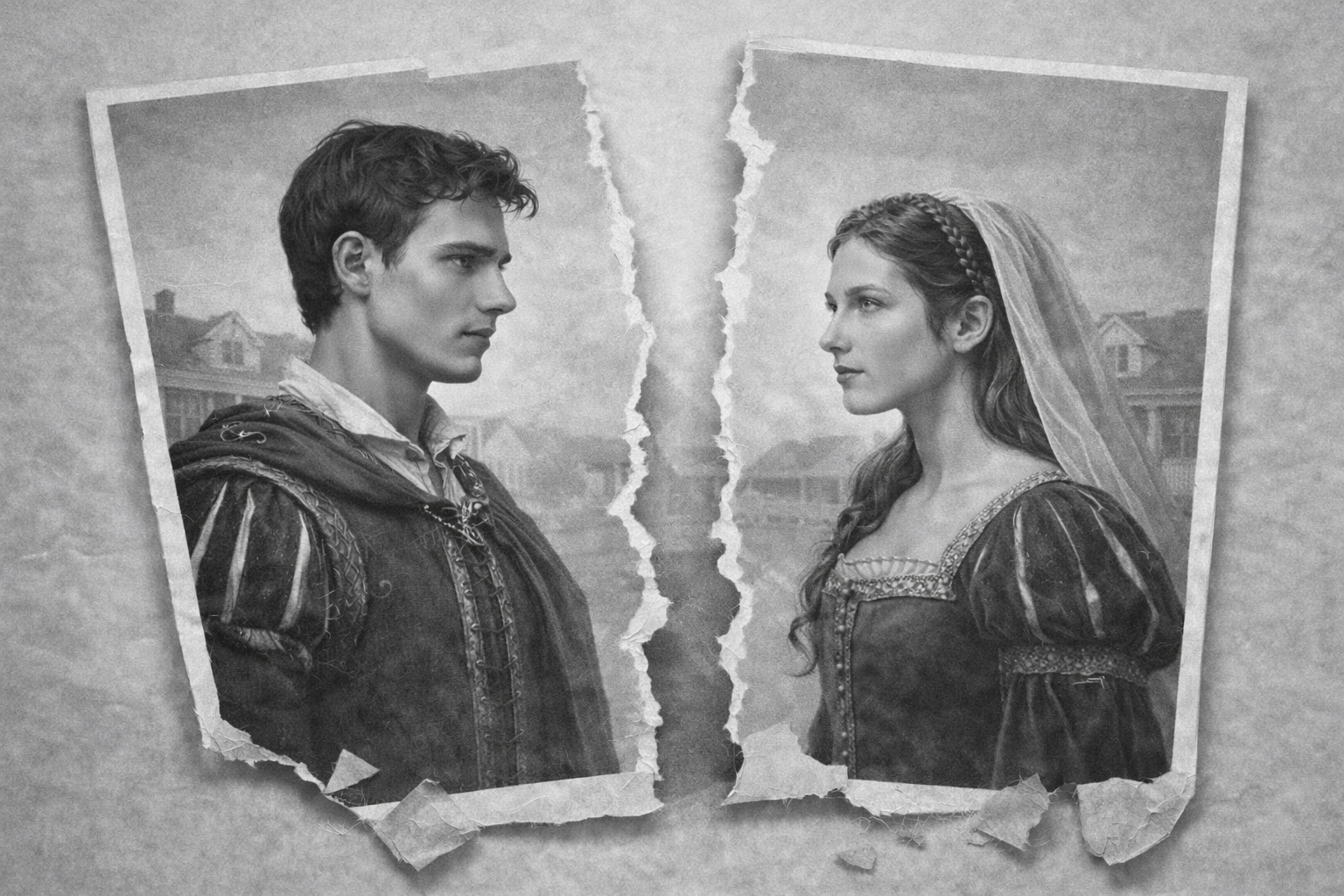
Romeo and Juliet is not a love story, it is a tragedy of labels overpowering humanity. Ryan Vet thinks Romeo and Juliet are being born right now.
Two teenagers try to become the authors of their own lives and the adults around them will not allow it, not because Romeo is unkind or Juliet unworthy, but because their world already decided their fate based on last names. Labels first, humans second. Gen Beta will not just inherit polarization. They will inherit a world where unity is treated like betrayal.
Ryan's illustration is personal and deliberately small. He bought a Tesla in the mid-2010s because he is a gadget guy, not because he was making a statement. Then in late 2016 he pulled into a North Carolina Supercharger to find it deliberately blocked by pickup trucks with flags flying. Less than a decade later the same car flipped its political valence entirely, and the people who blocked him were cheering the choice. When culture is polarized enough, you do not get to own things innocently. Everything gets drafted into the culture war.
The trust data underneath is a long, steady decline rather than a mood swing. Trust in the federal government fell from 77 percent of Americans in the 1960s to roughly 16 percent today (Pew Research Center, 2023). Interpersonal trust dropped from nearly half of Americans in the early 1970s to about 30 to 34 percent (Pew Research Center, 2019). Only about 8 to 9 percent of Democrats and Republicans have a spouse or long-term partner from the other party. Facts do not persuade in low-trust environments, they ricochet.
Ryan's close is a leadership mandate rather than a parenting one: model conviction without cancellation, protect shared spaces that are not optimized for agreement, and make disagreement survivable. Conviction is not the danger. The danger is when conviction creates an enemy.
Romeo and Juliet is a tragedy of labels overpowering humanity. The feud is inherited, no one remembers how it began, and children grow up inside it before they can understand it.
Trust in the federal government collapsed from 77 percent of Americans in the 1960s to roughly 16 percent today (Pew Research Center, 2023), and interpersonal trust fell from nearly half of Americans in the early 1970s to about 30 to 34 percent (Pew Research Center, 2019).
Only about 8 to 9 percent of Democrats and Republicans report having a spouse or long-term partner from the other party. Polarization is no longer just ideological, it is relational.
88 percent of Gen Z believe companies should help address major societal challenges and 80 percent believe companies should speak out (APCO Worldwide, 2023). When every institution must declare allegiance, neutrality becomes suspicious.
The mandate for leaders is not to abandon belief but to change their relationship to it: model conviction without cancellation, preserve spaces not optimized for agreement, and make disagreement survivable.
Plain-language definitions for the ideas in this episode. Structured for search and AI answers.
Ryan Vet's name for Gen Beta, born into ideological sorting deep enough that relationships across the divide carry real social cost. The family names are no longer Capulet and Montague, they are ideological, institutional, and algorithmic.
In this episode: The thesis of the essay.
The pattern in which every generation overcorrects for the pain it experienced. Gen X overcorrected for absent parents, Millennials for societal instability, and Gen Z is overcorrecting for distrust.
In this episode: Why Ryan expects distrust itself to become a parenting value.
The distinction between holding a shared table and requiring shared belief. Leaders can hold clear convictions while still creating space for dissent, showing that disagreement need not end a relationship.
In this episode: The first of Ryan's three shifts for leaders.
Lines worth keeping, verbatim from the episode.
Labels first. Humans second.
They died because the world around them made love illegal.
The danger is when conviction creates an enemy.
Straight answers to the questions this essay raises. Open by default, structured for search and AI.
What is the Romeo & Juliet Generation? +
It is Ryan Vet's name for Gen Beta, the generation born in 2026 and beyond. He argues they will inherit a world where authentic unity is treated like betrayal, much like the star-crossed lovers whose families forbade their connection. The labels dividing them are no longer family names like Capulet and Montague but ideological, institutional, and algorithmic.
What is the Generational Pendulum, and how does it apply here? +
The Generational Pendulum is the idea that every generation tends to overcorrect for the pain it experienced. The essay applies it to parenting: Gen X overcorrected for absent parents by becoming intensely involved, Millennials overcorrected for instability by seeking safety, and Gen Z is overcorrecting for distrust. Ryan argues that when distrust becomes a parenting value, children inherit not just beliefs but boundaries.
Why does Ryan Vet say unity will feel forbidden for Gen Beta? +
He points to a collapse in trust alongside intense ideological sorting that shapes where people live, who they trust, and who they befriend or date. When neutrality becomes suspicious, relationships across ideological lines become risky. Gen Beta will grow up absorbing these boundaries early and rarely having them challenged.
What does the Tesla charging-station story illustrate? +
Ryan describes buying a Tesla as a gadget lover, not to make a statement, then being blocked from a North Carolina Supercharger in 2016 by flag-waving pickup trucks. He uses it to show how quickly an ordinary object can become a proxy for identity. He notes the cultural coding of the car later flipped, illustrating how fast symbols get drafted into the culture war.
What does the essay ask leaders to do? +
Ryan frames polarization as a leadership problem, not only a parenting one, and offers three shifts. Leaders should model conviction without cancellation, preserve shared spaces that are not optimized for agreement, and make disagreement survivable by removing contempt from conflict. The goal he names is unity without uniformity.
Full show notes
Generation Beta has arrived, inheriting unprecedented challenges as AI-native children in a world where authentic unity is systematically forbidden.
This comprehensive analysis explores how parental ideology, algorithmic certainty, and institutional polarization are creating the most constrained generation in human history. Children born in 2026 and beyond face unique developmental challenges that no previous generation has encountered.
What You’ll Discover:
Generation Beta Characteristics: How AI-native children develop differently from Gen Alpha and Gen ZThe Romeo & Juliet Metaphor: Why authentic connection is becoming increasingly difficult for this generationParental Ideology Impact: How ideological divides shape childhood experiences and identity formationAlgorithmic Certainty: The psychological effects of AI-dependent decision making from birthDigital Native Parenting: Evidence-based strategies for raising children in an AI-driven worldCultural Tipping Points: The generational shifts defining our current historical momentEcho Chamber Effects: How information silos impact child development and social connectionInstitutional Polarization: The measurable impact on family dynamics and child psychologyPerfect For:
Parents navigating AI-enhanced parenting and seeking guidance for Gen Beta children Educators adapting teaching methods for digital native students Child Development Professionals working with modern families Business Leaders preparing for future multi-generational workforces Researchers studying generational trends and cultural shifts Policy Makers shaping education and family support systems
Research Foundation:
This episode synthesizes cutting-edge research from leading generational experts, child development specialists, and AI integration studies. We examine peer-reviewed research, demographic trends, and emerging patterns that define this pivotal moment in generational history.
Key Themes Explored:
Technological dependency • Generational rebellion patterns • Leadership environment changes • Identity formation crisis • Cultural collision dynamics • Digital childhood development • Parenting strategy evolution • Human connection in AI world • Generational constraint analysis • Future workforce preparation
Practical Applications:
Whether you’re a parent trying to understand your Gen Beta child, an educator adapting to digital natives, or a leader preparing for the future workforce, this episode provides actionable insights you can implement immediately.
Learn evidence-based approaches to create healthy technology boundaries, foster genuine human connection in an increasingly AI-driven world, and prepare Gen Beta children for success while maintaining their humanity.
Send us Fan Mail
About Ryan VetRyan Vet is a USA TODAY bestselling author, futurist, and international keynote speaker whose insights on generations, culture, and the future of work have been featured in Forbes, Financial Times, ABC, NBC, and CBS. His research helps leaders understand emerging generational patterns and anticipate societal shifts before they fully unfold.
Join 20,000+ Leaders for Weekly InsightsIf you want deeper research and behind-the-scenes insights on generations and the future of culture and society, join Ryan’s weekly newsletter: 👉 https://ryanvet.com/collide