What the Class of 2026 Is Really Bringing to the Workforce
2026 graduates are entering the workforce in an unprecedented time, but what they want is probably different than what you think.
Read the full essayThe data behind this essay. Every figure traces to a source the essay cites. Hover any card to share it.
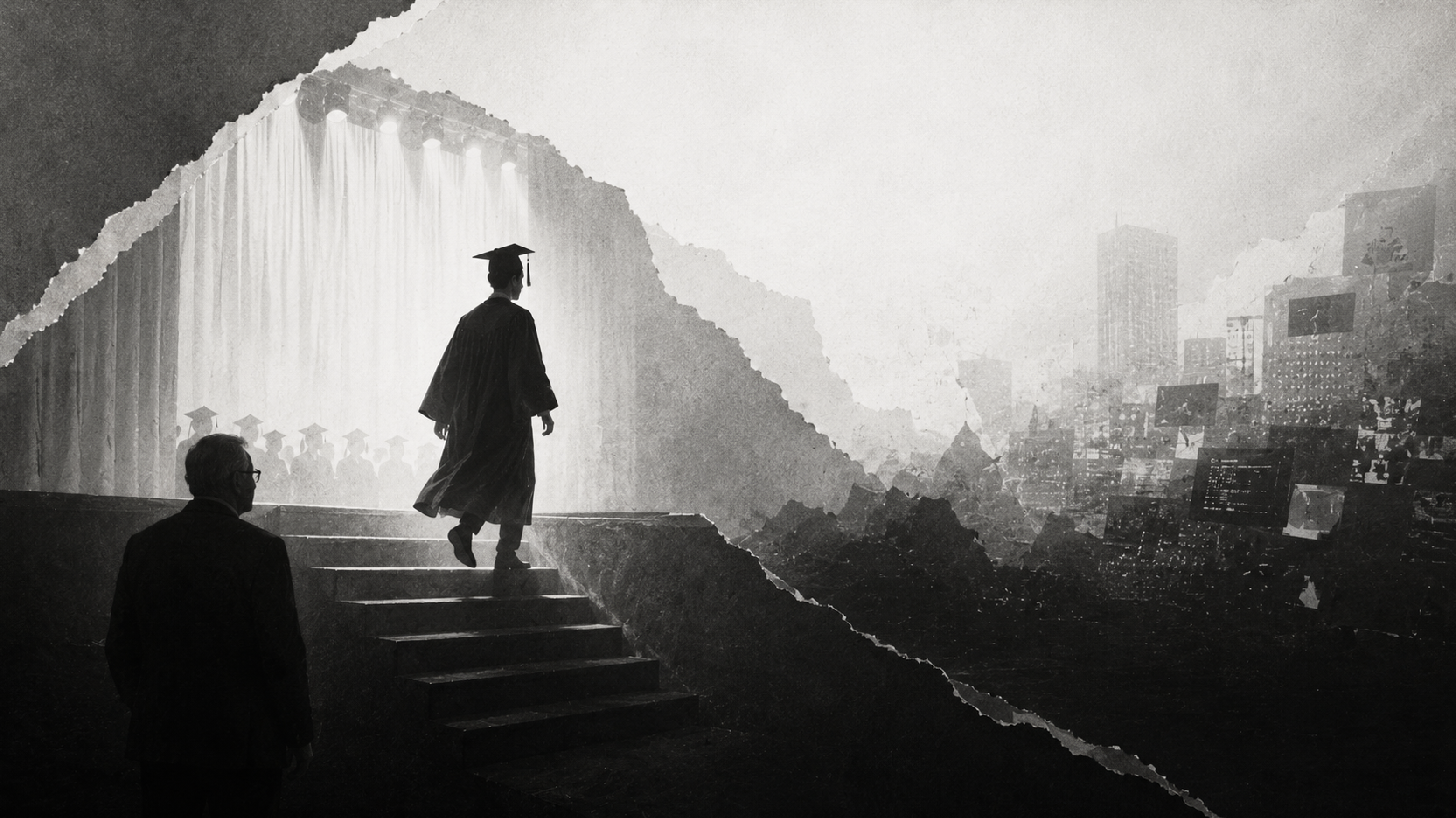
Gen Z does not simply need more flexibility. They need more meaningful connection, and someone waiting on the other side of the stage.
Using 2004 as shorthand for a 22-year-old graduate, the timeline tells the story. They were born the same year as Facebook. By potty-training age the iPhone and Netflix streaming had arrived. In 2008 their parents were weighing preschool against layoffs, and while they were too young to understand the economics they absorbed the uncertainty around them. They were 12 during the 2016 election, forming opinions about identity and belonging exactly as polarization intensified. COVID hit as they approached driver's ed, and they started college the same semester free ChatGPT was released.
The loneliness data cuts against the assumptions. Gallup found only 23 percent of remote-capable Gen Z employees preferred fully remote work, compared with 35 percent of every older generation, and that Gen Z is the loneliest generation at work, almost twice as likely as Gen X and nearly three times as likely as Boomers to report loneliness a lot of the previous day (Gallup, 2025). Flexibility without belonging is not freedom. A young employee can sit in 50 Slack channels and 5 Zoom calls and end the day more disconnected than they started.
The gap they name most is mentorship. 83 percent of Gen Z workers say a workplace mentor matters to them and only 52 percent have one (Adobe, 2023). Deloitte finds they look to managers for guidance and inspiration and mostly feel those managers are too busy with tasks to give it (Deloitte, 2025). Ryan's own examples are deliberately informal: a retired coworker at a big box store who told him when he did well and when he did not, and Chris, a sales rep at a paper company who brought an intern to client calls without it ever being his job.
On AI he argues for an honest conversation rather than reassurance. The market is more mixed than the headlines: 77 percent of 2025 graduates found work within 3 months, up from 63 percent the year before (ZipRecruiter, 2026), and employers project a 5.6 percent increase in new graduate hiring in 2026 (NACE, 2026). But this is a generation that was promised a degree would produce a job and that social media would produce community. Both promises were quietly disproven in their lifetime.
The Class of 2026 is the first traditional graduating class whose entire college experience was shaped by generative AI, having started college the same semester free ChatGPT was released.
Only 23 percent of remote-capable Gen Z employees prefer fully remote work, compared with 35 percent of each older generation (Gallup, 2025). The generation we assumed wanted to escape the office needs it differently.
Gen Z is the loneliest generation at work, almost twice as likely as Gen X and nearly three times as likely as Baby Boomers to say they felt loneliness a lot of the previous day (Gallup, 2025).
83 percent of Gen Z workers say a workplace mentor is important to them, and only 52 percent have one (Adobe, 2023).
The market is more mixed than the headlines. 77 percent of 2025 graduates found work within 3 months, up from 63 percent the year prior (ZipRecruiter, 2026), and employers project a 5.6 percent increase in new graduate hiring in 2026 (NACE, 2026).
Plain-language definitions for the ideas in this episode. Structured for search and AI answers.
The distance between how much early-career employees want a mentor and how many actually have one. It is filled by proximity and informal relationship, not by a program, a Slack message, or a learning module.
In this episode: The 83 percent who want one against the 52 percent who have one.
Remote and hybrid autonomy granted without the relational structure that makes work meaningful. Ryan's point is that it reads as isolation rather than freedom to the people receiving it.
In this episode: Why Gen Z is both the most flexible and the loneliest cohort at work.
Telling a new graduate what AI will change about their role, what you still need a human to do, and what you will teach them that no model can replicate, instead of reassuring them their job is safe.
In this episode: What Ryan says is worth more than any onboarding deck in a new hire's first 90 days.
Lines worth keeping, verbatim from the episode.
flexibility without belonging is not freedom
Gen Z does not simply need more flexibility. They need more meaningful connection.
That person was not a program. That person was a leader.
Straight answers to the questions this essay raises. Open by default, structured for search and AI.
What makes the Class of 2026 different from earlier Gen Z graduates? +
They are the first traditional graduating class whose entire college experience was shaped by generative AI. They were born around 2004, the same year Facebook launched, and they entered college the same semester the free version of ChatGPT was released to the public. Their adolescence was marked by political polarity and their childhood absorbed the aftershocks of the Great Recession.
Why is Gen Z considered the loneliest generation at work? +
Gallup's 2025 report found Gen Z employees are almost twice as likely as Gen X and nearly three times as likely as Baby Boomers to say they felt lonely a lot of the previous day. Only 23% of remote-capable Gen Z workers said they preferred fully remote work, lower than every older generation. The essay argues that flexibility without belonging is not freedom, and connects the trend to a broader epidemic of loneliness.
What does Gen Z actually want from the workplace? +
Mentorship. Eighty-three percent of Gen Z workers say a workplace mentor is important to them, yet only 52% say they have one, according to Adobe's 2023 study. Deloitte's 2025 Gen Z and Millennial Survey found most Gen Z employees feel their managers are too busy with tasks to provide real guidance.
How should leaders talk to new graduates about AI? +
The essay recommends replacing the reassurance of Don't worry, AI won't take your job with an honest conversation. That means telling a new graduate what AI is going to change about the role, what still requires a human, and what the leader can teach that no model can replicate. Ryan suggests this conversation in a graduate's first 90 days is worth more than any onboarding deck.
Is the job market really as bad as the headlines suggest for 2026 graduates? +
The picture is more mixed than the headlines suggest. ZipRecruiter reported that 77% of 2025 graduates found work within three months of earning their degree, up from 63% the year before, and NACE projects a 5.6% increase in new graduate hiring in 2026. Still, the essay notes this generation is graduating into a market that has spent years warning that AI may eliminate the entry-level jobs they are applying for.
Full show notes
The Class of 2026 is the loneliest generation ever to walk across a graduation stage, and the workforce is not ready for them.
Generational futurist Ryan Vet, an expert in generations and AI keynote speaker, unpacks why the college Class of 2026 is unlike any cohort before it. They are the first traditional graduating class whose entire college experience was shaped by generative AI, whose adolescence was marked by political polarity, and whose childhood absorbed the aftershocks of the Great Recession.
In this episode, Ryan answers the questions leaders are actually asking.
What makes the Class of 2026 different from previous Gen Z graduates? They were born in 2004, the same year Facebook launched. ChatGPT became free to the public the same semester they began college. They are the first cohort whose entire undergraduate experience was rewritten in real time by generative AI.
Why is Gen Z the loneliest generation at work? Gallup’s 2025 State of the Global Workplace report found Gen Z employees are nearly twice as likely as Gen X and three times as likely as Boomers to report daily loneliness. Only 23 percent of remote-capable Gen Z workers prefer fully remote work, lower than every older generation.
What does Gen Z actually want from the workplace? Mentorship. 83 percent of Gen Z workers say a workplace mentor is important, yet only 52 percent have one (Adobe, 2023). Deloitte’s 2025 Gen Z and Millennial Survey found most Gen Z employees feel their managers are too busy with tasks to offer real guidance.
How should leaders talk to new graduates about AI? The honest conversation is not, “Don’t worry, AI won’t take your job.” It is, “Here is what AI is going to change about this role, here is what I still need a human to do, and here is what I am going to teach you that no model can replicate.”
The biggest takeaway: this generation does not need more flexibility. They need more meaningful connection.
Read the full essay: www.ryanvet.com/collide/what-the-class-of-2026-is-really-bringing-to-the-workforce
Subscribe to the Collide newsletter: www.ryanvet.com/collide
Send us Fan Mail
About Ryan VetRyan Vet is a USA TODAY bestselling author, futurist, and international keynote speaker whose insights on generations, culture, and the future of work have been featured in Forbes, Financial Times, ABC, NBC, and CBS. His research helps leaders understand emerging generational patterns and anticipate societal shifts before they fully unfold.
Join 20,000+ Leaders for Weekly InsightsIf you want deeper research and behind-the-scenes insights on generations and the future of culture and society, join Ryan’s weekly newsletter: 👉 https://ryanvet.com/collide