The short version
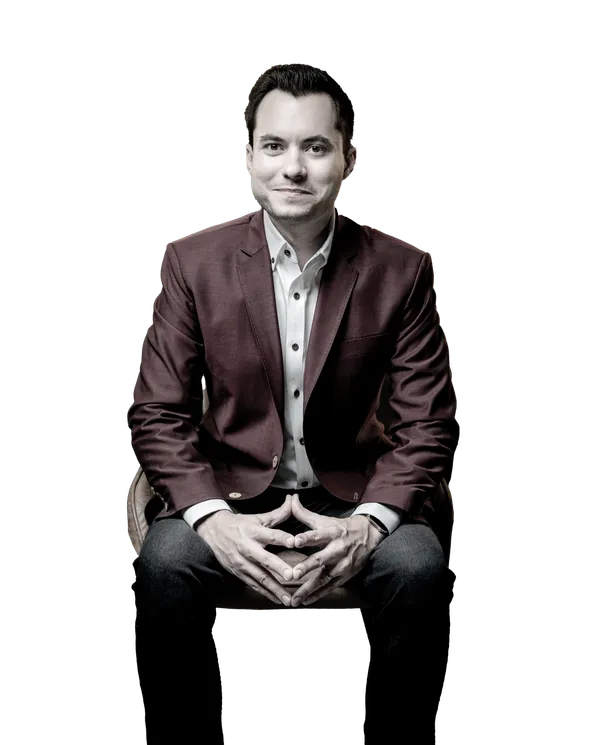
In Newsweek (September 30, 2026), in a piece filed on the magazine's AI Politics desk, Ryan Vet was quoted as an outside expert on why young Americans' views of AI are collapsing even as their usage holds. Newsweek identified him as an "author and generational futurist" and attributed the velocity gap to him by name — "Technology is accelerating faster than human wisdom can keep up." He told senior reporter Lauren Giella that Gen Z grew up amid endlessly generated content and so defaults to "verify then trust," inverting the older "trust but verify."
Ryan Vet · Article in Newsweek
Newsweek's Lauren Giella had a finding that broke the usual pattern. Young people are normally a new technology's earliest and most enthusiastic adopters — but this year, for the first time, a majority of American adults under 30 told Pew they are more concerned than excited about AI, while two-thirds of them use chatbots anyway. Familiarity was supposed to produce acceptance. With AI and Gen Z it is producing hostility.
The split inside that data is what Newsweek called Ryan Vet to explain: why adults under 30 read AI so much more darkly than millennials do, when both groups use it at similar rates. His answer was about formative experience rather than attitude, and Newsweek used his own term for the mechanism — the velocity gap.
He is one of five outside voices in the piece, alongside a startup founder, two academics and a youth-engagement director; the article is a policy story, not a profile. What is worth noting is the attribution. Newsweek introduced him as an "author and generational futurist" — the outlet's own words, not a descriptor supplied to it — and credited the velocity gap to him rather than to the reporting.
Ryan's Big Takeaways
- 01
Millennials watched the world change. Gen Z watched the iPhone get slightly better.
Newsweek's puzzle was a 9-point gap: 48 percent of adults under 30 expect AI to have a negative effect on society, against 39 percent of those aged 30 to 49, even though both cohorts use chatbots at similar rates. Ryan attributed part of the split to what each group had already lived through. Millennials, as Newsweek summarized his point, "saw flip phones evolve into smart phones and witnessed social media eat the world" — they have a personal reference class for a technology that arrives, reorders everything, and turns out fine enough. The technological evolution Gen Z has witnessed is the iPhone becoming a slightly better iPhone. Handed something genuinely discontinuous, the older group pattern-matches to a transition it survived. The younger group has no such precedent to reach for.
The Generational Prism → - 02
Newsweek named the velocity gap, and attributed it to him.
The article sets up the mechanism with its own reporting — it took years for more than half of US adults to adopt social media, and two months for ChatGPT to reach 100 million users, but with far less clarity about where the transformation lands. Then: "Vet calls this a velocity gap: 'Technology is accelerating faster than human wisdom can keep up.'" That is the framework doing the work it exists to do. The gap is not between AI's capability and our skill at using it; it is between the speed of deployment and the much slower speed at which a society works out what it costs. Seat belts took decades. A surgeon general's warning on cigarettes took decades. AI is not waiting.
The Velocity Gap → - 03
"Verify then trust" has replaced "trust but verify."
This is the quote that explains Newsweek's headline finding, and it reframes the whole survey. "[Gen Z] have grown up in a world where content is just prolific everywhere and being constantly generated, and so they're already in the mindset of 'verify then trust,'" Ryan told Newsweek. "And I think the previous generations were in [the mindset] 'trust but verify.'" The order matters. Trust but verify extends provisional credit and checks afterward; verify then trust extends nothing until proof arrives. A generation running the second rule will meet generative output — infinite, plausible, unsourced — with suspicion by default. Which means heavy use is not evidence of buy-in. The more you handle content you have to verify, the more the verifying becomes the experience.
- 04
Usage is not adoption, and the polling has stopped pretending otherwise.
The practical lesson for anyone reading AI dashboards is that the two numbers have come apart. Gallup found half of Gen Z using generative AI weekly or daily, roughly unchanged year over year — while excitement fell 14 points to 22 percent, anger rose nine points to 31 percent, the share saying workplace risks outweigh benefits climbed from 37 to 48 percent, and 80 percent said they worry AI is hindering their ability to learn. Steady seat-time beside collapsing sentiment is not a healthy adoption curve; it is compliance. Newsweek's reporting traces where that goes next: 60 percent of 18-to-34s wanting data-center construction slowed, and roughly 49 million Americans aged 18 to 29 eligible to vote in the 2026 midterms.
The framework was on the record before the reporter used it
Newsweek wrote "Vet calls this a velocity gap" rather than explaining the idea in its own words — which is the small, checkable thing that separates a named framework from a good line in an interview.
It is checkable here. The velocity gap has a page on this site, and Ryan published a full essay under that name — "The Velocity Gap: Gen Z's Contradiction with AI," COLLIDE No. 42 — on March 3, 2026, nearly seven months before Newsweek's piece ran. The argument in that essay is the same one the reporter reached him for: that Gen Z's heavy use of AI and its deepening distrust of AI are not a contradiction to be explained away, but the predictable result of adoption outrunning understanding.
The trust inversion has a paper trail too. "They have traded 'trust but verify' for 'verify so I can trust'" has been the standing line on this site's Gen Z profile since before the call. Newsweek quoted the same idea in his own phrasing, "verify then trust," which is what it sounds like when a position gets stress-tested by a reporter rather than restated.
Standout Quotes
Technology is accelerating faster than human wisdom can keep up.
[Gen Z] have grown up in a world where content is just prolific everywhere and being constantly generated, and so they're already in the mindset of 'verify then trust.'
And I think the previous generations were in [the mindset] 'trust but verify.'
Drag, swipe, or use the arrows to explore
Frequently Asked Questions
What did Ryan Vet say in Newsweek about Gen Z and AI?
He gave Newsweek two things. First, a reason for the gap between millennials and Gen Z on AI: millennials watched flip phones become smartphones and social media reshape everything, so they have a lived reference class for disruptive technology, while the technological change Gen Z has witnessed is the iPhone becoming a slightly better iPhone. Second, the trust mechanism — having grown up amid endlessly generated content, Gen Z defaults to "verify then trust," where previous generations operated on "trust but verify." He also named the velocity gap: "Technology is accelerating faster than human wisdom can keep up."
What is the velocity gap?
The velocity gap is Ryan Vet's term for the distance between how fast a technology is deployed and how slowly a society works out what it costs. Seat belts took decades to become standard; a surgeon general's warning on cigarettes took decades. AI is compressing the deployment side of that equation without compressing the understanding side — ChatGPT reached 100 million users in two months, where social media took years to reach half of US adults. Newsweek attributed the term to him directly in its September 30, 2026 report.
How did Newsweek identify Ryan Vet?
As an "author and generational futurist." That is Newsweek's own descriptor, in its own words, and he was quoted as an independent outside expert rather than as a representative of any company or product. The piece was filed on Newsweek's AI Politics desk by senior reporter Lauren Giella and published September 30, 2026.
Was the Newsweek article about Ryan Vet?
No. It is a reported policy story on why young Americans' views of AI are hardening and what that means for regulation, and it quotes five outside sources — Ryan alongside Sotira co-founder Amrita Bhasin, University of Houston law professor Nikolas Guggenberger, Stevens Institute political scientist Lindsey Cormack, and Audra Watson of the Institute for Citizens & Scholars. Ryan's contribution is the generational half of the explanation.
Had Ryan Vet made this argument before Newsweek called?
Yes, and it is on the record. He published "The Velocity Gap: Gen Z's Contradiction with AI" as COLLIDE No. 42 on March 3, 2026, almost seven months before the Newsweek piece ran, and the velocity gap has a standing framework page on this site. The trust inversion he described to Newsweek appears on his Gen Z profile as the trade of "trust but verify" for "verify so I can trust."
Frameworks & Ideas Referenced
- The Velocity Gap : Named in the article and attributed to Ryan by name — technology moving faster than our ability to reckon with the consequences.
- The Generational Prism implied : The formative-experience reading behind the millennial / Gen Z split on AI, rather than an age-based one.
- Generational Blur implied : Why the sharp break here falls between millennials and Gen Z on lived technological experience, not on the calendar.
Books, People & Sources Mentioned
- Pew Research Center: Young US adults are increasingly wary of AI, concerned it will take jobs : The survey behind Newsweek's lead statistic — 55 percent of US adults under 30 now more concerned than excited about AI, up from 31 percent in 2021.
- Gallup: Gen Z's AI Adoption Steady, but Skepticism Climbs : The 2026 Walton Family Foundation / GSV Ventures / Gallup study Newsweek cites for the split between flat usage and falling sentiment — excitement down 14 points to 22 percent, anger up nine to 31 percent.
- The Velocity Gap: Gen Z's Contradiction with AI (COLLIDE No. 42) : Ryan's own essay naming the framework Newsweek attributed to him, published March 3, 2026 — nearly seven months before the article. Read the essay →
Keep Exploring
- framework The Velocity Gap Explore →
-
 Collide essay The Velocity Gap: Gen Z's Contradiction with AI When you eliminate friction, you get caught balancing moral conviction over drive. Explore →
 - framework Gen Z Explore →
- framework The Generational Prism Explore →
- speaking AI keynote speaking Explore →
- speaking Ryan Vet, futurist Explore →
-
 Appearance Ryan Vet on Cowboy State Daily: screen time, cognitive erosion, and the friction kids need Ryan Vet joins Jake Nichols live on Cowboy State Daily to talk screens in the classroom: why we should teach kids to interact with humans rather than devices, how cognitive erosion quietly washes away skills, and why the velocity gap makes AI different from anything before it. Explore →
 - Appearance Ryan Vet in Fast Company: what an AI toothbrush can and cannot tell you Fast Company sought out Ryan Vet, an AI futurist who has built machine learning into healthcare products since the 2010s, for its report on usmile's AI-assisted D Series oral-care system. He gave reporter Sarah Bregel both halves of the argument: AI-enabled brushes may flag problem areas early, and they may also hand patients a false sense of security that costs them an exam. Explore →
Ryan writes one free essay a week. It's called Collide.
How generations are reshaping work and home. Practical, research-backed, and delivered weekly. Read it at RyanVet.com/collide.