The short version
On Tim Stating the Obvious, generational futurist Ryan Vet tells host Tim Staton that the biggest generational gap is not a real gap at all — it is the lens. Once a label exists, selective attention does the rest, and every new behavior that fits the stereotype confirms a belief that was never true. He explains why millennials were the first cohort named before it grew up, walks the Generational Pendulum from the Silent Generation's stability through boomer provision to Gen X latchkey kids and helicopter parenting, and argues that the real cost of a frictionless world is cognitive erosion — we are outsourcing the thinking, and even the parenting, to machines.
Ryan Vet · Video on Tim Stating the Obvious
Tim Staton opens by describing a workplace where five generations aren't clashing but colliding productively, then asks the obvious question: what is actually the biggest generational gap? Ryan Vet's answer is that there isn't one. The gap is the lens.
To prove it he reaches for the 1999 selective-attention experiment where viewers counting basketball passes miss a gorilla walking through the frame. That, he tells Tim, is what a label does. Once "Gen Z is lazy" exists as a category, every behavior that fits it lands as confirmation and everything else disappears. From there the conversation goes somewhere most generational interviews don't: the piano bench where Ryan learned that correction is a feature, the pyramids as humanity's first friction-removal project, and what happens to a generation that has never been told to sit up straight.
Ryan's Big Takeaways
- 01
The biggest generational gap is not a gap. It is the lens.
Ryan reframes Tim's opening question before answering it. What leaders experience as a generational gap is mostly their own perception, and the mechanism is selective attention. He points to the 1999 basketball experiment where viewers counting passes fail to notice a gorilla walk through the frame, because attention allocated to one thing makes the other thing invisible. Labels work identically. Once "Gen Z is lazy, glued to their phone, antisocial" exists as a ready-made category, every instance that fits gets logged as proof, and the belief hardens even though it was never true to begin with. His conclusion is that the friction leaders keep trying to manage is largely manufactured by the frame they brought to it.
The Generational Prism → - 02
Millennials were the first generation labeled before it grew up.
This is the sharpest original idea in the episode and Ryan builds it carefully. Every prior cohort was named well after it existed — the Greatest Generation, the Silent Generation, even boomers got their name in retrospect. Millennials were called millennials from roughly year one or two of the cohort being born, which meant articles were characterizing them while the oldest were barely teenagers and the youngest were toddlers. You cannot meaningfully label a two-year-old, he points out, and yet the label was set and the coverage followed. By the time millennials entered the workforce during the dot-com aftermath, the stereotype was fully formed and waiting — flexible schedules, unlimited PTO, hoverboards, adulting is hard — even though the CEOs of those same companies were overwhelmingly Gen X and boomers.
The Generational Prism → - 03
The productivity paradox is why the time you save never shows up.
Ryan returns to the 1950s and '60s appliance advertisements — a mother in a dress and apron beside a new dishwasher, under a line promising she now has time to spend with her kids. Did that happen? No. What happened is that women entered the workforce and society shifted. He names this the productivity paradox, an economics term for the gap between the output technology delivers and the freedom it was supposed to deliver. His broader claim is that humans have always tried to buy time, and every single time we succeed we immediately fill the space we bought. Tim connects it to a budget philosophy — income rises, spending rises to meet it, and you are back at capacity wondering how.
The Friction Doctrine → - 04
The Generational Pendulum runs on seven accelerating factors.
Ryan gives Tim the fullest version of this framework he has laid out in a press conversation, and he does it without technology as a variable — just parenting. The Silent Generation came out of the Great Depression wanting stability: Main Street jobs, long hours, authoritarian and disciplined households where kids did not speak out of line. Boomers rejected the rigidity and the frugality, explored more, divorced more, and became the first cohort with two household incomes — because provision stopped meaning dinner at the family table and started meaning brands, college funds, and the white picket fence. That produced Gen X, the latchkey kids who came home to empty houses with resources but no emotional presence, and who overcorrected into helicopter parenting. The mechanism underneath is four phases — experience, challenge, overcorrect, recalibrate — accelerated or slowed by seven external factors.
The Generational Pendulum → - 05
Gen Z is not swinging. It is splitting.
Ryan flags something he thinks may be a first. Where previous generations moved as a cohort along the pendulum, Gen Z appears to be fracturing into two opposed paths at once. One faction is accelerating and resembles Silent Generation patterns — extreme conservatism, marrying young, having children early. The other is decelerating hard, extending the failure-to-launch pattern into a stated intention never to have kids at all. He notes the milestone data around the slower path: Gen Z declining to get a driver's license, millennials cohabiting at nearly the rate other generations married while declining marriage itself, home purchases pushed later across the board. His read is that the split itself may be the recalibration, and that the middle ground will not appear until Gen Alpha and Gen Beta come of age.
The Generational Pendulum → - 06
A generation with unlimited information has never experienced correction.
Asked why Gen Z seems simultaneously certain and adrift, Ryan gives the most human answer in the episode. They have access to any information and any guidance they want, and their mentors are TikTok and YouTube. He concedes they are probably more knowledgeable on more topics than any generation before them. What is missing is the real-time feedback loop — the piano teacher correcting posture, the hands that were not curved enough, the sit-up-straight. So they enter the workforce equipped, empowered, and emboldened, having never experienced the friction of correction. Which is why correction, when it finally arrives at 22, can land as earth-shattering. Tim's addition is the one Ryan agrees with: having access to information is not the same as having knowledge.
Cognitive Erosion → - 07
With AI, the velocity gap has inverted.
Ryan's usual framing is that technology outruns morality and society spends a decade catching up — social media hit around 2012, and meaningful legislation on phone bans and age limits is only arriving now, fifteen years later. With AI he thinks the curve has flipped. The washing machine sped up a manual task; AI speeds up thinking, which is a different category of thing to outsource. His most pointed example is parenting: he wrote about Gen Beta arriving in 2026 and argues parents are already outsourcing parenting to AI, taking prescriptive guidance about children from a system that cannot know them. Anyone with kids knows you cannot treat two children identically even if they are identical twins. Remove the emotion from parenting and what remains is cognitive erosion, arriving faster than the last one did.
The Velocity Gap → - 08
Ask what will not change, then make your team do it the hard way.
Ryan's advice for executives is deliberately unfashionable. Go back to the basic leadership questions — why does this role exist, why does this company exist — because the answer is both why employees show up and why customers buy. He invokes Jeff Bezos declining to answer what is coming in five years and insisting the real question is what will not change: people will always want faster delivery, lower prices, and convenience. Then comes the part leaders resist. Force your team to do tasks the hard way and think critically through them. Not because technology should be ignored — ignore it and, in his coinage, you get blockbustered — but because the companies that win will be the ones that adopt the tool while deliberately preserving the thinking it would have replaced.
The Friction Doctrine → - 09
Add friction back in deliberately, one small analog task at a time.
His closing prescription is specific and small. Never use a calculator to work out a tip — even hitting the 20 percent button has removed the arithmetic. Handwrite. Journal. Go analog on the things that do not cost you much. He is explicit that he is not asking anyone to take a washboard down to the river; he is asking which daily processes could use your mind instead of a machine. For younger listeners he adds a second instruction: have conversations with adults, not just peers, and ask real questions. What song was everyone singing when you were in high school? What did you do after school as a sophomore? Ask a Gen Xer and you get the arcade; ask a boomer and you get riding around the neighborhood. The answers dissolve the stereotype faster than any argument about it.
The Friction Doctrine →
The Story Ryan Told
Ryan learned piano young, and strictly. His teacher had trained at some of the best musical academies in the world, and the method was Suzuki — complicated, exacting. He remembers the corrections most: hands not curved enough, posture not upright enough, sit up straight. He is careful to say the proverbial hand-slapping never actually happened. But that is how he remembers it, and that, he thinks, is what made him learn.
Years later he pulled the book out to teach his own son and caught himself reaching for a shortcut. There is surely a class on YouTube for this. Then he stopped. Could he learn the same songs from a video? Absolutely. But the posture, the dynamics, the real-time feedback from someone watching your hands — that does not survive the transfer.
He uses it to explain a generation rather than to complain about one. The correction he was getting at five years old, on a piano bench, for not sitting straight enough, is correction that many young professionals have simply never received — for a long list of reasons, most of them well-intentioned. So when it finally arrives in a performance review, it does not land as feedback. It lands as an earthquake.
Standout Quotes
The biggest gap isn't even a realistic gap as much as our own perception, the lens through which we view the different generations.
You can't label someone that's two years old, not effectively or efficiently.
Having access to information is not knowledge.
They feel equipped and empowered and emboldened, and yet they've never experienced that friction of correction.
We're eliminating the things that make us think, and in so doing we're really impeding our whole human experience.
I think we're going to develop a generation that can't think.
If you ignore it, you're going to get blockbustered.
Instead of asking what's coming in five years, you have to ask what's not going to change.
Drag, swipe, or use the arrows to explore
Frequently Asked Questions
Why does Ryan Vet say generational labels are ruining companies?
Because the label changes what leaders are able to see. He uses the 1999 selective-attention experiment — viewers counting basketball passes who fail to notice a gorilla walk through the frame — to show that attention spent on one category makes everything else invisible. Once "Gen Z is lazy, glued to their phone, antisocial" exists as a ready-made bucket, every behavior that fits it registers as confirmation and everything that contradicts it does not register at all. His argument is that most of what leaders experience as a generational gap is produced by the lens rather than by the people, which makes the label itself the friction worth removing.
Why were millennials treated differently from earlier generations?
Because they were the first cohort named before it grew up. Every generation before them was labeled well after the fact, but millennials were called millennials from roughly the first year or two of the cohort being born. That meant articles were characterizing them while the oldest members were barely teenagers, and, as Ryan puts it, you cannot label a two-year-old effectively. By the time they entered the workforce after the dot-com bust, the stereotype was already fully formed — flexible schedules, unlimited PTO, adulting is hard — despite the fact that the leaders of those same companies were overwhelmingly Gen X and baby boomers.
What is the productivity paradox?
It is the economics term for the gap between the output technology delivers and the freedom it was supposed to buy. Ryan's illustration is the 1950s and '60s appliance advertisement — a mother beside a new dishwasher, under a promise that she now has time for her kids. What followed was not more time with children but a broad shift of women into the workforce. His general claim is that humans have always tried to buy time and have filled the space every time they succeeded. Tim Staton frames it as a budget philosophy: income rises, spending rises to meet it, and you are back at capacity.
How does the Generational Pendulum explain parenting?
It runs in four phases — experience, challenge, overcorrect, recalibrate — with seven external factors accelerating or slowing the swing. The Silent Generation came out of the Great Depression wanting stability and ran authoritarian, disciplined households. Baby boomers rejected the rigidity and the frugality, and redefined provision as brands, college funds, and two household incomes rather than dinner at the family table. That produced Gen X, the latchkey kids who came home to empty houses with resources but without emotional presence, and who then overcorrected into helicopter parenting. Each generation is answering the previous one's perceived failure rather than starting fresh.
What does Ryan Vet mean by cognitive erosion?
The steady removal of the tasks that were keeping us thinking. He distinguishes this wave from earlier ones: the washing machine automated a manual chore, while AI automates judgment. His sharpest example is parenting — he argues parents are already taking prescriptive guidance about their children from AI, when anyone with kids knows you cannot treat two children the same way even if they are identical twins. He pairs it with a generation that entered the workforce having never experienced correction, and predicts, bluntly, a generation that cannot think.
Do millennials and Gen Z actually job hop more?
No, once you control for when each generation was allowed to start working. By age 25, baby boomers had changed jobs an average of 5.3 times, Gen X 5.3 times, and millennials 5.6 times. Boomers started at 10, 11, or 12, before child labor laws; Gen X started around 14 or 15; millennials started at roughly 20 because of college. So millennials compressed a nearly identical number of job changes into a much shorter window. Zoom out to age 30 and the three cohorts almost flatline. This is the Generational Prism in practice — age on one face, the moment in history on the other, and the label only what refracts out.
Did Henry Ford really say people would have asked for faster horses?
Almost certainly not, though Ryan repeats the attribution as nearly everyone does. There is no evidence Henry Ford ever said or wrote it. The line does not appear in his autobiography or in the Henry Ford Museum's list of more than 200 verified quotations, and the earliest known attribution to him surfaces in 1999, more than fifty years after his death. The point Ryan is making with it — that people ask for faster versions of what they already have rather than for the thing that replaces it — stands on its own without the attribution.
Frameworks & Ideas Referenced
- The Generational Prism : Saved for the closing thought and walked in full — age on one face, moment on the other, the label only what refracts out — with job hopping as the worked example.
- The Generational Pendulum : Named, with its seven accelerating factors and all four phases, and traced through parenting from the Silent Generation to helicopter parents without technology as a variable.
- The Velocity Gap : Named as the gap between technology and morality, with the argument that AI has inverted it because what is being outsourced now is thinking.
- Cognitive Erosion : Named directly, and given its most concrete form here — a generation that has never been corrected, and parents taking prescriptive advice about their children from a machine.
- The Friction Doctrine : The spine of the second half, prompted by Tim asking outright what we are missing in a frictionless society. Ryan traces it from the pyramids to the tip calculator.
- Childhood Surveillance implied : The playground argument — helicopter parents stopping kids from falling, and what gets lost when a child never has to scrape a knee and go find help.
Books, People & Sources Mentioned

Jonathan Haidt, The Anxious Generation
The book Ryan calls a fantastic encapsulation of the research on Gen Z and social media, and his anchor for the 2012 inflection point.
- Simons and Chabris, the invisible gorilla experiment (1999) : Ryan's illustration of selective attention. Two details are worth getting right — participants count passes by the white-shirted team, and about 54 percent did notice the gorilla, not the roughly 10 percent he estimates on air while flagging that he could not recall the figure.
- Kevin Stinehart on play and executive function : The play-based researcher Ryan cites on air for the finding that so much executive function develops on the playground. Kevin was a guest on The Ryan Vet Show. Listen to the episode →
- Bureau of Labor Statistics : The source behind the closing job-hopping figures: 5.3 changes by age 25 for boomers, 5.3 for Gen X, 5.6 for millennials, converging by age 30.
- MIT Media Lab: Your Brain on ChatGPT : The research Ryan reaches for on what heavy AI use does to the mind. He dates it to 2023 on air with an explicit "I believe"; the MIT Media Lab study published in 2025.
- The hydraulic lift theory of the Step Pyramid : The 2024 research Ryan references for water-powered lifting at Djoser — his oldest example of humans engineering friction out of a job.
- Jeff Bezos on what will not change : The panel answer Ryan paraphrases: stop asking what is coming in five years and ask what will not change, because customers will always want faster delivery, lower prices, and convenience.
- The "faster horses" line : Ryan attributes it to Henry Ford, as nearly everyone does. There is no evidence Ford said it — the earliest attribution appears in 1999, decades after his death, and it is absent from his autobiography and from the Henry Ford Museum's list of verified quotations.
- The Future of Parenting: the impact of AI on raising Gen Beta : The article Ryan mentions writing about Gen Beta and outsourced parenting. Read the essay →
- Tim Staton, Tim Stating the Obvious : The host's show on turning leadership principles into practical application, now in its seventh season.
Keep Exploring
-
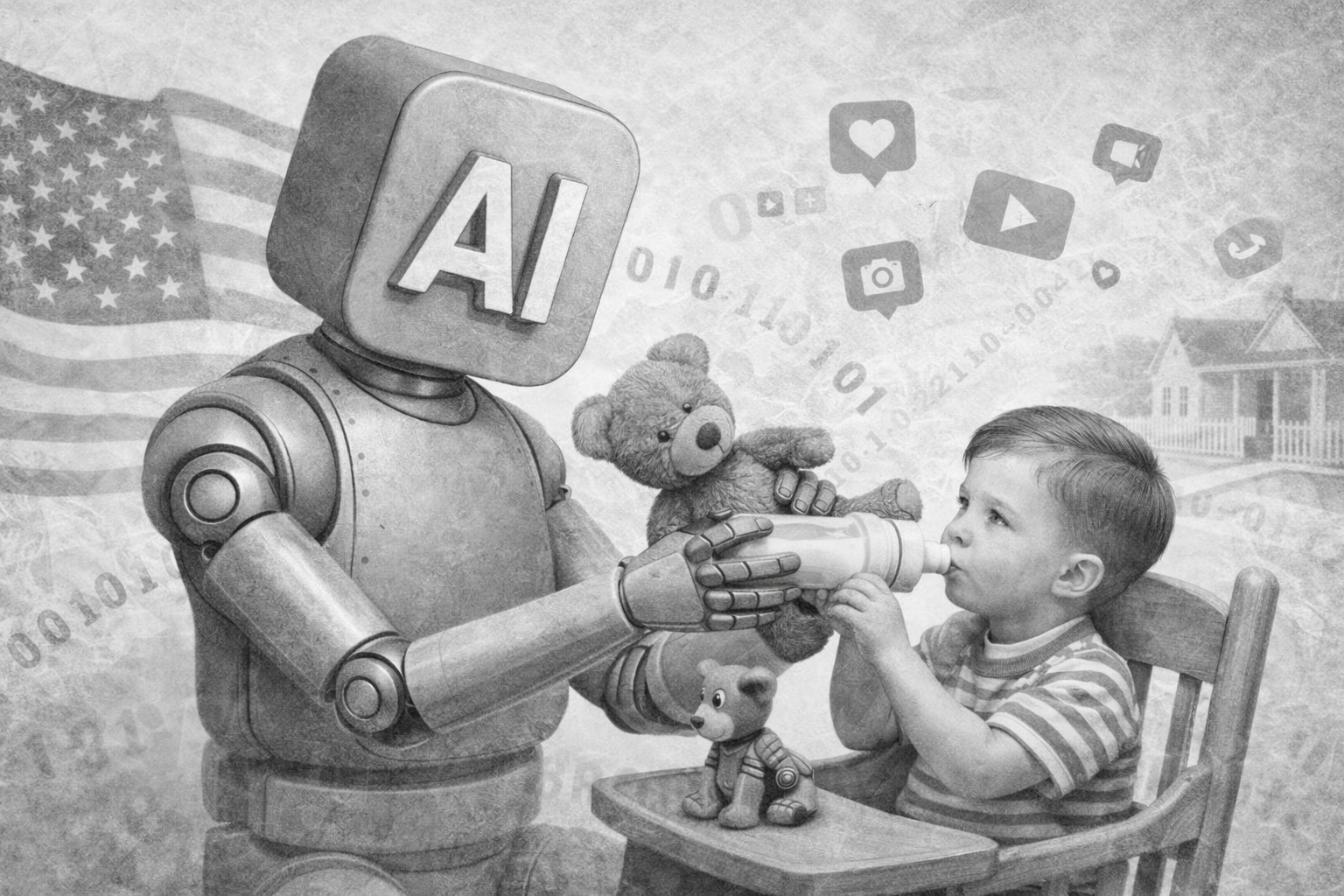 Collide essay The Future of Parenting: the impact of AI on raising Gen Beta Parent Tracked, Algorithm Raised. The Quiet Trade We’re Making in the New Age of… Explore →
 -
 Collide essay The Velocity Gap: Gen Z's contradiction with AI When you eliminate friction, you get caught balancing moral conviction over drive. Explore →
 -
 Collide essay The rise of fragility: what we created when we tried to keep kids safe How a safety-first culture unintentionally reshaped childhood and what it means for every generation. Explore →
 -
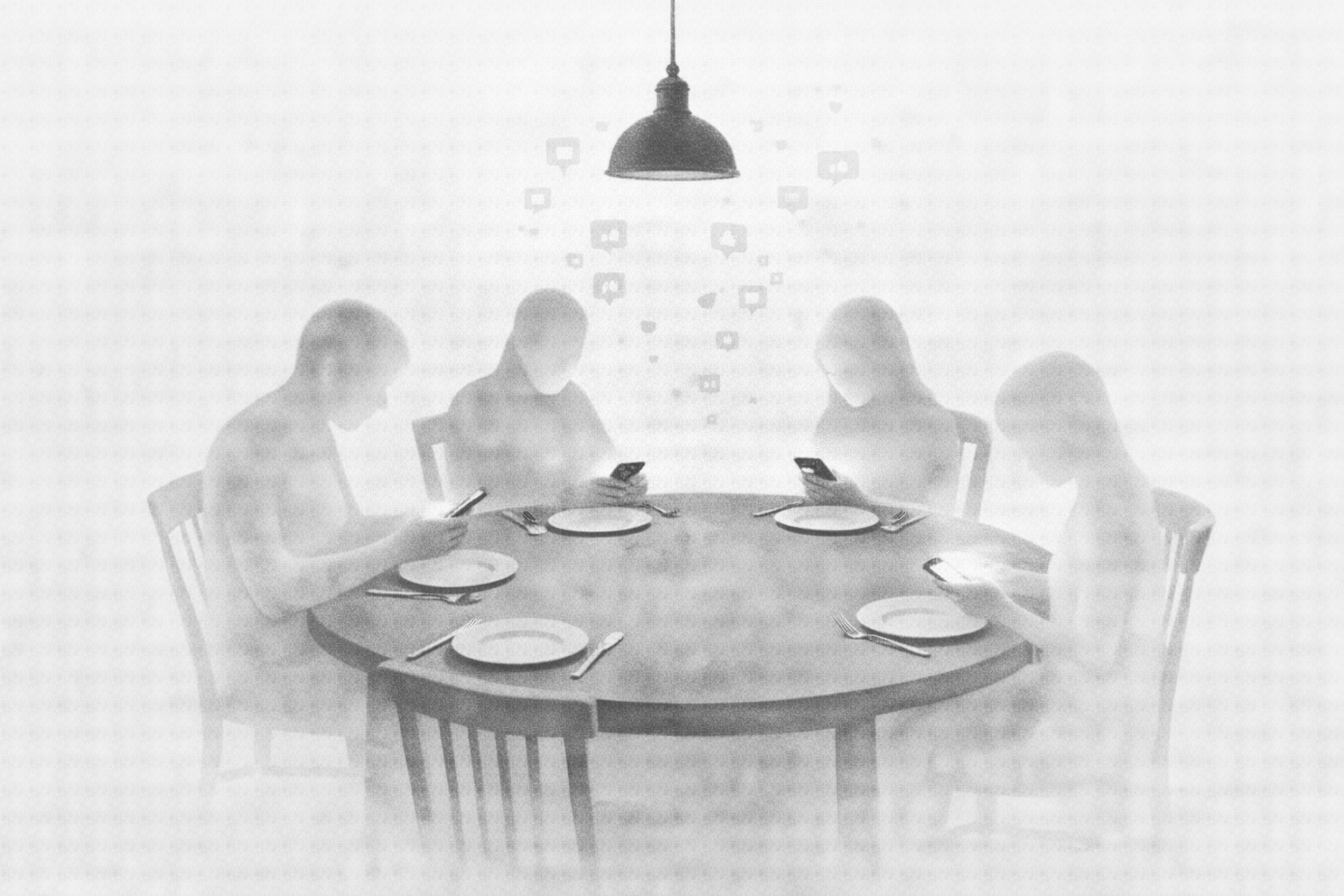 Collide essay We've never been more alone The Surgeon General says loneliness now kills like smoking 15 cigarettes a day. The youngest generation is the most at risk. Explore →
 -
 Podcast episode Kevin Stinehart: rebuilding recess and why play is a developmental need, not a want We engineered the friction out of childhood, then acted surprised when kids could not handle it. Explore →
 -
 Podcast episode Gen Alpha turned 13: the Generational Prism on growing up in 2026 The first Gen Alpha teenagers have arrived. What does turning 13 look like for a generation born into AI, pandemics, and a world that generates whatever you ask for? Explore →
 -
 Podcast episode The real barrier in cross-generational communication: why trust, not style, is what's really broken Poor communication costs U.S. businesses $1.2 trillion annually, but what if the deepest barrier across generations isn't how we talk, but whether we trust the person talking? Explore →
 -
 Appearance Ryan Vet on Our Future is Kind: the human advantage in the age of AI Generational futurist Ryan Vet joins the Our Future is Kind Podcast to argue that labeling a generation is one of the unkindest things we do, walk host Michael G. Neece through the job-hopping data that dismantles the millennial stereotype, and explain why AI is a hammer that can build a house but cannot give you shelter. Explore →
 -
 Appearance Ryan Vet on Shift Happens: why your top talent is walking out the door Generational futurist Ryan Vet joins the Shift Happens Podcast to name the apology syndrome eroding confident leadership, walk host Kamila Adamatti through the job-hopping data that dismantles the Gen Z stereotype, and explain why Gen Z now wants authenticity rather than transparency. Explore →
 -
 Appearance Ryan Vet on The Human Connection Podcast: you automated the connection and removed the reason people stayed Generational futurist Ryan Vet joins The Human Connection Podcast to tell the story of the AI matching tool that made his company's networking faster and quietly removed the trust the business was built on, plus the one question he thinks every leader should ask before any technology decision. Explore →
 - framework The Friction Doctrine Explore →
- framework The Generational Pendulum Explore →
- framework The Generational Prism Explore →
- speaking Keynote: When Generations Collide Explore →
Ryan writes one free essay a week. It's called Collide.
How generations are reshaping work and home. Practical, research-backed, and delivered weekly. Read it at RyanVet.com/collide.
Links from this conversation
Full Transcript
The complete conversation between Tim Staton and Ryan Vet, transcribed in full. Key terms link to the ideas behind them.
Hey, and welcome back to another episode. Imagine a workplace where baby boomers, Gen X, millennials, Gen Z, and Gen Alpha aren't clashing — they're colliding, in the most powerful way possible. That's exactly what today's guest helps leaders and brands master. He's a USA Today best-selling author, a serial entrepreneur who started his first company as a teenager, and he's one of the world's leading generational futurists. Please welcome the man who turns generational friction into a competitive advantage, Ryan Vet. Ryan, welcome to the show.
Thanks so much for having me, Tim.
I'm glad we're able to make this happen. If you don't mind, take a little bit and tell us a little bit more about yourself.
Yeah, my background — I like to go all the way back to the lemonade stand. That is really how I got my start, in the suburbs of Chicago, making lemonade and selling anything I could, charging people to pet my guinea pigs and turtles. That was kind of my journey, and that ultimately, as a teenager, got me into the venture-backed startup world. Got curious about it and did that for the next 20 years or so, throughout college and after college. And all the while I had this interest — and other people saw that interest in me — about what's going on with different generations. What's wrong with millennials? That was really the question I was getting asked at the time. And I was a millennial. Proud millennial — not at the time, a little bit embarrassed at the time. And I started to do research on it in the background of my day jobs, working in some of these different startups and companies. After an exit in 2021, I really sat back and tried to figure out what was important. I feel like there's different phases in life. You've got your grinding phase, where you're just cranking, trying to get things going. Then you've got your growing phase, where you're learning, but it's a little bit more smooth sailing, it's up and to the right. You're not grinding as much, but that's sometimes more of the emotional burden in life. And then you get to a phase where you're giving, and you want to give back. And as I was looking at all the opportunities and experiences, it was like, I'm really passionate about helping leaders stay relevant in a rapidly changing world, with a rapidly changing workforce, with rapidly changing technology. And that's what brought me here to where I am today.
Which is an amazing story in itself, going from selling lemonade all the way up to startup ventures. And I love the fact that you're focused on people, especially on the intergenerational gaps that we have. And you're right — I heard all that. What's wrong with these millennials, and everything else. And I didn't know if I was a millennial or not, because I fall in that weird age range. And now it's like, what's wrong with these Gen Z folks? And I'm like, well, I don't know if there's anything wrong with them. I think it's just us at a different phase in life, and we all have these different things. So from your experience and your background, what are the biggest generational gaps that you see?
I think there's a few, and that's a really solid question. I think the biggest issue that we see — not even a gap so much as the biggest friction point — is this idea that generations are labeled. When you have a label, whether it's a generational label or a label against people from a certain region or whatever it is, when we label people our minds start to categorize, and this bias creeps in. I don't know if you've ever seen the scientific study done in 1999. They say, hey, watch how many times someone in a black t-shirt catches a basketball and passes a basketball. And so everyone's counting — one pass, two pass, three pass. At the end they asked, how many people saw the gorilla? And there was only like 10% of the people — I forget the exact statistic — but a very, very few number of people saw the gorilla, because you're so focused on watching the people in the black shirts, not the white shirts, catch or pass the ball. I have this video available on my YouTube if you want to do the test yourself. And it's so fascinating, because we do the same thing with generations, or with people as a whole. It's like, oh, those Gen Z, they're lazy, they're glued to their phone, they're antisocial, they have the Gen Z stare, they say weird things all the time, they have their own vernacular. And so when one of those things does pop up, it just solidifies what we already believed, even if our belief wasn't true. So I think the biggest gap isn't even a realistic gap as much as our own perception — the lens through which we view the different generations.
With the startup industry, what do you see in the startup industry with the different generations and how that goes?
I think traditionally the startup generation — especially when you look at the dot-com boom, the bubble burst in the early 2000s, and then those that followed right after — you saw these big tech companies, and a lot of millennials were always the poster children for a lot of these companies, even though a lot of the CEOs were Gen Xers or even baby boomers with some of the bigger companies that still are around today. So that in and of itself is an interesting statistic, to see this like, oh, they want flexible work schedules, they want unlimited PTO, they want to ride around on their hoverboards, adulting is hard — all the linguistics and things that came out when millennials entered the workforce in this technological era. And so I think a lot of those stigmas stuck. But the other thing that was happening simultaneously around that time was that the millennial generation was the first generation to grow up with a label on it. And what I mean by that is, everyone else was named well after the generation was being born. But from basically year one or year two of millennials being born, they were called millennials. And so you see articles dating back to even when millennials were still being born and the oldest ones were barely teenagers — you see articles labeling them. You can't label someone that's two years old, not effectively or efficiently. And so I think we got really sidetracked with these labels, because it was convenient, and that convenience caused all sorts of friction in the conversations and in the workplace and in how we treated millennials, instead of just, how do you treat our new team members?
It's a great point, because I do remember growing up never really hearing about generations and generational gaps, or what's going on with this generation versus that generation. The only generation you really heard about was like the greatest generation — World War II, those veterans and those fighters who went in. Other than that, everyone was just people. So why do you think we started putting a label on different generations?
I think it's convenient and it's easy. As human beings, we like things neat and orderly, whether or not we admit that. And a label, a stereotype, gives us something neat and orderly. Not saying it's good, but it's easy. And so it's easy for our mind to just kind of rest there, and it's easy to explain away or dismiss cultural trends — which have always happened and will always happen with a changing world — by saying, oh, kids these days. But instead of oh, kids these days, it's oh, millennials. Oh, Gen Z. Oh, Gen Alpha. Oh, Gen Beta. And we're just going to keep doing this. It's always the new kids — and I'm using that in air quotes — the newest people that enter the workforce, that we always blame for whatever trend is different. And in recent history, the last three generations, it's different because new technology exists when they enter the workforce that didn't exist when the previous generation entered the workforce.
When we talk about the technology advancements that have been happening in the startup world, what is probably one of the most significant things that you've seen happen with technology that has hindered our communication with each other?
I think it's the idea that technology itself helps communication. And I think it's really interesting. If you look at really any advancement — and I'll go back to the 1950s and 1960s advertisements, and you can pull them up, that were in magazines or in newspapers for the dishwasher and the washing machine. If you look up these innovations at the time, it was always a mother in a dress and an apron with the curly permed hair. It's very stereotypical. And it basically said, now you have the time to spend with your kids. That was the whole punchline of these ads. And is that what happened when mothers installed dishwashers and washing machines? Well, no. We started to see mothers actually go into the workforce. And we saw a shift in society. And it's what we call the productivity paradox. It's not just there, it's with many different things. And to your question about communication — we think technology is aiding us in communication, but really what we want is this. You and me dialoguing back and forth. You can challenge me on something I say, and hopefully I'm respectful back, and we have this discourse and maybe have shared ideas, or even our conversation promotes new ideas. But technology doesn't do that. Even though there's two people involved, it's still fairly one-sided. Even the phone, which is great, kind of puts up a barrier that wasn't there before. You can't look someone face-to-face anymore. Obviously, as social media came around — and there's tons of statistics, and The Anxious Generation book by Jonathan Haidt is a fantastic encapsulation of the science and research on the impacts for Gen Z and social media — but you have a whole generation, and again, now we're labeling, but a whole generation by cohort that was born at a time where social media and smartphones hit mass adoption. And we see significant mental health rates and loneliness and suicide rates increase during this generation, when they're the ones that are most connected. They don't need a calling card to call a different country. They don't need a payment plan. They have unlimited minutes. They have unlimited data. They have unlimited texts. And yet they have the worst communication. And so I think a lot of times we get so reliant on technology that we forget what it's actually removing from our world when we rely on technology that's supposed to be making us better.
There's an interesting paradox with that, though, because each generation thinks they're building upon the other one, right? I'm kind of reminded of the saying, weak men create hard times, and hard times create strong men, and then strong men create weak men, and weak men create hard times again. We always think that we're helping the next generation out with this new technology thing. We've talked briefly about how that may or may not be true, but in your experience, how has this generational perpetuation either helped or hindered the next generation?
Yeah. Let's take technology aside for just a second. Let's look at parenting. I think it's one of the clearest illustrations of what I call the Generational Pendulum. This is one of the areas of research where I spend a lot of time. It examines seven accelerating factors that are external. And what you look at is, those seven accelerators, just like a pendulum swings back and forth, can change how fast the momentum goes and how fast those changes happen between generations. When you look at it, let's start with the Silent Generation. The Silent Generation are almost all kids of the Great Depression. Whether they lived through it or their parents lived through it, they all were the Great Depression. So they wanted stability. You see them working a lot of Main Street jobs. They're working long hours. In many cases both the husband and the wife worked, interestingly, because of the World Wars — again, depending on exactly where they were born. So you have this interesting generation here, and they were very authoritarian, extremely religious in the United States, and very disciplined. They had certain ways of doing everything. The kids did not ever speak out of line. They did exactly what they were told. They were always nice and orderly in public. Well, then you have the baby boomers. The baby boomers were the kids of the Silent Generation, for the most part — generalizing here for the sake of brevity. But the boomers didn't like that strict lifestyle. They didn't like the rigidity of a lot of what they experienced with their parents, and they didn't like the frugality of their parents. They would share their Christmas gifts or their birthday gifts with four siblings. And the boomers wanted something different. So when the boomers had the opportunity to go to college, they were more exploratory with relationships, premarital relationships for the first time, ended up higher in divorce, which you almost never saw before. But also, when they were working, they were the first generation to have two household incomes. Because they wanted to provide for their kids, and provision was no longer coming home and having dinner around the family table. It was making sure your kids had the money, the latest brands, that they would be able to go to college, that you had the 2.2 kids with a golden retriever and the white picket fence. Well, that bore the latchkey kid generation, Gen X. Latchkey kids would come home to an empty house because their parents were trying to provide monetarily and provide resources, but they weren't providing emotionally. And again, generalizing here, but Gen X, which makes up 50% of the parents of millennials — they became the helicopter parents. They're like, I'm not going to do what my parents did. I'm going to make sure I'm at every game, I'm going to make sure my kids have every experience, and my parents are hyper present. So this is the Generational Pendulum. We could keep going way more in depth, but I think even removing technology from it, just think about how you were raised, and your parents, and where they fell, and where you fell, and what you're doing for your kids. There's four phases of the pendulum. First, you experience it. It's what a teenager does, right? They experience something — their parent says, go clean your room. Then they're going to challenge it, because that's what teenagers do. They're going to always push back. Then they're going to overcorrect. So that means shove it all in their closet, sweep it all under their bed, or just throw it out the window in a fit of rage. And finally, at some point, they're going to recalibrate, because they're going to lose their homework and they need to end up back on track. Same thing is true with generations. They experience it, they challenge it, they overcorrect, and then they ultimately recalibrate to whatever the new normal is in light of the times, technology, and trends.
Yeah, and I see that as well. And I was thinking about my great-grandmother. She was part of that Silent Generation and she grew up in northern Virginia, and she had her own farm. She literally would grow her own vegetables, everything else. I mean, amazing vegetable soup — I'm just going to say that right there. Like, the freshest vegetables ever. And every generation after that kind of was like, well, these things we can give up. And I'm looking at the future and I'm wondering, what are the side effects of the helicopterism that you're seeing?
Yeah, I mean, you see the term failure to launch a lot — meaning we're slowing down life milestones. And not so much for our generation, but we're seeing that with Gen Z more so, where they're just not opting for a driver's license. I was clamoring at 14 and a half in the suburbs of Chicago, when you could take driver's ed at 15. The day I turned 15, I was in the DMV getting my permit. I couldn't wait. And now you're having people not drive at all. And that's just one milestone, but it's an easy milestone. Same with delaying marriages. You see millennials, interestingly enough, cohabitating at almost the same rate as other generations married, but they won't actually commit to marriage. So it's not that they're not having kids, it's not that they're not living with someone or getting involved in a romantic relationship, but they're not taking the step of marriage. The same with buying houses — just delays across the board. And part of that's what people are calling failure to launch, but we're seeing that swing. And now the good thing is millennial parents are starting to be parents of Gen Alpha and Gen Beta kids, as well as some of Gen Z. Gen Z's actually, in some respects, a big divide. We don't have enough time to go into it, but some of Gen Z is actually speeding things up and almost resembling Silent Generation principles, with extreme conservatism, getting married young and early, having kids right away. Whereas the others are putting it off and saying they're never going to have kids, they don't want to populate this earth. So, a great polarity. But you're also seeing that fracture happen with Gen Z right now. And so the swing might be one of the first times we see kind of a split. And that might be part of the recalibration — two really different paths, and at some point there has to be a middle ground. I think we'll see that as Gen Alpha and Gen Beta come of age.
Do you think that split is because there are folks in Gen Z — and I hate to put labels on things again, like you had said — but they're looking for stability? Because I find in the leadership realm people are like, hey, what is the path? What is the goal? What do I have to do? They're eager to do it, they just don't know what to do. And they're looking for that guidance. And then you have other folks who are like, I don't want any guidance, just leave me alone and let me do my own thing and live my own life and be me. So what are you seeing?
I think a lot of what you're seeing with Gen Z in particular is they have always had access to any information that they want and any guidance that they want. So they have their social media, their TikTok idols that they follow, their YouTube channels that they're watching, and those are their mentors. And I think the element that's missing is — yes, they have more information, and they probably are more knowledgeable on more topics, deeply, than any previous generation. I think that's a fair assessment. The concern is there's something, again, like this dialogue you and I are having, if you have that with a mentor that's teaching piano, for example. I remember I had piano lessons from a very, very young age, and it was strict. An incredible piano teacher, but she was trained at some of the best musical academies in the world. I was learning Suzuki, which is very complicated piano. I pulled out a book recently to teach my son. And I was like, oh, you know what, I'm sure there's a class on YouTube or something. And then I was like, wait, wait. Part of what made me learn piano was — and this didn't actually happen, but I felt like the proverbial hands were getting slapped, because they weren't upright enough and not curved enough, and sit up straight. Again, it didn't actually happen that way, but that's what made me learn. Could I learn potentially the same songs from YouTube? Absolutely. But the posture, the dynamics, and things that had that real-time feedback loop — I think that's what's missing. So when you have Gen Z with this unlimited access to information entering the workforce, they feel equipped and empowered and emboldened, and yet they've never experienced that friction of correction. And so when you correct someone of this generation, oftentimes, not always, they take it as earth-shattering. Because the correction I was getting at five years old, sitting on a piano bench, not sitting straight enough, is correction they never got, for many, many reasons. But it creates a really interesting culture inside a generation.
You brought up some things that really made me think. When you're talking about the human-to-human connection, it's the soul. And when you have a mentor next to you teaching you how to play the piano — sit straight, curl your fingers — yes, you're hitting that key right, but maybe you could put a little bit more pressure on it and help get that soul back into the music. And I think people are yearning for a soul connection, because you can learn anything, you have access to it. And I would debate that just because I have access to information doesn't mean I learn it. It just means I can read it, I can digest it. But it's different than going to the library, reading 20 different books, and then retaining that information and rewriting a one-page summary of something I had to manually read, versus asking ChatGPT or whatever AI, hey, where can I get this information, give it to me so I can recite it to somebody else. Having access to information is not knowledge. And so I think that they may know, but they understand they're missing that connection, that guidance. So you bring up a really good point with that. I appreciate that, it really made me think about it. You talk a lot about friction, though. So what are we missing in a frictionless society?
Yeah, I love that question. I think it's one of the most challenging things that's ever happened in our world, for all of humankind, from the dawn of time. We have always tried to remove friction in our lives. I always mention the idea of the pyramids. Yes, they had slave labor that helped build the pyramids, but more than that, they had to move 2,500-pound bricks to build these pyramids. And how did you move them? You didn't have bulldozers, you didn't have cranes. Well, they invented simple machines. They used log rollers. And even as recently as 2024, they found new information that they would have used hydraulic lifts, water-powered lifts, to hoist these 2,500-ton — no, not 2,500-ton, that'd be really heavy — 2,500-pound bricks up into place. So we see machines all the way from there and early tools to the computer and cell phone and everything else. But what's happened is what I call the velocity gap. And the velocity gap is this. We saw it most prevalently so far with social media. Let's get the world connected. We're going to have the best generation ever, because they're going to be able to meet with peers around the world, be more cultured, more experienced, more access to everything — which are all, I think we could agree from a human experience, theoretically good things. However, what we didn't know is that it created more isolation. Because your feed and your best friend's feed, that might have the same political leanings, that might like the same musical artist, are going to be slightly different because you like something slightly different. It's going to be more and more tailored to what gets your reaction. So now you have isolation even amongst friends. And then you upload the picture and you need that dopamine hit, and if you don't get enough likes in enough amount of time, you're feeling like no one loves you. And so it creates this vicious cycle, where we saw so many young girls in particular, but young males too, take their own lives as a result of this. We saw eating disorders skyrocket. We saw so many other real, measurable things happen. And you can argue causation and correlation all day — there was more than just social media — but it is a defining moment in time where we started to see all these things happen. That was about 2012. It's just now, where we're 15 years, a decade and a half removed from that, that we're starting to see legislation. Even more states started implementing either cell phone bans on buses or cell phone bans in the classrooms, or limiting ages to social media, because we know the harms. So that's the velocity gap between technology and morality. And now it's shrinking faster and faster and faster. With AI, I think the velocity gap is in reverse. If the lines could go backwards and invert each other, I think we're there. Because you have AI, which is a great tool when used responsibly, and it does speed things up, just like the washer and dishwasher were supposed to do. But now you have this issue where you're not just speeding up processes that are manual and not necessarily something you have to do for life — but thinking. You're outsourcing thinking. I wrote an article on Gen Beta being born in 2026, and it's the future of parenting. I think parents already are outsourcing parenting. And they're not outsourcing it to the parenting books that took storm in the '70s and then again in the '90s, but they're outsourcing it to AI and getting prescriptive data on how to treat their kids. And anyone that has kids knows that you cannot treat two children the same way, even if they're identical twins. They're unique individuals and they have unique personalities. So when you outsource that, you remove the emotion from parenting. And I think the velocity gap here is causing what I call cognitive erosion. It's the idea that we're eroding, we're eliminating the things that make us think, and thus eliminating the friction. And in so doing, we're really impeding our whole human experience — the things that make us grow and stronger and be better. You know, no pain, no gain. We're eliminating that whole friction, and it really should be scary.
I was thinking about a budget philosophy when you brought up the washing machine again and technology. As our budgets increase, oftentimes so does what we fill it with, and then we're like, wait a minute, I'm at capacity again. How is that? And so with technology, and filling it with AI, what are some of the things that you see people filling in that time that we're given back, that we're probably not using wisely enough?
Well, it's the productivity paradox, and it's an economics term. It's the idea that with faster output you'll have higher productivity, meaning you have more free time. But we've always tried to buy time. We have always tried to buy time as human beings, and every time we do, we figure out how to fill it. Henry Ford once said, if I asked people what they wanted, they would have said faster horses. And yet he came up with the car, and everyone's like, oh, the car is going to save me so much time — but now we have time to go to soccer practice and ballet. And all of a sudden we just shove things in. I think entertainment's a big part of it. I think when people actually look at their true screen time and how long they're doom scrolling on TikTok or whatever it is — and I'm not just picking on the younger generations. I think some of the older generations are like, that's a younger kid thing, and if they look at their screen time, they'd be horrified to know that they're competing minute for minute with some of these younger generations. I think that's a big part of it. And a lot of it's being alone, doing activities that you're doing alone. I mean, you and I right now could open up Claude and co-work. You and I could create some sort of object that we want to be 3D printed, with our voice, and have it printed by the time we're done with this conversation. That power is frightening. Now, someone that's Gen Alpha turns 13 this year. They could be doing that as a 13-year-old. And I think it's a really, really — we need to slow down and think about the implications of these. Yes, these are good tools. Yes, they can be used for good. But also a lot of scary things are happening out there, and we're not stopping and slowing down. We're just going faster and faster and faster.
Yeah, and developmentally, we haven't changed as human beings. There are certain mile markers and milestones that happen along the way. I'm not quite sure a 13-year-old is equipped enough to 3D print and run a business from their house. But they think they can, because they have the access to it and the opportunity. What is the damage that we're doing that we don't know? If you had a crystal ball and you could see into the future, what do you predict that we're going to see five, 10, 15 years down the road?
I think we're going to develop a generation that can't think. And the early studies out of MIT, I believe in 2023, with what AI was doing to the mind — we're already starting to see that. We're starting to see just tasks that are required for us to process and operate as human beings, we're outsourcing, because it's easier, it's faster, it's more efficient, we can create more content, we can have better marketing materials. But what's happening is we're losing the ability to think. It's so fascinating. It's almost like we're being programmed to think like a machine. Machines still, even with generative AI and agentic AI — you go back to the very core, and it's more or less, gross generalization, ones and zeros. It's still if this, then that. It's just at rapid pace, rapid scale, with rapid data, immense power being used to fuel and fund all of that. But if we rely so much on outputs that are so binary, a lot of our thinking process becomes binary. We might eliminate the ability to think critically. And for the longest time, I did really well in school until handwriting. And handwriting, I always had to be called in, and my parents were called in, because I was such a sloppy handwriter. I never saw the point. It was when computers were early and you still had MS-DOS, right? So you were typing to actually open Word documents. You had to program the word processing before you could even type. And I just didn't see the point. But now, looking back, it's like those little things. I was even having a conversation with Kevin Steinheart, who did a lot of the play-based research and showed that so much executive function and other things that are critical for human beings happens on the playground. And when we're removing the playground, or putting screen time in classrooms, and you're having helicopter parents stopping kids from falling — not that anyone's advocating that kids get hurt, but there's something to be said, like a kid's got to scrape his knee and come find help. And you don't want to leave them out there, and again, we know more than we did and we have more information, so we're more fearful. But there's something to learning to play with others, learning to play with others of different ages, and learning how those dynamics work. And so much of that has been stripped from modern childhood.
To the folks listening today, let's say they're in executive leadership roles for the workforce. What is something that they could implement today to make their leadership style more effective to reach that younger generation?
Great question, Tim, and I think it's actually really easy. I think if you zoom out, you have to go back to the very basics of leadership. We had so many leadership books for a while, then it turned to management strategies. I would say go back to some of those leadership principles. Why is it that you are in the role that you're in? Why is it that your company exists? Really plain and simple. Because whatever your why is, is often why, A, your employees want to come, but often, B, why whoever buys it, whether it's customers or businesses, why they're buying from you. And so many companies are getting sidetracked by shiny squirrel syndrome. And I have that terribly. Like, yes, I did buy the 3D printer. Yes, despite all I talk about, I wear a smartwatch. And I subscribe to every AI tool, because I am curious. But at the same time, at the end of the day, what is my mission? What is my purpose? Where are we headed? And help bring your team back to that core idea. Jeff Bezos once asked a profound question. He was on a panel, and the question was asked to him, you know, what do you see in the next five years, or something like that. And he's like, I'm so sick and tired of people asking that question. Instead, you have to ask what's not going to change. I know people are going to want faster delivery and cheaper prices and convenience. That's what my motto has been from the beginning and will be forever, and nothing is going to change that. And I think as leaders, this is our opportunity to go back and not say ignore technology — because it's here, and if you ignore it, you're going to get blockbustered, if that's a verb. But instead, what are those things, what are those human elements that are never going to change, and how does everything we do, whether implementing technology or not, align with that? So as we move forward, a leader's job is to still motivate and gain followers on their mission. And that mission needs to be consistent regardless of what's going on in the world. And then force your team to do tasks the hard way and critically think. And I think there's going to be a lot of pushback on that, especially with how easy things can be done. But I think the companies that win aren't the ones who neglect technology, but who adopt technology while simultaneously forcing critical thinking in the process.
Points that I was thinking about — hospitals, right? The hospital should still do downtime in different locations. So there's this theory that you pick a day a month and you say all technology doesn't work, go back to pen and paper, how do we still operate the hospital? And then in the military we do the same thing, right? Let's say all technology goes down, we're in the middle of nowhere, how can we still communicate and still push the ball forward and achieve the objective? And I agree with you, we still need to push people to — hey, maybe today we say, you know what, no technology day today. How do we communicate with each other? Maybe you get up and you walk around the cubicle and talk to your buddy next door and say, hey bud, my name's Tim, nice to meet you. I know I usually call you, but I have a question today. I think that would go a long way. So I really appreciate your insights on that. For the younger folks listening to this, I would like you to flip that question. What do you say to the younger folks?
Yeah, I think be aware of the technologies that are going on, for sure, but also find those things — and it might be as simple as asking your parents, what did you have to do when X, Y, and Z? Whether that was as simple as telling analog time. I love this, and so if you ever hear me talk and you're a millennial, and I do a generational talk, I'll pull someone from each generation from the audience. And I say I'm going to put objects from each generation up, and someone from a different generation has to answer it. And so the first thing I always put up is a clock, an analog clock. And there's no numbers on it intentionally, but the lines are there, so anyone that knows how to tell analog time can do it. So I ask the millennial or Gen Z, I say, what is that? They're like, oh, that's easy, it's a clock. I say, good job, everyone applaud. What time is it? And every single time they completely go white, because most of them, especially if they're a millennial or older Gen Z, have no idea how to tell analog time. I use that as an example, but I say there's so many things in our life where we can add little areas of friction that aren't that hard. And just go analog, just use our minds. Don't ever use a calculator to do a tip at a restaurant. Even hitting the 20% button has removed friction in our lives. We're not even calculating what 20% is. And little things like that, every single day. What are those simple processes that — I'm not saying get out the washboard and go down to the river — but what are those things that you can use your mind for, or handwrite, journal? That's good for so many reasons. What are those things that you can do every day, and how can you be a critical thinker? And then again, for the younger people, go sit down and have conversations. Have conversations not just with your peers, but go look an adult in the eyes and have a real conversation with them and ask them questions. Ask some of the questions I always like to ask, like, hey, when you were in high school, what was the song that everyone was singing? And someone will be happy to tell you, and you'll be like, I didn't know that band existed. Or, what would you do after school when you were a sophomore in high school? And you ask a Gen Xer, they were going to the arcade. And you ask a boomer, they were riding around their neighborhood. And you ask a millennial, they were probably on their computer or watching TV — depending, again, on where they're born in the cycle. So you start asking questions about that, clothing styles. Just like that, you can ask questions about the stereotypes. And all of a sudden you start to see, like, wow, Jurassic Park was the most revolutionary. Jaws was impressive — there wasn't even CGI in it, it was a big animatronic. And these things just start to help you realize we're all humans. We all are amazed at new technology and new movies and new music and new ways of doing things. And it allows us to go and just have a more holistic conversation with people.
Well, last question is, is there anything that I didn't ask you, or we didn't talk about, that you're like, you know what, I really wish you would have asked me this question? Or we wish we would have talked about this one thing?
Yeah, I think — we've talked a lot around labels. I would love to just have one closing thought on labels. I always use this idea of a generational prism. A prism, you shine light through it and it refracts light. And I say the Generational Prism: the one side is age, the other side is moment, and then the refraction is the label. So often we start with the label — Gen Z, or lazy, or whatever it is — but when you look at the age and you look at the moment, it helps us ask better questions. So a quick example is, everyone says millennials were job hoppers and Gen Z are job hoppers. But if you look at the age — let's take every generation at age 25, in whatever era they're in. Boomers at age 25 had worked an average of 5.3 jobs. But there weren't any child labor laws, so their first job was at 10, 11, or 12. Gen X also worked an average of 5.3 jobs by age 25. And there started to be some child labor laws, so their first jobs were 14 or 15. So they hopped jobs more closely together. Millennials' average first job was at about age 20, because of college. And they still hopped 5.6 jobs. So yes, in a shorter period of time they hopped more jobs. But when you zoom out and you look at age 30 for all three of those generational cohorts, it almost flatlines. And so there are just certain things that you have to say — hey, when I was that age and in that moment in history, does this label still stick? And if not, it helps leaders to really process, like, when I was 22 and in my first job, which might have been at 12, in that moment in history, these were the things I was experiencing. And it might help you be able to see the generation a little bit more clearly.
Thank you for stopping by. Ryan, I really appreciate you being here and being on the show.
Thank you, Tim.
Lightly edited from the episode's automated captions for readability, with transcription errors in proper names corrected. Two notes on the record, both flagged in the FAQ above rather than altered here. Ryan estimates that roughly 10 percent of viewers noticed the gorilla in the 1999 selective-attention study while saying on air that he could not recall the exact figure; the published result is about 54 percent, and participants count passes by the white-shirted team. And the "faster horses" line he attributes to Henry Ford is apocryphal. Both are left as spoken, because this is a record of the conversation.