The short version
On Cowboy State Daily, Ryan Vet argues schools should teach kids to interact with humans, not devices. He explains cognitive erosion (skills atrophy once we hand them to tools like spell-check and GPS) and the velocity gap (technology outruns our ability to understand it), and why a little friction is what actually forms kids. His hope is the generational pendulum swinging back toward outdoor play and less screen time.
Ryan Vet · Video on Cowboy State Daily
When Ryan Vet joined Jake Nichols live on Cowboy State Daily, the anchor wanted to know what a "generational futurist" even is. Ryan's answer was the rearview mirror. It takes up only 8 to 10 percent of your windshield, but you have to know what happened behind you before you can move forward. The pattern he watches most closely is the pendulum, the way each generation overcorrects whatever it did not like about how it was raised.
From there the conversation turned to the topic Jake teed up first: devices and screen time in schools, at a moment when Wyoming districts are adopting new classroom cell-phone policies. Ryan, a self-described techie who spent his early career in AI startups, made a counterintuitive case. We do not need to teach kids how to use technology, he argued. We need to teach them how to interact with other humans. Along the way he unpacked cognitive erosion, the friction that actually forms us, and the velocity gap that lets technology run faster than our ability to understand it.
Ryan's Big Takeaways
- 01
A generational futurist reads history through the rearview mirror
Most futurists, Ryan explained, talk about economics and every aspect of life going forward. He works the other direction, looking back. The rearview mirror only takes up about 8 to 10 percent of your windshield, but you always need to know what happened before you can go forward safely. A generational futurist studies the formative moments, technologies, and pressures that shaped each cohort, then reads that history to see where a generation is heading next. It is not prediction by gut. It is pattern-reading grounded in the past.
The Generational Prism → - 02
The pendulum: every generation overcorrects what it disliked growing up
Jake raised it first with a question about why millennials were slow to buy homes, having watched the generation before them get upside down on a mortgage. Ryan named the pattern: the pendulum. You want to fix or overcorrect whatever you did not like growing up, and that is what shows up in every generational flip-flop since we started measuring generations. His caution is that technology has accelerated the swing so fast that we are no longer just overcorrecting the generation before us. We are all living inside the change at the same time, experiencing it for the first time together.
The Generational Pendulum → - 03
Do not teach kids to use devices. Teach them to interact with humans.
Ryan was candid that he used to argue the opposite. In venture-backed startups, including AI startups more than a decade and a half ago, he pushed for screens in classrooms so kids would learn to use the technology. Research changed his mind. Kids do not need to be taught how to use devices, he said; they need to be taught how to interact with other humans. He pointed to Jonathan Haidt's The Anxious Generation, which ties rising adolescent anxiety in large part to social media and screen time, and to all the small human moments technology has quietly removed: ordering food from a cashier instead of a phone at the table, checking out with a person instead of a self-checkout kiosk, a parent teaching a child to look an adult in the eye. Now, he said, too many kids are cowering behind a screen instead of standing in the conversation.
- 04
Cognitive erosion: the skills we hand to our tools quietly wash away
Jake confessed his own version of it, spelling that has slipped because spell-check does the work, and a brain that switches off the moment GPS starts talking. Ryan called those two of his favorite examples of cognitive erosion, and noted we have been doing it since the 1960s and 1970s, long before smartphones or AI. He likens it to soil erosion on a hillside: without grass holding it together, the ground slowly gives way. Another example is the kitchen, where a smart device on the counter means most adults can no longer say how many cups are in a pint, something they learned in second grade. The stakes are not trivial. Ryan pointed to Jared Cooney Horvath's The Digital Delusion, which ties the long decline in student test scores to classroom technology and argues this generation is measurably less capable cognitively, not by a slight margin but a major one.
Cognitive Erosion → - 05
Friction forms us, and the velocity gap makes AI different
When we remove friction, Ryan said, we remove the very thing that forms us. He learned guitar through blistered, then calloused, fingers; the callus is what lets you play, and it does not happen without a little pain. The danger with AI is not the tool but the speed. He compared it to a tsunami: put the best swimmer alive next to a kid who has never swum, and when the wave hits, the playing field is level, because neither can outmatch it. Technology and society are moving so fast that we have not slowed down enough to think about the implications. It took decades to adopt seat belts, decades for a surgeon general's warning on cigarettes. That lag is what Ryan calls the velocity gap. Social media is the cautionary tale: it promised to connect us, and yet the people who spend the most time on it feel the most isolated.
The Velocity Gap →
Going Raw: A Techie Dad's Own Paradox
Asked whether he practices what he preaches, Ryan called himself a living paradox. He wears a smartwatch and drives a car that can drive itself. He spent his early career inside venture-backed startups. And yet his own kids have no phones, no tablets, and only occasional, tightly limited TV. He and his wife make them go outside and play.
Then he went further, and admitted the part most speakers leave out. His son, in first grade, still rides a bike with training wheels, when Ryan was riding at three or four. Screens are not the only thing pulling kids away from the childhood that Gen X and early millennials grew up with, and even a family that removes the screens is still swimming against the current.
His hope is the pendulum. Now that millennials and older Gen Z are raising Gen Alpha, with Gen Beta beginning in 2026, he sees the swing starting to come back: more outdoor play, less screen time, and parents saying out loud that something was not right about how they were raised, so they are going to fix it.
Standout Quotes
The rearview mirror only takes up about 8 to 10 percent of your whole windshield, but you always need to know what happened before you go forward.
You want to fix or overcorrect whatever you didn't like growing up. That's what we see every single time in every generational flip-flop since we've been measuring generations.
We don't need to teach kids how to use technology. We need to teach them how to interact with other humans.
When we start removing that friction, that friction is what forms us.
Social media promised to connect us all closer to one another, and yet people who spend more time on social media feel more isolated than anyone else.
Drag, swipe, or use the arrows to explore
Frequently Asked Questions
What is a generational futurist?
A generational futurist studies the forces that shaped each generation, the technologies, formative events, and cultural pressures they grew up with, and uses that history to forecast how each cohort will work, buy, lead, and live next. On Cowboy State Daily, Ryan Vet described it as looking through the rearview mirror, which takes up only 8 to 10 percent of your windshield, but you have to know what happened behind you before you can move forward.
What is cognitive erosion?
Cognitive erosion is the slow loss of a human skill after we hand it off to a tool. Ryan's favorite examples are spelling (eroded by spell-check) and our sense of direction (eroded by GPS). He notes it is not new to AI; we have been doing it since the 1960s and 1970s. The concern he raised, citing Jared Cooney Horvath's book The Digital Delusion, is that this generation is showing a measurable, major decline in cognitive test scores.
What is the velocity gap?
The velocity gap is Ryan Vet's term for the distance between how fast technology and society move and how slowly we understand the consequences. He points out it took decades to adopt seat belts and decades for a surgeon general's warning on cigarettes. With AI moving faster than we can grasp its implications, he argues, we have not slowed down enough to think about the trade-offs.
Does screen time in schools help or harm kids' learning?
Ryan Vet, who once argued for more screens in classrooms during his years in AI startups, now takes the opposite view. He says kids do not need to be taught how to use devices; they need to be taught how to interact with other humans. He cites Jonathan Haidt's The Anxious Generation and Jared Cooney Horvath's The Digital Delusion, which link heavy classroom technology and social media to rising anxiety and declining learning.
Who is Ryan Vet?
Ryan Vet is a generational futurist, keynote speaker, and author who helps organizations turn cross-generational friction into momentum. He has been featured by outlets including Forbes and USA Today and, in this appearance, joined anchor Jake Nichols live on Cowboy State Daily, Wyoming's largest newsroom, to discuss screen time, cognitive erosion, and the generational pendulum.
Frameworks & Ideas Referenced
- The Generational Prism implied : The rearview-mirror discipline of reading history and context instead of the label.
- The Generational Pendulum : Named on air; each generation overcorrects what it disliked growing up, then recalibrates.
- Cognitive Erosion : As we hand skills to our tools, the skills quietly atrophy; a pattern running since the 1960s.
- The Friction Doctrine : Friction is what forms us; removing it, like blisters that become calluses, removes the growth.
- The Velocity Gap : Named on air; technology and society move faster than we can understand the implications.
Books, People & Sources Mentioned

Ryan cited Haidt's book, which ties rising adolescent anxiety in large part to social media and screen time, and to lives lived removed from reality.
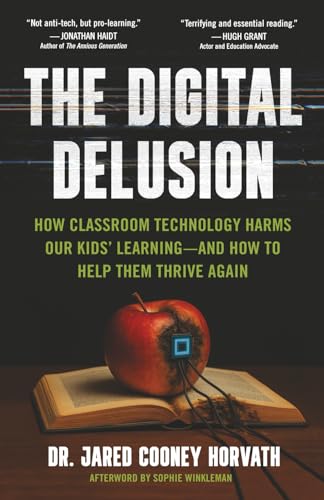
Ryan pointed to Horvath's book, which argues classroom technology has driven a long decline in student test scores, and that this generation is measurably less capable cognitively.
- Local backdrop: Wyoming's new school cell-phone law (Enrolled Act No. 46 / SF0035) : The 2026 law requires every Wyoming district to adopt a student cell phone and smart device policy, with compliant policies due July 1, 2026. It was the timely backdrop to the segment's screens-in-schools discussion.
Keep Exploring
- speaking What a futurist actually does Explore →
- press How media and institutions describe Ryan Vet Explore →
-
 Collide essay Gen Z Is Turning Its Phones Black and White Switching to grayscale cut students' screen time by about 40 minutes a day. The most colorful generation is opting out. Explore →
 -
 Podcast episode Nicki Petrossi: Scrolling 2 Death, AI Companion Bots, and Keeping Kids Safe Online Former social media exec Nicki Petrossi on the harms beyond social media, from Roblox and Discord to AI companion bots, and why the responsibility sits with Big Tech, not just parents. Explore →
 -
 Collide essay The Shock of the Scroll: Gen Z's Defining Moment How the assassination of a movement leader, seen instantly on millions of phones, could define Gen Z’s formative years the same way King’s death shaped… Explore →
 -
 Podcast episode Michaeleen Doucleff: Hunt, Gather, Parent, Dopamine Kids, and What Modern Parenting Gets Wrong What if everything we know about modern parenting is wrong? NPR global health correspondent and bestselling author Michaeleen Doucleff joins The Ryan Vet Show for the first guest episode of year… Explore →
 -
 Collide essay The Rise of Fragility: what we created when we tried to keep kids safe How a safety-first culture unintentionally reshaped childhood and what it means for every generation. Explore →
 -
 Podcast episode Gen Alpha Turned 13: The Generational Prism on Growing Up in 2026 The first Gen Alpha teenagers have arrived. What does turning 13 look like for a generation born into AI, pandemics, and a world that generates whatever you ask for? Explore →
 -
 Appearance Ryan Vet on A Geek Leader: AI, cognitive erosion, and the generational pendulum Generational futurist Ryan Vet joins the A Geek Leader Podcast to unpack what AI will not change, the cognitive erosion already underway, and the seven forces moving the generational pendulum. Explore →
 -
 Appearance Ryan Vet on Sharpen the Spear: why "kids these days" is the oldest story in leadership Generational futurist Ryan Vet joins the Sharpen the Spear podcast to unpack leading five generations at work: labels versus lived experience, the job-hopping myth, and why fearful leaders quietly stopped leading. Explore →
 - speaking Keynote: When Generations Collide Explore →
Ryan writes one free essay a week. It's called Collide.
How generations are reshaping work and home. Practical, research-backed, and delivered weekly. Read it at RyanVet.com/collide.
Links from this conversation
Full Transcript
The complete conversation between Jake Nichols and Ryan Vet, transcribed in full. Key terms link to the ideas behind them.
All right, we're back to it, just running a tick late as usual on a Friday. Ryan Vet's with us. Ryan publishes a weekly newsletter and hosts the Ryan Vet Show on YouTube. He's been featured on Forbes, USA Today, ABC, NBC, CBS, all the lettered stations. He is a self-proclaimed generational futurist, and I want to understand what that is. We're going to start with a topic of devices in school, screen time, and all these kids today. He lives inside it, he sees how the sausage is made, he's a father to kids today, and he understands how these shifts happen in generations. Ryan, it's great to have you on. Thanks for coming.
Well, thanks so much for having me. I'm excited to be here.
So before we talk about devices in the classroom and what the fears are of these screenagers being hooked on their stuff, which certainly we have concerns about as parents, tell me what a generational futurist is. I wonder if it isn't just a pendulum swinging back and forth. You got into this asking why millennials aren't buying homes. Well, they probably saw what happened when their parents bought a home and got upside down on it, and they said, I'm not doing that. Is that a lot of it?
You're absolutely right, Jake. There's so much that goes into it. When you talk about a futurist, they talk about economics and every aspect of life, but I do it kind of looking through the rearview mirror. The rearview mirror only takes up about 8 to 10 percent of your whole windshield, but you always need to know what happened before you go forward. And one of the patterns is your favorite word, the pendulum. If you have teenagers you know this even more acutely: you want to fix or overcorrect whatever you didn't like growing up. That's what we see every single time in every generational flip-flop since we've been measuring generations. And technology and screen time have accelerated that so fast that we're no longer overcorrecting a previous generation. We're all living inside this at the same time, experiencing it for the first time.
So is there any danger you can identify in kids' screen use? It seems like 24/7 kids are on some device, and school classrooms are even utilizing these tools in the cloud. They say, kids are already really good at this, throw out the textbooks, give them a Chromebook. On one hand, I like the idea these kids are growing up in this, so when we talk about AI, which I'm scared of, they're in it, they know how to navigate that world. But is it also reason for danger or concern?
Great question. That's the argument we've always made, and I was part of that argument for a long time. Having been in venture-backed startups for the early part of my career, including AI startups over a decade and a half ago, I was all for, hey, we need screen time in classrooms, we need to teach children how to use screens and technology. But as I've learned and researched, we don't need to teach kids how to use technology. We don't need to teach them how to use those devices. We need to teach them how to interact with other humans. Jonathan Haidt, in The Anxious Generation, does a great job painting the picture of a generation that's anxious, and in large part he pins it directly to screen time. Because they're on social media, we live lives that are removed from reality. Other people talk about the importance of kids just getting outside and getting dirty and playing again, and screen time has removed them from that reality, which is the human experience.
Let's talk about some of the downsides. Attention span. Anytime you try to have a conversation with a pre-teen, a 10-year-old, it's their doomscroll life, that's how they do it, and when they're tired of a topic they're distracted to the next one.
You're exactly correct. We blame the quick scrolling, and that is a huge factor. But part of it is that 10-year-old, that 12-year-old: when was the last time they went to a fast food place and didn't order it on their phone sitting at the table, instead of going up and ordering it from the cashier, looking them in the eyes? Now you have self-checkout at the grocery store, so you're not interacting. We've removed the basic human experiences. I remember when I was four or five, my dad would be talking with another adult, and he would make me look at that adult in the eye. I didn't have a screen at the time. Now a lot of kids are cowering behind their screen, not even behind their parents' legs, and it gives them an excuse to be detached from reality and that human connection.
That does not sound like a good thing. I noticed on one of your podcasts an underlying danger in the kids with a short attention span: cognitive erosion. I see that happening already in my life. I converse with college graduates whose spelling is atrocious because they've had spell check. I'm guilty of believing every darn thing GPS tells me when I'm driving, because I turned that part of my brain off.
You're exactly correct. Those are two of my favorite examples of cognitive erosion, and we've been doing it since the '60s and '70s. This isn't something we've done since AI came out publicly four or five years ago, or even since smartphones a decade and a half ago. Cognitive erosion is that slow erosion, like soil on the side of a hill: if you don't have grass holding it together, it falls apart. Another example is cooking in the kitchen. So many people have a smart device sitting on the counter, and if you ask how many cups are in a pint, most people couldn't answer that question you learn in second grade. It's not a huge life skill, but it's proof that we start outsourcing these little decisions. It's no longer going to AAA and watching the person get out their highlighters to show you where there might be construction on the map.
Are we silly to be concerned, Ryan? So what if three generations from now we can't spell anything, the machines can do that for us. Is there real danger here?
I think there's a ton of real danger. Jared Cooney Horvath has a reprint of his book, The Digital Delusion, coming out in just a couple weeks. He writes something interesting, basically saying Gen Z is less capable than previous generations cognitively, and he looks at very specific test scores. For the first time, we've seen not just a slight decline but a major decline with this generation. As parents, we always try to provide, we try to overcorrect and provide a better life for our kids than we had growing up. That's natural instinct. But the question is, at what cost? When we start removing that friction, that friction is what forms us. When I started playing guitar, you get calluses and blisters on your fingers and it hurts, but at some point you have those calluses and you can play guitar. That doesn't happen overnight. There's a little bit of pain that comes from all that gain.
Before you can become an Einstein, before you can be a deep thinker, basics like spelling are those calluses on your brain. Being able to do the simple things, that life's been made easier because a machine does them for you. That cognitive erosion sounds scary. Ryan, what's the hope? Will the pendulum just swing back? Can we believe that later-born millennials, early Gen Z parents, maybe Gen Alpha, will come back? Will the pendulum swing back, and how?
I do have some high hopes. You do see this pendulum swing back and forth. Now that millennials and earlier-born Gen Z are parents of Gen Alpha, and Gen Beta starts in 2026 and onward, I start to see it coming back. You're seeing more outdoor play, the removal of screen time, parents who grew up with the screen saying, something wasn't right about the way I was raised, let's fix it. Now the issue we're facing, which has never happened before, I liken to a tsunami. If you get the best swimmer, Michael Phelps, and put him next to a kid who's never swum before, and a tsunami comes, it's pretty much an equal playing field. Neither one is going to win. That's the world we're in right now with artificial intelligence, because it's moving faster than we as humans can even understand the implications. Think about seat belts in cars: it took us decades to realize we needed seat belts to keep people safe. Same with cigarettes, it took decades for the surgeon general to issue a warning. These things take a long time, and that's what I call the velocity gap. At some point you have technology and society moving so fast that we haven't slowed down enough to think about the implications. Social media was the great example: it promised to connect us all closer to one another and make us feel like we were in community, and yet people who spend more time on social media feel more isolated than anyone else.
So the promise it had was the very opposite effect. I love your analogies, the windshield and the rearview mirror, swimming in a tsunami. That really brings things to life. One last thing: our demographics show there aren't that many Gen Alpha and Gen Beta kids watching right now, they're all asleep. But for parents of these kids, and you're a parent of young kids, what's the balance? Do you admit that you also struggle with when to take the phone and say, all right, that's enough?
Absolutely. I'm a living paradox. I've got my smartwatch on, I drive a smart car that can drive itself, and I'm a techie guy, I spent my early years in venture-backed startups. And yet our kids don't have any screen time. They don't have access to phones or tablets. We watch some TV very occasionally, and it's very limited, but we force them to go outside and play. And even so, if you want me to go raw here, my son who's in first grade doesn't ride a bike yet. I was riding a bike when I was three or four, and he's still learning with training wheels on. So even though we take away screens, that's not the only thing in culture and society that has distracted kids from the childhood that Gen X and even early-born millennials had.
Ryan, that's so interesting to have you on. Very interesting discussion. I don't think you have to encourage screen use or technology for kids, through osmosis they're going to pick it up, don't worry, we don't have to teach it. I think we have to err on the other side of things. Thanks for being on, Ryan. Have a great weekend.
You too. Thank you.
Lightly edited from the broadcast's automated captions for readability. Ryan's segment begins around the 48-minute mark.