In under twenty minutes, Ryan Vet gives host Walter Dusseldorp the most compressed version of his argument. Stop starting with the label.
Every generation gets called lazy by the one before it, every "job-hopping" panic dissolves once you look at when people actually started working, and the real cost of getting generations wrong is not just the roughly $1.2 trillion a year lost to poor communication in the U.S. workforce. It is trust. His fix is almost old-fashioned: quit managing tasks and get back to leading humans, because at the core, leadership is leading other humans, and no machine is going to do that for you.
Ryan's Big Takeaways
- 01
Lead through the prism, not the label.
Ryan's core tool is the Generational Prism: the label is the last thing to look at, the rainbow refracted out the far side; start with the age and the moment. His proof is job hopping. In longitudinal data going back to the 1950s, the generations land within about 0.3 job changes of one another by age 25, roughly five to six each, so millennials were not really hopping more. It only felt that way because they compressed those jobs into fewer years, starting their first job around 19 after college versus 10 or 11 for boomers before child-labor laws. He ties it to a famous attention experiment: radiologists asked to count nodules on a scan missed a gorilla hidden in the image, because they were looking for the wrong thing. Leaders do the same when they lead by stereotype.
The Generational Prism → - 02
We forgot how to lead. Stop managing tasks and start leading humans.
Somewhere along the way, Ryan argues, business went robotic and confused management with leadership. Leadership is not administering behaviors and tasks. It is casting a vision and walking forward so people want to follow. That means no one-size-fits-all playbook: a unified vision for the team, but real, individual attention to the people on it, the way you cannot parent a second child like the first. And it means a mission so clear and so repeated that your team starts making memes about you saying it, which is exactly when you know it is landing.
- 03
Where did Gen X go? The barbell generation is missing from leadership.
Ryan flags a structural gap most leaders miss: Gen X, the barbell generation, is underrepresented in top leadership, squeezed between boomers holding on and millennials climbing. He points to the pattern in national politics, boomers and millennials with a conspicuous Gen X void, as the visible version of what is happening inside organizations. The cost of ignoring these dynamics is not only cash and productivity. It is the erosion of trust and human relationship, right as we are handing more of the work to machines and losing the human in leadership.
The Barbell Generation (Gen X)
The Story Ryan Told
Ryan's parting story is about racing his fiercely competitive oldest son up the stairs at bedtime. The boy took off, but he kept glancing back over his shoulder to see where Ryan was. So Ryan seized the parenting moment, ran straight past him, and won.
When his son came into the room upset, asking why he had lost, Ryan told him: "Because you were so focused on what I was doing, looking over your shoulder, that you weren't focused on where you're going." That, he says, is the whole job of a leader across generations. Know where you are going, keep your eyes on it, and bring the next generation along with you rather than watching the competition.
Standout Quotes
At the core, leadership is leading other humans.
You were so focused on what I was doing that you weren't focused on where you're going.
If you don't have a vision and values that you repeat so much your team starts making fun of you for saying them, there's actually a problem.
We always say the next generation is lazy. They just work more efficiently.
We can't have this blanket leadership. It's not one-size-fits-all.
Drag, swipe, or use the arrows to explore
Frameworks & Ideas Referenced
- The Generational Prism : The label is the last thing to look at; start with a cohort's age and its moment in history.
- The Barbell Generation (Gen X) : Gen X squeezed out of top leadership, between boomers holding on and millennials climbing.
Books, People & Sources Mentioned
- By age 25 the generations changed jobs within about 0.3 of one another (roughly five to six each), in data going back to the 1950s : Ryan's Collide essay, The Future Is Born, on the job-hopping differential.
- Gen X holds a shrinking share of top leadership, around 43% of CEO roles, with millennials overtaking at the executive level (LinkedIn / Becker's, 2024) : Ryan's Collide essay on Gen X and the corner office.
- Poor communication costs U.S. businesses an estimated $1.2 trillion a year (Harris / Grammarly, State of Business Communication) : The measurable cost of getting communication wrong across generations.
- The "invisible gorilla" radiology study (Drew, Vo & Wolfe, 2013) : Radiologists counting nodules missed a gorilla hidden in the scan; we miss what we are not looking for. The classic version is Simons and Chabris, 1999.
- The great wealth transfer (about $84 trillion, Cerulli) : Trillions of dollars moving between generations over the coming decades.
Keep Exploring
-
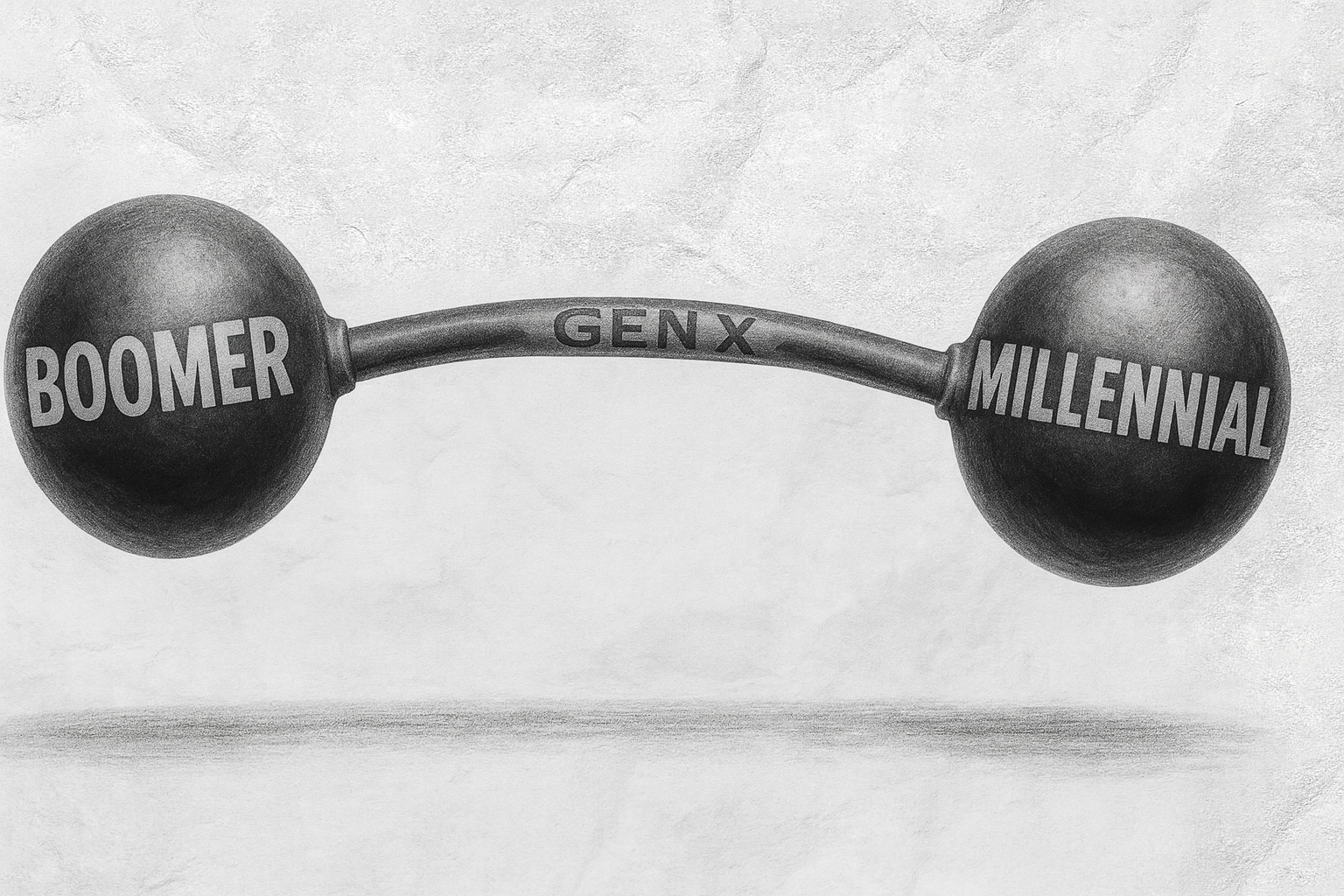 Collide essay Sorry Gen X, you're the least likely generation to become the next CEO A unique convergence of generations is shaking up the C-suite, causing a barbell effect, squeezing Gen X out of top seats in organizations. Explore →
 -
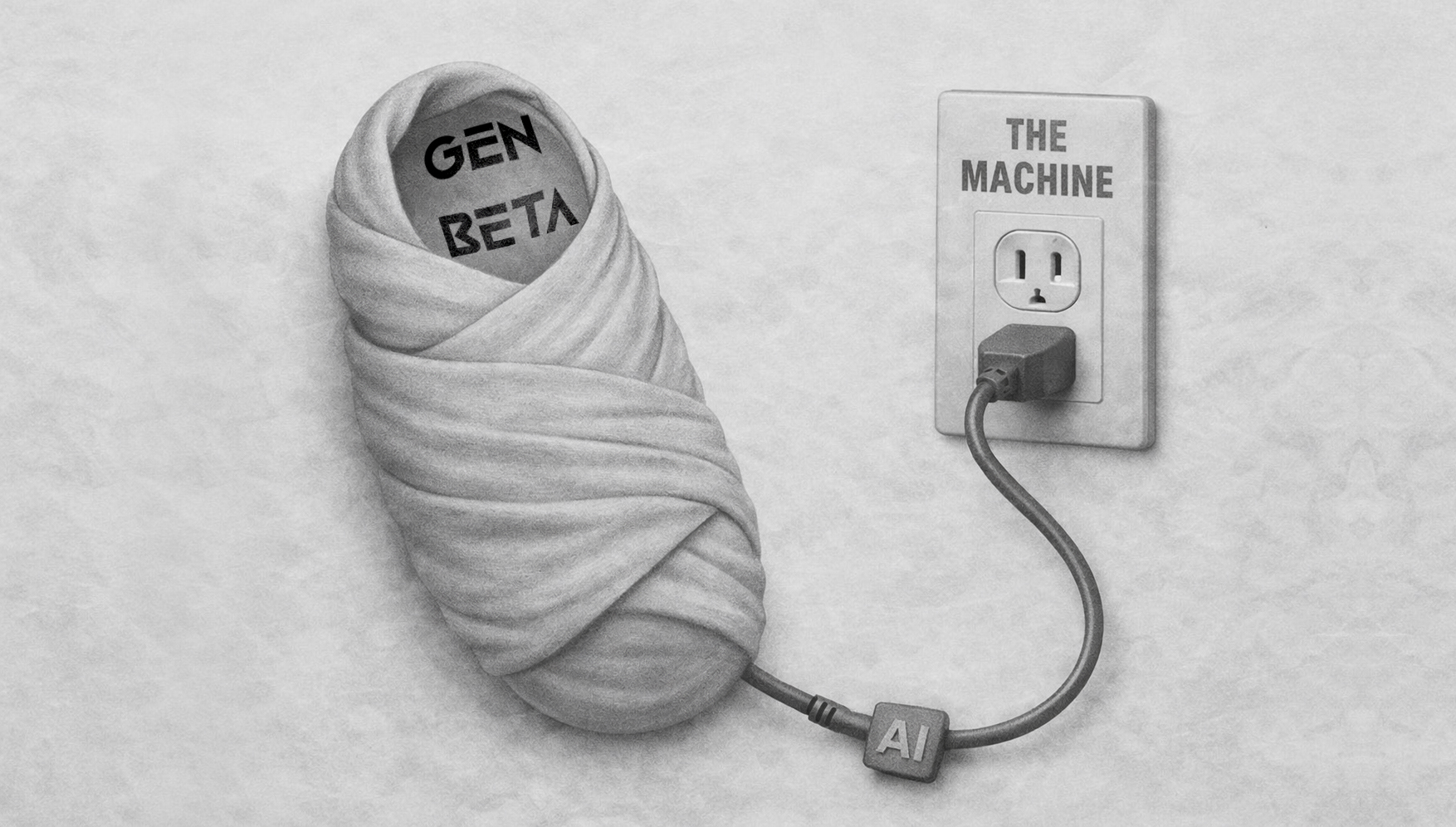 Collide essay The Future Is Born: Gen Beta has arrived The latest generational cohort, Gen Beta, was officially born on January 1, 2026, marking a new era and a new generation. Explore →
 -
 Appearance Ryan Vet on Workforce Alchemist: generational change, AI, and workplace friction Generational futurist Ryan Vet on the Workforce Alchemist show: the generational pendulum, why leaders fear the young workers who just want to be led, and why removing friction quietly erodes a team's ability to think. Explore →
 -
 Appearance Ryan Vet on The Human Factor: the generational fault lines of transformation Generational futurist Ryan Vet on The Human Factor Podcast: why the same change initiative lands as opportunity for one generation and threat for another, why removing friction backfires, and why leaders who stop apologizing lead better. Explore →
 -
 Appearance Ryan Vet on A Geek Leader: AI and cognitive erosion Generational futurist Ryan Vet joins the A Geek Leader Podcast to unpack what AI will not change, the cognitive erosion already underway, and the seven forces moving the generational pendulum. Explore →
 -
 Appearance Ryan Vet on Straight Up With Steph: generations and patient trust Generational futurist Ryan Vet on Straight Up With Steph: communicating across generations in healthcare, why patients trust you less than they used to, and how to get ahead of the second opinion. Explore →
 -
 Appearance Ryan Vet on Sharpen the Spear: leading five generations Generational futurist Ryan Vet joins the Sharpen the Spear podcast to unpack leading five generations at work: labels versus lived experience, the job-hopping myth, and why fearful leaders quietly stopped leading. Explore →
 -
 Appearance Ryan Vet on Dents in the Darkness: the generations and the church Generational futurist Ryan Vet on the Dents in the Darkness podcast: leading five generations in the church, the velocity gap between technology and morality, and why Gen Z is unchurched but spiritually hungry. Explore →
 - Appearance Ryan Vet on Maximize Life with Mindset Pivots: the generational pendulum, decoded Generational futurist Ryan Vet on Maximize Life with Mindset Pivots: the four phases of the generational pendulum, its seven accelerators, and why the labels leaders reach for so often mislead them. Explore →
- speaking Keynote: When Generations Collide Explore →
Ryan writes one free essay a week. It's called Collide.
How generations are reshaping work and home. Practical, research-backed, and delivered weekly. Read it at RyanVet.com/collide.