When leaders tell Kamila Adamatti their biggest problem is talent retention, they almost always say the next word too: Gen Z. On the Shift Happens Podcast, she puts a case to Ryan Vet that breaks the pattern — a company running fifty percent turnover among mid-career employees and above, still blaming the youngest people in the building.
Ryan's answer is blunt. "That is not a generational problem." What follows is a forty-five minute argument against the comfort of labels: the job-hopping statistics that collapse the moment you control for age, the trust styles that actually differ generation to generation, and the reason he thinks so many leaders have gone quiet. He calls that last one the apology syndrome, and he names the cohort he holds responsible.
Ryan's Big Takeaways
- 01
The apology syndrome is quietly dismantling confident leadership.
This is Ryan's own coinage and the freshest idea in the episode. A leader reaches a decision, is genuinely confident in it, and then talks themselves backwards through every what-if, maybe, and then — until the confident leader is gone. Confidence, he is careful to say, is not pride, arrogance, or being overbearing; those are separate things. It is being able to say this is where we are going, I took advice, I did this properly, it could still be wrong, and we are going anyway. His diagnosis for why it is spreading now is that failure is more public than it has ever been. It lands on social media, it lands on Reddit, it lands on Glassdoor. He points at millennial leaders in particular, and says the reflex traces back to growing up on Facebook and Instagram, carrying a high-school fear of the comment section into the executive chair. "Be kind, be gracious, be humble, but also be a leader."
Apology Syndrome - 02
A 50 percent turnover rate is not a generational problem.
Kamila brings the case: a company bleeding half its mid-career and senior people, and still framing the conversation around Gen Z. Ryan calls this what it is — selective attention bias, and the thing he calls the label eye. Once a label exists, blame becomes easy and tidy, because grouping everything that fits the bucket is genuinely how minds prefer to work. It is the same move cultures make with gender and with race, and it is wrong in the same way. The harder work is stripping the labels back, especially the ones applied subconsciously. He indicts himself to make the point: watching a student present to a university president in a blazer and a crop top, his first thought was about the outfit, until he caught himself mid-judgment. Her content, he says, was fantastic.
The Generational Prism → - 03
Gen Z doesn't want transparency. It wants authenticity.
Ryan's sharpest correction for leaders is that trust is not one thing, and each generation earns it differently. Baby boomers trust stability, and leave what is unstable. Gen X is skeptical of institutions and trusts its own effort, a broadly meritocratic posture. Millennials wanted transparency, a demand he traces to a childhood with information permanently on tap — Ask Jeeves, then Google, now ChatGPT — where information itself equals trust. Gen Z has moved past that. They already have the information and the models, so access is table stakes; what they want now is authenticity. He points to the Edelman Trust Barometer and a generation with low trust in government, news, and higher education, raised on contested elections, fake news, Photoshop, and now AI-generated everything. The counterintuitive payoff: they would rather you were honest with them. Deliver criticism with care and, Ryan says, Gen Z takes correction better than leaders expect — they may stare, they may pull out a phone, but it lands.
The Credibility Shift - 04
Run the job-hopping numbers by age and the stereotype collapses.
Ryan walks Kamila through the Generational Prism — age on one face, the moment in history on the other, the label being only what refracts out the bottom — using job hopping as the worked example. By age 25, boomers had changed jobs 5.3 times. Gen X, 5.3 times. Millennials, 5.6. Barely a gap. The gap people think they see comes from the moment, not the person: boomers started their first job around age 10 with paper routes and lawns, Gen X around 11 to 13, and millennials at roughly 19, after child labor laws and a schedule stuffed with school, sports, and extracurriculars pushed the first job past college. Boomers had fifteen years to accumulate those jobs; millennials compressed the same number into three to five. Zoom out to age 30 and the generations converge, because everyone has to serve their time with bosses they dislike and work they are bad at.
The Generational Prism → - 05
Fit AI into your world, not your world into AI.
Ryan is not an AI skeptic and says flatly that the people predicting it will go away are wrong. It is here, it will replace jobs, and like every major innovation before it, it will create new ones. His warning is about the leaders reshaping their whole company to accommodate the tool. The parenting advice he says was the best he ever received is his frame for it: your kids are born into your world, you are not born into theirs, so do not make them the center of the universe — fit them into your world and they will thrive. He applies it to AI without modification. He also names the cost he is watching for, cognitive erosion — the internet calls it brain rot — where we offload the tasks that were keeping our minds sharp, the mental equivalent of handing the Sudoku to a machine.
Cognitive Erosion →
The Story Ryan Told
Ryan was at a conference at the Gaylord Rockies in Denver, sitting in a room full of people he admired. A woman with many years on him, someone he had met only at that conference and who had never spoken into his life before, looked at him and said: you're going through a midlife crisis.
He pushed back. He was barely thirty. She told him to count differently — not from his birthday, but from when he started doing the work. Difficult clients. Leading teams. Carrying the thing. By that clock he was two decades in, and two decades is a long time.
It became one of several lightbulb moments. He had a growing family and had watched the toll of raising money, keeping companies alive, and leading through everything that comes with it. And since about eighteen, only a couple of years into his professional life, what he had actually wanted was to inspire others toward positive change. In 2021 he stepped out of day-to-day operational leadership to write, speak, and reflect instead. Inspire forward, as he puts it — make sure what you are doing has a positive impact tomorrow.
Standout Quotes
Gen Z no longer wants transparency alone. What they now want is they want authenticity.
Be kind, be gracious, be humble, but also be a leader.
Once we have a label for something, it's easy to group everything that could fit into that bucket.
Leaders are afraid to lead confidently because they're afraid of making enemies.
Your kids are being born into your world. You're not being born into theirs.
There's so many pool noodles hitting us in society right now, whether that's AI, whether that's polarity, whether that's just distraction and chatter and noise.
Don't let anyone look down on you because you're young.
Drag, swipe, or use the arrows to explore
Frequently Asked Questions
What is apology syndrome in leadership?
Apology syndrome is Ryan Vet's term for a leader who reaches a decision they are genuinely confident in, then apologizes their way back through every what-if and maybe until the confidence is gone. He argues it has spread because failure is more public than ever — Reddit, social media, Glassdoor — and that millennial leaders in particular carry a comment-section fear formed on Facebook and Instagram into the executive chair. His prescription is that confidence is not arrogance: be kind, gracious, and humble, but still lead.
Does Gen Z really job hop more than previous generations?
No. By age 25, boomers had changed jobs 5.3 times, Gen X 5.3 times, and millennials 5.6 — and there is not yet enough data on Gen Z. The apparent gap comes from when each generation was first allowed to work. Boomers started around age 10, Gen X around 11 to 13, and millennials at roughly 19, so boomers spread those job changes across fifteen years while millennials compressed them into three to five. By age 30 the generations converge.
What does Gen Z want from leaders that millennials didn't?
Authenticity rather than transparency. Ryan Vet's argument is that millennials equated information with trust, having grown up with answers permanently available from Ask Jeeves through Google to ChatGPT. Gen Z already has that access, so it is table stakes. Raised on contested elections, fake news, Photoshop, and AI-generated media, they want to know what is real. The practical consequence is that Gen Z would rather receive honest feedback than be protected from it — delivered with care, they take correction better than most leaders expect.
How does Ryan Vet think leaders should approach AI?
Fit AI into your world rather than reshaping your world around AI. He borrows the best parenting advice he ever got — your kids are born into your world, you are not born into theirs — and applies it directly. He is not an AI skeptic and says those predicting it will disappear are wrong; it will replace jobs and, like every major innovation, create new ones. The risk he watches is cognitive erosion, the offloading of the tasks that were keeping our minds sharp.
Is Gen X really absent from senior leadership?
Partly, and this episode overstates it — so here is the correction. In the conversation Ryan says Gen X is largely absent from Fortune 500 CEOs and C-suites. That one is backwards: Gen X holds a plurality of Fortune 500 chief executive seats, roughly 267 of 500 against about 226 baby boomers, and the average Fortune 500 CEO is now in their late fifties. Gen X runs corporate America. Where the gap is real is politics. No member of Gen X has held the presidency, the office passed from boomers to a millennial vice president, and boomers still hold about 61 percent of the Senate. In the House, Gen X became the largest generation in the 119th Congress, though still smaller than its share of the population would predict. The apology-syndrome argument does not depend on the Fortune 500 claim, and the claim does not survive the data — which is the Generational Prism working exactly as intended, applied to Ryan's own line.
How did Ryan Vet's career shift in 2021?
At a conference at the Gaylord Rockies in Denver, a woman he had just met told him he was going through a midlife crisis. He was barely thirty. Her point was that he had been leading teams and handling difficult clients for two decades, having started his first legitimate business at 14 with his father co-signing the paperwork. With a growing family and eight companies behind him, he stepped out of day-to-day operational leadership in 2021 to write, speak, and consult.
Frameworks & Ideas Referenced
- The Generational Prism : Named and walked through on air — age on one face, the moment in history on the other, the label refracting out the bottom.
- Apology Syndrome : Ryan's own term in this episode for leaders who reach a confident decision and then apologize their way back out of it.
- Cognitive Erosion : Named directly when the conversation turns to AI and cognitive offloading.
- The Credibility Shift implied : The trust progression he walks generation by generation — boomers to stability, Gen X to self-reliance, millennials to transparency, Gen Z to authenticity.
Books, People & Sources Mentioned
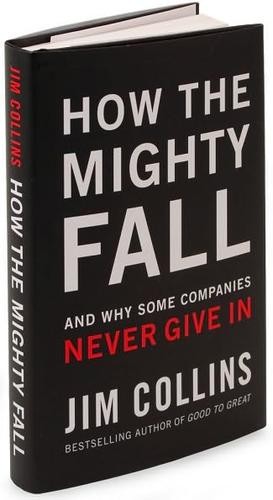
Jim Collins, How the Mighty Fall
Ryan hedges the attribution on air, but it checks out. Collins does use Rubbermaid, which averaged a new product every day for 365 days in 1992 and then slid from the end of Stage 2 to Stage 5 in about five years.
- Edelman Trust Barometer : Ryan's go-to source for Gen Z's low trust in government, news media, and higher education.
- General Social Survey : The US-based survey he pairs with Gallup and Pew on purpose-driven work and trust in institutions.
- Jeff Bezos and Amazon : The paraphrase Ryan returns to: stop asking what innovation is next and ask what will not change, because customers will always want convenient access and affordable pricing.
- Ryan's book: Cracking the Millennial Code : The book Ryan discusses as useful in its moment, and the reason his next one is built on timeless frameworks instead of one generation. Cracking the Millennial Code →
- Ryan's book: Speak Goodr : The USA Today bestseller built from 40 of the 60 wildest things that have happened to him on stage. Speak Goodr →
Keep Exploring
-
 Collide essay Gen Z isn't too sensitive — they're sounding the alarm From smartphones to suicide contagion, the data shows their struggles are real, and dismissing them could be deadly. Explore →
 -
 Collide essay When Frequency Equals Trust Understanding the Communication Patterns of Gen Z and Why Gen Z Trusts What It Hears Most… Explore →
 -
 Collide essay What the class of 2026 is really bringing to the workforce 2026 graduates are entering the workforce in an unprecedented time, but what they want is probably different than what you think. Explore →
 -
 Podcast episode The real barrier in cross-generational communication: why trust, not style, is what's really broken Poor communication costs U.S. businesses $1.2 trillion annually, but what if the deepest barrier across generations isn't how we talk, but whether we trust the person talking? Explore →
 -
 Podcast episode Gen Alpha turned 13: the Generational Prism on growing up in 2026 The first Gen Alpha teenagers have arrived. What does turning 13 look like for a generation born into AI, pandemics, and a world that generates whatever you ask for? Explore →
 -
 Appearance Ryan Vet on The Human Connection Podcast: you automated the connection and removed the reason people stayed Generational futurist Ryan Vet joins The Human Connection Podcast to tell the story of the AI matching tool that made his company's networking faster and quietly removed the trust the business was built on, plus the one question he thinks every leader should ask before any technology decision. Explore →
 -
 Appearance Ryan Vet on The Human Factor: the generational fault lines of transformation Generational futurist Ryan Vet on The Human Factor Podcast: why the same change initiative lands as opportunity for one generation and threat for another, why removing friction backfires, and why leaders who stop apologizing lead better. Explore →
 -
 Appearance Ryan Vet on Sharpen the Spear: leading five generations without the labels Generational futurist Ryan Vet joins the Sharpen the Spear podcast to unpack leading five generations at work: labels versus lived experience, the job-hopping myth, and why fearful leaders quietly stopped leading. Explore →
 -
 Appearance Ryan Vet on S.M.A.R.T. Performance: lead through the prism, not the label Generational futurist Ryan Vet on the S.M.A.R.T. Performance podcast: the Generational Prism, why Gen X is missing from leadership, and why we forgot how to actually lead. Explore →
 - framework The Generational Prism Explore →
- framework Cognitive Erosion Explore →
- speaking Keynote: When Generations Collide Explore →
Ryan writes one free essay a week. It's called Collide.
How generations are reshaping work and home. Practical, research-backed, and delivered weekly. Read it at RyanVet.com/collide.
Links from this conversation
Full Transcript
The complete conversation between Kamila Adamatti and Ryan Vet, transcribed in full. Key terms link to the ideas behind them.
Hello everyone, and welcome to the Shift Happens podcast. Today I'm so excited to have Ryan here with us. Hi Ryan, welcome.
Hey Kamila, how are you?
I'm doing great, thank you. Ryan started his first legal company at 14, and Ryan, your dad had to co-sign the paperwork. You've founded eight companies, ranging from failed startups to one valued at $750 million. I was so impressed with this. And then in 2021 you walked away from all of it and chose a completely different path. So Ryan, what happened at that moment? What made you realize that the next chapter of your life would be totally different from the previous 20 years of your life?
Yeah, I appreciate that. I was sitting in a meeting at a conference with people that I greatly admired. We were at the Gaylord Rockies in Denver. We're sitting in this room and someone looks at me — she had many years on me — and she said, you know what? You're going through a midlife crisis. And I said, midlife crisis? I'm barely 30 at the time. And she's like, no, you have to think about when you started work, and work work, like when you've been dealing with difficult clients and leading and having teams. She's like, you've been doing that for two decades. That's a long time. And that was one of those moments that really sticks out. The funny thing is, we didn't know each other before that conference. It was not someone who had spoken truth into my life for years and years.
And so when I had that moment, it was one of many lightbulb moments. I think the other one was we had a growing family. And I'd just seen the impact and the toll of raising money, trying to make companies succeed, leading teams, and the challenges and the opportunities that come with that. It was a season in life where I was like, you know what? What I've always wanted to do from about 18, so a couple years after I got started professionally, I'd always wanted to inspire others towards a positive change. That was my sole goal. How can I take where we've been and inspire people tomorrow? Inspire forward is a slogan that I often say. It's how do you make sure that what you're doing is making a positive impact tomorrow. And it was a season in life where I had the opportunity and the time to be able to step away from leading companies and running teams in the day-to-day, and really reflect and start writing, speaking, and doing a lot more of that.
That is so nice. I saw in your resume, and also as we were talking, you spoke on all four continents, right? And over a thousand presentations already. That's so impressive. And you know what? I love what you're saying about this midlife thing. I started to work when I was 13. And it's funny, because I never thought about that. I thought about midlife crisis when I turned 45. But now it makes me think maybe I had that crisis before and I didn't know. When you start so young and you have all these challenges already at such a young age, it's crazy how much you learn and how much you can develop. And there is this bias, right, Ryan, that we were talking about before we started the show — this bias where people look at you like, oh, you look so young. What can you offer me, really? I don't know you, and you're just, what, barely a teenager? So did you have this kind of bias towards you when you started?
Absolutely, for so many years. And I think that's partly why I'm passionate about what I do now — as a futurist and a generational futurist looking at the future and looking at kids these days, because that's the slang, if you will, that we throw around. Oh, it's kids-these-days problems. I was one of those kids-these-days problems for a long time, and so I think that's what inspired me. But I can think of a couple advantages I had being young at the time in which I built the business, and plenty of disadvantages. One of the advantages was email was new, websites were new, so I had a website. Most companies didn't. This was a time when it was like 90-some percent of small businesses did not have a website. I had one, and I built it myself. It looked terrible, but nonetheless I had one, and I had an email address. This was where we started to transition from only having phone calls about business to email. And so I hid behind my email address. No one heard how old I was from my voice or the way I spoke, and I've always enjoyed writing, so I would be able to craft a message and, quite frankly, people wouldn't know how old I was. So that was an advantage. But then the disadvantages came too. Walking into a room with a suit that didn't fit quite right, or as a teenager battling with acne and walking into a meeting and people are like, who are you, are you getting my coffee? Definitely had that multiple times — are you here to take our coffee orders?
And so those were all challenges. I always kind of follow, don't let anyone look down on you because you're young, but by the way you live, let them know that you're capable and able. And that's really a big part of what inspired me in that season. Sometimes it was arrogance that got me in trouble, quite frankly, but hubris often gets many of us in trouble at different points in life. And then as I went into the professional setting and we had enterprise software and I started going to a lot of meetings, one of my sales reps that worked for me said, hey, you need to not shave. And I couldn't grow a full beard. He's like, but you just need to not shave, just keep like a five o'clock shadow, it'll make you look older and more trustworthy. Sure enough, I did. And 15, 18 years later, still keep that five o'clock shadow, and now I'm getting to the point where I'm showing some other colors in that shadow, so I might need to lose it so I look younger again. At some point it flip-flops. Getting clothes that fit differently, making sure things were tailored in such a way that it made you look older. There are a lot of little tricks that I learned over the years. And now at this point it's, how do I look younger?
Yes, I'm with you. I had to go through the same thing. I started to wear glasses just to show that — I had such a small degree and it still was like, no, I will wear them, because then people will respect me more, right? And I have an advantage that I'm tall, and for some reason people kind of assume when you're tall you're older. I don't know if it makes sense, but if people say it helps, okay, I take it. Because I'm tall and I put heels on top — well, I just become 6'1 easy peasy, and then it's all fine, with glasses and a nice suit. That works.
It's such a phase. It's so hard to build this credibility. You don't have the experience and you want to learn and you are a hard worker and you want to do it. But when people look at you and ask you to — in my time, to send a fax, right? That was back in my days. So, send a fax. And it's like, well, okay, but I'm not here for that. Of course I can help you, but I do this too. So trying to be humble and all, but sometimes I stepped into arrogance as well. It's all the learnings. But it's beautiful to look back and see. And now you're going to shave because of the different colors. In my case, I did eye surgery, so I don't wear glasses anymore. You see how crazy it is?
The things we do to change.
Exactly. But yeah, and you shifted, right? So you started to do presentations and speaking gigs all over the world. I think it's amazing. That inspires me so much, Ryan. And then you wrote five books so far, right? And one is a USA Today bestseller. Tell me more about that — the books, the journey, and the impact that you're causing people.
All are kind of part of my current body of work, if you will. The first one that did really well was Cracking the Millennial Code. And I actually look back on that book and, as helpful as it was when it came out in the late 2010s, so much has changed with the generations since. What I've learned in writing and just in research since is there are frameworks and things you can use that don't have to be a point in time — here's a moment, a book about a generation. So while that book has a lot of good things, the next one that comes out a couple years from now, it's in progress, will be much more, I'll call it evergreen, timeless. Give you the framework so that no matter what generation letter we're on, or Greek letter we're on, we can navigate it. And then Speak Goodr was a fun one, and that's one of those where you don't know how people are going to respond.
I get to talk about the things you're not supposed to talk about at work. I get to talk about religion, education, gender, politics, race — all the things that you're not supposed to talk about. Well, that's what I talk about, with a three-generational lens. And the problem is I'm sarcastic, but I'm not always funny. I think I'm hilarious, but I can be literally in an agrarian farming town in Iowa speaking one day, and then I can go be on the West Coast in a city that's completely opposite politically, telling the same story and using the same jokes. In one place it's going to land well, and the other one is not. And so I actually hired someone to guide me through humor, and they told me, hey, you need to write out your jokes. So start with writing out the wildest things that have ever happened to you while you're speaking. So I wrote out about 60 of them. 40 of them made it into the book, and people thought it was so ridiculous that they bought the book and made it a USA Today bestseller, because so many people bought it. It was just funny stories. It's got pictures in it even. And it's got words like Shazam. So it's just different than my normal academic work that I publish every week in my newsletter. But it was fun. It was a fun experiment.
Before we go to the generational part, which is fantastic and very inspiring to me, tell me about the challenges you had when you were sitting in the executive chairs, when leaders were proposing big transformations, and the change management on you. Tell me how you guided people through these challenges around changes in your executive life.
Yeah, it's hard, and I'm fortunate enough — I say fortunate because I have done countless change management initiatives, whether that's with my own companies, with fundraising, with mergers and acquisitions, with companies I've sat on the boards of, with institutions and universities and organizations. So I have an advantage of having done it many times and having failed many times. And change management's hard. I've taken great courses online at different universities on change management, got certificates and the whole nine yards. And what I would say about change management is it's not one size fits all. It's kind of like parenting, right? If you read a parenting book, it's great, and I can recommend many great parenting books, but if you have three kids like I do, you cannot use the same book and apply it the same way three times. The same thing's true with change management. So I think you've got to stay humble, but you've also got to be confident. And one of the things I'm seeing leaders struggle with right now in change management as a whole, regardless of what organization you're in, is I call it the apology syndrome.
It's this — a leader is sort of confident in their decision, but then they start apologizing for all the what-ifs or the maybes or the thens. And we lose the confident leader. And being a confident leader doesn't mean you're prideful, doesn't mean you're arrogant, it doesn't mean you're overbearing. Those are totally separate. But you can say, hey, this is where we're going, I'm the leader, I'm going to lead in front thinking this is the best decision based on the information — I took other people's advice, I've done everything right. And chances are it could be wrong, but this is still where we're going. Don't apologize for where you're going. And I think more and more leaders are just so afraid to fail, because failure is more public than it's ever been. We're putting it on social media. We're putting it on Reddit.
One of my portfolio companies this week landed on Reddit in an interesting battle. And the leader of that organization was freaking out, and I said, stop. Don't do anything. I promise it'll right its course and it's going to blow over. And the internet actually revolted against the person who posted, which doesn't always happen that way. That was a happy story. Normally it doesn't work that way. But I said, it's because you just stayed calm and you were doing the right thing. You were staying true to your mission. Don't apologize to the team that someone posted. The team's going to see it for what it really is. And this leader ended up winning because he was confident in the decision he made. It was the right decision. One person got upset and the internet actually got upset at that person, not our manager. So he got off a little scot-free, but he stayed true and he didn't apologize. And I think that's what's really important in change management right now. Be kind, be gracious, be humble, but also be a leader.
Yes, because this leadership part is really the most important part, right? As you build trust and you lead people in the right direction. And I think it's also so related to companies not really empowering and equipping the leaders in the right way. But to be honest, that's the first time I hear that perspective from a leader. Normally you see much more struggles on the middle management layer on change management. But I didn't think about the fact that probably the reason could also be social media, and everything you do wrong, right? Because normally people like to put out there the wrong, or what they consider wrong, as opposed to celebrating the other person and complimenting and saying good things.
Yeah, and it's important because it's a generational thing too. If you look at the workforce right now, you still have a bunch of baby boomers in the workplace that have stayed a lot longer. Gen X actually have not taken leadership roles. If you look at the political landscape in the United States, we have not had a Gen X in the White House. We've had boomers and millennials. And then you look at Senate and Congress — Gen X, for their size, is largely absent. You look at the Fortune 500 CEOs and C-suites, Gen X is largely absent. So you have millennials leading and boomers leading. Again, that's a gross generalization, but you have both of these leading, and millennials are the ones that are apologizing so much. And the reason being is they grew up on Facebook and Instagram. And so they carry that like, oh, I posted a picture and my friends didn't like my outfit that I wore to prom. They're taking that high school mentality, that mentality from decades ago, and they're applying that to leadership right now. They're afraid to lead because they're afraid of the backlash that, in most cases, if your business isn't that public, it's not going to end up on Reddit. You might get a bad Glassdoor review, like one, and most people know those are jaded employees anyway. And so I think even more than the reality of that happening, it's the fear that it could happen. And these millennial leaders in particular — and I'm calling them out — aren't processing that that's why they're afraid to lead.
And as we're talking about trust and all of that, what are the elements? What is the difference if I have a Gen Z team? What do I do to create more trust with specifically that generation? What really matters to them compared to what used to matter to the other generations?
Yeah, across the board, I think there's a what-matters question and a how-do-they-gain-trust question. So I'll try to answer both. The what-matters-to-them question, interestingly, has scored almost the same for millennials, Gen Z, Gen X, and baby boomers. And that is that they want purpose-driven work. Purpose-driven work. And that's just human nature. We want what we do to mean something. None of us really work for the paycheck. That is why we work, we work to pay our bills, but we want more than that. Everybody wants more than that. I don't care who you are, and if you say you're not interested in working for something bigger than yourself, you're probably not telling the truth, or you're just bored with life. I don't know. But the reality is every generation scores high on that and it always has, whether you look at the General Social Survey, Gallup, Pew — all of them score high there. And right now, the younger generations are being told that their purpose is being replaced by AI, that they're being equated to a computer, that they're just punching numbers. Nobody wants that as their purpose. It's how does the number that you crunch impact the benefit of the company or the customers that we serve?
But then the trust question is totally different, and I think that's a more important one. We all trust differently. When you get into a relationship, you're bringing baggage from childhood and your upbringing and any past relationships, as is your significant other. You trust differently. Some are very natural to trust everything. Some are completely untrusting. Some are skeptical. And the same thing is true with generations in the workplace. So baby boomers trust stability. They grew up in an era where their parents made them extremely strict, extremely authoritarian. They just want stability. And in a stable company, in a stable organization, in a stable country, in a stable family, that's where they find trust. And if they don't find it, they leave it. Then you have Gen X, who's skeptical of everything. They are not trusting of institutions. They're trusting in themselves and their own ability, for the most part. I'm a hard worker. If I do my job, I know I'll get the reward. It's almost this meritocracy-based mindset a little bit. Then you move to millennials, and millennials' trust really changed.
Millennials wanted transparency. And we can take this all the way back to Ask Jeeves, if you remember that search engine. Millennials always had access to information, and so they want to understand the different things going on in the world. If they had a question, they can go to Ask Jeeves, then to Google, and now to ChatGPT and get information right away. Information for them equals trust. Well, Gen Z took that one step further, and this is what's really interesting. I think a lot of leaders have this wrong right now. Gen Z no longer wants transparency alone, because yes, they have access to the information, yes, they have access to AI and ChatGPT, LLMs, et cetera. What they now want is they want authenticity.
Gen Z is one of the most jaded generations towards AI, even more so than boomers. Gen Z has a big distrust for it. Gen Z has a big distrust for our government, for news stations, for higher education institutions. If you look at the Edelman Trust Barometer, everything that you could trust, they don't like it, because they feel that there's a lack of authenticity. They grew up when everything was fake news. They grew up in elections that were always polarized. We have to remember, yes, elections were always a fight, but it was never a war. And ever since they've grown up, it's always been contested. There's always been all this rhetoric, and then all this fake news that they've seen, and then they went to school in a time where they're getting fake images with Photoshop and now with AI. Nothing was real, and so they want authenticity.
So they would rather — and this is what so many leaders don't get — they would rather you be super honest with them. Now, unlike previous generations, you have to put on your kid gloves and be really kind when you give them honest feedback, and that's a challenge for a lot of leaders. But they want this authenticity that I think leaders are afraid of, because they're afraid of hurting this younger generation's feelings. And so there's this big disconnect. A boomer wants stability in relationships, so they're not going to upset someone by being authentic. And you have this natural issue. But if the boomer can just be cautious in how they approach this topic and talk about the betterment and the purpose of this person's being at a company and work together, you're actually going to find — and I'm oversimplifying — but you're actually going to find that Gen Z is fairly receptive to criticism. They will initially stare at you and not say anything. They'll probably pull out their phone and start texting and you don't know who they're texting. But at the end of the day, they usually do pretty well with correction if done well.
That is amazing, what you're saying. You're bringing to my mind so many examples that I've lived and seen. And you reminded me of one comment that you made in our last conversation — that people say that Gen Z is the problem, but actually the leaders are the problem, right? It's really the approach that the leaders used to take with previous generations, and now they have to really change and adapt their way. When you mention this feeling of I don't want to hurt the generation, it's so legitimate, it comes from a good side, but at the same time you're not helping them. You're not getting their trust or their commitment even. And there is this mindset which I've seen in other companies — in Brazil we use the monkey kind of joke, that they keep jumping from tree to tree. It's just a metaphor, of course, but really changing jobs a lot, because maybe the leadership, maybe they don't feel the purpose. But I would say that most of the times we join the company and we leave the leader.
Absolutely. I think there are two great points that you brought up. One is — and this has been said forever, this is not mine, I don't know who to credit for this, but don't credit me because I didn't come up with it — people don't quit the job, they quit the person, or quit the manager. So I think that's definitely part of it. But the other interesting job-hopping statistic you brought up: if you look at a longitudinal study done back to the '50s in the United States, I use what I call the generational prism. So if you're listening to this, basically I'm making a triangle with my fingers. On one side you've got age, on the other side you have the moment, and on the base — I'll tell you what that is in a moment, but I'm going to save that.
Because so often we say Gen Z is lazy, or entitled, or a job hopper, or fill in the blank. And we always start with the label, and that is the problem with half of these things. I call it the label eye. But when you look at this generational prism, this triangle with the age and the moment on one side — a prism refracts light. So when you shine light through it, you're pressure testing, and out of the bottom comes the label. And so that is the bottom piece. So when you think of the generational prism, let me put it in terms that make sense and aren't so pie in the sky. When you look at job hopping, you take the age first, and let's use age 25 as a marker. So let's see how many jobs the average American hopped by age 25. And you have to look at boomers, you have to look at Gen X, and you have to look at millennials, because we don't have enough data on Gen Z yet.
Then let's look at the moment in history. So when boomers were getting their first jobs, there was almost no child labor laws — gross generalization, we don't have time to go into the actual full study. When Gen X was engaged in their first jobs, there were some child labor laws in about half the states. By the time millennials were engaged in jobs, millennials were working almost 55 hours a week at school with extracurriculars and drama and sports, and there were so many child labor laws they couldn't get their first job until at least 16, generally, across the United States, if not older. So when you look at that, here are the real statistics. Boomers hopped jobs by age 25 5.3 times. Gen X hopped jobs by age 25 5.3 times, the same. Millennials by age 25 hopped jobs 5.6 times. Only slightly more. And everyone's like, that's not true. You can look at the studies, but here's what we have to look at. Boomers started their first job when they were 10 on average. Paper route, mowing lawns, washing cars. Gen X when they were 11, 12, 13. And so they had 15 years to hop that many jobs. But millennials, their first job on average, give or take, is about 19. Meaning most of them waited till after college to get their first job. And so they were hopping that in three to five years. And so it seemed really fast. But then if you zoom out to age 30 and do the same exact study, almost all generations level out. Meaning we all have to get those first experiences with the bosses we don't like, the jobs we don't like, the things we've got to learn that we're not good at. And then all of a sudden you can use the generational prism, that age-moment-label framework, and you can actually get to the truth of what's really going on in culture and society.
Now that I heard the statistics, it's hard to believe based on the perception that we have. And you see, we are already building this bias about the generation that statistics show is not really so true. The difference is not that big that we think it is. And some of the things I also realized about Gen Z, talking to other leaders — let me tell you Ryan, my podcast now on May 15th is turning one year. And I would say, if not all, probably 90-plus percent of these leaders I interview, if I ask, what are the biggest challenges, point two, three — between the three, exactly that. Talent retention, Gen Z. Right? But you know what? I've seen companies with issues of talent retention, and that's one coming my way right now. And I'm talking about high-level employees already in terms of their career, at least mid-career, having turnovers of 50 percent, okay? And I'm not even talking about Gen Z. And then they are talking about Gen Z. But wait a minute — is it a generational thing, or are you not able to retain your talent, period? You're not equipping and helping your leaders to guide different generations to really lead with the heart, and be brave as a leader too.
I think what you just said is so profound. It is easy, if we have a label for something, it is easy for us to blame the label. So what's wrong with kids these days? What's wrong with Gen Z? But when you just share that data, even in higher-level positions, mid-level managers and up, they still have 50 percent retention rate — that is not a generational problem. And I think that's a perfect story, and unfortunately it's indicative of a lot of companies. We have this selective attention bias. We know that Gen Z is this because we put these labels on it, these stereotypes, and as a result it's easy to blame. And we do that in culture as well. We do that with gender, we do that with race. It is a cultural problem, and we do it with generations too, because once we have a label for something, it's easy to group everything that could fit into that bucket. It's how our minds work, actually. It makes it neater for our minds to chunk the information together, but it's not right.
So what do we do with that? I think the biggest thing is we have to strip back — and this is hard for human beings — we have to strip back the labels that we're applying, whether consciously, but even more hard, subconsciously. When we walk in and we see the kid in the hoodie and all the latest trend. I was at a university doing some work, and the president of the university was sitting at the same table that I was, watching student presentations. And a young student walks up, and she's got a blazer pantsuit on, but she's got a crop top underneath it. We can see her full stomach. That is just not professional. And maybe people get upset at me for that, but it's not professional in most work environments, especially in the United States. Maybe some other cultures are more accepting of that. And I'm sitting there and I'm thinking, what is this professor allowing this kid to do? And I'm like, wait a minute, this is a generational issue. I'm automatically labeling her for wearing what's trendy in this generation. And you know what? Her content was fantastic.
And that's a great opportunity for a leader who's afraid to talk about someone's clothes to come up and say, hey, you know what? If you want to take your presentation to the next level — your content was already there — but this is what's expected of you as far as proper attire goes when you're sitting in front of the president of the university and a distinguished panel of advisors. But the professor didn't do anything. And that was probably more startling. So I think there's this fine line between automatically labeling because someone fits a certain stereotype, and then also being able to help them grow out of that. And I would say some of my earliest successes are because I had people that would tell me when I was being a stupid teenager. And I was being a stupid teenager. And that didn't expire when I turned 20. That carried well into my 20s and probably into my 30s I was being a stupid teenager. But I've always surrounded myself with people that can speak truth into that. And the problem is Gen Z as a whole is not willing to ask for a mentor, but the vast majority of them long for a mentor. And so find the opportunity to just step into them, and not boss them around, not tell them what they're doing wrong, but say, hey, can you follow me? Can you watch what I do? Can I speak truth into your life? And you'd be shocked, so many people are okay with that.
Yes, absolutely. We all have biases. I have my tattoo story, which is actually very hilarious. When I started my career I was told that there are certain expectations at the company — very traditional company — and we don't want people with tattoos. And I was taught even from my parents, no, tattoo is wrong, that is not nice, it's not appropriate. Okay, fine. Well, I remember a situation where I was interviewing candidates, early-career candidates, and I saw a few tattoos on one of the candidates, and that bias stuck with me. And it's like, hm, but this person is so good. Well, it turns out that was the best candidate. And I went in and said, look, I understand the tattoo thing, but I'm so sorry, we just need to remove this bias from our heads. That is not nice, and this is the best person for the job. And we ended up hiring the person, and I love that we did that. Well, later in life I have a tattoo, just to say. But the thing is, sometimes we are taught certain things and patterns since we are very young, and then we carry them with us. And to break those biases when we are talking to someone is very important. But to your point about the proper attire, I 100 percent agree. We also have to guide them on what is appropriate or not in an environment.
And another point I want to bring is that you mentioned the trust barometer. I've seen those statistics before. In fact, one of my clients was working with that, and we were talking about overall trust — not only in the company environment, overall community and country and all. And I also had the chance to see the data globally. And it's not very different, and I want to point it out, because here we have 25 countries that watch our podcast. And yes, globally you see the same tendency of lowering trust over the years, right?
Absolutely. The Edelman Trust Barometer is a great resource. I use that a lot, leverage that a lot. The General Social Survey, which is US-based primarily, is also a great resource that can show you trust in institutions and things like that. But yeah, one funny closing thing you said — appropriate clothing. So I was speaking at an event. There's like 7,000 people. It's been, I think, 180 years, this conference, every single year. It's been a legacy event. And my host, who's hosting me for this event, brings me down to breakfast before I speak. And I speak at maybe 9:00, breakfast at 7:30 or something. And I come down and I have a uniform, if you will. I wear a sport coat, almost always a pattern shirt like I'm wearing now, jeans, and nice shoes. And that's what I wear on stage. And so we finish breakfast and he's like, hey, are you going to go upstairs to your hotel room and change before you go speak in front of everybody? I said, no, this is what I'm wearing. He's like, you don't have a suit and tie. I said, do you really want someone talking about AI, the future, and generations wearing a suit and tie, or what I'm wearing? He looked at me. He's like, you're right. Let's go.
And talking about AI right now — tell me about that. What do you think the AI conversation is distracting leaders from, from what actually matters? And also later I want to talk about AI and the young generation, this bias towards the young generation with AI and working with AI.
Yeah, so I'm super passionate about AI. I'm not an expert at all, but I will say that back in the startup world in 2009, '10, '11, '12 and onward, we were working with AI in my company. So I've been around it a little bit longer than most people have been talking about it. So I have a little bit of understanding. And what I will say is, AI is the shiny new object. Just like social media was a shiny new object. I'm not one of those people that's saying it's going away, because there are plenty of people saying that. I'm like, that's just garbage, that's idiotic. So it's here. It's here to stay, and yes, it's absolutely going to replace jobs. But every major innovation has replaced jobs and it's also created new ones. It has changed the way we work. It has changed and influenced society both positively and negatively, just like social media, which has many negative implications, but it also has allowed us to connect with people that we otherwise wouldn't be. So everything has both sides.
But for the leaders that are getting distracted, I think there are a few things to remember. One, figure out how AI works in your company and aligns with your mission and vision. I have seen so many leaders recently pivot their company and what they're doing to make AI work for them or with them. That is the wrong approach and you will crash and burn. I think it was in Jim Collins' book How the Mighty Fall — and I'll say it even if it's not in there — but he basically is citing Rubbermaid, and how one day Rubbermaid had always had the same containers, and so they had an innovation a day and they had to release one new product every day for 365 days. I believe it was them. And how they ended up going bankrupt as a result. And I think the same thing is true with AI. Leaders are getting distracted.
Figure out how AI fits into your world. It was the best parenting advice I ever got. Someone once said, hey, your kids are being born into your world. You're not being born into theirs. Never revolve around them. They're not the center of your universe. Fit them into your world and they will thrive. And it's the best advice I've ever received. And I think the same thing is true with AI. It's going to change. I won't even name platforms right now, because by the time this podcast is released and then two weeks later there'll be new platforms up and down. But the reality is the technology is here to stay. It's going to massively interrupt everything we've done. It's going to influence and change the way people interact, which is the scariest part to me. There's cognitive erosion we're already seeing. Another term that is floating around the internet is brain rot. People are cognitive offloading — taking tasks that are important for us as human beings to just do, to keep our mind sharp — and it's like the New York Times Sudoku puzzle. We're taking that and now we're putting it on AI. That's dangerous.
But I'll conclude this thought with Jeff Bezos of Amazon. Years ago he once said — and I'm paraphrasing — I'm so sick and tired of everyone asking me what new innovation is Amazon going to do. The question you need to be asking is, what's not going to change tomorrow? And he said, customers are still going to want convenient access to their products and affordable pricing. And that's something that Amazon's going to stand behind, whether drones are delivering it or robots or whatever it is. Those two things are never going to change. And so for leaders I'd say, what are the things that are never going to change? Don't change because of generations, don't change because of technology, and stick to those and be confident that those are the right things.
For any change, right Ryan? Of course we need to have resilience and adaptability. We need to hear our clients. You need to adjust when it makes sense, but stick with the strategy. The methodology that I work with my clients is called SPEECH. S is for strategy. You start with the strategy. No matter what, you want to change things along the way for the better, of course, but if the strategy is not very clear, and whatever comes after that is not truly aligned to the strategy, you have a big problem. How would you articulate to your team why we are changing this, or why we are not changing, if the strategy is not even clear and you cannot even say to them the reasons that you're changing, the whys?
Yeah, I think our society is so polarized right now. And I do blame to some extent social media and the algorithms, right? You join an identity group, you align with this group of people, and it's going to keep perpetuating the stuff that you like to see as well as the stuff that makes you angry, because you can stay on the platform longer and you get more ads and everything else. And it's not the only problem, but it has trickled over into how we relate with other human beings, and it's trickled into leadership. Leaders are afraid to lead confidently because they're afraid of making enemies. They're afraid of getting unfollowed, or shamed by getting their screenshot posted on Reddit. Those are real fears. I'm not going to discredit those, and I've had those happen to me. But at the same time, more importantly, I think we have to realize that leaders aren't always everybody's friend, and that's a big shift for a lot of people — to borrow your word, shift. You don't have to make enemies, and I think that's where, just because someone doesn't like what you do doesn't mean you make an enemy.
My son the other day was saying, dad, you're being so mean to me, everything you're saying is mean. I said, am I being mean? Am I raising my voice? No. Am I being mean in my words? No. I said, or do you just not like what I'm saying to you? And he's like, well, I don't like it. I was like, I'm not asking you to like it. This is where we're going. And I think the same is true in business. You're not going to make everyone happy. We never have. No leader ever has and no leader ever will. But you still can lead with dignity and grace and confidence, knowing that you were set out to lead these people. You need to lead forward. You need to inspire forward, and people will follow. And yes, you will lose some followers along the way. But when you lose them, lose them graciously. Don't ostracize them. Don't exile them. Don't banish them. Don't block them. And figure out saying, hey, we have a difference of opinion. That's okay. This is where the bus is going and we're going to keep going forward.
Yes. And I've seen some companies talking with leaders about that, in terms of what they call brave leadership or courageous leadership. Everybody wants to please everybody, and sometimes you just forget the mission of that specific department in the company, and it becomes very complicated to keep working like that without the right alignment. And they get lost, and then sometimes they even disappear — they're not available anymore, they don't want confrontation, they don't want to have hard conversations. The conversation with you is just phenomenal. I was just shocked now when I saw the time, and we need to wrap up our talk today. But one more thing I would like to ask you — as final words to the leader that is watching us right now, what would be your final words to help them lead through fast changes? What do you want them to walk away with?
Yeah, I've used my kids a lot in this. I don't normally use them as examples, but they must be on my mind today. I will give them this example. One of my sons was not wanting to go up to bed, and so I turned it into a competition and I said, hey, I'll race you upstairs. And he was four at the time, probably. And so he starts tearing up the stairs in a competition — he's super competitive, don't know where he gets that — and the whole time he's just looking over his shoulder at me. And so I saw an opportunity as a parent, and I ran right past him, ran to his room and sat on his bed. And he came in huffing and puffing and all upset, and he's like, why did you win? I wanted to be like, because I'm older and you're little, but I didn't. I said, buddy, you were so busy looking over your shoulder worried about where I was, and you weren't focused on where you were going. You knew your goal. Your goal was to get to your bedroom first.
And so that's the advice I'd have for any leader. It's know where you're going. And there is more noise than ever before. If you ever played basketball in the '90s — they don't allow you to do it anymore because they say it's harmful to children — but I remember coaches using pool noodles and trying to knock the ball out of your hands. Now you can't do that because it's considered hitting children, but I digress. So think about that. There's so many pool noodles hitting us in society right now, whether that's AI, whether that's polarity, whether that's just distraction and chatter and noise. But if you're focused and you know what your finish goal is, keep running towards it. Stop looking over your shoulder. Be confident that you picked the right direction, and know there's going to be obstacles, but don't deviate from your mission.
That is great. That reminds me also of my advice to my daughter. She swims and she started to compete more, and she has the habit of looking to the side, looking back, and normally when she does that, she reduces her time. And I tell her, hey, it's about you, girl. It's about the end, where you are going, not about the other one. Because guess what happens? Your time goes down. So focus on you. And she's super competitive as well, but that one I promise you she didn't take from me. Well, Ryan, it was a great conversation. Thank you so much for your time today. I'm pretty sure the audience will love this episode — this Gen Z conversation, the leaders' position on that. That's gold. Thank you so much once again.
Thank you for having me.
And to you all, thank you for being here until the end with us on the Shift Happens podcast. See you next time.
Lightly edited from the episode's automated captions for readability. One correction to the record: Ryan's remark that Gen X is largely absent from Fortune 500 CEOs and C-suites is not accurate — Gen X holds a plurality of those seats. See the FAQ above for the full picture. The line is left in the transcript because this is a record of what was said.