Every leader Ryan Vet sits with eventually says some version of "kids these days." On the Workforce Alchemist show with Mason Duchatschek, Ryan's reply is a question: what were you like when you were a kid?
That reframe runs through the whole conversation. Generational conflict, he argues, is mostly a trust-and-labels problem sitting on top of a simple truth: the younger workers leaders are so afraid of mostly just want to be led. And the bigger risk is not AI taking jobs. It is leaders removing so much friction, from their teams and from their kids, that they erode the one thing that will actually separate people once everyone has the same tools: the ability to think.
Ryan's Big Takeaways
- 01
Before you chase AI, name what won't change, and anchor to why the business exists.
AI is not new (the term dates to the 1950s, the idea to the 1600s), and Ryan's worry is selective attention: leaders so busy implementing the newest tool that they forget the parts of the business that never change. His examples are sticky. The Ritz-Carlton's "ladies and gentlemen serving ladies and gentlemen." Amazon's Jeff Bezos betting on what customers will always want, which is convenience, speed, and lower prices. Rubbermaid's "new product a day" year that nearly sank a company that forgot it was supposed to be the best at containers. Use technology, he says, but tether every shiny new thing back to why you started.
- 02
Generational tension is a labels-and-trust problem, and the young mostly want to be led.
Ryan calls the stereotypes the "label lie," and he defuses them with the Generational Prism: read a cohort's age and its moment in history first, and treat the label as the last thing, the color refracted out the bottom. Job hopping is his proof. By age 25 the generations land within about 0.3 job changes of one another, roughly five to six each, and the gap all but vanishes by 30 (he points listeners to the Bureau of Labor Statistics and his own Collide writing for the math). The deeper point is trust: leaders fear Gen Z's reviews and litigiousness, while the research shows what those workers actually want is leadership and mentorship.
The Generational Prism → - 03
AI's real danger is that removing friction erodes critical thinking.
Generative AI is a great equalizer, Ryan says: anyone can spin up what once took a team of engineers, even speak an object into existence and 3D-print it. But friction is what forms great teams, the war stories, the hard things weathered together, the baby applauded for falling while learning to walk. Strip the friction and you lose critical thinking, and then you cannot decide when it counts. His phrase for the endgame is cognitive erosion: teams so dependent on the tools that "we become the machines." When everyone has the same AI, the people who break out are the critical thinkers, the ones who flip the cereal box over instead of digging through it.
The Friction Doctrine →
The Story Ryan Told
Early in his leadership career, Ryan came home one night and told his wife that almost everyone on his team had cried in his office. Her response: "Are you that mean to them?" He had not made anyone cry. He was running a team in a highly regulated medical-device and pharma world, with a demanding board and no room for error, which meant a lot of hard conversations when something went wrong.
Within a month, every one of his managers had cried in that office, not because he was harsh, but because they trusted him with the things that were hard. They were willing to have the difficult conversation with him, even when it might go badly for them, because they had seen him handle those conversations with respect. That, he says, is the whole game: people want to be treated the way they want to be treated, and trust is what makes the hard conversations possible.
Standout Quotes
Time is equal for all of us. You can't buy more time.
Friction is what makes us who we are. That's how we learn.
Gen Beta is born into a time where polarity is not just existent, but expected.
In the effort of trying to please everyone, you're actually going to make enemies.
My work on generations is looking at the past so we can better understand the future.
Drag, swipe, or use the arrows to explore
Frameworks & Ideas Referenced
- The Generational Pendulum : The teenager overcorrecting at the wheel: experience, challenge, overcorrect, then recalibrate.
- The Generational Prism : Read age and moment first; the label is the last thing, not the first.
- The Friction Doctrine : Friction forms great teams; removing it erodes the critical thinking you need when it counts.
- Cognitive Erosion : Teams so dependent on the tools that, in Ryan's words, we become the machines.
Books, People & Sources Mentioned
- By age 25, the generations changed jobs within about 0.3 of one another, and the gap closes by 30 (Bureau of Labor Statistics) : Ryan's Collide essay, The Future Is Born; he points listeners to BLS and his own site for the math.
- 83% of Gen Z say a mentor matters, but only 52% have one (Adobe, 2023) : What younger workers actually want is leadership and mentorship, not distance.
- Marlene Chisum, business consultant : Almost every business problem traces back to a conversation that did not take place; poor communication costs U.S. businesses an estimated $1.2 trillion a year (Harris / Grammarly, State of Business Communication).
- Jim Collins, Good to Great and How the Mighty Fall : The Rubbermaid cautionary tale and getting the right people on the bus.
- Jeff Bezos and Amazon : Betting on what customers will always want: convenience, speed, and lower prices.
- The Ritz-Carlton motto : "Ladies and gentlemen serving ladies and gentlemen."
- Henry Ford (commonly attributed, likely apocryphal) : "If I had asked people what they wanted, they would have said faster horses."
- Claude (Anthropic) : Spinning up software and 3D-printing an object from your voice.
Keep Exploring
-
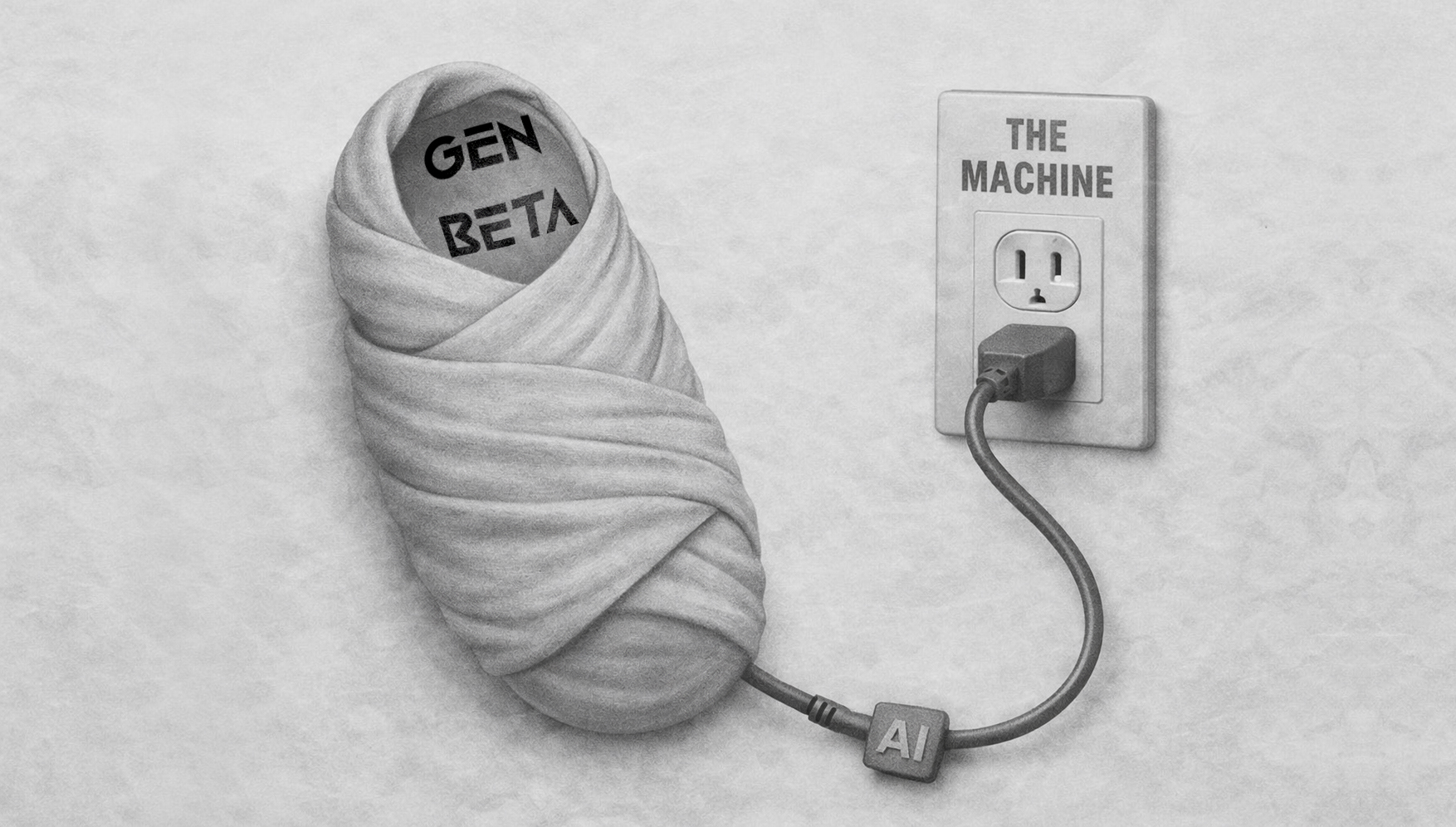 Collide essay The Future Is Born: Gen Beta has arrived The latest generational cohort, Gen Beta, was officially born on January 1, 2026, marking a new era and a new generation. Explore →
 -
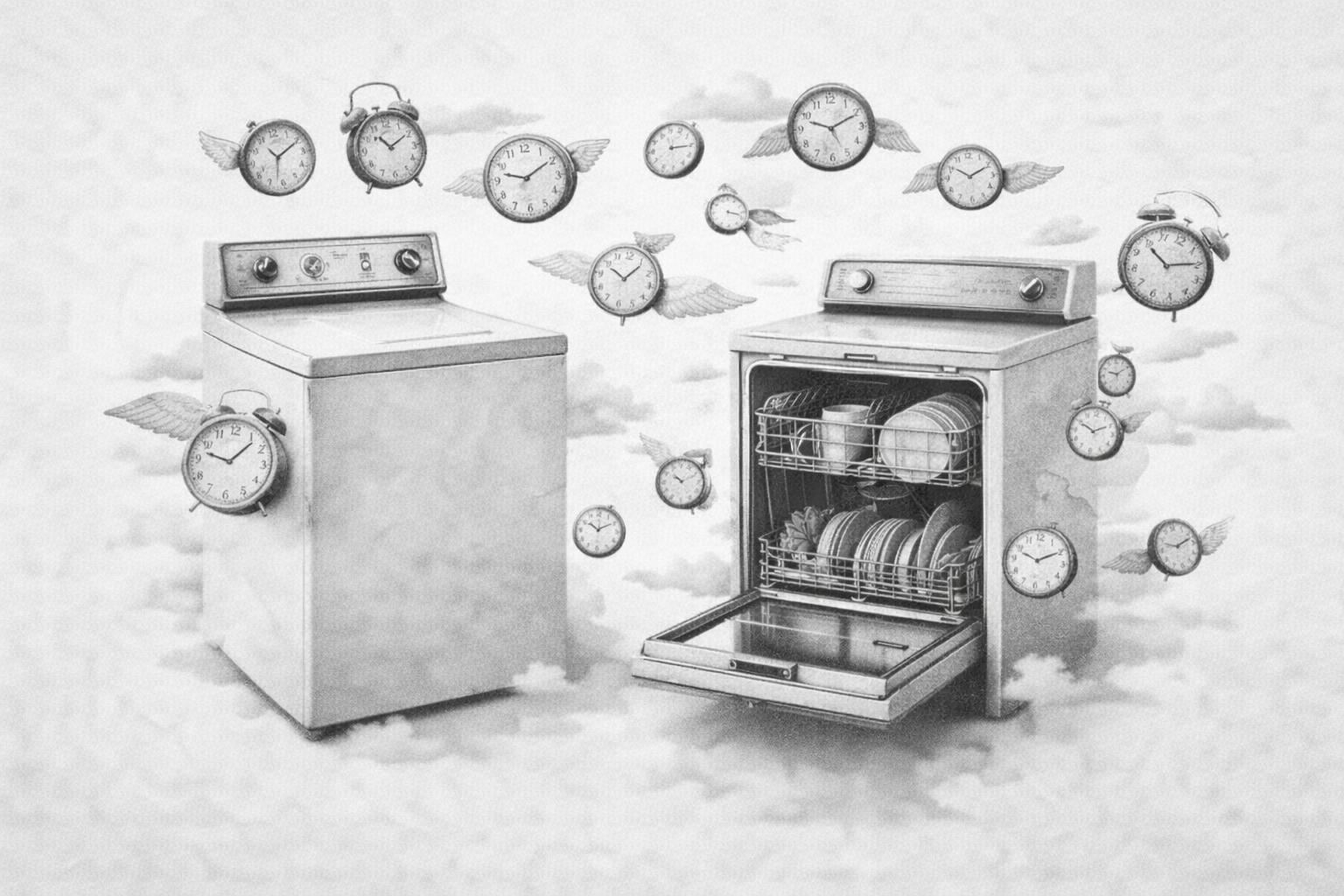 Collide essay What we lost when life got easier What washing machines and dishwashers tell us about artificial intelligence and the Velocity Gap. Explore →
 -
 Appearance Ryan Vet on A Geek Leader: AI and cognitive erosion Generational futurist Ryan Vet joins the A Geek Leader Podcast to unpack what AI will not change, the cognitive erosion already underway, and the seven forces moving the generational pendulum. Explore →
 -
 Appearance Ryan Vet on The Human Factor: the generational fault lines of transformation Generational futurist Ryan Vet on The Human Factor Podcast: why the same change initiative lands as opportunity for one generation and threat for another, why removing friction backfires, and why leaders who stop apologizing lead better. Explore →
 -
 Appearance Ryan Vet on Sharpen the Spear: leading five generations Generational futurist Ryan Vet joins the Sharpen the Spear podcast to unpack leading five generations at work: labels versus lived experience, the job-hopping myth, and why fearful leaders quietly stopped leading. Explore →
 -
 Appearance Ryan Vet on Dents in the Darkness: the generations and the church Generational futurist Ryan Vet on the Dents in the Darkness podcast: leading five generations in the church, the velocity gap between technology and morality, and why Gen Z is unchurched but spiritually hungry. Explore →
 -
 Appearance Ryan Vet on Straight Up With Steph: generations and patient trust Generational futurist Ryan Vet on Straight Up With Steph: communicating across generations in healthcare, why patients trust you less than they used to, and how to get ahead of the second opinion. Explore →
 - Appearance Ryan Vet on S.M.A.R.T. Performance: lead through the prism, not the label Generational futurist Ryan Vet on the S.M.A.R.T. Performance podcast: the Generational Prism, why Gen X is missing from leadership, and why we forgot how to actually lead. Explore →
- Appearance Ryan Vet on Maximize Life with Mindset Pivots: the generational pendulum, decoded Generational futurist Ryan Vet on Maximize Life with Mindset Pivots: the four phases of the generational pendulum, its seven accelerators, and why the labels leaders reach for so often mislead them. Explore →
- speaking Keynote: When Generations Collide Explore →
Ryan writes one free essay a week. It's called Collide.
How generations are reshaping work and home. Practical, research-backed, and delivered weekly. Read it at RyanVet.com/collide.
Links from this conversation
Full Transcript
The complete conversation between Mason Duchatschek and Ryan Vet, transcribed in full. Key terms link to the ideas behind them.
Ryan Vet is a generational futurist, keynote speaker, and USA Today best-selling author whose work sits at the intersection of leadership, AI, and the future of work. He has spoken across four continents, been featured by outlets including ABC, NBC, CBS, Forbes, Newsmax, and USA Today. And he helps leaders make sense of generational friction, workplace trust, and what change will demand next. Welcome to the show. We're super happy, glad to have you here today.
Thanks so much for having me, Mason.
So you call yourself a generational futurist. What do you see that most executives still dismiss as a trend instead of recognizing as a structural shift?
That's a wonderful question. I think that term, when I first heard the term futurist described for me as, like, you know, I don't even know what's going to be for dinner tonight. So I don't like that term. It's not a crystal ball. And as I kind of sat with that term, it was an introduction actually similar to this, where someone ascribed that label. I was like, you know what, my work on generations is looking at the past so we can better understand the future. So I ran with it and I took it and I just kind of modified it and put the generational part in front of it, because a lot of my work started back when I was significantly younger and in the venture-backed startup world. And I had all of these Twitter followers, and everyone wanted to know how I got all these Twitter followers. And this was, like, a couple years into the platform, and it was a big deal, and I still have the same number. I have not grown on that platform. I don't really use that platform much anymore. But they were asking me the question at the time why Millennials weren't buying houses, and they thought because I tweeted, I knew the answer to that. And that's really where I got my start on the generational conversation. And over the next, my 20-year career in executive leadership roles, I was often asked about generations because I did find it fascinating and I did want to know why people were the way they were. And so when you ask what are those structural shifts that no one's seeing or not talking about, I think there's a few things that I know we'll talk about over our time together in this conversation. But one of the big ones is generational swing. And what I mean by that is I've got a framework called the generational pendulum, and we see history repeat itself. Now, not exactly, but it kind of, like, it's driving down a road. When you're a teenager and you just get your license, or you're even with your permit and your parent or instructor's in the car, and you see a deer, you're going to swerve. You're going to go off the road and you're going to overreact and overcorrect. But as you drive more, you get the experience and you ultimately recalibrate. And that's sort of what the generational pendulum is. It's first we experience something, and then just like a teenager, we challenge it. We challenge its existence. Then at some point we overcorrect, and ultimately we come back and recalibrate. And so when I hear a leader, and I'm sitting with a C-suite of, you know, a Fortune 50 company, and they say, kids these days, I'm like, well, what were you like when you were a kid? And they'll be like, well, I was nothing like that. It was a different world. And yes, it was a different world. But what were the things that are similar, and what are the things that have changed, and then how do you lead to that?
Interesting. So a lot of leaders talk about the future of work in slogans. What are the actual changes that are already happening inside organizations that they can't afford to ignore?
I think the biggest thing is we're all running towards artificial intelligence, and artificial intelligence is not new at all. Artificial intelligence was first coined in the 1950s, and even before that you can trace ideas and concepts, obviously no machines, computers behind it, back to the 1600s. So we're talking about a long existence of this idea that machines could replace and think in lieu of humans. And I think one of the things that is happening now is we're getting distracted. It's our selective attention, and we're getting distracted by artificial intelligence, saying, how can we implement this and how can we run with this? I'm a huge fan of it. My early startups in the early 2010s, like, I think there's a lot of benefits, but at the same time we need to pump the brakes and say, what's not going to change as a result of technology growing and moving more quickly? And I think if you look at Ritz-Carlton, they're well known for incredible customer experience, and the one thing that they equip each one of their team members with is this idea that we are ladies and gentlemen serving ladies and gentlemen. So every person on the team, whether you're scrubbing toilets or you run the entire company, you're a lady and gentleman serving a lady and gentleman. And I think the profundity of that statement, and why I bring it up in this context, is there's some things in our businesses that are not going to change, and that's what we need to be looking at. And yes, absolutely use technology to focus on those things. Not so you can be the first one to get across the finish line, but what are those things that when techno, I mean, by the time you and I are done discussing this, there's going to be 30 new AI tools and 200 that are gone. And that's just the reality of what's going to happen. There's going to be a bunch of updates to models. So instead of trying to focus and stay up to date, which I'm not saying ignore, but what are the things that are not going to change, and lead to that? Lead towards your original vision and mission.
So you speak about five generations under one roof. What do leaders most often misread related to generational tension, and what is really going on underneath it in your opinion?
I think there's two things. I think the first one is, interestingly, it's the labels themselves. We say, oh, the silent generation is this way, which makes up a very, very small fraction of our workforce today, and they are the fifth generation. They will be phasing out just by age. Then you got baby boomers, who make up a little less than 20% of the workforce right now. And then you got Gen X, Millennials, and Gen Z, all that make up kind of a remaining third. Give or take a couple percentage points on each of those to balance out the rest of the workforce. And then you do have some Gen Z in the workplace as well starting to happen. So when you're looking at the generations under one roof and all of that, we assign labels. Oh, Gen Z, all they do is care about AI and technology. Oh, Millennials, all they cared about was their vacation time and their work-life balance, and so on and so forth. And that's just not it.
That's what they think about.
Yeah, and that's because we created stereotypes. It's the label lie, right? There's a lot of benefit to analyzing and researching cohort-based analysis, regardless of what it is. Whether you're in medicine trying to figure out a certain demographic that might be more susceptible to some disease, or whether you're, you know, an anthropologist or sociologist or psychologist or a leader looking at who's in your workplace today, and say Millennials have these traits. But you and I know stereotypes are extremely dangerous. And what has happened when we start labeling is we start honing in on these stereotypes and then apply it to everyone, and we're almost blinded by the reality of what's really going on. So I think that's one of the big things that leaders need to be aware of when they're diving in and trying to lead their teams, is realize that stereotypes aren't always that helpful, and the labels aren't always that helpful. So understand what then shaped each one of them. So I think the second part to answer that question is what I call the generational prism. And a prism refracts light. It's usually a pyramid, and light comes in and something happens inside there. I'm not sure of the science, but when you see it on the table or projecting to wherever it is, it creates like a rainbow or a prism. And I think that's how we need to look at generations. We look at the two sides being one age and the other moment, and I'll talk to those in a minute, and then the bottom layer being the label. That's the thing that's refracted out. That's the last thing we have to talk about. So let's talk about age for a minute. Age would be, how old are they right now? So if you're looking at the current Millennial, who are still getting accused of being Gen Z, but no, Millennials are well into their 30s and 40s at this point during the time of this conversation. They're older than most people are realizing. So that's their age. But now let's look at the moment in history. So moment in history is what's happening right now. So as a 30-something, a late 30-something, let's just pick an average Millennial, the moment in history is we've got AI. We've got screen time. We're starting to see all these things. But if you rewind to when Gen X, just one generation before, was in their mid-30s or late 30s, that didn't exist. What they were excited about was that dial-up was going away. And so when you look at those two things, then you say, okay, what is the label that we can cast when we're shining the light through an accurate generational prism? I'll give you one really easy example that everyone's like, there's no way, and you can look up this data on Bureau of Labor Statistics. I've got all the math worked out. You can go look it out on my website. But the reality is boomers hop jobs by the age of 25, 5.3 times. So the age marker is five. We'll get to the moment in just a second. Gen X hop jobs there 5.3 times by age 25. Now, Millennials were labeled job hoppers. So let's see if the math works out. If you go through Bureau of Labor Statistics, by age 25, Millennials, they hop jobs 5.6 times. So slightly more than boomers or Gen X. So what happened? Everyone's like, that's not true. Well, let's look at the actual data. In the moment in history that boomers were growing up, there were very few child labor laws in most states in the United States. So they would start their first job 10, 11, 12. And so between, let's call it age 12 and age 25, 13 years, they had time to hop 5.3 jobs. That was figuring out that they didn't like flipping burgers at McDonald's or, you know, ice cream from Dairy Queen. And then the next generation, there were some child labor laws. More people were going to college. So you're starting to see that take place. So really from age 15 to 25, you still have 10 years. But when you look at the average Millennial's first job, it's 22. So they hop 5.6 jobs in three years. That's how you look at the prism. So it's like, okay, because it was heavily concentrated, it did in fact seem like they hop jobs more, and they did hop in rapid succession. But when you extrapolate that out to age 30, it almost levels out across all generations.
Wow, I would not have guessed that. In your work, what is the difference between a company that's merely reacting to change and one that's genuinely future ready?
I think the best future-ready companies are ones that aren't always looking over their shoulders, but are anchored in the past. Meaning, why did the business start in the first place? If you look at Amazon and Jeff Bezos for a minute, in an interview he had several years ago, he said there's some things that I know that my customers are always going to want, regardless of what technology is there. They're going to want the convenience of ordering online, they're going to want it delivered faster, and they're going to want it cheaper. That's what his customers are going to want. Or you remember when Amazon was just free shipping, and that was a big deal, but it still might take two weeks. And then it went to two days, and then now in an hour. He still is focusing on the same thing. And so I think it's just a really great and profound example. If you think about it, what they've done has never changed. I mean, yes, they started with books and maybe sold some other products, but the core of delivering value to the customer quickly and conveniently at a reasonable price has never ever changed. The question for you and your company as you're sitting at your boardroom table is saying, hey, these technology things are great. They can streamline process. We can become more efficient. We can have more insight. But what are those things that are never going to change that we need to be anchored to, so that when we see the new shiny thing come out that's really exciting and fun, and yes, we should pursue it, that we always tether that back to why we are doing what we're doing in the first place? Because we lose the sense of why so often when we're chasing after the shiny new technology. And that can be problematic, and that's where people lose their course. There's a story of Rubbermaid, the company, that had their, you know, several products. I believe it's in Jim Collins' book Good to Great, or How the Mighty Fall, maybe. But basically what they say is they had a new product a day campaign for a year, and they came out with all these products, and it almost bankrupted the company because they just wanted to keep creating, and it wasn't the right thing. They weren't anchored to being the best making enclosures and containers. So I think the same thing is true with all the technology and things going around us today.
So I know that you have a keynote that's called A Familiar Future. What patterns from the past do you think today's leaders should understand better as they navigate AI, culture shifts, and workforce change?
Yeah, I think with any technological advancement, regardless of what it is, there's a couple questions that always come up. It's like, is this going to replace my job? And that's always a big question. And how's this going to change society? And all of that. And I think just what's so important is if you look at the generational pendulum, you look at the ebbs and flows throughout history, we do repeat. And when I say repeat, there's that recalibration, right? We're never exactly on the same orbit that we were originally, but we're slightly different because we have new technology, new data, new science, whatever it might be. So a familiar future is really looking at how do you understand and establish the patterns that have been around for all of humankind, and figure out what are those main drivers and motivators that human beings want? We all want a sense of purpose. We all want a sense of identity. And each generation has sought that in different things. You look at baby boomers, for example, they sought it in titles. You go ask a baby boomer what they do, they're going to rattle off all their accomplishments, what their volunteer positions are, what boards they're on. You go to Gen X, Gen X is more inclined to tell you, you know, tell me about yourself, same question. They're going to tell you about their family, maybe their community, where they live, and then mention their job. Millennials are going to tell you about their experience and the trip they just went on and the restaurant they just ate at. And you look at this, but that was what was valuable to each generation. And the same is true as we start to look at a workplace. And as we go through, you mentioned the keynote of A Familiar Future, it's like, what are those patterns that don't change? And as leaders, this is what's so important, because there's different types of leaders. For me, especially when I was in the day-to-day of leading organizations, I'm the visionary guy. The shiny new thing, I was like, every single thing, I was squirrel. In fact, at one of my earlier startups, venture-backed startups, my team would always, they'd go, squirrel. If I just went off on a tangent, because they knew that it was going to happen. And I had people that reined me in, like that was their job. They were paid to throw water on my parade. But that's really important to stay focused. And it was like, okay, some squirrels are helpful to chase after and look, like that golden retriever. But how does it tie back? Just like I said a minute ago, what are you tethering to that humanness, that reason that we exist? Because there's two things true in every business. Time is equal for all of us. You can't buy more time. We've tried to do that with technology. We've tried to do that by speeding things up. You can't do it. It's the same. And then when we do create something that speeds up time, we just fill it with something else to make us more productive. Look at the washing machine and dishwasher. The ads literally said that those were designed to allow mothers to be with their kids more. And that didn't happen. It allowed them to do other housework or go get jobs. And ads did buy time, but the time wasn't used for what the time was allegedly supposed to do in the '50s and '60s as those ads portrayed. And we do that with everything. With technology, with cars, you know, if you have two cars in the house, it's going to make your life so much easier because you can get around. Well, no, now you just go to, you make sure that the kids are in soccer and ballet instead of just soccer after school and riding the bus home. So it's just a cycle.
So where do you think executives are being too timid, and where are they being maybe even reckless?
I mean, that's a big question, and I have a laundry list depending on the executive. But I think if we go back to the generational side for a minute, leave technology in the corner, because people have such differing opinions on that. I think a lot of generations that are in leadership, so you're looking mainly at Millennials, Gen X, and boomers. And interestingly, there's not a lot of Gen Xers in leadership. They've kind of been skipped over for multiple reasons that we don't have time to get into. I think a lot of generations in leadership are afraid of Gen Z and Gen Alpha. They're afraid of the bad online reviews. They're afraid of the litigious nature. They're afraid of being ghosted. They're afraid of these younger generations. And what's so interesting in so many surveys, by Pew, by Gallup, by you name it, a lot of what these younger generations want is actually leadership and mentorship. It's a really fascinating kind of paradox, because you have these older generations, or more mature generations, that are almost afraid of these younger ones and what they can do with a keyboard or their phone. And then you got these younger generations that just want to be led. And these more mature generations are afraid of having difficult conversations. Now, is the way that they're going to have those conversations...
That is, there's a Marlene Chisholm. She's a business consultant out of Springfield, Missouri, and she is known for saying almost every business problem can be traced back to a conversation that didn't take place that should have.
Yeah. Yeah, a recent Harris poll said that $1.2 trillion of potential lost every year in the United States alone due to poor communication. And a lot of that communication is due to lack of trust. And generational barriers have one of the biggest reasons, they're one of the biggest wedges that create lack of trust. It's like, a Gen Zer, and now I'm stereotyping, so want to be careful here, but a Gen Zer walks in and says, oh, look at that boomer. Okay, boomer. You know? And then a boomer is looking down at that Gen Zer, and they're like, you know, they're going to walk in with their pink drink and their crop top, which is totally not professional, and they're, you know, going to just AirPods in, and...
This isn't your first day at the office, is it?
Yeah. Yeah. But the reality is, people are more likely to play to the stereotypes and be more frustrated about the stereotypes than say, hey, this is a professional work environment, and here's our expectations. Not so you change what you're wearing or you come in on time, but because the customers that we serve or the clients that we have the opportunity to work with expect a certain level, and that's why we exist. And most people, not all, are receptive for that. And that's a blanket generalization. There's nuance in every business, of course. But at a high level, do what leaders have always done, and lead. Cast vision, and bring people along. And to borrow another great business leader, get the right people on the bus. And it will work out, even with these different generations in the workplace. And again, that's gross overgeneralization, but the concept is there.
So what are some early warning signs that a leadership team is starting to fracture across values, generations, or assumptions about the future?
Yeah, we live in a polar society. In fact, Gen Beta, which is born 2026 and onward, the current generation being born right now, I wrote an essay on the idea that they're the Romeo and Juliet generation. Meaning, they're born into a time where polarity is not just existent, but expected. You can't be friends with those people if they go to that school, if they chose public school or private school. You can't be friends with someone that voted for that other person. I was giving a keynote in Memphis a couple weeks ago, and I used an example. I said I was at a family Thanksgiving, and we have a huge extended family, and a kid who was probably, call it five or six, kindergarten, first grade, maybe seven years old, came running up in a conversation of adults and said, my parents voted for X person in this election, and the other person's horrible because X, Y, and Z. And I'm just looking, I'm like, first, the fact you know two people that ran in a presidential election is really impressive, but that polarity that just seeped into this young child. And this is the generation that we're seeing being raised now. And so I think for leaders, it is an exceptionally challenging time, because there's, especially with Gen Z out there and some Gen Alpha latching onto this, if you speak up and you speak the wrong thing, you're wrong. And if you don't speak up, your silence is also wrong. And so you live in this tension, and that's where I have to go back. And I do, even though I'm out of, you know, operational leadership day-to-day, I still sit on the boards of several companies. And I do have a few smaller portfolio companies. And one of them, it is very public-facing just because of the nature of what it is. And that leader that's in there, I work with him regularly, and he gets so frustrated because people expect him to speak up on every political issue in their city, and you know, celebrate this holiday or don't celebrate that holiday. And I said, here's the deal. I said, if you worry about treating every single person that walks in your door equally, and treat them like human beings, they're not going to care if you celebrate that holiday or don't celebrate that holiday. And yes, you're always going to have someone that's upset. But stop trying to please everyone, because in the effort of trying to please everyone, you're actually going to make enemies. So just focus on what your business is, and do it to the best of your ability, and people are still going to come.
So how should a CEO lead when maybe one part of the organization wants stability, and the other one wants transformation right now, or wants transformation yesterday? What advice, tips, or guidance do you have for a situation like that?
Yeah, so when you're not even talking about stuff going on outside, but you're talking inner company conflict, right? That brings in a whole 'nother level. And I would say this, there's always been resistance to change. Use that generational prism again. When typewriters first came, there was resistance to change. When computers first came, when laptops first came, when you could get a company cell phone, when you could get a company email, when you could check that email at home. Like every single time, and those seem so insignificant now because they're such a part of our daily life, but they weren't always a part of our daily life. And so there's always been change. And as a leader, again, this is where, I think a lot of leaders, and I want to be careful here, but a lot of leaders have almost resigned to the fact that it's too hard, and so they don't do the hard things. But you're at the top, and as a leader, you have to do the hard things. Make the hard decisions, and you do have to draw the line. And a good leader understands their team and where their company's going, and says, hey, you know, we're going to implement email addresses for everybody. If your company doesn't have that, that's a whole 'nother, you know, we're talking 20 years ago, but we're going to say, hey, we are going to adapt AI, and we are going to use it for these things, and we're not going to use it for these things. And some people are going to be like, well, I can do my job so much faster if you do let me use it. While the other people are going to say, I don't want you to do that, because then I don't have a job. It's like, at some point, you have to make a business decision. And yes, you're in the business of people, and you serve people every day, but you do have to make tough business decisions. I think a lot of leaders are hesitant because of the tough, it is a difficult, probably one of the most difficult seasons to be a leader of any organization, of any team, even a manager. It's extremely challenging, but you still have to lead, and we're called to lead. And I think too long we've been stuck on this idea of management. And while there's great management books and great management principles, it's more like herding cats, not hurting, but herding cats, you know, like a cowboy with a lasso trying to chase, and you can't. Their claws are out, and they're always hissing at you. But instead, it's like, how can I lead you instead of trying to go get them after they're already out of the gate? How do I go in front of them and say, this is where we're going, and I want you to come with me because I think this is best, and you have to trust me?
So what do younger employees often wish senior leaders understood, and what do senior leaders wish younger employees better appreciated?
I think for senior leaders, or I would just say even more seasoned people who've been in the workplace a while, especially if you're looking at baby boomers and a little bit of Gen X, they always complain about work ethic. Every single, I mean, that is probably the biggest complaint I hear, is they don't have the work ethic that we once did. And I would say that work has changed. And what I mean by that is, on one hand, from a work ethic standpoint, baby boomers, for the most part, again, generalizing, but they want to be the first ones in, last ones out. That's how they climb the corporate ladder. They were seen in the time that they put in. They were all about quantity, not necessarily quality. Gen X would do exactly what they needed to do. They would keep their heads down. They were great workers, and sometimes they would stay late if they needed to, and they wouldn't complain about it. They'd come early if they needed to, they wouldn't complain about it, but they still want a work-life balance. That's actually their word, not Millennials. That's what Gen X is to thank for that phrase. And then you had Millennials who could do the same work, and this is what's really hard, could do the same work that Gen X or boomers could do, just faster, because they grew up technology native. They grew up with computers in their hands. And so it wasn't that their output was less, but they were also less likely to be self-starters. So once they were in, you know, if they did a task, and you told them to do X, Y, Z, they're going to do it, and then they're going to sit at their desk and go on Facebook. Because that's just what they would do. Now, you have a whole different generation with Gen Z, and again, we're generalizing here, stereotyping pretty broadly, so this isn't applicable to everyone, who grew up in the social media era. So one step further, and what I mean by that, not that Millennials didn't have it, but Gen Z had it from birth, right? They don't really know life or a world without smartphones and without social media. And so they get a lot of their affirmation through either seeing what other people are doing, or trying to get likes, and so they're going to start on TikTok until you tell them to do something. And that's again, a gross generalization. So I think part of it is the way people work has changed, and that's okay. How can you leverage that? If a Millennial can do something three times as fast as a baby boomer, that's not a real statistic, that's just a conceptual statistic, because they're faster typers, they know the tools, whatever it might be, why don't you leverage that instead of look at that as, you know, a downside to the way they're working? So what? And a lot of people are going to, I'm going to get emails about this, but so what if they only have to work 18 hours a week to accomplish the same things you did? Now you have to figure out, do you let them have the other, what is that? Oh, now I'm doing math. Yeah, I shouldn't have done this. 22 hours a week?
Rest of the week off. How about that?
Rest of the week off, or do you feel that 22 hours was something else? And that's what we call the productivity paradox. It's the whole idea that computers were supposed to shorten the work week, you know, make us retire earlier, and yet we're working longer hours, we're working later. This productivity paradox, and that's where we find ourselves.
So when leaders try to bridge generational divides, what tends to backfire?
Assumptions. Almost always assumptions.
Like for what? Give me a couple examples.
Yeah, because you're Gen Z, you'd rather be on TikTok, you'd rather be at home, you'd rather not work, you don't know how to work hard. And so they start to assume, and then a Gen Z person looks right back at them and assumes the opposite direction. Well, you're out of touch, you don't even know what's going on in the world, you talk like an old person. And you have this huge divide right there, instead of, again, going, it's so simple, and yet we just don't do it. Why are you here working? For most people, it's earning a paycheck, especially in an early job. Okay, so let's get past that layer and say, what impact are you making by the work that you're doing, and why does it matter that you're a part of this team? Not just so you can pay the bills. But go back to like leadership 101, and say, hey, your job is to get people excited, to cast a vision for where you're going, and why they're a part of the team. From the person, you know, that is cleaning toilets all the way up to the person in the corner office. Gen Z listening, corner office used to be a big dream for boomers, but now it's the bullpen.
So what conversations are executives avoiding that they really, really should be having right now?
I think one of the things that's so interesting to me is I think generations, any generation that's in leadership, is just afraid of having difficult conversations. The conversations that are essential to grow a team, to lead an organization. They don't want disagreement because of how polar our society is, and how, you know, people go from zero to 100 almost instantly from an emotional standpoint, it seems like. And so leaders are afraid to have this conversation. I can think of, you know, when I was leading in one of my first leadership positions that I had, and I remember one day coming home to my wife and said, I think almost every single person has cried in my office. And she's like, are you that mean to them? I said, I haven't made a single one of them cry. She's like, then why are they coming crying in your office? What are you running, a daycare? And what was really interesting as we looked at it, and I reflected on it, is I had had tough conversations with a lot of that team, because that company was just hard. We had big goals, we had a board that wanted us to achieve certain things, and we were in a highly regulated industry, so we were always up against regulations and changing laws, and trying to be compliant there. And so it would require long nights, and we would have tough conversations, and there was not room for failure because we were dealing with a medical device and pharma and patients. And so we would have tough conversations if someone messed up. And I would be able to have that respectfully. And so when they came into my office, and when I was leading a team of other managers in that company, mid-level managers, it was true, all of them had cried in my office within the course of a month because they felt comfortable coming to me with things that were hard. And again, I don't necessarily endorse an environment in which everyone openly cries. That was a unique situation and some really extenuating circumstances, and a lot of Millennials, so there you go. That could be part of it. But I think what was so interesting was they trusted me. And that's what I want to get at in all of that is, they trusted me with what was going on in their workplace, and they were willing to have a difficult conversation with me when they knew could be bad for them, because they also saw that I trust, that I was going to have a difficult conversation with them in respect. I think that's what it boils down to. We want respect as human beings. We want to interact with other people, and we want to be treated the way that we should treat others, the way we want to be treated. And I think there's just a lot of opportunity for us to go down to those basic, like, hey, this is not working. Let's have a difficult conversation. Not avoid those things because we're afraid someone's going to lash out against us.
I had a guest on a few months ago. His name was Bryant Wright, W-R-I-G-H-T, and we ended up writing a book together as a result of it. But one of the things I learned from Bryant Wright, W-R-I-G-H-T, what it takes to build something that lasts, he taught me something that I want to share, because it's piggybacking on what you're talking about. He talks about correction as care.
Mhm. Yeah.
He said with his leadership role, he always treated correction as care, and he made sure that it was always calm, specific, and grounded in observation. And I don't care what generation you're in, if someone cares enough to say, look, I care about our company, I care about you, I care about our team, our culture, we can improve here, and that's calm. And let me be very specific. This took place, A happened, then B happened, then C happened. So we're very specific.
Yep.
And I saw it happen, and here's the reports. So it's calm, it's specific, and it's grounded in observations. Not like, oh, you're terrible. Or, oh, you're not smart. Or, what's the matter with you? Or, you're lazy. Or, you're playing on the internet. Or whatever it is. Not those opinions.
Right.
It's calm, specific, grounded observation, and delivered from a place of care and concern. And when I heard him describe things to me that way, I was like, wow. If people do nothing more than take that away from his book and take that to the office, the office will be a better place. And I don't care what generation you're running.
I completely agree, Mason. I think you're spot on there. It's kind of like parenting, and I don't know who to credit with this advice that I was given, but they're like, don't discipline for the behavior, train the character, because the behavior will always follow the character. And so it's very similar. You want to be caring in the way you correct. You want to be specific, and it's not, you shouldn't run in the house, right? It's, hey, we're cooking, and if you run through the kitchen while the oven's open, it's not going to end so well for you. And so it's more correcting not the behavior but the character, like, hey, we need to pay attention. The opportunity there is to pay attention to your surroundings and be sure that what you're doing is safe. Not that running's wrong. And I think that has been a really, that's translated to leadership for me as well as parenting.
So five years from now, what will separate the organizations that have evolved well from the ones that slowly became irrelevant?
Yeah, I mean, I think we're definitely in another Blockbuster moment, and we're going to see people that are going to accelerate ahead and try to hop on the latest technology. What's so different about artificial intelligence and generative AI in particular with the technology that we're in, is it's equal. Anyone can become pretty much anything that they need to be, whether it's a developer, a designer, video editor, pretty rapidly. You're removing most of the barriers that were there. Before, if you wanted to build the Netflix instead of a Blockbuster, you needed a team of engineers. You needed a lot of tools and resources and skill and an understanding that you just don't need right now. And so I think that is really, really interesting. The scary part about that, and this is one of the things that I always talk about whether it's hiring or building teams, is the fact that when you go pursue almost like a god-like ability to speak something into existence, you can go to Claude Code and speak into, or Claude Cowork rather, and speak into existence an object and have it 3D printed. Like, literally from your voice have something created. It's unbelievable. And so we live in this era, but what that's doing is it's removing friction in our lives. And I think that's the important thing, and this is what's going to set companies apart in five years. If we remove all the friction that makes a team great, you look at the best teams, and sometimes the best are war stories, right? The teams who have these incredible accomplishments and war stories, or even sports teams, are the ones who have gone through something hard together and can weather that storm and can navigate that. That's friction. That's what makes us who we are. That's how we learn. It's when a baby falls down after trying to walk, we applaud. We don't say, why did you fall down? You're so stupid. We get excited because they tried to walk. It's friction, and they get that positive reinforcement. So I think the companies that could become irrelevant are not actually the ones that are going to seem most innovative now because they're using technology. It's the ones who remove friction. They remove that teamwork. They remove the teams collaborating together. They remove how do you actually do the work that makes the thing happen. And I think that's really, really challenging. And I think when we start to remove friction from society and we remove friction from our companies, we lose critical thinking. When you lose critical thinking, you can't make decisions when time gets hard. And there's going to be a time when AI is kind of a great equalizer in some respects. When everything seems equal, you're going to need something to break out ahead of the pack. I love Henry Ford's quote. He's like, if I would have asked people what they wanted, they would have said faster horses. And at some point we're all going to have horses, and that's going to be AI, and it's all going to be riding the same. Who are the people that are going to break out ahead? It's the people who know the fastest way to get the Hot Wheels car out of the Lucky Charms box is not to dig through the box and eat all the cereals, it's to flip it upside down, open it from the bottom, because it's sitting on the bottom of the box. And if you open it upside down, you grab the Hot Wheels car out and you have it. It's the people who are critical thinkers, who are seeing the world different. And I think that's what organizations risk losing the most is that critical thinking. And if they take that out of it and their team starts to suffer from cognitive erosion, we're going to become the machines. We're going to be so programmed and so dependent on these technology platforms, which are good in many respects, but we're going to miss the whole human experience of creating friction that makes us great.
So for anyone watching or listening, which typically business owners, executives, managers who are aspiring into executive roles, if there's only one piece of advice you would give to people listening or watching, what would it be?
I would say know why you started on your journey in the first place. Where is it that you're going? There are so many technologies, so many things that are distracting, but the companies that have longevity and have had longevity through and weathered technological storms, weathered economic storms, are the ones that always are certain on where they're going. Why is it that they exist? And then if you have that anchored, then play with technology. Then figure out how that changes your team dynamic, but know why you exist and where you're going.
If people want to learn more about you, your books, your work, what's the best way or ways for them to connect?
Yeah, you can find out more about me at ryanvet.com, R-Y-A-N-V-E-T. On there I publish a weekly essay that goes deep into some of the numbers and other stats on kind of futurism, generations, and so you can look at that. It's called Collide. You can find me on YouTube, Instagram, wherever you enjoy hanging out, I'm sure I'm there.
It's been a pleasure having you. Thank you so much for joining us.
Thank you, Mason.
Lightly edited from the podcast's automated captions for readability.