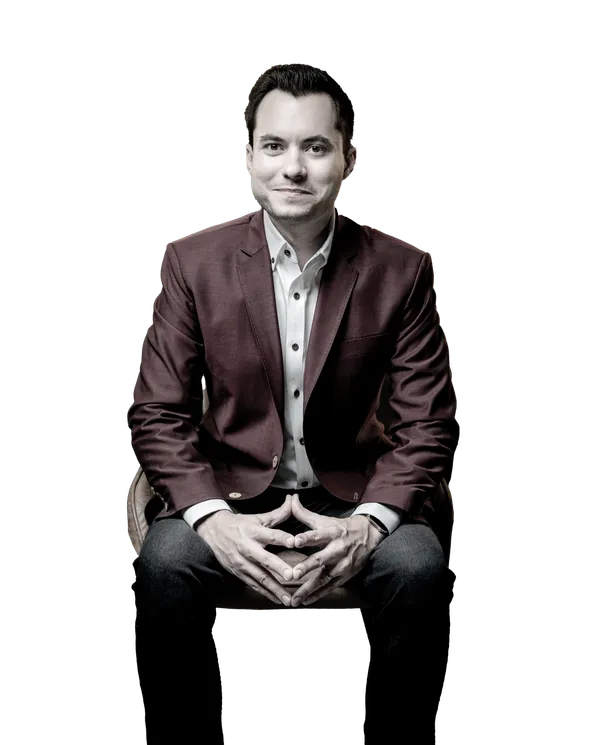
Every business leader wants to know what the future looks like. On Business Breakthroughs with Vincent Hovorka, Ryan Vet borrows a better question from Jeff Bezos: ask what is not going to change, and build there first.
For Ryan, that answer is disarmingly old-fashioned. AI is moving faster and reaching wider than any innovation before it, and yes, it will displace jobs. But a business still cannot exist without customers, and most cannot exist without a team. So before you chase the newest tool, get the two oldest things right: lead your people well and serve your clients well. Do that, and the changes take care of themselves.
Ryan's Big Takeaways
- 01
Stop asking what AI will change. Ask what won't, and build there first.
Ryan is careful not to oversell his own expertise on AI (he was writing algorithms on whiteboards from 2009 to 2019 and still calls himself no expert), and he is just as careful not to undersell the disruption: AI has touched more areas, accelerated faster, and been adopted more quickly than anything in modern history. But every innovation follows the same acceleration pattern, from the automobile to the assembly line to the internet, and each one displaced work while creating whole economies no one could yet imagine. His anchor is the question Jeff Bezos posed from an AWS stage: not "what will the future look like," but "what is not going to change." For a business, the answer never changes. You cannot exist without customers, and you usually cannot exist without a team. So lead your people well and serve your clients well before you spend a minute optimizing for AI. Do that, Ryan says, and they will adjust to whatever comes.
- 02
Let AI take the repetitive work, then reinvest the savings in the human experience.
Ryan is blunt that some roles are already on the chopping block: mass layoffs have hit development and design, and video editing is next as tools edit multicam footage in a fraction of the time. His question is not whether to automate the menial, repetitive tasks, but what you do with what you free up. If one person can now manage AI and multiply their capacity ten, twenty, or thirty times, the cash you save should not just fall to the bottom line. It should fund the thing customers increasingly want, which is real human contact. His evidence is a counter-trend: Gen Z is going back to the mall, Barnes & Noble is opening 60 new locations, and Starbucks is investing in larger stores designed to feel like a living room. The businesses that pour their AI savings into a better in-person experience are the ones that win.
- 03
Chase purpose, not money, and stay disciplined enough to still be here in ten years.
Ryan's sharpest warning is about motive. He once set a goal to hit a million dollars by a certain age, reached it, then lost it a year later because he kept pushing for the dollar. The businesses he most admires now are the disciplined ones: save half of what is left after payroll, invest the other half, repeat for a decade. You do not need a nine-figure exit or even a ten-million-dollar company; a three-million-dollar business run patiently for ten or fifteen years can build lasting, generational wealth. The trap is social media's compression of time, the sense that success has to arrive tomorrow. His reframe echoes an old line he loves: we overestimate what we can do in a year and underestimate what we can do in ten.
The Generational Pendulum →
The Story Ryan Told
Ryan does not hide the failures. For every success people see, he says, there are probably ten or twenty behind it. Even his speaking business runs on rejection: he reaches out to roughly a hundred people to land three engagements, which means 97 no's for every yes. In the operating years he lived through employee embezzlement, lawsuits over things his companies did not do wrong, and mass layoffs when the cash ran out. There were months he was not sure he could make payroll, calling clients to beg them to pull invoices forward.
The lesson he keeps coming back to is the one that cost him the most. He hit his early money goal and then watched it disappear because the money had become the point. Now he measures differently. He talks about three cyclical phases of a life and career, grinding, then growing, then giving, and says he is finally in the giving one: writing every week, sharing what he got right and, more often, what he got wrong. The through-line is simple. When money is the main thing, the business gets into the stickiest situations. When purpose is, it tends to last.
Standout Quotes
Anyone that pursues money as their main measure of success ultimately fails.
For every one success you see, there's probably 10 or 20 failures behind that.
When money becomes the main thing, almost every time I see those businesses get in the stickiest situations.
The most important thing is not business. It's family and the relationships that you have, because that's something that you can't buy.
I see the airport, I see the inside of a cab, I see the inside of my hotel room, I see an audience, and I leave.
Drag, swipe, or use the arrows to explore
Frameworks & Ideas Referenced
- The Generational Pendulum : History repeats itself and there is nothing new under the sun; innovation swings back and forth like a pendulum, and leaders who read the swing move earlier.
- The Generational Prism implied : The lens behind Ryan's Collide newsletter: read each generation, from the silent generation to Gen Beta, by its age and moment before its label.
Books, People & Sources Mentioned
- Jeff Bezos, on an AWS stage : His reframe that Ryan builds on: stop asking what the future will look like and ask what is not going to change.
- Barnes & Noble is opening 60 new locations : Ryan's Collide essay on why Gen Z demand is pushing a bookstore to expand its physical footprint.
- Gen Z is going back to the mall : Ryan's Collide essay on the return to in-person retail and experience.
- Starbucks is investing in larger, living-room-style stores : Closing smaller international locations to double down on comfortable, in-person spaces.
- The Collide newsletter grew more than 20x in nine months : Ryan's weekly essay on the generations, from the silent generation to Gen Beta; he also narrates an audio version each week.
- Larry Long Jr. : A mutual friend who first connected Ryan and Vincent, and who is traveling to Scotland to work with Vincent.
Keep Exploring
-
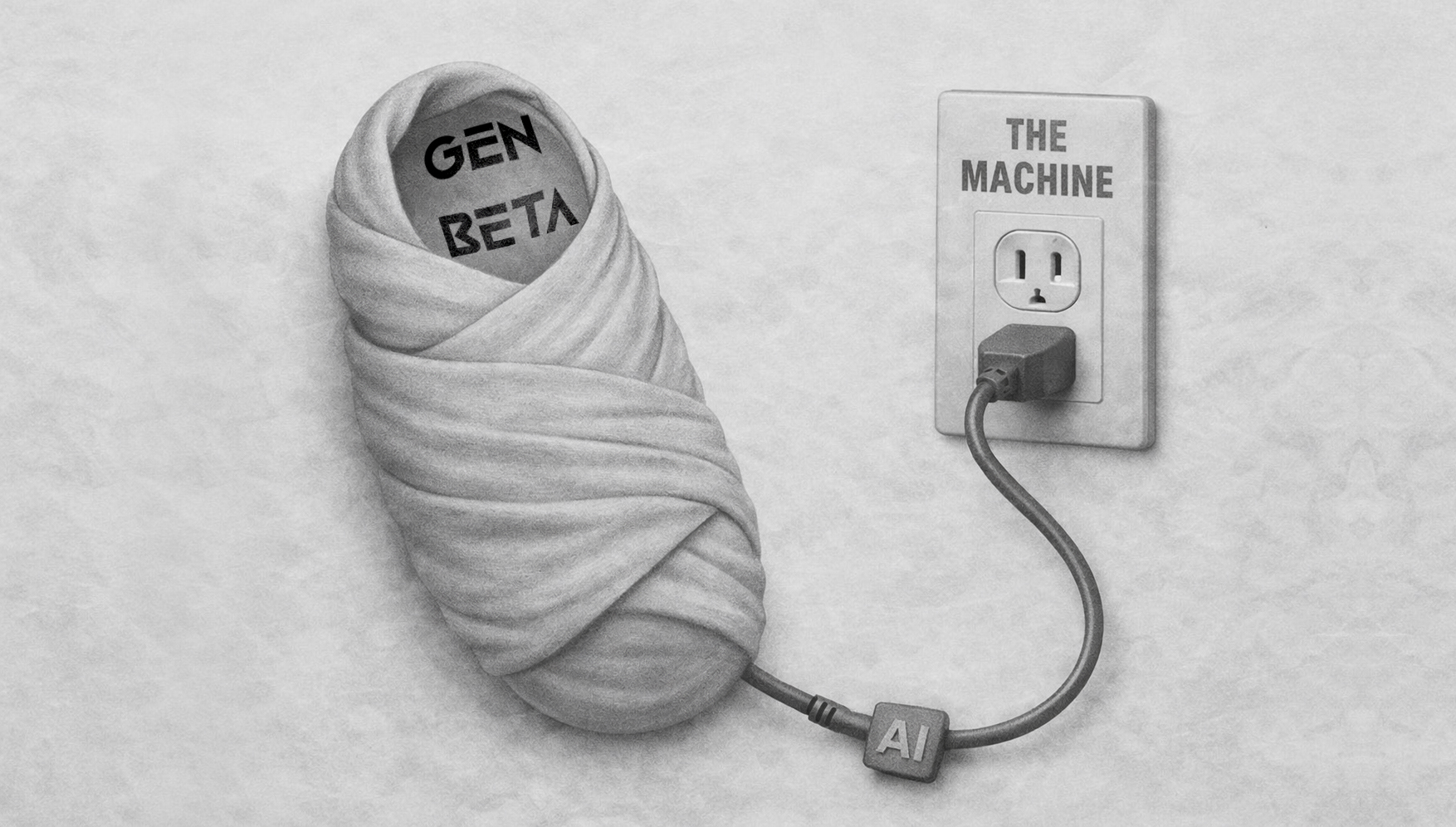 Collide essay The Future Is Born: Gen Beta has arrived The latest generational cohort, Gen Beta, was officially born on January 1, 2026, marking a new era and a new generation. Explore →
 -
 Collide essay Gen Z is ungrounded and going back to the mall Positive trends are emerging, pointing to Gen Z's desire to be back in-person and in real life (IRL). Explore →
 -
 Collide essay Gen Z inspired Barnes & Noble to open 60 new locations Gen Z Isn’t Addicted to Tech—They’re Starving for… Explore →
 -
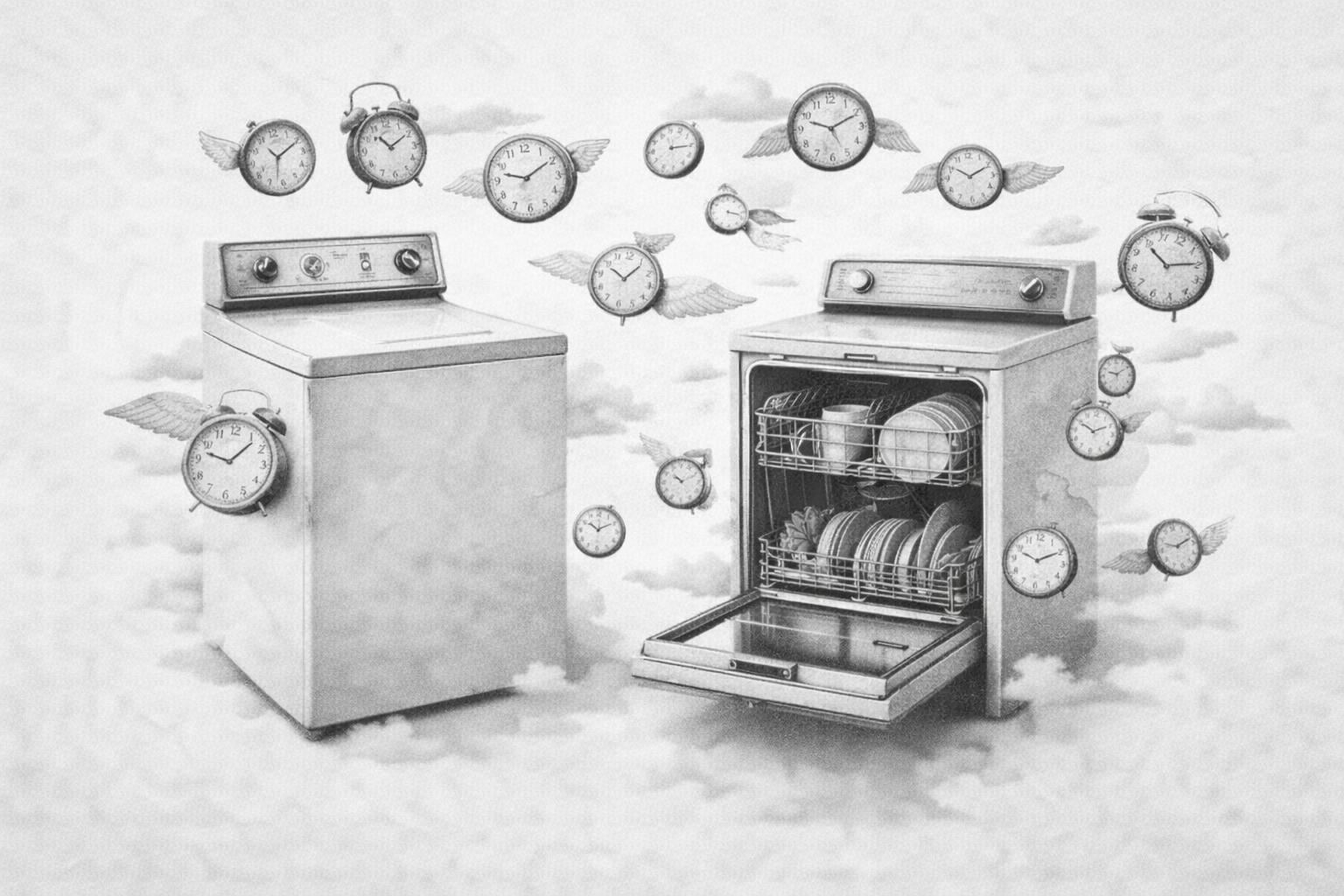 Collide essay What we lost when life got easier What washing machines and dishwashers tell us about artificial intelligence and the Velocity Gap. Explore →
 -
 Appearance Ryan Vet on Workforce Alchemist: generational change, AI, and workplace friction Generational futurist Ryan Vet on the Workforce Alchemist show: the generational pendulum, why leaders fear the young workers who just want to be led, and why removing friction quietly erodes a team's ability to think. Explore →
 -
 Appearance Ryan Vet on A Geek Leader: AI and cognitive erosion Generational futurist Ryan Vet joins the A Geek Leader Podcast to unpack what AI will not change, the cognitive erosion already underway, and the seven forces moving the generational pendulum. Explore →
 -
 Appearance Ryan Vet on The Human Factor: the generational fault lines of transformation Generational futurist Ryan Vet on The Human Factor Podcast: why the same change initiative lands as opportunity for one generation and threat for another, why removing friction backfires, and why leaders who stop apologizing lead better. Explore →
 - speaking Keynote: A Familiar Future Explore →
- speaking Keynote: When Generations Collide Explore →
Ryan writes one free essay a week. It's called Collide.
How generations are reshaping work and home. Practical, research-backed, and delivered weekly. Read it at RyanVet.com/collide.
Links from this conversation
Full Transcript
The complete conversation between Vincent Hovorka and Ryan Vet, transcribed in full. Key terms link to the ideas behind them.
Thank you, Ryan, for coming to my Business Breakthroughs podcast. I have managed to look at you, and I have seen that not only have you done some amazing things building companies, 750 million valuation, exited, speaking all over, thousands of presentations, but when I was watching your show reel, I've seen a common friend, Larry Long Jr.
He introduced you to some of the stages.
Yes. And he's coming here to Scotland in June. We'll be doing something together. So it's so nice to see how the world is small, that through those connections you can meet some interesting people. So thank you very much for coming, your precious time from your day and coming to this podcast. Would you mind sharing with us a little bit about what it is you do right now, because I know you are a futurist, you are thinking ahead and helping companies as well. Tell us a little bit about yourself so we can really get to know you.
Yeah, I appreciate it, Vincent, and it is a small world. Larry's a good, good friend. He lives right down the road from me here. But my background, like you said, it's been entrepreneurial. I spent a lot of time in the venture-backed startup world, and grew and scaled companies of all sizes. Some pretty big, some insignificant, and some didn't make it. That's just part of the nature of the business. But in 2021, I left that world from an operational standpoint and being in the day-to-day, either the president or CEO of these companies, and really started looking forward to what it was that I wanted to do with the next chapter in my life. And as I reflected on almost 20 years in the venture-backed space, I really realized there was an opportunity to help business leaders and entrepreneurs look forward into the future. And that's what I devoted a lot of my time and research and writing and speaking to, is saying, hey, I've had a lot of great experiences, happy to share those. But history repeats itself. There's nothing new under the sun. And at some point, as we watch, there's kind of a pendulum swing that goes back and forth. And how can we as business leaders, entrepreneurs, investors take that information and be more successful into the future?
Yeah. Yeah. It's nicely said. I love it. I once was on an event. It was actually with Tony Robbins. It was his Business Mastery, and they were nicely sharing the cycles which you are going through, like the smaller cycles, but then there were the big cycles, and it's by studying the history, what everything happened in the past, so how it's repeating in the future and how it's going to go. And it's very good to know these things, because when I didn't know, for example, I felt stressed sometimes in my business, like, ah, this is happening. But then when I knew, I'm like, actually it's normal, my business is that size, it's normal I'm missing a cash flow, it's normal, I'm in that phase. So you are basically helping those companies to navigate through that. So tell me some of the things that you see, where is the future coming. Obviously AI is a big topic, so I can see that you speak on that as well. So can you tell me maybe a little bit about that and how the future looks like from your point of view?
Absolutely. One of the biggest questions I get, whether it's from meeting planners or even teams I work with, is the AI question. And I think there's a lot of people out there that proclaim to be an expert, and I am very bold in saying I am not an expert. I was writing algorithms on paper and whiteboards back in 2009 through 2019. So I have a little bit of experience, but nowhere close to an expert. And I think really what I try to help people understand when we look at AI is, AI is moving faster, it has wider reach than some other innovations. But we look at any innovation in all of modern history and we see the same acceleration pattern. So you see the automobile. The automobile broke us out of neighborhoods and made communities and cities, and then we could travel. You look at the assembly line, even that built the automobile, and some of the implications there. It put people out of jobs, but now people had to build conveyor belts and figure out systems and processes. You look at the computer and internet. So you keep going. And I think one of the most profound questions, and it was years ago that Jeff Bezos is sitting on a stage at one of his conferences for AWS, which is basically the server farm that runs half the internet. He's sitting there, I'm tired of people asking me what's the future look like. He instead says, we have to ask what's not going to change. And I think that's what's really important for us as business leaders. There's all sorts of new innovations that are always going to disrupt, and AI, granted, has touched more areas and has accelerated faster and been adapted more quickly than anything in the past. So that is worth noting. But at the same time, yes, it's going to displace jobs. There's no argument there, but it's also going to create whole new economies that we don't even know and can't fathom yet.
Yeah, absolutely. Yeah, I actually seen that interview with Jeff Bezos, like what was not going to change, and then just looking at those things, because this is where I think a lot of businesses, I have businesses as well, to focus on, because these are the predictable things which we know are going to be there and they're not going to change. So what would you suggest if, let's say, there are some business owners, and obviously we are helping businesses to scale, like what will be some of the things which you think are not going to change from your point of view, what people maybe can look at and focus on? Because for example, I had a holiday-let business, and it's nothing to do with AI, but because of new licensing in Scotland, that disappeared, you know, and I had to close it all. And then after five years of building the company, making good money from day to day, I had to close because of the new licensing. And five years ago I didn't know that something like that can happen. But I think if someone like you who is actually looking into the future, then you could maybe predict that, because you might have known, actually, New York, we can do Airbnb, or we cannot do it in here, and that's going to come into the business cities as well. But I never looked into things like that. So because you are an expert in those areas, what would people think would be safe for them to do if they are running their business, and they're like, yeah, it's a good place to be, or maybe change it?
Yeah. I think the first thing, forget industries for just a minute and let's talk about a business regardless of the business. You've got to focus on your leadership skills and how you lead your team well, and how you serve your client well, because businesses can't exist without that. Businesses can't exist without customers or clients. And most businesses, not all, can't exist without team members. And so I think those are the two things that you need to focus on above all before you start figuring out, how do I use AI, where is AI going to interrupt? It's how can I make sure that my company is future-proof because we serve the people well. Once you do that, they'll adjust to the changes that come. So I think that's step one. Step two is, okay, let's look at the economies of efficiency that we can implement into our business today. And there's quite a few of those. So AI can take out a lot of menial, repetitive tasks. There's a lot of money being invested right now at certain levels of an organization that will get replaced, and I don't think there's anything inherently wrong with that. The question is, if you replace that task, do you have to replace that person, or can that person now manage AI tasks and they actually accelerate their capacity 10 times or 20 times or 30 times? So I think that's something that's important, and I think it's forcing human creativity. We've already seen mass layoffs in the development space, mass layoffs in the design space, and video editing is right on the tail here. There's some new cloud co-work skills that have come out that integrate with Adobe Premiere and Final Cut Pro that edit multicam footage better than most humans and in a fraction of the time. So video editing is also next on the chopping block if you look at the creative services, and those are some of the most expensive things, development, design, and video. And if you're cutting those, that's going to allow cash in your business to invest in other areas. And I think you really need to figure out, okay, if we can repurpose these roles, where can we invest that cash into the future? Because the customers are going to expect more. The customers want that real experience. We saw an interesting trend in the United States here. Gen Z is actually returning to malls, to shopping malls. They're returning to department stores. Barnes & Noble, a popular bookstore, is opening 60 new locations, increasing their footprint significantly, because people want that in-person experience. Starbucks internationally has shut down a bunch of locations, but is focused on their larger locations, and is putting in comfortable seating and making it feel more like a living room, and they're investing a tremendous amount of money in that. So people still want to interact with human beings. And I think that desire is actually increasing more now. And so as you save money here, in certain repetitive tasks or creative services or the many places that we're going to be able to save money, the question is how can you invest in the people experience, because the people that focus on that first, the businesses that focus on that first, will ultimately win.
Yeah, absolutely. Yeah, it's very good. Thank you for sharing. For example, one of the things, I'm not a big fan of webinars or virtual things. I know you can reach a lot of people, but from what you mentioned about people returning to malls and doing things like that, one of the things which I do is masterminds or in-person events, and I really see that people are really hungry for it. Like they want to come, and when they experience it, they see that it's much better than just being on a virtual event. And I barely do any, I still need to do some webinars, or we do it there like that, because you are in USA, I'm here, different. But I think people will be more and more hungry for that in-person experience, because we are social creatures, we want to speak with people, we want to be surrounded, and all this technology is kind of dividing, so we need to come together. And I think businesses that focus on those experiences in person, and more of that, they will definitely have some kind of advantage. And where do you see yourself going, basically? If I read it right on your website, you've done over 10,000 presentations. Obviously you speak all over. Like where do you see yourself, how much more you want to accomplish, because it seems like you have done a lot? Oh, also I have a note, if it's correct, your newborn daughter, she'll be two, right? Adel, Adia.
Ellen. Yeah, she'll be one. Yep. One.
She's one. She'll be two in, no, she'll be one. Yeah, she'll be one. But what made the note, why I've seen it, because she was born on the 17th of July, right?
Yeah. As my daughter.
Oh, no way.
I have three daughters and my eldest is the 17th of July, but she's 2018, so she'll be 10.
I've just seen it on your Instagram. I'm like, huh, 17th of July, I need to mention it.
Hey, that's great. Yep. It's a good birthday. Good birthday. You know, you were asking, what do I want to do next? And I feel like I've been super blessed and fortunate to have done quite a bit, and I'm still learning every day. I think I'm learning more now the hard lessons than I was in the grind. But I think there's kind of three phases of life, and they're cyclical. Everything's cyclical. But the first one is you're grinding, and that's where most of us start, where we are just working so hard to get our break, to hit that next level, and we're just nose to the grindstone, grinding, grinding, grinding. That's phase one. I think phase two for many is growing, and not everyone gets there, but at some point you get out of the grind and you kind of have that growth where you're soaring a little bit. You're not not working, but it's just smoother. You've kind of hit those smooth waters. And then the final phase, once you've graduated, would be giving. And I feel like that's the opportunity that I have to be in right now. I love sharing the lessons that I've learned. And often when I share what I've learned, I reflect and I learn more about what I did right, and usually more what I did wrong on the journey. And so that's really where I'm at. I plan to continue down this line of giving, and writing. I write every week in my newsletter. And that's amassed quite a big following. It's grown over 20 times in the past nine months. So it's growing real fast, thanks to conversations like this and being on stages. And I just absolutely love the opportunity to be around and help people think about the future in a helpful way that's not scary necessarily, but also make them aware, because some things that we do need to be cautious of.
Perfect. Can you tell me about some, for example, let's call it negative or bad situation which happened with your business, maybe this business, maybe in the past? Very often we speak about the good stuff on the podcast or with people, and then sometimes people who are watching or listening, they're like, yeah, everything is good, but it's not good for me, I'm going through this. So if you went through any difficult situation, you don't need to share what it was if you don't want to, but how did you overcome it? Like what was that, something like, if you had one like that, which I think you had, because if not, I will like...
Plenty, plenty. I don't even know where to start. There are so many, and I would say for every one success you see, there's probably 10 or 20 failures behind that. You know, a really tangible example, and then I'll get into some concrete things that I've had to walk through, but for every speaking gig I get, I reach out to about 100 people to get three speaking gigs. So that means 97 failures or rejections. But I would say with the business world, it's true too. I mean, we've walked through everything from employee embezzlement to lawsuits for things that we didn't even do wrong. One lawsuit, the other company violated their contract, so they sued us. And they lost it in court, and they sued us again. So there's just all these things throughout, and I think the biggest mistakes that I look back, none of those things were fun. Mass layoffs because you're running out of cash, or you run out of cash and you can't deliver, because those are real stages that happen in businesses. People don't talk about that. They talk about when they make the nine-figure businesses, but no, there's times when you're not sure you're going to make payroll, and you're begging people to pull forward invoices and doing some really risky things. And so I think, you know, slow and steady wins the race for a long time in the venture capital world, and still to this day. And one of the reasons why I stepped out of it slightly is it's all about how much money can we put in so you can go spend all that money to hopefully grow. And sometimes you lose it all, sometimes you win it all. But I think the businesses that I see, and the business owners I love working with right now the most, are the ones who are really disciplined. They're like, okay, I'll use easy numbers, but I made $100 this month, and my payroll is $25. That means I have $75 left over. I'm going to save half of that and then invest the next half. And then the next month they make like $1, but they still have payroll at 25. Well, it doesn't matter. They saved. And the ones that are so disciplined, those are the ones that I'm actually seeing create generational wealth that lasts forever and ever and ever. And you don't have to have this big nine-figure, $750 million company, or even $10 million company. You can have a $3 million company that would allow you to retire after doing it for 10 or 15 years, but you do it for a long time because you enjoy it and it's not stressful. And so I think anyone that pursues money as their main measure of success ultimately fails. Not that money is bad, not that you can't pursue certain goals. You should have goals. But I think when money becomes the main thing, almost every time I see those businesses get in the stickiest situations.
Yeah. Yeah. It needs to be about more than money. It needs to be a contribution, like you said, giving away, and then that ultimately can grow. Because I mean, I don't know, what are money just sitting on the account doing nothing? Like you want to enjoy it, we want to do something, it's just a tool, right? So absolutely, it's really good. So it's being, like you said, being steady and slowly grow. And I think I have to admit that was one of my mistakes when I started, not at all, but like 14 years ago. And then I used to have a food truck business and things like that, and then they would call me and like, this is a good opportunity, come over here. And then I'm like, yeah, it's a massive opportunity, I can make over the weekend £10,000 with my food truck. This is how they kind of sold it to me, that that's going to happen. And then I didn't have the money to enter. So I had to borrow the money, go there, paint stuff which I never had. And then of course it didn't work out and I lost money. And if I was just thinking like that, slow and steady, then I would never sign up. I'd like, no, maybe next year, I need to build to that. But this is sometimes the problem of also the social media, everything, it needs to be quick, it needs to be tomorrow. And that's kind of, then we make some bad decisions. But I have learned, I was sharing actually on the podcast earlier, on a different one, that we overestimate what we can do in a year, but underestimate what we can do in 10. And I'm really now, when I'm older, I'm like, yeah, I need to go, I have time. I don't need to rush. There's important things, you have a family to take care of, but I don't need to be a millionaire tomorrow. There's time for that. There's no rush to anything.
Yeah. I think you're completely correct. And I mean, one of my, I had a goal at what age I would have a million dollars. I achieved that goal, and then a year after I lost it, because I kept pushing for the dollar. And money comes and money goes. But I think there's a lot of truth to that. It's when you take sight off of why it is you're doing what you're doing, I think failure is lurking around the corner. And the majority of businesses fail. I mean, we're talking about nine out of 10 worldwide. That's a significant number, and a lot of times it's running out of cash or getting burned out. But if you start a purpose-driven business and you say, hey, whether it's the food truck and I want to make the best hamburger, or I want to have the best customer service, or the fastest turnaround, whatever your purpose is in that food truck, do it and do it well and make that what you obsess over. And when you obsess over that one thing, you'll excel. But it's easy to get distracted. And I think social media does throw you off. You see these people that are flying on the jets, or these lavish five-star vacations and fancy resorts and butlers and all that at a mansion in the Caribbean or somewhere, and you think that you can do that. And yeah, you probably can, but you don't know how long it took them to get there. And most of the people that post that, I found, can't actually afford it. I have a membership-based business, and it's amazing the credit cards that bounce on their dues to be a part of that membership-based business, and they're the ones who are flying first class and all that. I'm like, but you can't even pay your couple hundred a month membership fee. So it's not always what it looks like.
Yeah. Yeah. It's exactly like that. I'm part of the JT Foxx community and being coached by him, and then he always says, like, I don't know the numbers exactly, but he's like, on Instagram there's like 200,000 billionaires, but in the real world there's only like 3,000 of them, but on Instagram there's so many, right? So it's, and especially now with AI, people can fake anything. It's so difficult to now believe what is true, what is not. So that's why it's, I think, very important to meet people in person and build a strong relationship, because you cannot fake that, because you can feel it from the people, where they are, on what level, when you speak to them you know it. Because if they show something online and then you speak to them and they act differently, you can smell it.
You can, absolutely, absolutely.
And have you spoken to the majority of the countries, like, or do you focus on USA, or have you spoken in Europe, Australia, everywhere, where do you go with your message?
Yeah, I've spoken in person physically on four different continents. And then virtually, still four continents actually, but more countries virtually. But I think the majority of my research is primarily focused on the UK and Western Europe. The majority of my research comes from the United States, Canada, and then Australia and New Zealand. But when you look at my generational research, that's really where the body of work lies. And it's applicable across the globe. But you have to pick one data set. Otherwise your books and essays would be so long that no one would read them, to peel through all the data that I look at.
Okay. So it's actually a lot of Europe then. You mentioned UK.
Yep. Yep.
Ah, okay. So do you come here, because you live in New York, or...
I live in North Carolina.
North Carolina. Ah, okay. So, like Larry, you said he's actually close by. So yeah. Oh, okay. Yeah. Because I'm planning to, because he's coming here to do some things, and then I'm planning to take some of my clients to come to your North Carolina region for speakers and do some speaking there. So really good. I've never been to North Carolina. I've been only once in USA last year actually. So, but I've been pretty much in a hotel only. So I need to see something.
Yes. Yes. That's the bad part about speaking. Everyone's like, oh, you go to all these cool cities. I say, I see the airport, I see the inside of a cab, I see the inside of my hotel room, I see an audience, and I leave. So...
Yes. Yeah. It's not that simple. Especially, like, how do you balance if you travel a lot? That's actually a good question, because I have three daughters. I think, if I've seen on the photos, you have three kids as well, right?
I do. Yes.
Yeah. So how do you kind of balance that when you go somewhere for a longer period of time, or like then it's like, ah, daddy's away, you know, like your wife and everything? Do you sometimes travel together? How does it work? Because I think a lot of speakers kind of have that kind of a thing.
Great question, and one of my favorite questions to answer. When I was in the VC world too, I was traveling a lot, so the travel is not new for my family. But one of the things that's really important is I'm always home on Sundays. I will not take anything that requires me to travel on a Sunday. My family knows that no matter what, I'm going to be there, and if not, they're with me. That's kind of the rule. So there is one guaranteed day a week that we are always together. We are always doing stuff together, and usually it's more than one, but that's kind of rule number one, is there are no Sundays where I'm not with the family. Period. Full stop. And then the other thing is, I have done more and more local speaking, and local by United States. I don't actually do much in North Carolina, ironically, but so I will do a lot of day trips. So I'll fly to New York for the day, or I'll fly to Orlando for the day, or Atlanta or Chicago. LA you can't really do it in a day, but I'll fly there and then redeye home. So, because I'm speaking for an hour or two hours, most of these cities I can get to, speak, and fly back, and that way I'm missing maybe one bedtime. And sometimes I'm not even missing bedtime. So that's really important. So even though I speak quite a bit, some of those are at the same conference too. So for example, I had a conference that wanted me to speak three separate times on three separate days, three different talks. I said, since they're each an hour, I can speak three times in one day. I'll be in and out, and that's it. And I also, different than some speakers, I charge per day. And that's very intentional. I could charge per session, but I know how much my day is worth, first of all, but second, if they want me for a second day, they have to pay the second day whether I'm speaking or not. And that will help the meeting to narrow down how long I'm there. And there's disadvantages to that. Professionally, it definitely stunts some of my ability to network or spend more time with the meeting planners or meet other people there. But at the same time, the most important thing is not business. It's family and the relationships that you have, because that's something that you can't buy.
Yes. Yes. It's actually very interesting when you mention about charging per day. I've never heard anybody say that they charge per day, because obviously I'm a member of the PSA here in the UK, but for three and a half years I go to a lot of conferences, but all of these speakers charge usually per keynote or something like that. I don't really do much keynotes. I usually go, I mean I do, but it's not like my primary thing where I would get paid. I just go, I speak for free, no problem, and then people come to my mastermind, that's kind of that kind of approach. But per day, it's interesting. Yeah, but it's like they want you for the next day, so you either pay, or if not, then you are with your family, that's more important.
Exactly, and it's afforded my kids the opportunity to travel. My oldest is only six, and he's been to 27 states I think and three countries. My middle, I think like 18 states, and also three countries. And then my daughter, not as many. But she's only nine months old, so she's got a little bit more time to catch up.
Yeah. Yeah. No, I totally see that. Like, I think my youngest, two and a half, she already traveled in a plane, I don't know how many times, 12, 15 times already. I'm like, I was first time on a plane when I was like 14.
Right. Right.
Yeah. But I've done the same, like there was this global speaking summit in Australia. So I'm like, yeah, I booked the ticket a year and a half ago on the conference, and I'm like, okay. And then I told my wife in a message, like, we'll go as a family, all of us. And then six months before it, I'm like, oh no, now it's about, we need to plan and we need to go. So we hired a motor home and we spent our six weeks in Australia traveling around and going to the conference, and it was really nice. Like kids enjoyed it a lot. Yeah. So I'm trying as much as I can to take them, but I cannot do it all the time, because obviously as a family of five it adds up with everything. But trying to take them also with me. We, fortunately, because we decided like that, they don't need to go to school, we do homeschooling, so we can actually do whatever we want. So that's kind of a good thing. I don't need to ask anybody for permission. But yeah, it's good. Yeah, it's nice to meet someone like yourself who is having, you know, three young children as a speaker, and doing similar things. Obviously you do bigger businesses, but it's good, you know, I like it.
It's fun. It's fun. It's good to keep the family center.
Yeah. Okay. So I also seen in here, the newsletter you mentioned that it grew like 20 times, is that the one called Collide?
It is, yep.
Okay. And what do you mostly speak about there in that newsletter? Is it about the future, or what is it about mainly?
It's looking at the current generations in society, from the silent generation all the way to Gen Beta now being born in 2026, and it looks at all those generations, what is going on in society and culture, how that impacts leaders, parents, businesses into the future. So it takes that lens and says, hey, kids these days have this problem, or people retiring this day have this personality trait, or this generation accumulates wealth but doesn't spend it. So how do you react to those different things?
Mhm. Okay. Okay. Wow. And how long are you already doing that?
It'll be one year next week that I've done.
One year only.
One year.
Wow. And you already have 17,000 people subscribed to...
Yes. Yes.
Wow. I'm doing things for five years and I have like a thousand members. Like how do you do it?
You know, I write, I try to write really good content as much as I can. Not all of them are home runs. But then I ask intentionally, people, to share it. I think that's one thing that I've learned. If you want someone to share it or subscribe, you've got to ask for it. And so I'll ask my most loyal subscribers, say, hey, I see your open rates, you know, 95% over the last two months, would you mind sharing this? Or who do you think needs to hear it? And I also narrate it too, so you can, if you don't like reading, which ironically, as much as I write, I don't prefer reading. So I will narrate it, and it's like a little audio book for each newsletter, and I think that gets a lot of traction as well.
Oh, that's really good. Yeah. I, because I also prefer to listen to things than just reading, because otherwise I just, it came so quickly. So I like to listen, because for me it's also efficient, and then if I really want to, I can then go and, for example, get the book and read it again, because it's really good. So I think this is really interesting concept that it's good. I also seen that you have on YouTube like 100,000 subscribers. This is really good.
Yeah, I do.
And you do have your own podcast, correct?
I do. It's just reading the newsletters is what the podcast is.
So the newsletter comes out on Tuesday, and every Thursday you can get the audio version.
Yeah. So it works like that.
Okay. So you don't really get their guests or something like that. So it's more the reading part.
Correct. Correct.
Okay. Good. Good. Good. Perfect. Yeah. I mean, is there anything else you feel like you would like to share on this podcast today with me before we'll wrap it up?
I don't think so. I appreciate the opportunity, and I love always knowing how small the world is and how we can make an impact where we are, and it matters, the people you invest with, because you never know when Larry Long Jr. is going to be in Scotland.
Yes. Yeah. Yeah. Absolutely. Yeah. Yeah. Amazing. Perfect. Thank you very much, and then yeah, I'll look forward to meeting you.
Awesome. Thanks, Vincent.
Lightly edited from the podcast's automated captions for readability.