The short version
On The Wake Up America Show with Austin Petersen (October 6, 2026), generational futurist Ryan Vet took the final twenty minutes of the broadcast to unpack his COLLIDE essay on the kindergarten class of 2039 — the children starting school this fall, nearly three-quarters of whom were born to millennial mothers in 2021. He separated the predictions that are already fact from the ones that are still bets: 38 states plus DC now restrict student phones and more than 30 state education departments have issued AI guidance, while optional driver's ed and a generation that never builds a project the slow way remain forecasts. His framing throughout is the Generational Pendulum, with the Velocity Gap — technology outrunning human wisdom — as the reason the usual predictions may not hold. His closing argument is that the future can be more human, citing Barnes & Noble's 60 new stores and the return of the mall, but only if we train a generation that can still enjoy being in a room with people.
Ryan Vet · Radio on The Wake Up America Show with Austin Petersen
Austin Petersen had spent most of the hour on Social Security — the Cato survey, the 2032 trust fund deadline, the housing squeeze — before handing the last stretch of the broadcast to a different kind of generational math. He has a son due at Christmas. He wanted to know what is coming for the kids.
Ryan Vet's answer is an essay he had already written: eight predictions about the children who started kindergarten this fall and will graduate high school in 2039. Some of them, as Austin notes on air, have already stopped being predictions.
Ryan's Big Takeaways
- 01
Four of the eight predictions have already come true, which is the uncomfortable part.
Austin reads the scoreboard before Ryan even speaks, and Ryan confirms it. The class of 2039 is almost entirely the children of millennials — 74.5% of 2021 births went to a millennial mother. They will be the first cohort in six years for whom a classroom mask is not a memory. The share of K-12 students being homeschooled doubled between 1999 and 2023, from 1.7% to 3.4%, which Ryan expects to keep climbing as private school enrollment rises and learning co-ops multiply: "it's not just public school, homeschool or private school." And prediction three, the split he had framed as a forecast, is visibly happening — some millennial parents doubling down on devices, others retreating entirely into free play and nature-based learning.
The Generational Pendulum → - 02
A school that bans the phone and issues a Chromebook has not reduced screen time. It has relabeled it.
This is the sharpest correction Ryan makes on air, and it cuts against the easy headline. Yes, 38 states plus DC now restrict student cellphones, and Austin's framing is tempting: are we raising the first generation that gets less screen time at school than their parents get at work? Ryan's answer is a qualified no. "It's important to note that the ban is on the personal phone being brought into the classroom in most cases. It's not on devices as a whole — so they might not allow phones, but they still have the Chromebook." He puts the absurdity plainly: "It's a little bit backwards, right? It's like you can't have your phone, but here's a computer to stare at all day." Some districts are doubling down on devices while others ban them outright, which means the policy is not a trend so much as a fault line running through a single cohort.
- 03
When a child can speak any question into an answer, they stop learning to trust people.
Austin asks what happens to a generation that never needed to read to find something out, and Ryan argues both sides before landing. Oral tradition predates the written word, so knowledge passed by voice is not new. What is new is the absence of the person. He makes the case through the junk our parents told us — the bread crust, the shower during lightning, the knuckle-cracking and arthritis: "some of those might be true, some of them might not be. But part of that is building trust and rapport with your kids." The transaction was never purely informational. "If you're asking a device, you're now teaching the kid to trust a device instead of trust the human beings that are there leading them."
Cognitive Erosion → - 04
Take away driver's ed and the rite of passage survives. It just moves.
North Carolina already says the operator of a fully autonomous vehicle needs no driver's license, so Austin asks what replaces the sixteenth birthday. Ryan goes back further than the car — to the horse, which carried children far younger than sixteen to market. The car's real cargo was never transportation: "the rite of passage is freedom and independence. That's really what the car signified for so many people." Autonomous vehicles may deliver that earlier, which he calls a potential advantage. What they remove is the friction of a human encounter — the hailed cab became the Uber became the Waymo where you never state a destination or speak to anyone. And the broader drift is in the other direction anyway: generations keep pushing every rite of passage later, with Austin noting a nephew who simply does not care about driving.
- 05
The paper mache earth beat every 3D print in the room.
Ryan wrote the prediction that these kids will never build a project the slow way, and then his first grader handed in a planet. They own a 3D printer. His son chose flour, water, salt and glue. "It was not how I would have made it, but it was perfect because he did it." The presentations are where the argument closes: child after child described what their mom or dad had made, and his son explained the mixing ratio he worked out himself. The parents' Jupiters and Saturns would have earned fine grades. "They weren't as proud as my son was with his lopsided earth." Ryan's conclusion is about ownership, not craft: a model you generated and printed "might have been your idea or your inspiration, but it's not your work, and the pride just isn't there."
The Friction Doctrine → - 06
The Velocity Gap is why he will not fully commit to his own forecast.
Asked whether the class of 2039 will marry and start families earlier than their millennial parents, Ryan gives the pendulum answer and then undercuts it. Tracked back to the early 1900s, the pendulum would swing them toward a Silent Generation pattern: marry young, have children young. But one of the seven influences on generational momentum is technology, "and we're in a moment in history where technology is moving faster than human wisdom can keep up. I call that the Velocity Gap. It's accelerating so quickly that you can pretty much throw all the predictions out the window." His worry is that every genuinely good technology has also purchased individualism — the printing press meant you no longer had to sit and learn from someone; the car opened the country and hollowed out the neighborhood.
The Velocity Gap → - 07
His advice to parents is not a ban. It is a boundary, and it starts with the adult on the couch.
Austin asks who closes the velocity gap — the parents who remember dial-up, or the kids who can fake a video of anyone. Ryan rejects the premise that you can solve it by subtraction. "You can't take away the tools. Don't say you can't have a phone and don't say you can't have AI. The question is, in the world in which we live, what are the boundaries and things you put in place?" Then he turns it on the parent, and includes himself: "I'm a living paradox. But if you're sitting with your family and you don't want your kids to be engrossed in their phone when they're a teenager, don't be on your phone on the couch." The skills he thinks will matter most are the ones that cannot be delegated: "if they have the logic to communicate with another individual, they can tell ChatGPT what to do. It's not rocket science."
- 08
The closing case: the future is more human, but only if we train for it.
Austin's last question is about the 2040s workforce, and the Wall Street Journal's running complaint about managing Gen Z. Ryan grants the disruption — humanoids already doing dish work, robotic arms as fry cooks, jobs that do not exist yet arriving alongside jobs nobody expected AI to take. Then he points the other way. Barnes & Noble opened 60 new locations. Malls are seeing a resurgence for the first time in decades. Starbucks, while closing stores, is reinvesting in bigger and more comfortable seating. "There's a future where the future is more human, if we pay attention to it." The condition is the catch: "if we raise a generation that is locked into AI, they're not going to know what to do when they get out in public," so the in-person renaissance only pays off for children taught how to be in a room with people.
Ryan's segment starts at 42:16, and it is not the one in the episode title
This is a full broadcast of a daily radio show, and the headline topic is not Ryan's. The first forty minutes belong to Austin Petersen's Social Security argument — the Cato Institute survey finding that 89% of Americans 65 and older would protect current benefits, the 2032 trust-fund deadline, the squeeze on first-time homebuyers — and to a debate with Camellia Peterson on intergenerational fairness and family responsibility.
Ryan comes in at 42:16, for the last twenty minutes, on a different generational question entirely: not who pays for the retirees, but what we are handing the five-year-olds. He does not weigh in on Social Security, trust-fund policy or taxation, and the recap above covers only his segment.
What makes the segment work is that Austin had read the essay. He opens by reciting its scoreboard — the 2021 birth cohort, the 38 states, the AI guidance, the doubled homeschooling rate — and then separates the facts from the bets himself before asking Ryan to defend the bets. It is a rarer kind of radio interview: the host arrives having done the reading, which means the twenty minutes go to the arguments rather than the summary.
Standout Quotes
It's a little bit backwards, right? It's like you can't have your phone, but here's a computer to stare at all day.
If you're asking a device, you're now teaching the kid to trust a device instead of trust the human beings that are there leading them.
The rite of passage is freedom and independence. That's really what the car signified for so many people.
It was not how I would have made it, but it was perfect because he did it.
They weren't as proud as my son was with his lopsided earth.
We're in a moment in history where technology is moving faster than human wisdom can keep up. I call that the velocity gap.
You can't take away the tools. The question is, in the world in which we live, what are the boundaries and things you put in place?
There's a future where the future is more human, if we pay attention to it.
Drag, swipe, or use the arrows to explore
Frequently Asked Questions
What is the class of 2039?
It is Ryan Vet's name for the children who started kindergarten in the fall of 2026 and will graduate high school in 2039 — mostly born in 2021, and nearly three-quarters of them to millennial mothers (74.5% of 2021 births, by the figure in his COLLIDE essay). He uses the cohort as a forecasting device: by reading the conditions of their first five years, you can make defensible predictions about the adults who will enter the workforce in the 2040s.
Which of Ryan Vet's eight predictions for the class of 2039 have already come true?
Four, by his own accounting on air. Their parents are almost entirely millennial. They will be the first cohort in years with no memory of a classroom mask. They are roughly twice as likely to be homeschooled as their parents were — the homeschooled share of K-12 students doubled from 1.7% to 3.4% between 1999 and 2023. And the predicted split between parents doubling down on technology and parents retreating to free play and nature-based learning is already visible. The remaining bets are optional driver's ed, never building a project the slow way, and being the first generation that can be convincingly faked.
Do school phone bans actually reduce screen time?
Not necessarily, and this is Ryan's main correction on the broadcast. 38 states plus DC now restrict student cellphones, but he points out that in most cases the ban covers the personal phone brought into the classroom, not devices as a whole. "They might not allow phones, but they still have the Chromebook." He calls the result backwards — you cannot have your phone, but here is a computer to stare at all day — and notes that some districts are doubling down on devices while others ban them outright, which splits a single cohort rather than setting a single trend.
What is the Velocity Gap?
It is Ryan Vet's term for technology moving faster than human wisdom, morals and institutions can adapt. On Wake Up America he uses it against his own forecast: the Generational Pendulum, which he has tracked back to the early 1900s, would predict the class of 2039 reverting to a Silent Generation pattern of marrying and having children young — but because technology is one of the seven influences on generational momentum and is currently accelerating, "you can pretty much throw all the predictions out the window."
If cars drive themselves, what replaces the driver's license as a rite of passage?
Ryan argues the rite of passage was never the license — it was freedom and independence, and the car was only the delivery mechanism. He traces it back past the automobile to the horse, which carried children well under sixteen to town and market. Autonomous vehicles may grant that independence earlier, which he counts as a possible advantage, and he notes North Carolina already exempts the operator of a fully autonomous car from needing a license. What is lost is human friction: the hailed cab became the Uber became the vehicle where you never speak or state a destination.
What does Ryan Vet tell parents to do about phones and AI?
Not to ban them. "You can't take away the tools," he says — the useful question is what boundaries you set in the world as it actually is. His specific instruction is aimed at the adult rather than the child: if you do not want your teenager engrossed in a phone, do not sit on the couch with yours. He calls himself a living paradox on this point. He also argues the durable advantage is in what cannot be delegated, since a child who can reason and communicate with another person can direct an AI tool: "it's not rocket science."
Does Ryan Vet think the future is less human?
He argues the opposite is available, conditionally. He acknowledges the displacement — humanoid robots doing dish work, robotic arms as fry cooks, the disappearing Manhattan taxi — but points to counter-evidence he reads as demand for human contact: Barnes & Noble opening 60 new locations, malls recovering for the first time in decades, Starbucks reinvesting in larger and more comfortable seating even while closing stores. "There's a future where the future is more human, if we pay attention to it." The condition is that a generation raised locked into AI will not know what to do with that room when it gets there.
Frameworks & Ideas Referenced
- The Generational Pendulum : Named outright, and used to explain what millennial parents are overcorrecting for: a childhood of 48 to 55 hours a week of school and extracurriculars, now producing a measurable drop in extracurriculars for Gen Alpha and Gen Beta.
- The Velocity Gap : His stated reason for hedging his own forecast — technology outrunning human wisdom fast enough that "you can pretty much throw all the predictions out the window."
- The R.E.S.P.E.C.T. Framework implied : Referenced on air as "the seven influences on generational momentum," of which he singles out technology as the one currently distorting the pendulum.
- Cognitive Erosion implied : The cost of speaking a question into an answer with no adult in the room — knowledge arrives, but the trust that used to travel with it does not.
- The Friction Doctrine implied : The paper mache earth against the 3D print, and pride as something that only attaches to work you actually did.
- Childhood Surveillance implied : Prediction eight of the essay — a cohort watched its entire life, and the first that can be convincingly faked.
Books, People & Sources Mentioned
- Millennials are raising the class of 2039 : The COLLIDE essay this entire segment works through, with all eight predictions and the sourcing for every figure Austin quotes on air. Read the essay →
- Cracking the Millennial Code by Ryan Vet : Named in Austin's introduction, and the book he says he will have to grab a copy of after the driver's licence exchange. About the book →
- COLLIDE newsletter : Ryan's on-air plug, given as a specific address: ryanvet.com/collide, free, where the Gen Z stare and driver's ed pieces live alongside the class of 2039 essay. Read and subscribe →
- Cato Institute survey on Social Security : The survey driving the broadcast's headline topic — 89% of Americans 65 and older would protect current benefits. Austin's segment, not Ryan's; he does not comment on Social Security policy.
- Camellia Peterson : The guest in the preceding segment, debating intergenerational fairness and family responsibility with Austin. She and Ryan do not appear together.
Keep Exploring
-
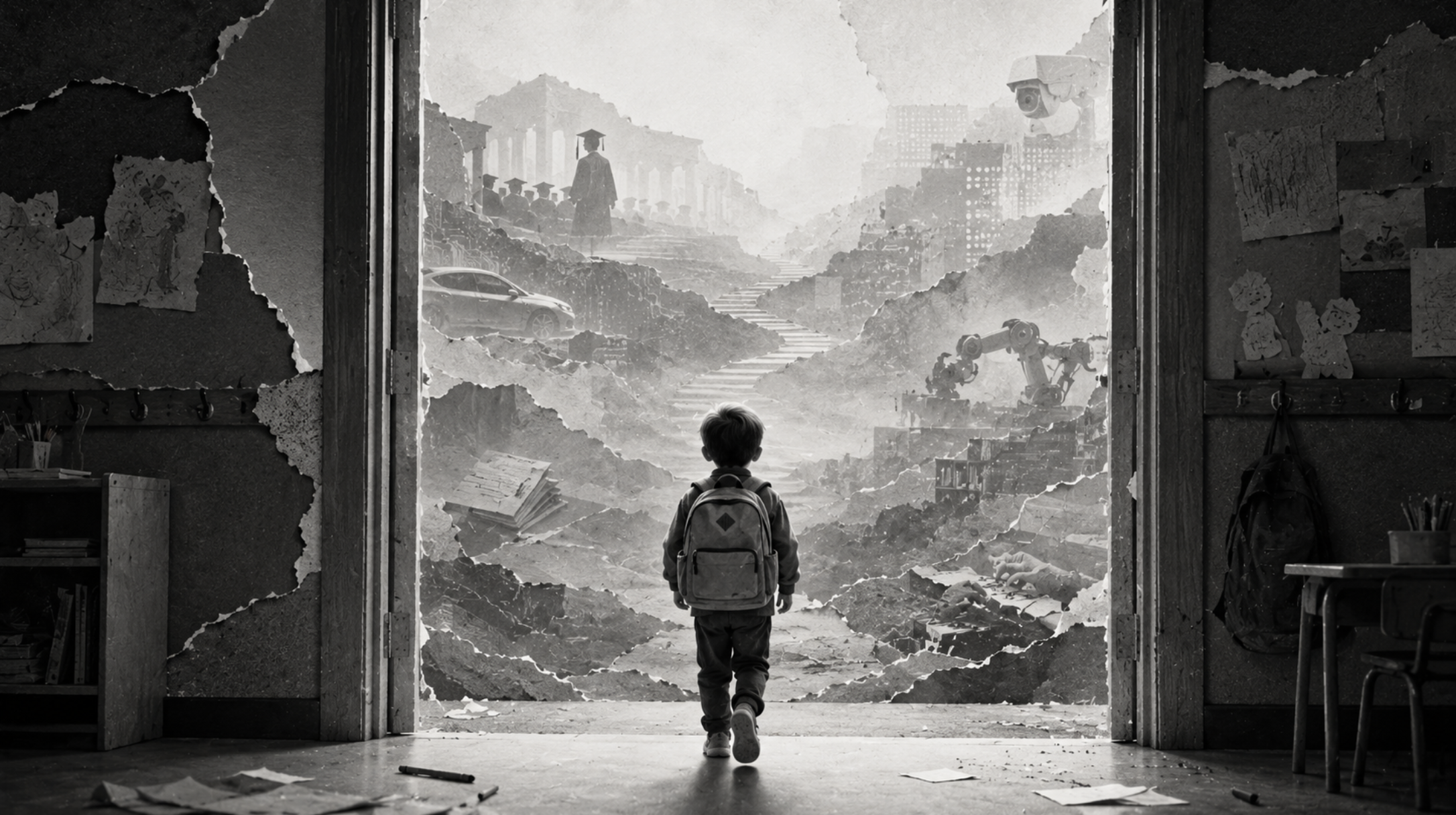 Collide essay Millennials are raising the class of 2039 Their older siblings wore masks in school. This class never had to, and that is only the first difference. Explore →
 -
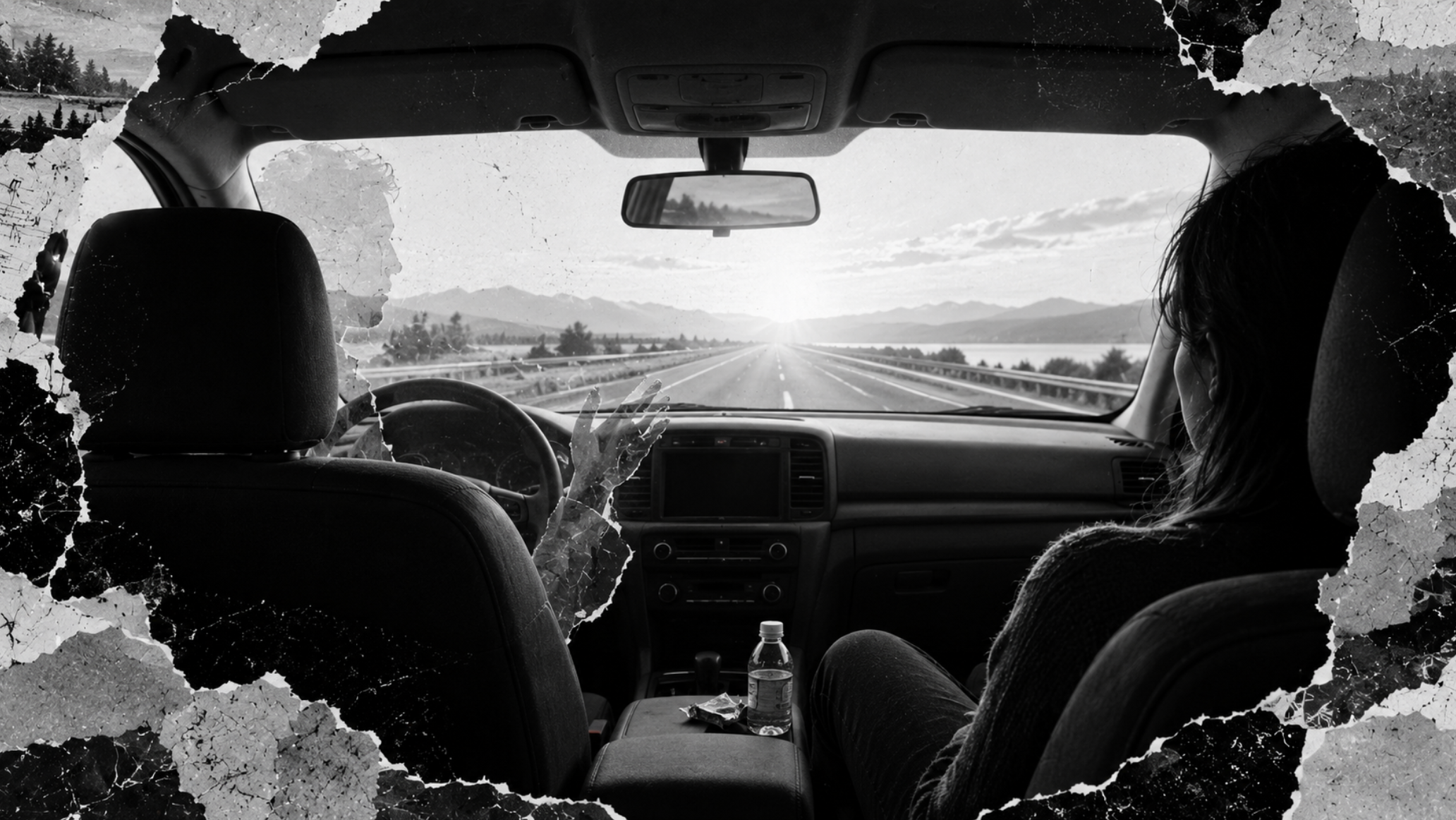 Collide essay Gen Beta may never need a driver's license A New York taxi medallion went from $10 to $1.3 million to $79,105. The license is next. Explore →
 -
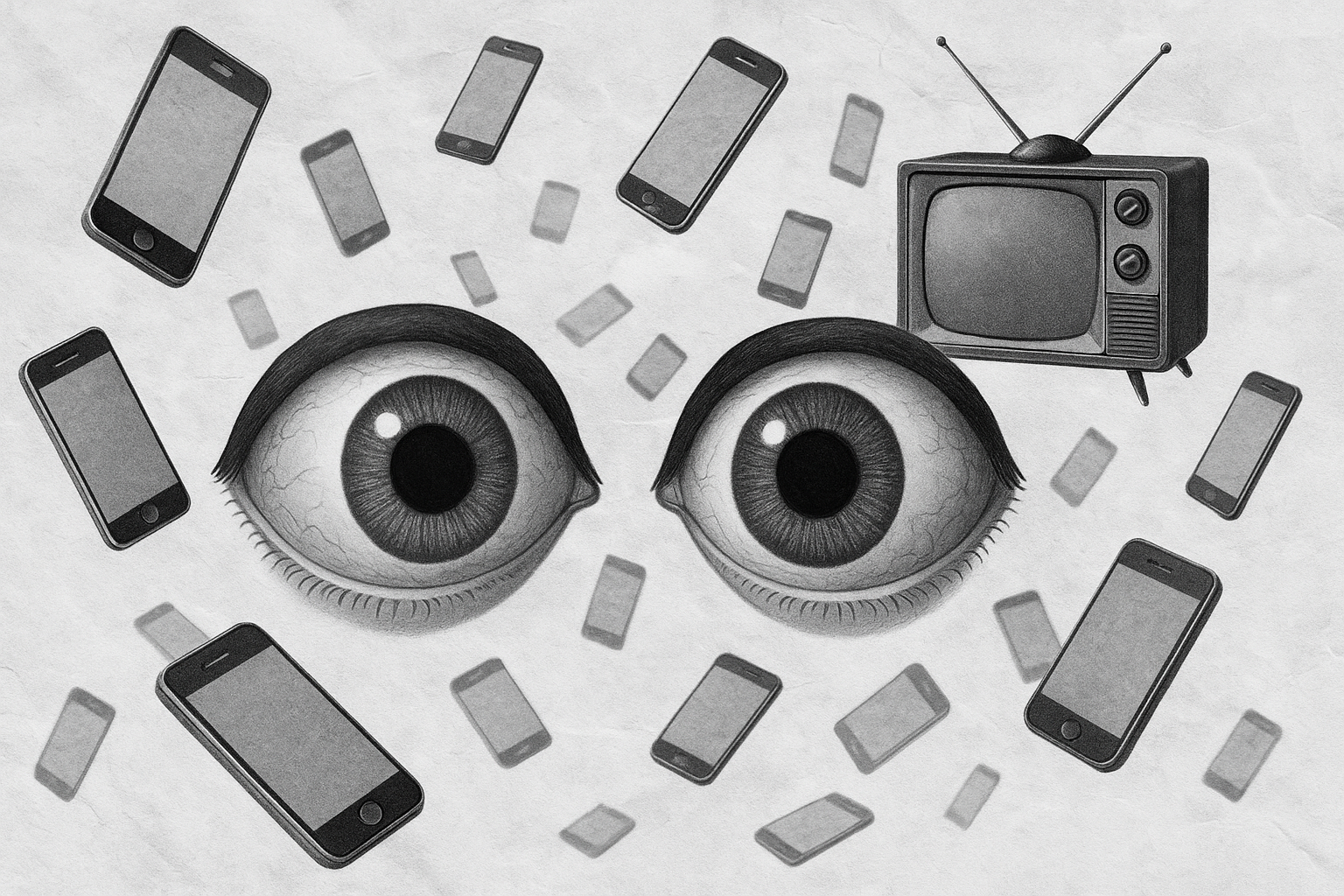 Collide essay The Gen Z stare is more than a TikTok trend From TikTok trends to the workplace, Gen Z’s blank expression reveals a deeper story about authenticity, screens, and leadership. Explore →
 -
 Collide essay Why "six seven" might be the most important nonsense you'll hear all year I didn’t want to write this one, but when nonsense starts defining a generation, you pay attention. Explore →
 - Podcast episode Millennials are raising the class of 2039 — on The Ryan Vet Show Generational futurist Ryan Vet has eight predictions for the kindergarten class of 2039. They never wore a mask. They may never need to read to find an answer. Explore →
- framework The Velocity Gap Explore →
- framework The Generational Pendulum Explore →
-
 Appearance Ryan Vet on Still Launching: Why Gen Z Isn't Broken Generational futurist Ryan Vet joins Still Launching to answer the question Gen X parents of stuck college grads keep asking the wrong way: not "what is wrong with this kid," but what the kid was never allowed to practice. Explore →
 - speaking Futurist keynote speaker Explore →
Ryan writes one free essay a week. It's called Collide.
How generations are reshaping work and home. Practical, research-backed, and delivered weekly. Read it at RyanVet.com/collide.
Links from this conversation
Full Transcript
The complete episode between Austin Petersen and Ryan Vet, transcribed in full. Key terms link to the ideas behind them.
I've got a little baby boy that's going to be born this Christmas, and so I'm curious about what's happening with the kids' generation. This fall's kindergarteners are going to be the class of 2039, and in his essay Ryan Vet notes that they were born mostly in 2021, and by his count 74% of that year's births were to millennial mothers. He also makes eight predictions. Some of them are already fact: 38 states plus DC now restrict student phones, more than 30 state education departments have issued guidance when it comes to AI, homeschooling has doubled between 1999 and 2023 — which I think for this audience, weird kids are winning. Others are bets, though: that these kids won't need driver's ed, they won't build projects the slow way, and they'll be the first generation that can be convincingly faked. Ryan Vet is an entrepreneur. He's the author of Cracking the Millennial Code, hosted the Ryan Vet Show. His COLLIDE newsletter covers generations, technology and culture. And it's his first time on the Wake Up America Show. Ryan, welcome to the show.
Awesome. Thanks so much for having me.
Ryan, one of your eight predictions for the class of 2039 — so which ones are already true for these five-year-olds, and which ones are educated guesses?
Yeah, I think the true ones: their parents are mostly millennials, and they probably never wore a mask, which is really interesting when you think about this generation and when they were born — first generation of school where we can say that confidently. And I think you're seeing a split. Prediction number three was a split between some of the parents doubling down on technology and some backing off on technology completely and going to more free play and nature-based learning. So we're seeing that already taking place. The twice as likely to be homeschooled — it was also a fact, but I think when you look at some of my other educational predictions, we're going to see that number continually climb. We're seeing private school increase, and we're seeing a diversity of education outlets change. So it's not just public school, homeschool or private school. You're starting to see additional types of co-ed learning, co-ops, things like that. So we're starting to see a lot of unique situations with the learning there. One of the big predictions I said is they're never going to have to read to find something out, and I think that's already coming true. We're seeing that with things like our robot friend in our pocket — I won't say her name, otherwise everyone's phones will light up here listening to you, and we want to stay here. I also said they'll never build a project the slow way. You can go 3D print it now.
So in your piece you describe this kind of generational pendulum, swinging back and forth, where every generation overcorrects for the pain of the one before it. So I'm a millennial — geriatric millennial. What are millennial parents overcorrecting for, and then what will their kids overcorrect against?
Yeah, it's a big part of my work, is the generational pendulum. And I think when you look at anything in life, we always want the next generation to have it better than we had it, and that means that there's something in our lives that we thought wasn't good — and a lot of times we don't realize that till we look back. And so for millennials you see that: hey, we feel like we were over-programmed. We had to go from school to soccer to dance to theater back to basketball, and that was, you know, called Monday afternoon. And when you look at a lot of the studies, millennials worked — and I am doing air quotes, but worked — anywhere from 48 to 55 hours a week during their elementary, middle and high school years growing up, and that work was all these extracurriculars. So we're already seeing a drop in extracurriculars with Gen Alpha, who's being born right now, and Gen Beta, who's being born right now. And I think the other thing is, you're still seeing this split with parents and technology. Some parents — you know, we saw as millennials, I also am a millennial, as we were growing up, we saw families set iPads in front of their kids, and as geriatric millennials, as you put it, we were appalled by that. Like, what are you doing? But younger millennials and Gen Z, that was normal. That was how you maintained peace in the home. And I think we're starting to see specifically millennials born in the first half of the '80s and early '90s — we're starting to see them really push back on technology as a whole, making their kids go back outside, get dirty. And so we're starting to see that shift pretty dramatically, and we're trying to overcorrect in that way as well.
So they're going outside and they're touching grass, like the meme says. That's good. Now, our generation carried Razr flip phones. Now 38 states plus DC are restricting phones at school. So are we raising the first generation that's going to get less screen time at school than mom and dad get at work?
Potentially some. And this is where, you know, a minute ago we were talking about how divided this generation is going to be — Gen Beta and Gen Alpha. But when you look at just schooling, you have some schools still doubling down on devices and Chromebooks, or whatever device that they have in school or allotting time for, and you have other school districts totally banning it. And I think a lot of these bans — it's important to note that the ban is on the personal phone being brought into the classroom in most cases. It's not on devices as a whole. So they might not allow phones, but they still have the Chromebook. So there's kind of this — it's a little bit backwards, right? It's like you can't have your phone, but here's a computer to stare at all day, in some of these districts. So you're starting to see some of that already divide this generation. And I think that will be really interesting as they grow up. We will absolutely see a difference in how those kids experience school. And I think it's good for the parents — you know, parents worry, that's just our job, it's in our job description. And I think the more kids you have, or the longer you're a parent, you worry a little bit less, but it doesn't ever remove all the worry. And you know, I think what you're seeing with the phones being taken away is at first parents were up in arms, and then they're like, well, I didn't have a phone when I was eight years old. And so they're starting to come to grips with it in some of these states. And you know, it's always going to be a divided issue.
Ryan, are you right that these kids never needed to read to find something out? Interestingly, an article I read the other day was like a tabloid piece about an OnlyFans model who said that she had never read a book in her entire life. And young people now, they could just say, hey Siri, to ask them a question. So what is that going to do to these kids, right? What's not reading going to do for their patience, for their attention span?
Yeah, I think that's really interesting, right? I can argue both sides of this. On one hand, for the longest time, even before the written word, you had oral tradition, and that's how we would communicate. We would tell stories and folklore, and that's how things would spread. And you look at — I wrote a piece last year on six seven and the trend, and how that trend just permeated all these school campuses. And if you don't have Gen Alpha kids at home, you know, you're probably not doing the hand motion for six seven right now. But I think one of the things that we have to consider is, when you can speak anything into knowledge — right, you can get any knowledge from a device and an adult is not there — that changes the dynamic a lot, because you're no longer learning to build trust in a relationship with your parent, and all of the, you know, stupid folklore that they tell you: that if you don't eat your bread crust this is going to happen, or if you shower when it's lightning out that's going to happen. You know, all these things that we grew up hearing. Part of that is building trust and rapport with your kids. If you crack your knuckles you're going to get arthritis — and some of those might be true, some of them might not be. But if you're asking a device, you're now teaching the kid to trust a device instead of trust the human beings that are there leading them.
Now, North Carolina has a law that says that the operator of a fully autonomous car doesn't need a driver's license. Pretty interesting stuff. If a 16-year-old in 2037 never learns to drive, Ryan, what's going to replace that rite of passage for independence?
That's really another big question. And I think you have to go back all the way to the horse, right? The horse kind of was the first — off home as a vehicle, to some level. It could kind of keep you going where you need to go, and you would put someone way younger than 16 on a horse to go to the town, to the market. The big difference now is you've got a machine that's weighing thousands of pounds, can go very fast, and you're entrusting your child to a machine. And that's what you're doing. And I think autonomous vehicles — I mean, they are in many respects safer. They're undistracted. They are doing the purpose that they were created to do, and that's drive someone safely from point A to point B. So I think there's a lot of advantages, and safety advantages. At the same time, when you get into that car — it's like if you're in New York City and you have to hail a cab. Now you can get an Uber, and that's changed one human interaction to standing on a street waving your arm. To now you don't even have to talk about the destination when you get in the car. When you get into one of these Waymos, or you know, robotaxi or anything like that, you're not talking to anybody. And so I think there's this human connection that we're definitely going to lose with them. But the rite of passage is freedom and independence. That's really what the car signified for so many people, and I think they'll still be able to do that. And they might even be able to do it younger, which would be a huge advantage. But you are seeing generations push that rite of passage, along with other rites of passage, further and further out — instead of, you know, lining up at the DMV when they're 14 and a half to get their learner's permit.
Yeah, I'm shocked at how many young people don't even care about getting their driver's license. My nephew doesn't even care about driving, and it's not even just because of self-driving. It's because they just don't even care to travel the way we did. When I was 16 years old in the 1990s, you got your driver's license the day that you turned 16. We were excited to do it. But there's some kind of massive change in the generations, that they don't even have the same interest in going out the way that we did. But I don't know what that means for them. But certainly we'll have to grab a copy of your book and maybe we can find out some more. Ryan, you built a four-foot Statue of Liberty out of foam board the slow way. When AI makes a slide deck, and then a 3D printer — which I have over my shoulder here — makes the solar system, what are the kids losing? But then what do they maybe gain from that?
Yeah, I think this was — you know, before I wrote the article, I didn't have my son's syllabus, if you will, for this semester in first grade. But he just finished a paper mache earth. His planet was earth, so I guess the easiest planet, because you know, he can walk outside and do some research. But he wanted to build this thing from scratch. And yeah, we have the 3D printer and he loves it, and we could have done it that way. But it was so helpful for me, even after writing this essay, to watch him labor over getting his hands sticky and dirty, and the things he cared to be perfect, and things I was like, you've got to do this different. But he did it all himself, and it was not how I would have made it, but it was perfect because he did it. And I got to see his presentation, and the number of kids who said, oh, my mom did this or my dad did this — and they talked about their parent creating the project. But my son, he stood up there and said, I did this, and I mixed the flour and the water with just the right amount of salt and the glue to make it stick together. And so I think there's something for pride in our work. We are designed to work as human beings, and I think when we can find pride in our work because we toiled over our work, there's something to be said there. But if you're letting a computer generate a model then print it out, and you deliver that, that's not really your work. It might have been your idea or your inspiration, but it's not your work. And the pride just isn't there. Watching these other kids present their parents' Jupiter and Saturn and all that — they did the project just fine, and they would have gotten a fine grade, but they weren't as proud as my son was with his lopsided earth.
I might not be that proud of the 3D printed phone stands at 4LibertyShop.com, but I am happy with the money that they provide me. If you're just tuning in to the Wake Up America Show, I'm Austin Petersen. I'm speaking to Ryan Vet this morning about some intergenerational trends. Let's talk a little bit about births in 2021, Ryan — the year that most of these kids arrived. So births rose only about 1.4% or so in 2021. When that class reaches adulthood, do you expect them to marry and start families earlier than their millennial parents, or later?
Yeah, you know, if the generational pendulum, which I've tracked since the early 1900s, holds true, the argument would be they would almost go back to the Silent Generation mentality, where they would marry young, have kids young. But I think there's one other component. If you look at the seven influences on generational momentum, one is technology. And we're in a moment in history where technology is moving faster than human wisdom can keep up. I call that the velocity gap. It's accelerating so quickly that you can pretty much throw all the predictions out the window. And I think what we're seeing is technology has always allowed us to be more and more individualistic. That is from day one — from the printing press, you no longer have to sit and learn from someone, you can now take a book and read. And I don't think we think about all those implications of really good technology. But the car allowed us to go places, but it also kind of ruined the neighborhood, where you have your community. So you start to see these things slowly get traded over time. And my fear is that we have put so much reliance on technology, with three-quarters of Gen Z right now interfacing daily with a chatbot, and between 12 and 25% — depending on whether you look at Pew or Gallup — actually are in a romantic relationship or having romantic conversations with a chatbot. Talk about individualism at its core. And so I think, you know, AI is not bad. I use AI regularly. But we have to realize that in the hands of a kid, there's certain things we wouldn't let a child do or handle or be alone with, and yet we're leaving them with these devices in their room. And I think that's really, really concerning, because most of these parents don't even know how deep some of this goes, and how fast it can attract someone to a device, and what that does to them for the rest of their life.
Ryan, in your piece you call this the velocity gap — technology moving faster than our morals and institutions can adapt. So when parents who remember dial-up raise kids who can fake a video of anyone, and then those kids enter the workforce in the 2040s, who's going to close the gap, the parents or the kids?
You know, parents always want what's better for the next generation, but sometimes we try to do it through the lens in which we were raised. And so I always try to encourage parents: hey, you can't take away the tools. Don't say you can't have a phone, and don't say you can't have AI and all that. The question is, in the world in which we live, what are the boundaries and things you put in place? If you're sitting — this is the millennial thing, and hey, I'm guilty of it, right, I'm a living paradox — but if you're sitting with your family and you don't want your kids to be engrossed in their phone when they're a teenager, don't be on your phone on the couch with a family. Put your phone away. Don't make it so they can even get it out or open it. They will learn. Everyone's like, well, your kids aren't going to know how to operate in the world. Yes, they will. If they have the logic to communicate with another individual, they can tell ChatGPT what to do. It's not rocket science. And I think those foundational skills are going to be some of the most valuable things that they're ever going to have, because there's always going to be humans interacting with other humans. Technology will always be there, it will always be moving faster. But if you don't learn those soft skills — and we're seeing that right now with some of the younger individuals entering the workforce, they missed development of some of those core skills in their teenage years for many different reasons: because of technology, because of COVID, because of some other things going on in our country. All those sort of stunted their growth, and now we're seeing that in the workplace. And I think as parents we need to be proactive, as leaders we need to be proactive in choosing what we give kids access to.
Last question for me. Let's talk about the workplace issues here, because employers have been reporting that they're struggling to manage Generation Z. If you read The Wall Street Journal you'll frequently read about this — you know, if you go to a restaurant and a Gen Zer is working at the front desk, that they'll give you the zoomer stare and tell you to, you know, ask them what's going on. So when these kids show up to work — these, the new generation of kids are going to show up to work in the 2040s, they're never going to have known life without AI. How are they going to cope? What's it going to be like to integrate that generation into the workplace? Or will it be maybe easier than ever before?
Yeah, I think the workforce is going to look radically different in 2040 when these individuals are entering the workforce. I think first of all, jobs that don't exist today will exist, and jobs that we think will never get replaced with AI will be replaced. I mean, we're already seeing some very, very fast moves, and it's not making major headlines, but with even humanoids taking — you know, doing dish work. And we already have fast food places implementing robotic arms to be fry cooks. And you know, I've already talked a little bit about we're not going to see the taxis in Manhattan like you once did. So we're starting to see things that are just drifting away. But what we are seeing also simultaneously increase — Barnes & Noble opened 60 new locations. Malls are seeing a resurgence for the first time in decades. And part of that is generations do want that human connection. So I think there's a future where the future is more human, if we pay attention to it. But if we raise a generation that is locked into AI, they're not going to know what to do when they get out in public and are sitting at one of these coffee shops or Barnes & Noble, or even Starbucks, who you know closed down a lot of stores but is reinvesting in making more comfortable seating that's Gen Z friendly in the stores that they are keeping, with bigger seating areas. So you're starting to see some of these shifts back to in-person in really big ways. But you also have to train up the generation to be able to enjoy those benefits of being a human and being in community and connection with one another.
Ryan, is there anything on this subject that you think we might have missed, or is there anything you'd like to plug before I let you go today?
Yeah, I appreciate you asking. I would say if you like these topics, I've written an article on the Gen Z stare, on the driver's ed more extensively, as well as the article we've talked about today. They're all available for free on my website. It's ryanvet.com — that's just V-E-T dot com — slash collide. And it's totally free and accessible to anyone that wants to learn more.
Ryan, thanks so much for being so generous with your time. Great pieces over there on your website, RyanVet.com. LWs in the chat says great guest, glad they enjoyed him. Make sure you give him a follow over on X and tell him you saw him on the Wake Up America Show. Ryan, have a great day.
Thanks, Austin.
Ryan's segment runs from 42:16 to 1:03:26 of the October 6, 2026 broadcast; the transcript above covers that segment only, and the preceding Social Security discussion with Austin Petersen and Camellia Peterson is not included. Lightly edited from the show's published captions for readability, with obvious transcription errors in proper names corrected. The chatbot-use figures Ryan cites from memory on air are Pew and Gallup findings reported under those organisations' own age bands; the sourced versions are in his COLLIDE essays.